Our Short List of 3
All 5 Picks at a Glance
| Product | Specs | Action |
|---|---|---|
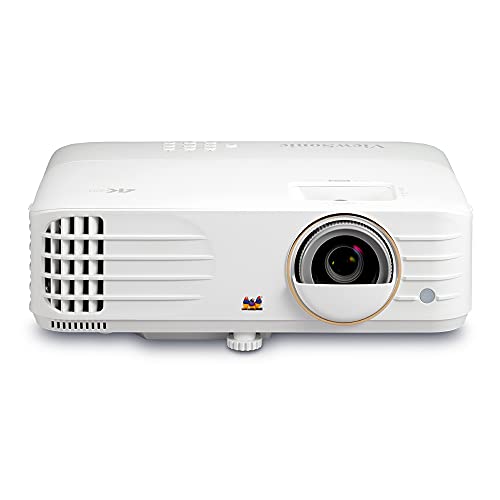 1. ViewSonic PX748-4K | Check price on Amazon | |
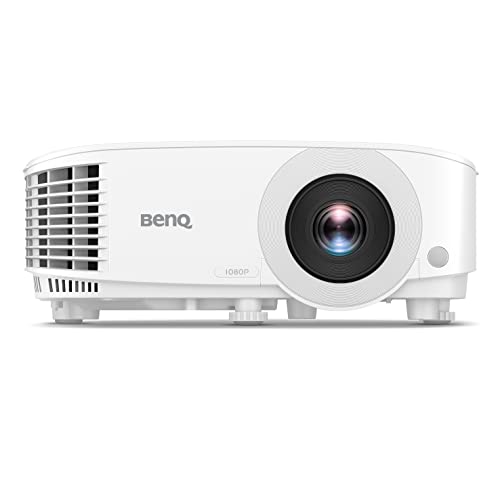 2. BenQ TH575 | Check price on Amazon | |
 3. Optoma UHD35STx | Check price on Amazon | |
 4. Epson Home Cinema 1080 | Check price on Amazon | |
 5. Epson Home Cinema 2350 | Check price on Amazon |
Our Top Picks
Most outdoor projectors are built for after-dark movie nights, and that is exactly where they fall apart in daylight. A projector rated at 300 or 700 lumens can look wonderful on a dark patio and turn into a pale grey rectangle the moment the sun is still up, a porch light is on, or the sky is overcast but bright. Daylight viewing is a different problem from backyard cinema, and it is solved almost entirely by raw brightness, not by resolution, smart features, or speaker size.
The five projectors below all clear the brightness floor that makes daytime viewing realistic. Every model here is rated at 2,800 lumens or higher, and the top picks reach 3,600 to 4,000 ANSI lumens. They are mains-powered home theater and gaming projectors rather than battery portables, which is a deliberate trade: a lamp or high-output light engine that can fight ambient light needs wall power. If your plan is a shaded patio, a pergola, a bright living room, or a late-afternoon game on the lawn, these are the models that keep the picture watchable while the sun is still working.
As an Amazon Associate, we earn from qualifying purchases.
Quick Answer
For daylight outdoor viewing, choose a projector rated at 3,000 lumens or higher and pair it with a shaded screen position. The ViewSonic PX748-4K leads this list at 4,000 ANSI lumens with true 4K resolution, while the BenQ TH575 and Optoma UHD35STx offer 3,800 and 3,600 lumens for gaming and short-throw setups. Keep the screen out of direct sun for the best results in shade or at dusk.
1. ViewSonic PX748-4K
The ViewSonic PX748-4K is the brightest projector in this guide, and brightness is the whole point of a daylight pick. Its 4,000 ANSI-lumen rating is roughly four times the output of the battery portables that dominate outdoor roundups, and it pairs that output with true 4K resolution, so a large daytime image stays sharp as well as visible. For a shaded patio or a bright room with the curtains open, it is the most capable starting point here.
Gaming is a genuine second strength. The PX748-4K supports a 240 Hz refresh rate with a 4.2 ms response time at 1080p, which keeps fast sports and console games responsive on a big screen. HDR10 and HLG support help the picture hold contrast when ambient light is washing out the darker parts of the image, and the 12,000:1 contrast ratio gives the image more depth than the brightness figure alone suggests. Dual HDMI and USB-C cover streaming sticks, consoles, and laptops without an adapter hunt.
Key specs
| Spec | Detail |
|---|---|
| Resolution | 4K UHD (3840 x 2160) |
| Brightness | 4,000 ANSI lumens |
| Display technology | DLP |
| Contrast ratio | 12,000:1 |
| Refresh rate | 240 Hz |
| Input lag | 4.2 ms at 1080p |
| HDR support | HDR10 and HLG |
| Connectivity | Dual HDMI, USB-C |
The PX748-4K is a lamp projector, so it needs mains power and a stable surface, and it is not a grab-and-go portable. Its strength is a fixed or semi-permanent daylight setup: a patio table, a shelf under a pergola, or a living room where the blinds stay open. If you want the brightest image in this guide and you can run a power cable to the spot, this is the model to start with.
2. BenQ TH575
The BenQ TH575 is the value pick for daylight viewing, and it earns that spot with a simple combination: 3,800 lumens, native 1080p resolution, and a 16.7 ms input lag that keeps console gaming responsive. It is a DLP gaming projector first, which means its brightness and low latency are the headline features, and its 15,000:1 contrast ratio helps the picture stay punchy when the room or patio is not fully dark.
Setup is straightforward. Auto vertical keystone corrects the image when the projector sits below or above the screen, a 1.1x zoom gives some placement flexibility, and dual HDMI inputs cover a console and a streaming stick at the same time. The built-in 10 W speaker is adequate for a small group in a quiet yard, though a separate speaker is worth adding near a road, a pool, or a larger gathering. BenQ backs the TH575 with a 3-year warranty, which is longer coverage than most projectors in this class carry.
Key specs
| Spec | Detail |
|---|---|
| Resolution | 1080p (1920 x 1080) |
| Brightness | 3,800 lumens |
| Display technology | DLP |
| Contrast ratio | 15,000:1 |
| Input lag | 16.7 ms at 1080p |
| Speaker | 10 W built-in |
| Connectivity | Dual HDMI |
| Keystone | Auto vertical |
| Zoom | 1.1x |
| Warranty | 3 years |
The TH575 is the right choice when the budget matters and the viewing is mostly sports, games, and casual daytime movies. Its 1080p resolution is a step below the 4K models here, and the difference shows on very large screens with fine text, but for a 100-inch daytime image the brightness matters far more than the extra pixels.
3. Optoma UHD35STx
The Optoma UHD35STx solves a different daylight problem: space. Its short-throw lens produces a 100-inch image from just over three feet away, which makes it practical on a small patio, a balcony, or a room where a standard-throw projector would need to sit halfway across the space. It pairs that placement flexibility with 3,600 ANSI lumens and true 4K resolution, so a bright, sharp picture is possible even where the projector has to sit close to the screen.
Gaming performance is strong. Enhanced Gaming Mode drops input lag to 4.2 ms at 1080p with a 240 Hz refresh rate, and 4K signals run at 60 Hz with a 16.9 ms lag. HDR10 and HLG support, plus a 1,000,000:1 contrast ratio, help the image keep shadow detail when ambient light is competing with the picture. The fixed lens offset and lack of lens shift mean placement needs more care than a model with zoom and shift, so measure the throw distance before committing to a mounting spot.
Key specs
| Spec | Detail |
|---|---|
| Resolution | 4K UHD (3840 x 2160) |
| Brightness | 3,600 ANSI lumens |
| Display technology | DLP |
| Contrast ratio | 1,000,000:1 |
| Throw ratio | 0.5:1 short throw |
| Input lag | 4.2 ms at 1080p, 240 Hz |
| HDR support | HDR10 and HLG |
| Connectivity | Dual HDMI, USB |
| Lamp | 240 W, 4,000 hours in Bright mode |
The UHD35STx is the pick for tight spaces and for viewers who want 4K and gaming speed in a bright room. Its short-throw design is a real advantage on a small patio, but it also means the projector sits close to the audience, so fan noise and heat are more noticeable than with a model placed ten feet back.
4. Epson Home Cinema 1080
The Epson Home Cinema 1080 takes a different route to daylight performance: a 3-chip 3LCD light engine that delivers 3,400 lumens of color brightness and 3,400 lumens of white brightness. That equal color and white output matters outdoors, because many single-chip projectors lose color saturation as ambient light rises, while a 3LCD design keeps reds, greens, and blues vivid at the same brightness level. For daytime sports and animated films, where color carries much of the picture, that is a visible advantage.
The rest of the package is built for easy setup. Auto picture skew squares up the image without manual keystone fiddling, a built-in speaker covers casual viewing, and dual HDMI inputs handle a streaming stick and a console. The 16,000:1 contrast ratio is solid for a 1080p lamp projector, and the 1080p resolution keeps the image crisp at the 80- to 120-inch sizes most patios use. It is a straightforward, bright, color-accurate projector with no smart platform built in, so plan on a streaming stick for apps.
Key specs
| Spec | Detail |
|---|---|
| Resolution | 1080p (1920 x 1080) |
| Brightness | 3,400 lumens color and white |
| Display technology | 3-chip 3LCD |
| Contrast ratio | 16,000:1 |
| Speaker | Built-in |
| Keystone | Auto picture skew |
| Connectivity | Dual HDMI |
| Model number | V11H980020 |
The Home Cinema 1080 is the best choice in this guide for viewers who care most about color in daylight. Its brightness is a step below the ViewSonic and BenQ picks, so it benefits most from a shaded screen position, but its color accuracy in bright conditions is the strongest here.
5. Epson Home Cinema 2350
The Epson Home Cinema 2350 is the smartest projector in this guide, and the most versatile. It runs Android TV with streaming apps built in, so a shaded patio setup needs only power and Wi-Fi, with no stick or external box. Its 4K PRO-UHD image uses pixel shifting to reach near-4K sharpness, and its 3-chip 3LCD engine produces 2,800 lumens with HDR10 and HLG support. A 10 W speaker and Bluetooth audio round out a package that is ready to run the moment it is plugged in.
That 2,800-lumen rating is the lowest in this guide, and it sets the limit on where the 2350 works best. In a shaded patio, under a canopy, or in a bright living room, the picture holds up well. In direct sun or on a very bright overcast afternoon, the image washes out faster than the 3,400-lumen and brighter models above. Low-latency gaming support keeps it useful for console sessions, and the Android TV platform means the projector doubles as a complete streaming setup without extra hardware.
Key specs
| Spec | Detail |
|---|---|
| Resolution | 4K PRO-UHD (pixel shifting) |
| Brightness | 2,800 lumens |
| Display technology | 3-chip 3LCD |
| HDR support | HDR10 and HLG |
| Smart platform | Android TV built in |
| Speaker | 10 W built-in |
| Audio | Bluetooth |
| Gaming | Low latency mode |
The 2350 is the right pick when convenience matters as much as brightness: a single box that streams, plays, and projects, for viewers whose daylight use is mostly shaded. If the screen will face open sky at midday, one of the brighter models above is the better buy.
Who It’s For / Who Should Skip
This guide is for people who want to watch in daylight or in a room that never gets dark: afternoon sports on a patio, a bright living room with the curtains open, a shaded pergola screening, or a classroom with the lights on. It is also for buyers who already own a portable projector and discovered that its after-sunset picture does not survive the daytime. If your viewing happens mostly in shade, at dusk, or indoors with light control, the brightness ratings here translate directly into a more watchable picture.
Skip this guide if your viewing is strictly after dark. A battery portable with 700 to 1,000 lumens costs less, needs no power cable, and looks excellent once the sun is down. The projectors here are heavier, need mains power, and cost more than a portable, and that trade only pays off when ambient light is part of the problem. Skip it as well if the screen will sit in direct midday sun with no shade at all: no projector in this class overcomes full direct sunlight on a large screen, and a television is the honest answer for that setup.
How the Five Compare
Brightness is the headline difference, and it runs from 4,000 ANSI lumens on the ViewSonic PX748-4K down to 2,800 on the Epson 2350. Resolution splits the group too: the ViewSonic and the Optoma are true 4K, the Epson 2350 uses pixel shifting to approach 4K, and the BenQ and Epson 1080 are native 1080p. For a 100-inch daytime image, the brightness gap matters more than the resolution gap, because a dim 4K picture is harder to watch than a bright 1080p one.
Gaming speed is strong across the board. The ViewSonic and Optoma both reach 4.2 ms input lag at 1080p with 240 Hz refresh, the BenQ runs 16.7 ms, and the Epson models support low-latency gaming modes. Placement is where the Optoma stands apart: its short-throw lens needs only a few feet for a 100-inch image, while the others need roughly eight to twelve feet for the same size. The Epson 2350 is the only model here with streaming built in, and the Epson 1080 is the only one whose color brightness equals its white brightness, which shows up in vivid daytime color.
For a complete picture of the other side of outdoor viewing, the site’s portable roundup covers battery-powered models for after-dark use: Best Portable Projectors for Outdoor Use in 2026. Its picks top out at 1,000 lumens and are built for dark yards, which is exactly the gap this guide fills: when the sun is still up, brightness is the feature that matters, and these five are the models that deliver it.
FAQ
How many lumens do I need for a projector in daylight?
For a watchable picture in shade or under a canopy, look for at least 3,000 lumens, and treat 3,500 or more as the comfortable range for a 100-inch image. Direct sunlight on the screen defeats even 4,000 lumens, so shade, a canopy, or a late-afternoon start matters as much as the rating. Smaller screens help too: the same brightness looks far stronger on an 80-inch image than on a 150-inch one.
Is 4,000 lumens enough for outdoor daytime viewing?
It is enough for shaded and partly cloudy conditions on a screen up to about 120 inches, and it is the strongest rating in this guide. In open shade the ViewSonic PX748-4K holds color and contrast well. In direct sun, even 4,000 lumens will look washed out, so position the screen with its back to the sun and use a canopy or pergola whenever possible.
Do daylight projectors need a special screen?
A standard white screen works, but a grey or ambient-light-rejecting screen improves contrast noticeably in daylight by absorbing some of the light that hits it from the sides. A high-gain white screen also helps by reflecting more of the projector’s own light toward the audience. Either option is an upgrade over a bedsheet or a plain wall, which scatter light in every direction and lose contrast fast.
Can I use a daylight projector indoors in a bright room?
Yes, and that is one of the best uses for these models. A bright living room with windows and lamps is the same problem as a shaded patio, and a 3,400- to 4,000-lumen projector handles it far better than a dim portable. The same rules apply indoors: keep direct sun off the screen, sit the audience in the screen’s viewing cone, and expect the picture to improve as the room gets even slightly darker.
Final Verdict
Daylight viewing starts and ends with brightness, and the ViewSonic PX748-4K is the strongest answer in this guide at 4,000 ANSI lumens with true 4K resolution. The BenQ TH575 is the best value for gaming and sports at 3,800 lumens, the Optoma UHD35STx is the pick for tight spaces thanks to its short-throw lens, and the Epson Home Cinema 1080 delivers the most vivid color in bright conditions through its 3LCD engine. The Epson Home Cinema 2350 rounds out the set as the most convenient option, with streaming built in and enough brightness for shaded viewing.
Whichever model fits the space, the setup rules are the same: shade the screen, keep it out of direct sun, size the image to the brightness available, and run mains power to the projector. Get those four things right and a bright projector turns a sunny afternoon into a watchable screening instead of a washed-out compromise.
Product and ASIN Reference
| Product | ASIN |
|---|---|
| ViewSonic PX748-4K | B096HBWRGT |
| BenQ TH575 | B0B4QV9YV6 |
| Optoma UHD35STx | B09XVNJNXT |
| Epson Home Cinema 1080 | B08GL2DSKZ |
| Epson Home Cinema 2350 | B0BDR8THMJ |
More from Amazon
Programs that pair well with the guide above. Offers and eligibility are set by Amazon and may change.
Free shipping on eligible items, Prime Video and more. Eligible new members can start with a free trial.
Start a Prime free trialAd-free music streaming. Eligible new subscribers can start with a free trial.
Try Music Unlimited freeA Prime membership for ages 18-24 with a trial period. Eligibility is set by Amazon.
See Prime for Young AdultsAudiobooks and podcasts to listen to on the go. Eligible new members can start with a free trial.
Try Audible freeAs an Amazon Associate we earn from qualifying purchases.