
Our Short List of 3

- Best for: A household with two current-generation consoles that share one desk monitor.
- 28-inch 3840 x 2160 4K SuperSpeed IPS display
- 144Hz refresh rate with 1ms GTG response time
- 2 x HDMI 2.1 and 1 x DisplayPort 1.4
- 3 x USB 3.0 and 1 x USB Type-C with KVM

- Best for: PlayStation 5 players who want noticeably stronger HDR in dark, atmospheric games.
- 27-inch 3840 x 2160 4K display with 144Hz refresh rate
- HDMI 2.1 with VRR support
- Full Array Local Dimming
- DisplayHDR 600
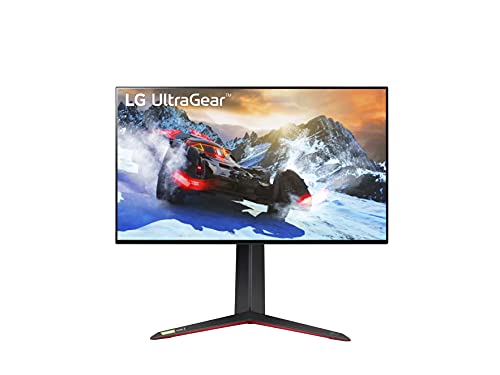
- Best for: Players who alternate between a console and a gaming computer on the same desk.
- 27-inch UHD 3840 x 2160 Nano IPS display
- 144Hz refresh rate with VESA DSC, overclock to 160Hz
- HDMI 2.1 with VRR up to 120Hz at 4K
- NVIDIA G-SYNC Compatible and AMD FreeSync Premium Pro
All 3 Picks at a Glance
| Product | Specs | Action |
|---|---|---|
| GIGABYTE M28U 28″ 4K 144Hz SuperSpeed IPS HDMI 2.1 Monitor |
| Check price on Amazon |
| Sony 27″ INZONE M9 4K HDR 144Hz HDMI 2.1 Gaming Monitor |
| Check price on Amazon |
| LG 27GP950-B 27″ UltraGear UHD Nano IPS Gaming Monitor |
| Check price on Amazon |
Key takeaways
- Three 4K monitors for PS5, Xbox and Switch compared on HDMI 2.1, 120Hz support, VRR and HDR, using specs from their Amazon listings to match your console.
A console and a monitor disagree more often than buyers expect. A PlayStation 5 or Xbox Series X can output 4K at up to 120 frames per second, yet the monitor decides whether that signal ever reaches your eyes intact. The wrong HDMI version caps the frame rate, a missing variable refresh rate leaves tearing in fast scenes, and weak HDR handling washes out the picture. Choosing a console monitor is less about chasing the highest numbers on the box and more about matching three things: the HDMI input, the refresh rate the panel genuinely supports, and the HDR the backlight can deliver.
This article is for PlayStation 5, Xbox Series X and S, and Nintendo Switch players who want a desk monitor instead of a television, including players who share one screen between console and computer. Every monitor below was picked from its Amazon listing, with attention to the HDMI version, the refresh rate over HDMI, and the HDR support stated on the listing.
Quick Picks
As an Amazon Associate we earn from qualifying purchases.
| Product | Best for | Key spec from title |
|---|---|---|
| GIGABYTE M28U 28″ 4K 144Hz SuperSpeed IPS HDMI 2.1 Monitor | A first 4K 120Hz console setup on a standard desk | 28-inch 4K 144Hz SuperSpeed IPS, 2x HDMI 2.1 |
| Sony 27″ INZONE M9 4K HDR 144Hz HDMI 2.1 Gaming Monitor | PlayStation 5 players who want HDR with local dimming | 27-inch 4K HDR 144Hz, Full Array Local Dimming |
| LG 27GP950-B 27″ UltraGear UHD Nano IPS Gaming Monitor | Players who share one screen between console and PC | 27-inch 4K Nano IPS, 144Hz, HDMI 2.1 VRR |
How to Choose
Check the HDMI version before anything else
The HDMI version on the monitor decides the frame rate your console can show. HDMI 2.1 carries 4K at 120Hz, while an HDMI 2.0 input tops out at 4K 60Hz no matter what the panel refresh rate says on the box. PlayStation 5 and Xbox Series X both offer 120Hz modes in supported games, and a monitor without HDMI 2.1 drops you to 60Hz. Count the HDMI 2.1 ports too: two ports let a PlayStation 5 and an Xbox sit side by side without cable swapping, while a single port forces a choice every time you switch consoles. Read the listing for HDMI 2.1 rather than trusting a high refresh rate alone.
Match the resolution to the console you own
Resolution is a console question before it is a monitor question. PlayStation 5 and Xbox Series X render their sharpest picture at 4K, so a 3840 x 2160 panel gets the most from either machine. Xbox Series S and PlayStation 5 both support 1440p output as well, which makes a 1440p monitor a reasonable partner if you never plan to chase 4K. Nintendo Switch outputs at most 1080p when docked, so a 4K panel adds nothing to a Switch-only setup beyond a larger canvas for the same image. Buy the resolution your console can feed, not the resolution that sounds most impressive in isolation.
Treat VRR and HDR as separate decisions
Variable refresh rate and HDR solve different problems, and a monitor can do one well while fumbling the other. VRR smooths the stutter that appears when a game cannot hold a steady frame rate, which shows up most in open-world titles and busy multiplayer matches. HDR, by contrast, depends on the backlight: a panel with local dimming and a DisplayHDR 600 label controls bright highlights far better than a panel that merely accepts an HDR signal. Check the listing for both the VRR range over HDMI and the HDR standard named, and remember that a console HDR mode only helps when the monitor can dim parts of the screen independently.
Size the panel for your seating distance
A monitor that looks right in a product photo can feel wrong at your desk. At a typical desk distance of an arm’s length, a 27-inch or 28-inch 4K panel keeps text, menus, and on-screen prompts readable without leaning in, while a 32-inch panel suits players who sit further back or share the screen with someone beside them. IPS panels hold their color when you view them from an angle, which matters if a second player watches from the side. Measure the desk depth, check the stand footprint in the listing, and confirm the monitor offers height and tilt adjustment so the screen sits at eye level during long sessions.
The 3 Best Options
GIGABYTE M28U 28″ 4K 144Hz SuperSpeed IPS HDMI 2.1 Monitor
- Best for: A household with two current-generation consoles that share one desk monitor.
- 28-inch 3840 x 2160 4K SuperSpeed IPS display
- 144Hz refresh rate with 1ms GTG response time
- 2 x HDMI 2.1 and 1 x DisplayPort 1.4
- 3 x USB 3.0 and 1 x USB Type-C with KVM
A household with two current-generation consoles that share one desk monitor.
The HDR Ready label means modest HDR rather than the stronger highlight control of a local-dimming panel, and with only two HDMI 2.1 ports a third console means swapping a cable.
The M28U covers the console essentials without asking you to learn a new menu system first. Two HDMI 2.1 inputs take a PlayStation 5 and an Xbox Series X at 4K and 120Hz, the 28-inch SuperSpeed IPS panel keeps motion crisp in fast games, and the built-in KVM switch lets a keyboard and mouse serve both the monitor and a connected computer. Its 144Hz ceiling gives headroom above the 120Hz console limit, and the height-adjustable stand makes it easy to set the screen at eye level on a standard desk.
Watch out for: The HDR Ready label means modest HDR rather than the stronger highlight control of a local-dimming panel, and with only two HDMI 2.1 ports a third console means swapping a cable.
Sony 27″ INZONE M9 4K HDR 144Hz HDMI 2.1 Gaming Monitor
- Best for: PlayStation 5 players who want noticeably stronger HDR in dark, atmospheric games.
- 27-inch 3840 x 2160 4K display with 144Hz refresh rate
- HDMI 2.1 with VRR support
- Full Array Local Dimming
- DisplayHDR 600
PlayStation 5 players who want noticeably stronger HDR in dark, atmospheric games.
The 27-inch 4K panel renders menus and HUD text small at a normal desk distance, so check your seating position first, and confirm how many consoles you plan to connect before relying on a single HDMI 2.1 input.
The INZONE M9 is the monitor in this list built most directly around console play. Its full array local dimming divides the backlight into zones that brighten and darken independently, which is what makes HDR highlights in dark scenes stand out instead of washing the whole frame grey. The 27-inch 4K panel runs at 144Hz, the HDMI 2.1 input carries a console signal with VRR, and the DisplayHDR 600 label signals a brighter HDR presentation than an entry-level HDR panel offers. PlayStation 5 players get the most obvious benefit, since the monitor was designed alongside that console generation.
Watch out for: The 27-inch 4K panel renders menus and HUD text small at a normal desk distance, so check your seating position first, and confirm how many consoles you plan to connect before relying on a single HDMI 2.1 input.
LG 27GP950-B 27″ UltraGear UHD Nano IPS Gaming Monitor
- Best for: Players who alternate between a console and a gaming computer on the same desk.
- 27-inch UHD 3840 x 2160 Nano IPS display
- 144Hz refresh rate with VESA DSC, overclock to 160Hz
- HDMI 2.1 with VRR up to 120Hz at 4K
- NVIDIA G-SYNC Compatible and AMD FreeSync Premium Pro
Players who alternate between a console and a gaming computer on the same desk.
The 160Hz overclock applies over DisplayPort, so consoles still use the 120Hz HDMI 2.1 path, and the typical 1000:1 contrast ratio means dark scenes look softer than on a local-dimming panel.
The 27GP950-B suits the player whose monitor serves two masters. Over HDMI 2.1 it takes a console at 4K with VRR up to 120Hz, and over DisplayPort it reaches 144Hz with an overclock to 160Hz for computer play. The Nano IPS panel covers a wide DCI-P3 color gamut, the DisplayHDR 600 label backs up its HDR claims, and DTS Headphone:X through the headphone jack gives spatial audio cues in competitive games without extra hardware. G-SYNC compatibility and FreeSync Premium Pro cover both graphics card brands when the computer takes over.
Watch out for: The 160Hz overclock applies over DisplayPort, so consoles still use the 120Hz HDMI 2.1 path, and the typical 1000:1 contrast ratio means dark scenes look softer than on a local-dimming panel.
Which One Fits Your Situation
You play PlayStation 5 and Xbox Series X at 4K
Choose the GIGABYTE M28U. Its two HDMI 2.1 ports hold both consoles at once, so neither machine waits for a cable swap, and the 28-inch 4K panel shows either console at 120Hz in supported games. The KVM switch is a bonus if a computer joins the desk later, but the twin console inputs are the reason it fits this setup.
You want the strongest HDR in the list
Choose the Sony INZONE M9. Full array local dimming is the feature that separates it here: the backlight dims in dark areas while highlights stay bright, which is exactly what HDR scenes in story-driven games need. Its 27-inch size suits a desk, and the HDMI 2.1 input with VRR keeps console motion smooth.
You share one monitor between console and PC
Choose the LG 27GP950-B. It is the only pick here that pairs HDMI 2.1 VRR up to 120Hz for consoles with a 144Hz DisplayPort path for a computer, plus G-SYNC compatibility and FreeSync Premium Pro for either graphics card. One screen, two machines, and no settings compromise on either side.
Your desk is small and this is your first 4K console monitor
Choose the GIGABYTE M28U. The 28-inch panel fits a standard desk without dominating it, the height adjustment and tilt let you set it at eye level quickly, and the two HDMI 2.1 ports leave room to add a second console later. It covers the console fundamentals first and leaves the specialist features for a future upgrade.
Safety Notes
Monitors run on mains power, so treat the power connection with care. Use the power cable and adapter supplied in the box, keep the ventilation slots on the rear clear of walls and clutter, and place the monitor on a stable surface where the stand sits flat. Unplug the monitor during long periods away from home, and let a screen that has been in a cold delivery box reach room temperature before switching it on.
Common Mistakes
- Buying an HDMI 2.0 monitor and expecting 4K at 120Hz from a PlayStation 5 or Xbox Series X.
- Assuming every monitor with a refresh rate above 120Hz shows 120Hz from a console, when only the HDMI path decides that.
- Judging HDR from the logo alone instead of checking for local dimming and the DisplayHDR standard named on the listing.
- Picking a panel far larger than the desk depth allows, then sitting too close to a screen that fills the whole field of view.
- Forgetting to enable 120Hz output and VRR in the console settings after connecting, then blaming the monitor for a 60Hz picture.
Frequently Asked Questions
Do I need HDMI 2.1 for console gaming?
You need HDMI 2.1 only if you want 4K at 120Hz from a PlayStation 5 or Xbox Series X. HDMI 2.0 handles 4K at 60Hz, which covers story-driven games and any Nintendo Switch setup. If you play fast competitive games and your console offers a 120Hz mode, an HDMI 2.1 monitor is the only way to see it.
Can a 144Hz monitor show 120Hz from a PS5 or Xbox?
Yes, provided the 120Hz signal travels over HDMI 2.1 and the monitor accepts it. Consoles cap their output at 120Hz, so a 144Hz panel has headroom to spare but never shows 144Hz from a console. Check the listing for HDMI 2.1 and VRR support rather than the headline refresh rate alone.
Is 4K worth choosing over 1440p for consoles?
For PlayStation 5 and Xbox Series X, 4K makes sense because both consoles render at that resolution in their sharpest modes. Xbox Series S and PlayStation 5 also support 1440p, so a 1440p panel is a sound partner if you own one of those and never plan to chase 4K. Nintendo Switch gains nothing from either beyond 1080p.
Can I use one monitor for a PlayStation 5 and an Xbox Series X?
Yes, if the monitor has two HDMI 2.1 ports. The GIGABYTE M28U in this article does, so both consoles stay connected at 4K and 120Hz. With a single HDMI 2.1 port, you would swap the cable each time you change consoles, which gets old fast in a household where both machines see regular use.
More from Amazon
Programs that pair well with the guide above. Offers and eligibility are set by Amazon and may change.
Free shipping on eligible items, Prime Video and more. Eligible new members can start with a free trial.
Start a Prime free trialAd-free music streaming. Eligible new subscribers can start with a free trial.
Try Music Unlimited freeA Prime membership for ages 18-24 with a trial period. Eligibility is set by Amazon.
See Prime for Young AdultsAudiobooks and podcasts to listen to on the go. Eligible new members can start with a free trial.
Try Audible freeAs an Amazon Associate we earn from qualifying purchases.









