
Our Short List of 3
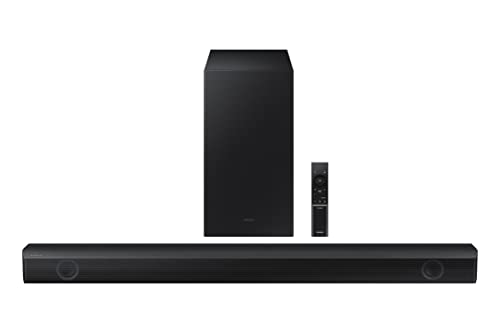
- Best for: Viewers who want a simple, effective upgrade over built-in television speakers.
- 2.1-channel system with wireless subwoofer
- Dolby Audio and DTS Virtual:X
- Adaptive Sound Lite
- Bluetooth multi-device connection
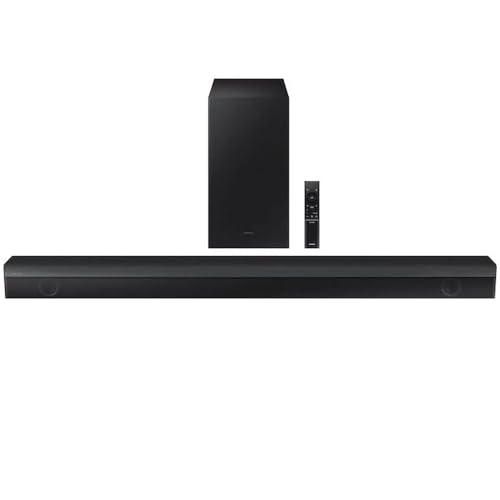
- Best for: Movie and drama viewers who miss dialogue and want a center channel to fix it.
- 3.1-channel system with built-in center speaker
- DTS Virtual:X sound enhancement
- Q-Symphony compatibility
- Voice Enhance mode for dialogue

- Best for: Film and music fans who want strong bass and a simple two-piece system.
- 2.1-channel system with wireless subwoofer
- 300W total power output
- 6.5-inch wireless subwoofer
- Four racetrack drivers and two one-inch tweeters
All 3 Picks at a Glance
| Product | Specs | Action |
|---|---|---|
| Samsung HW-B550 |
| Check price on Amazon |
| Samsung HW-B650F |
| Check price on Amazon |
| JBL Bar 2.1 Deep Bass MK2 |
| Check price on Amazon |
Key takeaways
- Our guide to the best soundbars under 400 dollars compares 2.1 and 3.1 systems with wireless subwoofers so you can upgrade TV sound without overspending.
Television speakers point backward or downward and fight the room, which is why dialogue gets lost and action scenes sound thin. A soundbar under this budget line fixes the core problem: it puts forward-facing speakers and a subwoofer in front of the viewer, lifting voices and adding bass without a receiver or a tangle of wires. The buyer still needs to choose between channel counts, subwoofer styles, and connection types. The room and the viewing habits narrow the field fast.
This guide is for viewers upgrading flat-panel sound, apartment dwellers who want bass without a large system, and anyone setting up a first home theater on a modest budget. Every product below was chosen from the name and specifications shown on its Amazon page, with the channel layout, subwoofer, and connections checked against the listing. Four layouts cover the main choices buyers face.
Quick Picks
As an Amazon Associate we earn from qualifying purchases
| Product | Best for | Key spec from title |
|---|---|---|
| Samsung HW-B550 | Simple TV sound upgrade | 2.1 channels, wireless subwoofer |
| Samsung HW-B650F | Clear dialogue and movies | 3.1 channels, center speaker |
| JBL Bar 2.1 Deep Bass MK2 | Deep bass for films | 2.1 channels, 300W output |
| Yamaha SR-C20A | Small rooms and desks | Built-in subwoofer, 60 cm wide |
How to Choose
Channel Layout and Dialogue
Channel numbers describe the speaker layout: a 2.1 system pairs a stereo bar with a subwoofer, while a 3.1 system adds a dedicated center channel for voices. That center speaker matters most for viewers who miss dialogue during loud scenes, since it carries speech separately from music and effects. A 2.1 bar suits music and casual viewing, where voices share the main speakers. Match the layout to the household habit: dialogue-heavy drama favors 3.1, while mixed use works well with 2.1.
Subwoofer Style
A wireless subwoofer sits anywhere in the room and delivers the deep bass that a slim bar cannot produce alone, which suits films and games. A built-in subwoofer keeps the whole system in one compact bar, which suits small rooms, desks, and bedrooms where floor space is scarce. Wireless units need a power outlet and a clear spot on the floor, while built-in units trade some depth for simplicity. Decide by room size first, then by how much bass the household wants.
Connections and TV Compatibility
The link between the television and the soundbar decides how simply the system works every day. HDMI ARC carries sound through one cable and lets the television remote control the volume, while optical audio covers older sets without HDMI ARC. Bluetooth streams music from a phone, yet it should not be the only link to the television, since a wired connection stays steadier for films. Check the television ports before buying, and pick the bar that matches them. A television with HDMI ARC makes daily use simplest, since one remote handles volume and the bar wakes with the set.
Size and Room Fit
A soundbar should sit neatly under the television without blocking the screen or the remote sensor. Measure the width between the television feet and the height under the screen, since a tall bar can cover the bottom of the picture. A bar close to the television width looks balanced, while a much wider bar overhangs the stand. Wall mounting frees the stand entirely, and many bars in this guide include the mounting hardware. A bar that is too tall can also block the remote sensor on the television, which is easy to miss until the first evening. Measure twice, since a bar that overhangs the stand looks wrong every day.
The 4 Best Options
Samsung HW-B550
- Best for: Viewers who want a simple, effective upgrade over built-in television speakers.
- 2.1-channel system with wireless subwoofer
- Dolby Audio and DTS Virtual:X
- Adaptive Sound Lite
- Bluetooth multi-device connection
Viewers who want a simple, effective upgrade over built-in television speakers.
There is no dedicated center channel, so dialogue shares the main bar speakers.
The Samsung HW-B550 is a straightforward 2.1 soundbar that pairs a 33.9-inch bar with a wireless subwoofer, giving television sound a clear lift without complexity. Dolby Audio and DTS Virtual:X widen the sound for films and shows, while Adaptive Sound Lite tunes the audio to match what is playing. Bluetooth multi-connection links two devices at once, so a phone and a tablet can both stay paired. The wireless subwoofer sits anywhere in the room, and the 410W total output fills a living room comfortably. The bar suits first-time buyers who want a clear step up from television speakers.
Watch out for: There is no dedicated center channel, so dialogue shares the main bar speakers.
Samsung HW-B650F
- Best for: Movie and drama viewers who miss dialogue and want a center channel to fix it.
- 3.1-channel system with built-in center speaker
- DTS Virtual:X sound enhancement
- Q-Symphony compatibility
- Voice Enhance mode for dialogue
Movie and drama viewers who miss dialogue and want a center channel to fix it.
The bar is wider than compact models, so measure the television stand before ordering.
The Samsung HW-B650F steps up to a 3.1 layout with a built-in center speaker that carries dialogue separately from music and effects. DTS Virtual:X creates a wider soundstage for films, and Q-Symphony works with compatible Samsung televisions to play the television speakers and the bar together. A Voice Enhance mode lifts speech further without raising the overall volume, which helps during quiet dialogue scenes. The wireless subwoofer adds bass, and the box includes a wallmount kit, an optical cable, and a remote. The center channel is the real upgrade here, since it separates voices from the rest of the mix.
Watch out for: The bar is wider than compact models, so measure the television stand before ordering.
JBL Bar 2.1 Deep Bass MK2
- Best for: Film and music fans who want strong bass and a simple two-piece system.
- 2.1-channel system with wireless subwoofer
- 300W total power output
- 6.5-inch wireless subwoofer
- Four racetrack drivers and two one-inch tweeters
Film and music fans who want strong bass and a simple two-piece system.
The 2.1 layout has no center channel, so dialogue relies on the main drivers.
The JBL Bar 2.1 Deep Bass MK2 is built around bass, pairing a 2.1-channel bar with a 6.5-inch wireless subwoofer for a total of 300W. Four racetrack drivers and two one-inch tweeters inside the bar handle the mids and highs, while the down-firing subwoofer adds weight to action scenes and music. Built-in Dolby Digital and Bluetooth cover films and phone streaming, and HDMI and optical inputs connect to the television. The bar suits viewers who rank impact and low-end energy above dialogue finesse. The down-firing subwoofer adds weight that a slim bar alone cannot produce.
Watch out for: The 2.1 layout has no center channel, so dialogue relies on the main drivers.
Yamaha SR-C20A
The Yamaha SR-C20A packs a complete 2.1 system into a bar just 60 centimeters wide, with a built-in subwoofer and passive radiators instead of a separate box. When the soundtrack swells, the Clear Voice mode keeps speech clear and easy to follow, and virtual surround processing opens up the soundstage without needing rear speakers. A dedicated game mode sharpens directional sounds for players, and Bass Extension adds depth from the internal subwoofer. HDMI ARC, optical, and Bluetooth inputs cover televisions, consoles, and phones, and the bar mounts on a wall or sits beneath a small screen. The compact width also suits a desk beside a monitor.
Specs
- Built-in subwoofer with passive radiators
- Clear Voice technology for dialogue
- Virtual surround sound
- Game sound mode
- HDMI ARC, optical, and Bluetooth inputs
- 100W total power output
- Width of 60 centimeters
- Weight of 3.97 pounds
- 2-year manufacturer warranty
Best for: Small rooms, desks, and bedrooms where a separate subwoofer has no place to go.
Watch out for: In a large room, the internal subwoofer will not reach the depth a separate wireless subwoofer can.
Which One Fits Your Situation
A Living Room Movie Setup
A living room built around films suits the HW-B650F or the JBL Bar 2.1, depending on whether dialogue or bass matters more. The Samsung center channel keeps speech clear through loud scenes, while the JBL subwoofer gives action films their weight. Either one pairs with a wireless subwoofer that hides beside a sofa, and both connect over HDMI ARC for simple daily use. Start with the subwoofer beside the sofa.
A Small Apartment or Bedroom
Small rooms need a compact system that does not dominate the furniture, which points to the Yamaha SR-C20A. Its 60-centimeter width fits beneath smaller televisions, and the built-in subwoofer needs no floor space at all. The sound stays clear at low volumes, which matters when neighbors share a wall. A compact bar also leaves the stand clear for a console or a streaming box, which matters when shelf space is tight.
A First Home Theater
A first home theater on a modest budget starts with the Samsung HW-B550, which covers the basics well: wireless subwoofer, virtual surround, and Bluetooth for music. The setup takes minutes, the bar fits most television stands, and the system leaves room to grow later. Add a larger television or a second speaker set when the budget allows. The setup takes minutes, and the bar leaves room to grow later.
Gaming and Mixed Use
Gamers who split time between consoles, films, and music need a bar that handles all three without fuss. The Yamaha game mode sharpens directional sounds for play, while the Samsung bars cover films and streaming with virtual surround. Pick the Yamaha for a desk setup beside a monitor, and the Samsung for a television across the room. A bar with a game mode sharpens footsteps and direction cues for play.
Common Mistakes
- Buying a bar wider than the television stand and living with the overhang.
- Choosing a 2.1 system when missed dialogue is the main complaint.
- Placing a wireless subwoofer in a corner without testing how it sounds there.
- Connecting over Bluetooth alone instead of using HDMI ARC or optical for the television.
- Forgetting to measure the height under the screen before ordering a tall bar.
Frequently Asked Questions
What is the difference between 2.1 and 3.1 soundbars?
A 2.1 soundbar pairs a stereo bar with a subwoofer, while a 3.1 soundbar adds a dedicated center channel for dialogue. The center speaker carries voices separately from music and effects, which keeps speech clear during loud scenes. A 2.1 system suits music and casual viewing, while a 3.1 system suits viewers who watch mostly films and drama.
Do I need a separate subwoofer?
A separate wireless subwoofer delivers deeper bass than a built-in unit, which matters for action films and music with strong low end. A built-in subwoofer suits small rooms where floor space is scarce and moderate bass is enough. The choice turns on room size: large living rooms benefit from the separate box, while bedrooms and desks work well with the compact bar.
Can I control a soundbar with my television remote?
Yes, when the soundbar connects over HDMI ARC, the television remote usually controls the volume through the same cable. Optical connections do not carry remote commands, so the soundbar remote handles volume instead. Check the connection type on the listing, and prefer HDMI ARC when the television supports it.
Will a soundbar fit under my television?
Measure the width between the television feet and the height from the stand to the bottom of the screen before ordering. A bar close to the television width looks balanced, while a tall bar can block the picture or the remote sensor. Wall mounting frees the stand entirely, and several bars in this guide include the mounting hardware.
More from Amazon
Programs that pair well with the guide above. Offers and eligibility are set by Amazon and may change.
Free shipping on eligible items, Prime Video and more. Eligible new members can start with a free trial.
Start a Prime free trialAd-free music streaming. Eligible new subscribers can start with a free trial.
Try Music Unlimited freeA Prime membership for ages 18-24 with a trial period. Eligibility is set by Amazon.
See Prime for Young AdultsAudiobooks and podcasts to listen to on the go. Eligible new members can start with a free trial.
Try Audible freeAs an Amazon Associate we earn from qualifying purchases.









