
Key takeaways
- The entry points into Dell gaming laptops: a G15 5530 configuration and the Alienware 16 Aurora, compared on graphics, memory, storage and panels from their listings.
Dell sells gaming laptops under two badges, and the cheapest way into the range is not always the machine with the loudest branding. The G Series is Dell’s entry gaming line, built to put a real graphics card and a fast panel in front of buyers who cannot stretch to Alienware money, while Alienware itself now starts lower than its flagship reputation suggests. The decision is which badge’s compromises you would rather live with at the bottom of each range.

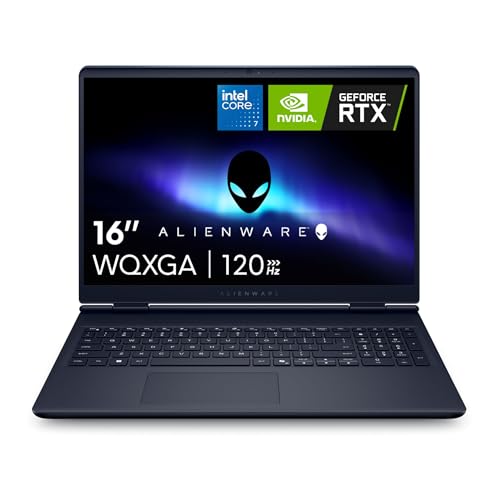
This guide is for buyers who have already settled on Dell — for its support network, its familiarity, or an existing preference — and want the lowest-entry gaming configurations that could be verified on Amazon US. Both picks were selected from their listing configuration lines, graphics first, and they sit at different levels: the G15 5530 is the entry point, and the Alienware 16 Aurora is the current-generation step up for buyers who find a little more room.
Quick Picks
As an Amazon Associate we earn from qualifying purchases.
| Product | Best for | Key spec from title |
|---|---|---|
| Dell G15 5530 | The entry point into Dell gaming laptops | Intel Core i7-13650HX with GeForce RTX 4050 and a 165Hz display |
| Alienware 16 Aurora AC16250 | Buyers who want current-generation graphics from Dell | GeForce RTX 5060 with a 16-inch WQXGA 120Hz display |
How to Choose
G Series Versus Alienware: What the Step Up Buys
The G Series exists to deliver gaming hardware without Alienware’s design and display premiums, and the G15’s listing shows the formula clearly: a strong HX-series processor, RTX graphics and a high-refresh panel in a plainer shell. Alienware’s step up buys you a newer graphics generation, a larger and sharper screen and a bigger drive in the configuration verified here. Neither badge changes the fundamentals — graphics, memory and storage still decide performance — so compare the configuration lines, not the logos, and pay for the badge only when its specific upgrades match your use.
Read the Configuration, Not Just the Model Name
Dell sells each gaming model in many configurations, and the same G15 name covers machines with different processors, graphics cards, memory and storage. A listing headline is a summary, not a specification. Before ordering, match the full configuration — processor model, graphics model, memory size, drive size and panel — against the pick you intended to buy. This matters most with Dell, because marketplace sellers list multiple variants side by side and the differences between two laptops both called G15 5530 can be larger than the difference between a G15 and a rival brand’s machine.
Graphics Generation Matters More Than Processor Tier
Both picks here carry processors well beyond what games require, which is typical of Dell’s gaming range. The meaningful gap between them is the graphics generation: the G15’s RTX 4050 is a proven 1080p card, while the Aurora’s RTX 5060 brings a newer architecture and more headroom for higher settings and resolutions. When two Dell configurations compete for your money, spend on the newer graphics card before the higher processor tier. Games lean on the graphics card every second; the processor mostly needs to be adequate, and both of these are comfortably more than that.
Panel and Storage Checks Before You Commit
The G15’s 165Hz Full HD panel suits fast 1080p play and matches what its graphics card can deliver. The Aurora’s 16-inch WQXGA screen is a different proposition: more workspace for productivity, sharper text, and a higher resolution target for games. Storage deserves the same scrutiny — the G15’s 512GB drive will need active management with modern install sizes, while the Aurora’s 1TB gives breathing room. Finally, confirm Wi-Fi 6 or better and the full Windows 11 edition on the listing, so the machine arrives ready for both gaming and everyday work.
The 2 Best Options
Dell G15 5530
The G15 5530 is where Dell gaming starts, and this configuration is the sensible one: an Intel Core i7-13650HX, RTX 4050 graphics, 16GB of DDR5 memory and a 512GB solid-state drive behind a 15.6-inch Full HD panel running at 165Hz. That is a complete 1080p gaming specification with no component waiting on an upgrade, which is exactly what an entry machine should be. The processor is stronger than the graphics card strictly needs, which helps with multitasking, streaming and study or office work between games. Wi-Fi 6 and Windows 11 Home complete a listing with no obvious gaps.
Specs
- Display: 15.6-inch Full HD 165Hz
- Processor: Intel Core i7-13650HX
- Graphics: NVIDIA GeForce RTX 4050
- Memory: 16GB DDR5
- Storage: 512GB SSD
- Wireless: Wi-Fi 6
- Operating system: Windows 11 Home
Best for: Buyers who want Dell’s gaming entry point with 16GB of memory and a 165Hz panel already fitted.
Watch out for: The 512GB drive fills quickly with modern game installs, and G15 variants differ widely, so confirm this exact i7 and RTX 4050 configuration on the listing.
ASIN: B0C8N95J4X
Alienware 16 Aurora AC16250
The Alienware 16 Aurora is the step up for buyers whose budget reaches past the entry point. Its listing pairs an Intel Core 7 240H with RTX 5060 graphics carrying 8GB of GDDR7 memory, 16GB of DDR5 system memory and a 1TB drive. The 16-inch WQXGA display at 2560 by 1600 and 120Hz gives it a second life as a work machine: more vertical space for documents and timelines than any Full HD panel here, plus the resolution headroom the newer graphics card can use. It is the current-generation Dell gaming configuration in this guide, and the one to choose for keeping longer.
Specs
- Display: 16-inch WQXGA 2560 x 1600, 120Hz
- Processor: Intel Core 7 240H
- Graphics: NVIDIA GeForce RTX 5060, 8GB GDDR7
- Memory: 16GB DDR5
- Storage: 1TB SSD
- Operating system: Windows 11 Home
Best for: Buyers who want Dell’s current-generation graphics, a larger sharper display and double the storage.
Watch out for: It sits a clear level above the entry point rather than at it, and Aurora configurations vary, so match the AC16250 code and the RTX 5060 line before ordering.
ASIN: B0FBHXJG7K
Which One Fits Your Situation
You Want the Lowest Dell Entry Point
Choose the G15 5530. It is Dell’s entry gaming line in its complete form: RTX 4050 graphics, 16GB of DDR5 memory and a 165Hz panel, with nothing essential missing. For 1080p gaming, school or office work and everyday use, it covers the brief without paying for Alienware’s display and design upgrades. Any money left over serves you better as a game library or a larger external drive later.
You Want One Machine for Work and Play
Choose the Alienware 16 Aurora. The WQXGA panel’s extra vertical space is a daily quality-of-life gain for documents, spreadsheets and editing timelines, and the 1TB drive holds a work archive and a game library at the same time. The RTX 5060 also gives the machine a longer useful gaming life. If your laptop earns its keep during the day, the Aurora’s upgrades are the ones you will notice every day.
You Play Fast Competitive Titles
Choose the G15 5530 and its 165Hz panel. In fast shooters and racing games, refresh rate at 1080p is the specification that translates directly into smoother motion, and the RTX 4050 is built for exactly that resolution. The Aurora is the more powerful machine overall, but its strengths — resolution and graphics headroom — serve cinematic and strategy titles better than the frame-rate-first needs of competitive play at this level.
You Are Replacing an Older Dell Gaming Laptop
Match the replacement to what limited the old machine. If storage and screen size were the frustrations, the Aurora answers both directly. If the old laptop simply slowed down, the G15’s modern processor, DDR5 memory and RTX graphics are a generational jump on their own. Either way, transfer your library expectations honestly: modern installs are large, and the G15’s 512GB drive is the one specification here that will ask for management from the start. Staying with Dell also keeps your support account, warranty habits and accessory expectations familiar, which is worth something when a machine has to last years.
Common Mistakes
- Assuming every G15 5530 listing is the same laptop, when processor, graphics, memory and storage all vary by configuration.
- Paying for a higher processor tier while accepting a weaker or older graphics card in the same machine.
- Treating the Alienware badge as a performance guarantee instead of reading its actual configuration line.
- Overlooking drive size, then discovering that a 512GB drive holds only a handful of modern game installs.
- Comparing headline model names between sellers rather than the full specification of the exact unit on sale.
- Skipping the panel line entirely, then finding the display’s refresh rate or resolution is not what the games you play needed.
Frequently Asked Questions
Which Is Dell’s Entry Gaming Line, G Series or Alienware?
The G Series is Dell’s entry gaming line, and the G15 5530 in this guide is its representative pick: gaming graphics and a high-refresh panel without Alienware’s design and display premiums. Alienware is Dell’s dedicated gaming brand, positioned a level up. The Aurora configuration here shows what that step buys — newer graphics, a WQXGA display and a larger drive — rather than a different kind of machine altogether.
Is the RTX 5060 Worth Choosing Over the RTX 4050?
It buys headroom rather than a different experience at 1080p. The RTX 4050 already plays modern games well at Full HD, which is what the G15’s panel shows. The RTX 5060’s newer architecture and GDDR7 memory give it more room at higher settings and at the Aurora’s native WQXGA resolution, and they extend the machine’s useful life. Choose it if you keep laptops for many years or play demanding single-player titles.
Can I Upgrade the Memory or Storage Later?
Both machines use standard laptop memory and solid-state storage formats, but the practical answer is to check the exact configuration’s documentation before relying on an upgrade path, because access and slot arrangements vary across Dell’s range. The safer approach at this level is to buy the specification you need: both picks here already carry 16GB of memory, so only the G15’s 512GB drive is a likely future project.
Why Do Listings for the Same Model Show Different Specifications?
Because Dell builds each model in many configurations and sellers list them under the shared model name. One G15 5530 may carry a different processor, graphics card or drive from another. Always read the full configuration on the specific listing — processor model, graphics model, memory, storage and panel — and match the configuration code, such as AC16250 for the Aurora, before you order. If two listings share a name but not a specification, they are not the same laptop, whatever the headline suggests.
More from Amazon
Programs that pair well with the guide above. Offers and eligibility are set by Amazon and may change.
Free shipping on eligible items, Prime Video and more. Eligible new members can start with a free trial.
Start a Prime free trialAd-free music streaming. Eligible new subscribers can start with a free trial.
Try Music Unlimited freeA Prime membership for ages 18-24 with a trial period. Eligibility is set by Amazon.
See Prime for Young AdultsAudiobooks and podcasts to listen to on the go. Eligible new members can start with a free trial.
Try Audible freeAs an Amazon Associate we earn from qualifying purchases.









