
Our Short List of 3

- Specs: 88 weighted keys; Graded Hammer Standard action; 10 voices; 64-note polyphony; built-in speakers; USB connection; music rest; sustain footswitch included
- Best for: Beginners who want a genuine piano feel at a sensible starting point.
- Watch out for: Its speakers are modest, so headphones or external speakers help for louder playing.

- Specs: 88 keys; PHA-4 Standard keyboard action; SuperNATURAL piano sound; 22W speakers; Bluetooth audio and MIDI
- Best for: Returning players who want a richer sound and a more refined key feel.
- Watch out for: A second listing for the same black model circulates, so confirm the exact model before ordering.

- Specs: 88 touch-responsive weighted keys; Smart Scaled Hammer Action; AiR Sound Source; 18 tones; 192-note polyphony; Bluetooth; Casio Music Space app; 2 headphone outputs
- Best for: Players with limited space who still want a full eighty-eight weighted keys.
- Watch out for: This listing is the gloss red finish, so check the color options if you want black.
All 4 Picks at a Glance
| Product | Specs | Action |
|---|---|---|
| Yamaha P-45 |
| Check price on Amazon |
| Roland FP-30X |
| Check price on Amazon |
| Casio Privia PX-S1100 |
| Check price on Amazon |
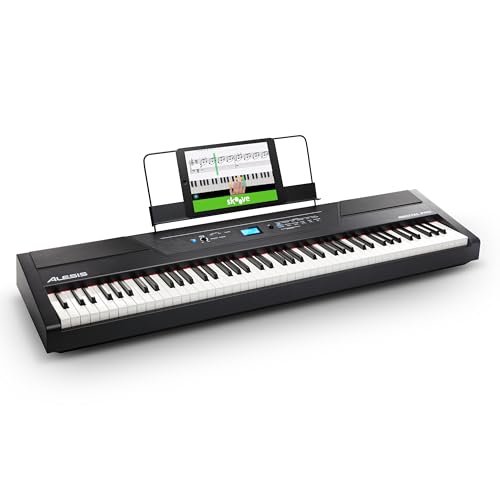 Alesis Recital Pro |
| Check price on Amazon |
Key takeaways
- Find the best electronic piano keyboards for beginners and returning players. Compare key action, sound, speakers and size before you choose your instrument.
An electronic piano keyboard should feel close enough to a real piano that practice transfers, yet fit in a living room and stay quiet enough for late evenings. The real decision is the key action: weighted keys that push back like a piano, the number of voices and the quality of the speakers that carry the sound. The four keyboards in this guide cover the main starting points, from a first instrument for a beginner to a portable piano for a returning player.
This guide is for beginners, returning players and families who want a piano at home without the size, tuning and upkeep of an acoustic instrument. We compared keyboards using the names and specifications listed on their Amazon product pages, focusing on key action, sound engine, polyphony and speakers, so you can choose an instrument that matches your level and the space you have. A digital piano also stays in tune, so the only upkeep is dusting the keys and keeping drinks away from the instrument.
Quick Picks
As an Amazon Associate we earn from qualifying purchases
| Product | Best for | Key spec from title |
|---|---|---|
| Yamaha P-45 | Beginners who want a real piano feel | 88 weighted keys with GHS action |
| Roland FP-30X | Returning players who want rich sound | 88 keys with PHA-4 Standard action |
| Casio Privia PX-S1100 | Small spaces and quiet practice | 88 weighted keys in a slim body |
| Alesis Recital Pro | A first keyboard with built-in lessons | 88 hammer-action keys, 12 voices |
How to Choose
Key Action and Feel
Key action decides whether a keyboard feels like a piano or like a toy, and it matters more than any other feature for a beginner. Weighted hammer-action keys resist your fingers the way acoustic piano keys do, building the finger strength that real playing needs, while unweighted keys feel light and make it harder to control loud and soft playing. Try to buy a keyboard with graded action, where low notes feel heavier than high ones, and remember that a good action keeps practice enjoyable long after the novelty wears off. Heavier keys in the bass and lighter keys in the treble mirror an acoustic piano, which helps dynamics feel natural.
Sound Quality and Voices
The sound engine turns your key presses into music, and a sampled grand piano voice should sound warm and full rather than thin and electronic. A small number of excellent voices beats a long list of mediocre ones, so listen for a piano tone you enjoy before worrying about strings, organs or electric pianos. Built-in speakers matter too, since a keyboard with weak speakers hides the sound quality you paid for. Headphone outputs let you practice late without disturbing anyone, and two outputs allow a teacher to listen along. A keyboard that lets you layer two voices, such as piano and strings, gives a beginner more ways to enjoy practice.
Polyphony and Note Handling
Polyphony is the number of notes a keyboard can sound at once, and it decides whether sustained chords fade out when you press the pedal. A beginner playing simple pieces rarely needs more than sixty-four notes, but anyone who holds the sustain pedal through rich chords should look for 128 notes or more. Higher polyphony also keeps layered voices and accompaniments from dropping notes. Check the figure on the product page and treat it as a floor, not a detail to ignore. A sustain pedal holds notes longer, so polyphony matters most when the pedal is down and chords overlap. A keyboard with 128 notes covers most home playing comfortably.
Size, Speakers and Extras
An eighty-eight-key piano is roughly four feet wide, so measure the wall or desk where it will live before you order. Slim models like the Privia fit tight rooms, while heavier keyboards need a proper stand rather than a folding table. Built-in speakers save you from buying monitors, and extras like lesson modes, recording and Bluetooth audio add real value for self-taught players. A sustain pedal, a music rest and a USB connection should be on your checklist before you decide. A folding stand suits a room that doubles as a living space, while a fixed wooden stand looks better in a dedicated music corner.
The 4 Best Options
Yamaha P-45
- Specs: 88 weighted keys; Graded Hammer Standard action; 10 voices; 64-note polyphony; built-in speakers; USB connection; music rest; sustain footswitch included
- Best for: Beginners who want a genuine piano feel at a sensible starting point.
- Watch out for: Its speakers are modest, so headphones or external speakers help for louder playing.
The Yamaha P-45 is the most popular first piano in this guide for good reason: its eighty-eight graded hammer-action keys feel like a real piano, and its sampled grand piano voice sounds warm through the built-in speakers. Ten voices cover the basics, and sixty-four notes of polyphony handle beginner and intermediate pieces without dropping sustained chords. A sustain footswitch, a music rest and a USB connection come in the box, so a new player can start practicing the day it arrives. The compact body fits a small room, and the simple controls keep a beginner focused on playing rather than menus.
Roland FP-30X
- Specs: 88 keys; PHA-4 Standard keyboard action; SuperNATURAL piano sound; 22W speakers; Bluetooth audio and MIDI
- Best for: Returning players who want a richer sound and a more refined key feel.
- Watch out for: A second listing for the same black model circulates, so confirm the exact model before ordering.
The Roland FP-30X is the choice for a returning player who already knows what good piano tone sounds like. Its PHA-4 Standard action gives each key a natural weight and a subtle click at the bottom of the press, while the SuperNATURAL sound engine delivers a piano voice with real depth. The built-in speakers are strong enough for a living room, and Bluetooth audio and MIDI connect the keyboard to apps and lessons without a cable. The keys respond to soft and loud playing with a natural feel, and the onboard speakers fill a living room without extra gear. A headphone jack keeps late practice quiet.
Casio Privia PX-S1100
- Specs: 88 touch-responsive weighted keys; Smart Scaled Hammer Action; AiR Sound Source; 18 tones; 192-note polyphony; Bluetooth; Casio Music Space app; 2 headphone outputs
- Best for: Players with limited space who still want a full eighty-eight weighted keys.
- Watch out for: This listing is the gloss red finish, so check the color options if you want black.
The Casio Privia PX-S1100 is the slim option in this guide, packing eighty-eight touch-responsive weighted keys into a body that fits a small room or a narrow desk. Its Smart Scaled Hammer Action keeps the piano feel intact, and the AiR sound source with 192 notes of polyphony handles sustained chords without fading. Eighteen tones cover piano, electric piano and more, and Bluetooth connects the keyboard to the Casio Music Space app for lessons and practice tools. The slim depth leaves room on a narrow desk, and the touch panel keeps the top surface clean and simple. The app adds lessons and practice tools for self-taught players.
Alesis Recital Pro
- Specs: 88 hammer-action weighted keys; 12 voices; 2x20W speakers; 128-note polyphony; lesson mode; record mode; FX; LCD display; USB-MIDI
- Best for: First-time players who want built-in lessons and a full-size keyboard.
- Watch out for: Its sound is solid rather than outstanding, so listen to samples before you commit.
The Alesis Recital Pro is built for a first-time player who wants guidance built into the instrument. Its eighty-eight hammer-action weighted keys feel substantial under the fingers, and twelve voices cover piano, electric piano, organ and more for exploring different sounds. The built-in speakers are strong enough for a room, and a lesson mode splits the keyboard so a teacher and student can play the same range together. Recording and effects add ways to experiment once the basics are in place. The lesson mode helps a parent guide a child, and the display shows the selected voice clearly. The speakers carry well across a living room.
Which One Fits Your Situation
A Child Starting Lessons
A child starting lessons needs weighted keys that build correct finger technique from the first week, plus a sound that makes practice rewarding. The Yamaha P-45 fits this role well, with a genuine piano feel and a simple layout that never distracts from the music. Add a proper adjustable bench and a sturdy stand, and keep the keyboard at a height where the forearms sit level with the keys.
A Returning Adult Player
An adult coming back to the piano after years away will notice key feel and sound quality immediately, so the Roland FP-30X is the natural pick here. Its refined action and deeper piano voice reward a player who already has technique, and Bluetooth audio connects it to practice apps and backing tracks. Choose a room with space for a proper stand, and give yourself a few weeks to rebuild finger strength gradually.
A Small Apartment or Shared Home
A slim keyboard that fits a narrow wall and plays quietly through headphones solves the apartment problem. The Casio Privia PX-S1100 is the slimmest full-size option here, and its two headphone outputs let you practice late without waking anyone. Measure the wall before ordering, use headphones for evening sessions, and store the keyboard on a stand that folds away when guests arrive.
A Family Exploring Music Together
A family that wants to explore music together benefits from a keyboard with many voices, lesson modes and speakers strong enough for a room. The Alesis Recital Pro covers this well, with twelve voices to try, a lesson mode for parent and child, and built-in speakers that carry across a living room. Let everyone try different sounds, keep sessions short and fun, and upgrade later once a favorite style emerges.
Common Mistakes
- Buying a keyboard with unweighted keys and wondering why playing a real piano feels so different.
- Choosing a sixty-one-key model to save space and running out of range within months.
- Ignoring polyphony, then hearing sustained chords fade while the pedal is down.
- Putting a full-size keyboard on a wobbly folding table instead of a proper stand.
- Skipping the sustain pedal, which is essential for anything beyond the first few lessons.
Frequently Asked Questions
How many keys should a beginner piano have?
A beginner should buy a full eighty-eight-key piano whenever space allows it. Sixty-one keys seem enough at first, but most method books soon need notes beyond that range, and upgrading costs more than buying the full size once. A full keyboard also teaches correct hand positions.
Do electronic pianos need tuning?
No, an electronic piano never needs tuning, since its sounds are stored digitally and stay in tune forever, unlike an acoustic piano, which needs a tuner yearly. Keep the keyboard clean, protect it from direct sunlight and spills, and it will sound the same in five years as on the first day.
Can I learn piano on an electronic keyboard?
Yes, a weighted eighty-eight-key model teaches the same technique as an acoustic piano. The key is choosing a keyboard with hammer action so your fingers develop the right strength and control. Add a good teacher or a structured app, practice a little every day, and the skills transfer directly.
What accessories do I need with a piano keyboard?
You need a stand, an adjustable bench, a sustain pedal and a pair of headphones at minimum. A USB cable connects the keyboard to a computer for lessons. Buy the stand and bench first, since a wobbly setup makes practice frustrating, and add a cover to keep dust off the keys.
More from Amazon
Programs that pair well with the guide above. Offers and eligibility are set by Amazon and may change.
Free shipping on eligible items, Prime Video and more. Eligible new members can start with a free trial.
Start a Prime free trialAd-free music streaming. Eligible new subscribers can start with a free trial.
Try Music Unlimited freeA Prime membership for ages 18-24 with a trial period. Eligibility is set by Amazon.
See Prime for Young AdultsAudiobooks and podcasts to listen to on the go. Eligible new members can start with a free trial.
Try Audible freeAs an Amazon Associate we earn from qualifying purchases.









