
Our Short List of 3

- Specs:
- 42 watts RMS total power
- 4-inch woofer and 13mm silk dome tweeter
- 75Hz to 18kHz frequency response
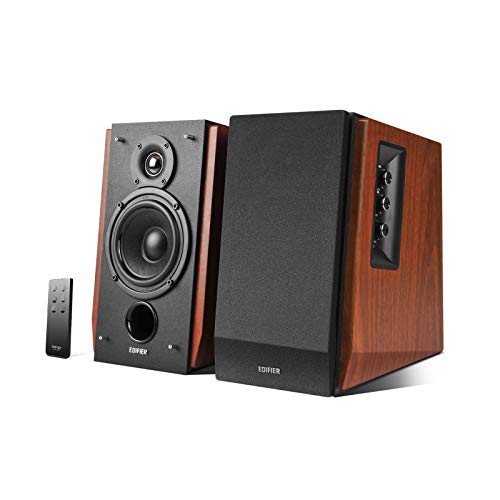
- Specs:
- 66 watts RMS total power
- 4-inch bass driver and 19mm silk dome tweeter
- 60Hz to 20kHz frequency response

- Specs:
- 140 watts peak power
- Bluetooth connectivity
- Built-in phono preamp
All 3 Picks at a Glance
| Product | Specs | Action |
|---|---|---|
| Edifier R1280T |
| Check price on Amazon |
| Edifier R1700BT |
| Check price on Amazon |
| Kanto YU4 |
| Check price on Amazon |
Key takeaways
- Searching for the best powered speakers? Compare three active bookshelf speakers with built-in amplifiers, Bluetooth, and big sound for desks and shelves.
Powered speakers are the simplest way to get real sound out of a desk setup, because the amplifier is already inside the cabinet. There is no receiver to buy, no separate amp to find space for, and no tangle of speaker wire running to a box under the desk. You plug the speakers into power, connect a single cable to your computer or phone, and the music starts. That simplicity is the whole appeal, and it is why powered speakers have become the default choice for desks, bedrooms, and small living rooms.
This guide is for anyone setting up a desk with proper sound, for vinyl listeners who want a direct connection to a turntable, and for people replacing a soundbar with something that images better. The three speakers below were chosen from the names and specifications shown on their Amazon product pages, with power output, driver size, and inputs checked for each model.
Quick Picks
As an Amazon Associate we earn from qualifying purchases
| Product | Best for | Key spec from title |
|---|---|---|
| Edifier R1280T | Classic value | 42 watts RMS, dual AUX inputs |
| Edifier R1700BT | Bluetooth streaming | 66 watts RMS, Bluetooth, remote |
| Kanto YU4 | Turntable-ready | 140 watts peak, phono preamp |
How to Choose
Built-In Power and Output
The power rating tells you how loud a pair can play before distorting, and the number to trust is RMS watts, not peak watts. A 42 watt RMS pair fills a bedroom or a desk area comfortably, while a 66 watt RMS pair handles a larger living room with headroom to spare. Peak power sounds bigger on a box, but it describes a brief burst rather than sustained listening. Match the output to the room: a small desk needs less power than an open living room, and a pair that is too powerful for the space will spend its life at the bottom of the volume dial. Headroom matters more than maximum volume.
Drivers, Tweeters, and Sound Character
The drivers decide what the speaker actually sounds like. A four-inch woofer gives a bookshelf speaker enough body for music and movies without a subwoofer, while a silk dome tweeter keeps the high frequencies smooth instead of harsh. Larger woofers dig deeper into the bass, but they also need a bigger cabinet, so a four-inch driver is the sweet spot for a desk. Listen for balance: a speaker that pushes the bass too hard will muddy voices, while one that is too bright will fatigue your ears during a long album. The cabinet material plays a part too, since wood enclosures reduce resonance better than thin plastic and add a warmer tone.
Inputs and Wireless Options
Inputs decide what you can connect, and a good powered speaker covers more than one source. Dual AUX inputs let a computer and a turntable share the same pair without swapping cables, while Bluetooth lets a phone stream music from across the room. A phono input with a built-in preamp is the feature vinyl listeners should look for, since it removes the need for a separate preamp box. A subwoofer output is worth having if you plan to add bass later, even if you do not buy a subwoofer today. A front headphone jack is a bonus for late-night listening. Check the inputs against every device you own before you choose.
Size, Placement, and Controls
Bookshelf speakers need space to breathe, and their size decides where they can live. A pair that is ten inches tall fits on most desks, while a larger pair belongs on stands or a shelf. Give the rear of each speaker a few inches of clearance from the wall, since a rear port needs room to move air. Side-panel knobs for volume, bass, and treble are easier to reach than rear controls, and a remote means you never have to stand up to adjust the sound. Think about the listening position too: the speakers should form a triangle with your head, with the tweeters near ear level for the widest soundstage.
The 3 Best Options
Edifier R1280T
- Specs:
- 42 watts RMS total power
- 4-inch woofer and 13mm silk dome tweeter
- 75Hz to 18kHz frequency response
The Edifier R1280T is the classic entry point into powered bookshelf speakers, and it has earned that place by doing the basics well for years. Its 42 watts of RMS power drive a four-inch woofer and a 13mm silk dome tweeter in each cabinet, giving a balanced sound that suits music, movies, and games without a subwoofer. Dual AUX inputs let you connect a computer and a second device at the same time, and the side-panel knobs adjust bass and treble without reaching behind the speaker. A remote is included, and the wooden enclosure keeps the sound clean at normal listening levels.
Edifier R1700BT
- Specs:
- 66 watts RMS total power
- 4-inch bass driver and 19mm silk dome tweeter
- 60Hz to 20kHz frequency response
The Edifier R1700BT adds Bluetooth and more power to the same formula, with 66 watts RMS driving a four-inch bass driver and a 19mm silk dome tweeter in each cabinet. Bluetooth pairing lets a phone or tablet stream music without a cable, while the dual RCA inputs keep wired sources connected at the same time. Built-in digital signal processing and dynamic range control keep distortion in check when the volume climbs, and the remote switches inputs and adjusts volume from the couch. The walnut vinyl finish looks warmer than the plain wood of the R1280T, and the 60Hz to 20kHz response reaches deeper into the bass.
Kanto YU4
The Kanto YU4 is the most versatile speaker in this group, with a built-in phono preamp that lets a turntable connect directly, without a separate preamp box. Its 140 watts of peak power drive a compact pair that suits a desk, a shelf, or a small living room, and Bluetooth covers streaming from a phone. A remote is included, and the auto standby feature powers the speakers down when the music stops, saving energy without any effort. The matte grey finish looks modern next to a computer monitor, and the pair works equally well for music, movies, and games. The pair also handles movies well, with clear dialogue.
Which One Fits Your Situation
You Are Setting Up Your First Desk System
The Edifier R1280T is the right first step, because it covers the essentials simply. Its 42 watts fill a desk area, the dual AUX inputs connect a computer and a second device, and the remote keeps volume control within reach. You give up Bluetooth, but a cable from a phone costs little and sounds just as good. This is the pair to buy when you want sound without learning a new system.
You Stream Music from a Phone
Bluetooth is the deciding feature for phone listeners, and the Edifier R1700BT is the pick. It pairs with a phone in seconds, keeps wired inputs free for a computer, and adds more power than the R1280T for larger rooms. The remote switches between sources without standing up, and the digital signal processing keeps the sound clean at higher volumes. This is the pair for a room where the phone is the main music source.
You Play Vinyl Records
A built-in phono preamp is the feature that matters for vinyl, and only the Kanto YU4 has one in this group. It lets a turntable plug straight into the speakers, with no preamp box and no extra cables to manage. Bluetooth covers streaming when the record ends, and the remote handles volume from the listening chair without standing up. This is the pair for a setup where the turntable is the centerpiece and simplicity matters.
You Want One Pair for Everything
If the speakers need to handle music, movies, games, and calls, the Edifier R1700BT covers the most ground. Its 66 watts of RMS power suit a living room, Bluetooth handles phones, and the dual RCA inputs take a computer and a console. The Kanto YU4 is the alternative when a turntable is part of the mix and vinyl matters to you. Either pair replaces a soundbar with wider imaging and a more natural soundstage.
Common Mistakes
- Comparing peak watts with RMS watts, which makes one pair look far stronger than it really is.
- Buying speakers with a single input, then discovering a second device has nowhere to plug in.
- Pushing bookshelf speakers against the wall, which chokes the rear port and muddies the bass.
- Placing the speakers at different heights, so the stereo image tilts to one side.
- Skipping the subwoofer output check, then finding no way to add bass later without replacing the pair.
Frequently Asked Questions
Do powered speakers need an amplifier?
No, powered speakers have the amplifier built into one of the cabinets, so they connect directly to a computer, phone, or turntable without any extra boxes. You plug the speakers into a wall outlet and run a single audio cable to the source. That is the main difference from passive speakers, which need a separate amplifier or receiver to work at all.
What is the difference between RMS and peak power?
RMS power describes what a speaker can sustain continuously, while peak power describes a brief burst it can handle for a moment. A 42 watt RMS pair and a 140 watt peak pair are not directly comparable, since the peak number is always larger. Use RMS watts when comparing speakers, and treat peak watts as a headline rather than a specification.
Can I connect a turntable to powered speakers?
Yes, if the speakers have a phono input with a built-in preamp, like the Kanto YU4 in this guide, which handles vinyl directly. A turntable without a preamp needs that stage to bring its signal up to line level. If the speakers lack a phono input, you need a separate phono preamp between the turntable and the speakers.
How far apart should powered speakers sit?
Place the speakers so they form a triangle with your listening position, with each speaker roughly as far from you as they are from each other. Keep the tweeters near ear level and give the rear of each cabinet a few inches of clearance from the wall for the best image. That placement gives the widest stereo image and the most even bass.
More from Amazon
Programs that pair well with the guide above. Offers and eligibility are set by Amazon and may change.
Free shipping on eligible items, Prime Video and more. Eligible new members can start with a free trial.
Start a Prime free trialAd-free music streaming. Eligible new subscribers can start with a free trial.
Try Music Unlimited freeA Prime membership for ages 18-24 with a trial period. Eligibility is set by Amazon.
See Prime for Young AdultsAudiobooks and podcasts to listen to on the go. Eligible new members can start with a free trial.
Try Audible freeAs an Amazon Associate we earn from qualifying purchases.









