For most living rooms, a soundbar with a wireless subwoofer such as the Sonos Arc paired with a Sub, the Samsung HW-Q-series, the Sony HT-A-series or the Vizio and TCL budget systems delivers a clear step up from television speakers, and the best match depends on your TV, room size, whether you want Dolby Atmos, and how much bass your neighbors can tolerate. Pick a compact bar and sub for small rooms, and a larger multi-channel system for open-plan spaces.
Our top picks
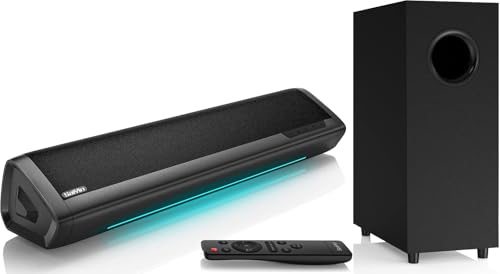
 ULTIMEA 5.1CH Surround Sound Bar System with
- Simplified 5.1ch Dolby Atmos Setup: Enjoy immersive 4D…
- Voice Clarity Enhancement: VoiceMX technology uses advanced DSP…
- 300W Output with 6-Driver System: Featuring five precision-tuned…


As an Amazon Associate we earn from qualifying purchases at no extra cost to you.
Why the subwoofer matters
A soundbar improves dialogue clarity and stereo width, but physical size limits low-frequency output. A separate subwoofer adds the rumble of explosions, music bass and movie effects. Reviewers generally find that a wireless sub makes the biggest audible difference for movies, and it lets you place the bass unit where it sounds best rather than where the bar sits.
At a glance: soundbar and subwoofer options
| System | Best for | Key stated features | Limits |
|---|---|---|---|
| Samsung HW-Q-series (Q800 and Q900 class) | Samsung TV owners wanting Atmos | The maker lists Dolby Atmos and DTS:X support, a wireless sub and TV integration features | Best features need a Samsung TV |
| Sony HT-A-series (for example HT-A5000 or HT-A7000 class) | Cinephiles wanting Atmos with room correction | The maker lists Dolby Atmos, built-in upfiring speakers and a wireless sub on certain bundles | Premium tier; subwoofer sometimes sold separately |
| Sonos Arc with Sub | Buyers who want a refined bar and multi-room audio | The maker lists Dolby Atmos and Wi-Fi streaming; the Sub is a separate purchase | Premium tier; fewer physical inputs |
| Bose Smart Ultra Soundbar with Bass Module | Listeners wanting clean voices and compact design | The maker lists Dolby Atmos and a separate Bass Module | Premium; setup centered on the Bose app |
| Vizio V-Series and Elevate | Mid-range budgets | Bars with wireless subs and DTS or Dolby support on listed models | Less refined sound at the budget end |
| TCL S-Series and Q-Series | Budget buyers | Compact bars with wireless subs and Dolby Atmos options on some models | Lower power and build quality tier |
Model lineups update regularly, so confirm the exact model name and generation on the maker’s current page before choosing. Older versions are generally a previous generation.
Key features to compare
Channel count and Dolby Atmos
Soundbars are labeled with channel configurations such as 2.1, 3.1.2 or 5.1.2. The first number counts front channels, the second counts subwoofers, and a third number counts height channels. Dolby Atmos adds height effects through upfiring drivers, and reviewers note that the effect depends on a reasonably flat, not-too-high ceiling. Without a Dolby Atmos-compatible source, you will not hear those effects.
HDMI eARC and inputs
For the best connection to a modern television, look for an HDMI eARC port. This carries high-quality audio such as Dolby Atmos from the TV’s own apps. Optical connections work for basic surround but cannot carry some advanced formats. Check the number of HDMI inputs if you want to connect consoles or players directly to the bar.
Subwoofer type and size
Subwoofer driver size and whether it is wireless are important. Larger drivers generally reach lower, but they need more space. Wireless subs connect automatically to the bar and only need a power outlet. Makers publish driver sizes and sometimes power ratings, though power numbers are not comparable across brands.
Voice and dialogue modes
Dialogue enhancement or voice modes can help with quiet speech. Night modes reduce the loudest effects, which matters if you live in an apartment.
Wi-Fi and smart features
Wi-Fi models stream music directly and join multi-room systems, and some include Alexa or Google Assistant. Bluetooth is common even on cheaper bars.
Size and fit
- Measure the width of your TV and the space on the media console. A bar should generally be roughly as wide as the TV, though makers list dimensions for each model.
- Check the bar’s height so it does not block the TV’s remote sensor or the bottom of the screen on a low stand.
- Wall mounting uses the manufacturer’s bracket, and studs or suitable anchors should be used. Consult a professional if you are unsure.
- Place the subwoofer on the floor, near the front, with some space around it. Placing it in a tight corner increases boominess.
Budget, mid-range and premium tiers
- Budget: TCL S-Series and Vizio V-Series. Good for small to medium rooms and for clear dialogue.
- Mid-range: Samsung HW-Q-series and some Sony models, which add Atmos and better sound processing.
- Premium: Sonos Arc with Sub, Bose Smart Ultra with Bass Module and the higher Sony HT-A systems.
Pick X if…
| Pick this | If |
|---|---|
| Samsung HW-Q-series | You own a Samsung TV and want Atmos with a wireless sub |
| Sony HT-A-series | You prioritize an immersive movie setup and room calibration |
| Sonos Arc plus Sub | You want a refined bar that grows into a multi-room system |
| Bose Smart Ultra plus Bass Module | You want clear dialogue and a compact modern design |
| Vizio or TCL | You want a big upgrade over TV speakers without a big outlay |
Alternatives
- Soundbar plus separate rear speakers: bars from Sonos, Samsung and Sony can add rear speakers for real surround.
- AV receiver with speakers: a bigger project that gives the best control and expandability but needs more space and wiring.
- Powered stereo speakers: a good choice for music-focused rooms where movie surround is a lesser priority.
Setup and tuning tips
- Connect the soundbar to the HDMI eARC port on the TV and turn on HDMI control in the TV’s settings so the TV remote handles volume.
- Pair the subwoofer according to the manual, usually by plugging it in and letting it link automatically with the bar.
- Start with the subwoofer level at the middle setting, then lower it if voices sound thick or neighbors complain.
- Run any built-in room calibration, such as the Sonos Trueplay or Sony and Samsung calibration modes, if the system offers one.
- Set the TV’s audio output to the format the bar handles best. If the bar does not support a format such as Dolby Atmos, choose PCM or standard Dolby Digital.
Things reviewers often flag
- Subwoofers that connect wirelessly can lose pairing after a power cut; the manual explains how to re-pair.
- Some bars compress dynamic range heavily in their night modes, so keep them for late viewing only.
- Bars with upfiring speakers can sound less convincing in rooms with sloped or very high ceilings.
- Budget systems may favor loud bass over accuracy; adjust the sub level to taste.
- Not all bars pass through every HDMI feature, such as certain gaming refresh rates, so read the maker’s specification if you plan to connect a console to the bar.
Matching a system to your room
In a small bedroom or apartment living room, a compact 2.1 or 3.1 bar with a modest wireless sub is usually enough, and a lower bass setting keeps the sound from carrying through walls. In a medium living room, a 5.1 or Atmos-capable bar with a larger sub fills the space better. In an open-plan area, look for higher output and consider adding rear speakers if the bar supports them. Reviewers consistently advise buying for the room you have, not the room you wish you had.
Finally, think about future changes. If you might upgrade your TV or add a game console, choose a bar with several HDMI inputs and eARC so the audio chain stays simple. If you may later want true surround, pick a brand that sells matching rear speakers. Buying into an expandable system costs more at the start but avoids replacing the whole setup later, and manufacturers list which accessories pair with each bar on their product pages.
Frequently Asked Questions
Do I need a subwoofer with my soundbar?
Not strictly, but bass is limited without one, especially for movies. Many bars include a wireless sub in the box, and others, like Sonos and Bose, sell it separately.
Is Dolby Atmos worth having in a soundbar?
It adds height effects when you play Atmos content and when the room is suitable. Reviewers note that the effect varies by ceiling height and shape, so it is a bonus, not a necessity.
What is HDMI eARC and do I need it?
It is a TV connection that carries high-quality audio, including Dolby Atmos, to the soundbar. It is the best way to connect most modern TVs, and your TV and soundbar both need to support it.
Where should I place the subwoofer?
Try the front of the room, on the floor, with space around it. Move it a few feet while playing bass-heavy content to find the spot that sounds tightest. Avoid sitting it directly in a corner if you want less boom.
Will a soundbar work with any TV?
Almost any TV can connect through HDMI eARC, optical or Bluetooth. Some brands add extra features when the bar and TV are from the same maker, such as using the TV remote or sharing speakers.
How loud will the bass be for neighbors?
Bass travels through floors and walls more than treble. Use night mode or reduce the subwoofer level in the settings if you live in an apartment or listen late.
More from Amazon
Programs that pair well with the guide above. Offers and eligibility are set by Amazon and may change.
Free shipping on eligible items, Prime Video and more. Eligible new members can start with a free trial.
Start a Prime free trialAd-free music streaming. Eligible new subscribers can start with a free trial.
Try Music Unlimited freeA Prime membership for ages 18-24 with a trial period. Eligibility is set by Amazon.
See Prime for Young AdultsAudiobooks and podcasts to listen to on the go. Eligible new members can start with a free trial.
Try Audible freeAs an Amazon Associate we earn from qualifying purchases.