Our Short List of 3

- Best for: A small studio with lots of windows that needs the brightest short-throw image.
- Display resolution: 1920 x 1080
- Brightness: 3500 lumens
- Light source: DuraCore laser
- Contrast ratio: 300000:1

- Best for: A sunny studio that needs a bright, sharp 4K image for films and work.
- 4K PRO-UHD resolution
- 3-chip 3LCD design
- Brightness: 2,800 lumens
- HDR10 and HLG support

- Best for: A small studio where the projector needs to move with the light through the day.
- Native resolution: 1920 x 1080 (1080p)
- Brightness: 1,000 ANSI lumens
- Battery: 185Wh built-in, rated up to 5 hours of video in Eco mode
- Operating system: Android TV 11.0 with Chromecast built in
All 3 Picks at a Glance
| Product | Specs | Action |
|---|---|---|
| Optoma GT2000HDR |
| Check price on Amazon |
| Epson Home Cinema 2350 |
| Check price on Amazon |
| XGIMI Halo+ |
| Check price on Amazon |
Key takeaways
- best projectors for a small studiowith lots of windows compared: three bright short-throw and portable models for small sunny rooms and studios in daylight.
A small studio with lots of windows is the hardest room for a projector, because the screen has to compete with daylight from every side and there is nowhere to put the projector far back. The buyer here is usually choosing between a bright short-throw projector that sits close to the wall, a bright 4K projector for a living room studio and a portable projector that moves with the light. The three projectors below cover those choices, and each one was chosen from the names and specifications listed on its Amazon product page.
This guide is for small studios, sunny flats and rooms where the windows outnumber the walls. The picks suit a studio flat with a wall of glass, a small room that doubles as an office and a home, and anyone who wants a projector that works in daylight. Read the sections below to match the projector to your windows and your wall.
Quick Picks
As an Amazon Associate we earn from qualifying purchases
| Product | Best for | Key spec from title |
|---|---|---|
| Optoma GT2000HDR | A bright short-throw projector for a small room | 3,500 lumens, DuraCore laser |
| Epson Home Cinema 2350 | A bright 4K projector for a sunny studio | 4K PRO-UHD, 2,800 lumens |
| XGIMI Halo+ | A portable projector for a studio that moves | 1,000 ANSI lumens, battery, Android TV |
How to Choose
Start with brightness and the windows you have
Brightness is the first thing to check, because a projector that is too dim for your windows will wash out the moment the sun comes round. The Optoma GT2000HDR puts out 3,500 lumens, so it suits a studio with windows on two sides, while the Epson Home Cinema 2350 puts out 2,800 lumens, so it suits a room with windows on one side and some blinds. The XGIMI Halo+ puts out 1,000 ANSI lumens, so it suits evening use and a room where the light can be controlled. Count the windows in your studio, and think about the brightest time of day you watch.
Check throw distance and the wall you have
A small studio has no room for a long throw, so the projector has to sit close to the wall. The Optoma GT2000HDR is a short-throw projector, so it sits close to the screen and fills a large image from a short distance, which suits a studio where the sofa is near the wall. The Epson 2350 needs more distance, so it suits a studio with a longer wall and space behind the seating. The XGIMI Halo+ is portable, so it can sit on a table wherever the light is best. Measure your studio, and think about where the projector will sit and where the audience will sit.
Look at the light source and the sound
The light source decides how long the projector lasts and how much it costs to run. The Optoma GT2000HDR uses a DuraCore laser with a 30,000 hour life, so it suits a studio where the projector runs every day. The Epson 2350 uses a lamp with 3LCD, and it trades some life for colour and image quality. The XGIMI Halo+ has a 40W speaker with Dolby Digital Plus built in, so it suits a small studio where you do not want a separate speaker. Think about whether you want the projector to be the whole cinema in one box, or whether you already have sound.
Weigh portability against brightness
A portable projector moves with the light, while a bright projector beats the light where it is. The XGIMI Halo+ has a built-in battery that runs for up to 5 hours of video in Eco mode, so it can move from the studio to the bedroom or the garden as the light changes. The Optoma and the Epson are brighter, but they stay where they are put. Think about whether your studio has one good wall or several, and whether you watch in one place or move around. A portable projector suits a studio that changes through the day, and a bright fixed projector suits a studio with one good wall.
The 3 Best Options
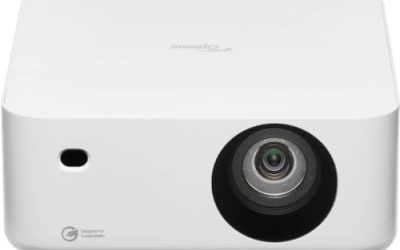
Optoma GT2000HDR
- Best for: A small studio with lots of windows that needs the brightest short-throw image.
- Display resolution: 1920 x 1080
- Brightness: 3500 lumens
- Light source: DuraCore laser
- Contrast ratio: 300000:1
A small studio with lots of windows that needs the brightest short-throw image.
It is a 1080p model, so make sure the resolution suits the text you will show.
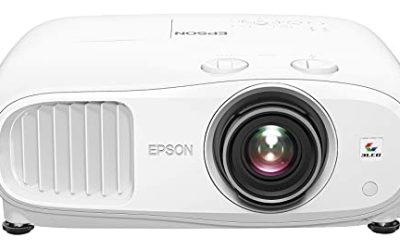
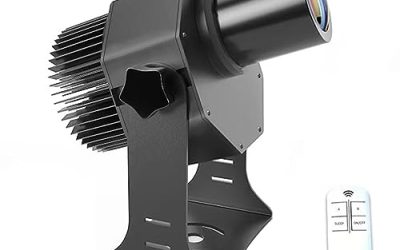
The Optoma GT2000HDR is the bright short-throw projector in this guide, and it is the one to choose when the studio is small and the windows are many. It brings 1080p resolution with 3,500 lumens, a DuraCore laser, a 300,000:1 contrast ratio, a 30,000 hour light source life, 4K HDR input, an 8ms gaming mode at 1080p120Hz and a maximum image size of 300 inches. It suits a studio flat with a wall of glass, a small room where the projector cannot go far back, and anyone who wants the brightest image in the group. It is the workhorse of the three, and it is built for daylight.
Watch out for: It is a 1080p model, so make sure the resolution suits the text you will show.
Epson Home Cinema 2350
- Best for: A sunny studio that needs a bright, sharp 4K image for films and work.
- 4K PRO-UHD resolution
- 3-chip 3LCD design
- Brightness: 2,800 lumens
- HDR10 and HLG support
A sunny studio that needs a bright, sharp 4K image for films and work.
It needs more throw distance than the Optoma, so measure your studio before buying.
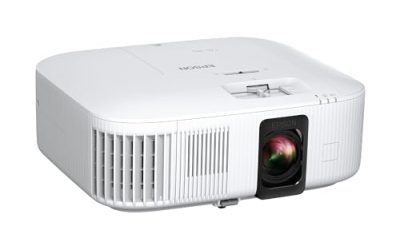
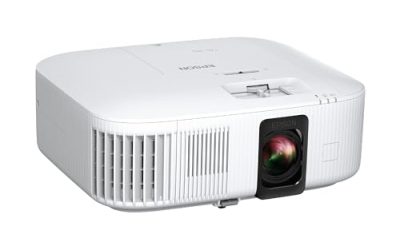
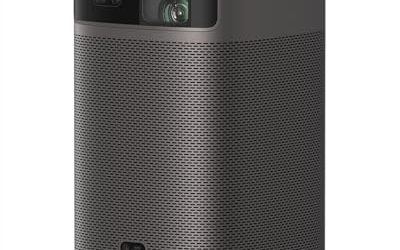
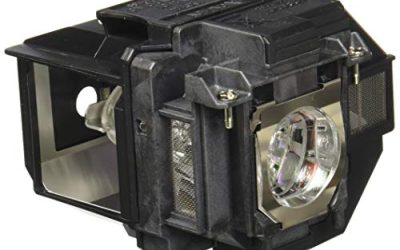
The Epson Home Cinema 2350 is the bright 4K projector in this guide, and it is the one to choose when the studio needs a sharp image as well as a bright one. It is a 4K PRO-UHD projector with a 3-chip 3LCD design, 2,800 lumens, HDR10 and HLG support, input lag under 20 milliseconds, a 10W speaker, Android TV and Bluetooth. It suits a studio that shows films and work, a sunny flat where the projector has to beat the daylight, and anyone who wants a 4K image in a small room. It is the sharp one of the three, and it shows on the wall.
Watch out for: It needs more throw distance than the Optoma, so measure your studio before buying.
XGIMI Halo+
- Best for: A small studio where the projector needs to move with the light through the day.
- Native resolution: 1920 x 1080 (1080p)
- Brightness: 1,000 ANSI lumens
- Battery: 185Wh built-in, rated up to 5 hours of video in Eco mode
- Operating system: Android TV 11.0 with Chromecast built in
A small studio where the projector needs to move with the light through the day.
It is the dimmest of the three, so it suits evening use and rooms where the light can be controlled.
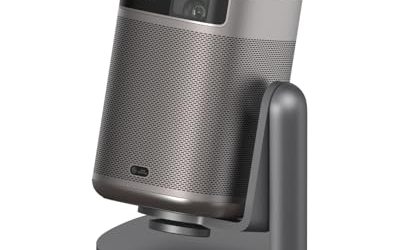
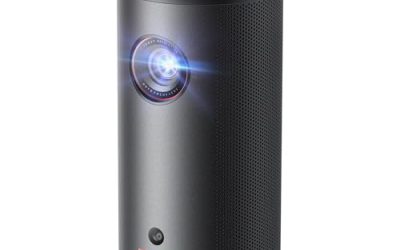
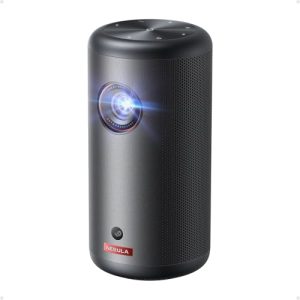
The XGIMI Halo+ is the portable projector in this guide, and it is the one to choose when the studio changes through the day and the projector has to move with it. It is a 1080p projector with 1,000 ANSI lumens, a 185Wh battery rated for up to 5 hours of video in Eco mode, Android TV 11.0, a 40W speaker with Dolby Digital Plus and IPX3 water resistance. It suits a studio flat where the light moves, a small room that doubles as a bedroom, and anyone who wants a projector that goes where the light is best. It is the flexible one of the three.
Watch out for: It is the dimmest of the three, so it suits evening use and rooms where the light can be controlled.
Which One Fits Your Situation
The studio flat with a wall of glass
Choose the Optoma GT2000HDR. Its 3,500 lumens are the brightest in this guide, and its short-throw design sits close to the wall. It suits a studio where the windows outnumber the walls, and it is the projector that keeps the image visible at noon. Put it close to the wall and let it work.
The sunny flat that shows films and work
Pick the Epson Home Cinema 2350. Its 4K PRO-UHD image and 2,800 lumens suit a studio that shows films by night and work by day, and its Android TV means it works on its own. It suits a sunny flat where the projector has to beat the daylight, and it is the one to buy when the image has to be sharp as well as bright.
The studio where the light moves all day
Choose the XGIMI Halo+. Its battery runs for up to 5 hours of video in Eco mode, so it can move from the studio to the bedroom as the light changes. It suits a small room that doubles as an office and a home, and it is the projector that goes where the light is best. Carry it to the dark corner and watch there.
The small room that doubles as an office
Choose the Epson Home Cinema 2350. Its 4K image suits work as well as films, and its 2,800 lumens are enough for a room with some blinds. It suits a studio that is an office by day and a cinema by night, and it is the projector that does both jobs well. One projector, two rooms in one.
Common Mistakes
- Buying a dim projector for a studio with lots of windows, and finding the image washes out at noon.
- Choosing a long-throw projector for a small studio, and finding there is nowhere to put it.
- Ignoring the light source and finding the lamp needs replacing after a year of daily use.
- Buying a portable projector for a bright room and expecting it to beat the daylight like a fixed one.
- Forgetting to measure the studio and the wall before buying, and finding the image does not fit the wall you have, so the projector has to move and the setup starts again.
Frequently Asked Questions
How many lumens do I need for a studio with lots of windows?
A projector with 2,800 lumens or more suits a studio with windows on one side, and 3,500 lumens suits a studio with windows on two sides. The Optoma GT2000HDR puts out 3,500 lumens. Count the windows in your room, and buy the brightest projector that fits your budget and your wall.
Can a portable projector work in a bright room?
It can in the evening, but a 1,000 ANSI lumen portable like the XGIMI Halo+ will not beat strong daylight the way a 3,500 lumen fixed projector does. Use the portable where the light can be controlled, and move it to the darkest corner of the studio.
What is a short-throw projector and why does it help?
A short-throw projector sits close to the screen and fills a large image from a short distance, so it suits a small room where the projector cannot go far back. The Optoma GT2000HDR is a short-throw projector, and it is the pick for a studio where the sofa is near the wall.
Do I need blinds for a projector in a sunny studio?
Blinds help a lot, and they are the cheapest way to make any projector look better. A bright projector like the Optoma GT2000HDR can work without them, but the image will always look better with the light controlled. Put blinds on the window nearest the screen first, and watch the image improve at once.
More from Amazon
Programs that pair well with the guide above. Offers and eligibility are set by Amazon and may change.
Free shipping on eligible items, Prime Video and more. Eligible new members can start with a free trial.
Start a Prime free trialAd-free music streaming. Eligible new subscribers can start with a free trial.
Try Music Unlimited freeA Prime membership for ages 18-24 with a trial period. Eligibility is set by Amazon.
See Prime for Young AdultsAudiobooks and podcasts to listen to on the go. Eligible new members can start with a free trial.
Try Audible freeAs an Amazon Associate we earn from qualifying purchases.