Key takeaways
- Where to find graphics cards in 2026: trusted retailers, stock trackers and restock alerts, plus how to avoid scalpers and ex-mining used cards when buying
As an Amazon Associate we earn from qualifying purchases.
Finding a graphics card in 2026 is a different problem from choosing one. The hard part is rarely deciding between two models; it is finding the card you want in stock, at a fair price, from a seller you can trust. High-demand cards sell out within minutes of a restock, marketplace resellers list them far above the normal price, and used cards from mining rigs circulate with no clear label. The buyer who wins usually knows where to look and gets an alert first.
This guide covers where to buy a graphics card in the United States, how stock trackers and restock alerts work, and how to tell a trustworthy listing from a scalper listing or a worn-out ex-mining card. It is a where-to-buy guide, not a which-card guide: the site already compares which graphics card to choose for streaming and for 1440p gaming, and this article answers the next question, which is where to find the card once you have chosen it.
How to Choose
Buy from the retailer, not from a marketplace reseller
The single most important rule is to buy from the retailer itself or from an authorised manufacturer storefront, not from a third-party marketplace seller listing the same card at a large markup. On Amazon, filter for listings sold by Amazon or by the official manufacturer store; on Newegg, filter for items sold by Newegg. A marketplace seller can be legitimate, but the markup, the return terms and the warranty support are all worse, and a card that costs far more than the normal price is almost always a reseller. Check the seller name on every listing before you buy.
Stock changes by the hour, so timing matters
Graphics card availability changes through the day, and a card that is out of stock in the morning can appear at noon and vanish again by evening. Restocks often follow a pattern, with some retailers refreshing inventory on weekday mornings and others dropping stock without warning, so checking once a day is not enough for a high-demand card. Set up alerts rather than refreshing pages by hand, and decide your target model and your maximum price in advance, so you can act in the minute a notification arrives instead of debating while the stock disappears.
Use price context before you pay
Before you buy, check what the card normally costs, because a listing that looks reasonable in isolation can be far above the usual price for that model. Price trackers show the history of a card across retailers, so you can see whether the current figure is normal, a temporary spike or a reseller markup. Older generations are increasingly sold by third-party sellers only, which pushes their prices up, and a previous-generation card can cost more than a newer, faster card if you do not check. Compare at least two sources before you commit.
Condition and returns decide whether a used card is safe
A new card from a retailer comes with a manufacturer warranty and a normal return window, while a used card may come with neither, and the difference matters more than the saving. Open-box and refurbished terms vary by retailer and by listing, so read the condition description and the return policy on the individual listing rather than assuming a standard policy. A card sold as refurbished by one retailer may carry a short warranty, while the same word from another seller may mean no warranty at all. When in doubt, buy new.
Where to Buy: The Main Retailers
Amazon
Amazon is the largest source of graphics cards in the United States, and the key skill is filtering out the marketplace noise. Use the filters to show only listings sold by Amazon or by the official manufacturer storefront, and ignore third-party sellers charging far above the normal price. Amazon’s own stock of a popular card can appear and vanish quickly, so a stock tracker that watches Amazon listings is worth setting up. Check the seller name, the condition and the return terms on the individual listing before you buy, since the same card model can appear under several sellers at very different prices.
Newegg
Newegg is the long-running specialist retailer for PC parts, and its strength is a deep catalogue of board-partner cards from ASUS, MSI, Gigabyte, Zotac and PNY. Filter for items sold by Newegg to avoid marketplace resellers, and watch for Newegg’s own restocks, which often arrive in waves. Newegg also lists open-box cards, which can be good value, but the condition and return terms are item-specific, so read the listing carefully. A Newegg account with notifications turned on will alert you when a card you follow comes back into stock.
Best Buy
Best Buy matters for two reasons: it is a major authorised seller, and it has historically been a source for NVIDIA Founders Edition cards when they are available. Local pickup is the advantage here, since you can reserve a card online and collect it from a store instead of waiting for shipping, and in-store stock sometimes differs from online stock. Check the local inventory page for your nearest store, and remember that high-demand cards can sell out in store as fast as they do online.
Micro Center
Micro Center is the strongest option if you live near one of its stores, because high-demand cards are often sold in store only, which keeps online resellers from sweeping the stock. Local inventory pages change through the day, so check them in the morning and be ready to visit the store the same day a card appears. Micro Center also sells refurbished cards, but the coverage varies by listing, so read the terms on the individual item. If you do not live near a store, Micro Center cannot help you, and you should focus on the online retailers instead.
B&H Photo Video and manufacturer stores
B&H Photo Video is a reliable authorised retailer with stock notifications and backorder options that depend on the model, and it is worth checking alongside the bigger names. The manufacturer stores are the other direct route: NVIDIA’s official store sells Founders Edition cards and links to authorised sellers, while ASUS, MSI, Gigabyte, Zotac and PNY each sell their own cards direct. Buying from a manufacturer store guarantees an authentic card with a proper warranty, though stock is often limited to the models that maker produces.
Stock Trackers and Restock Alerts
GPU-specific trackers
Dedicated GPU trackers watch retailer pages for specific card models and alert you the moment stock appears, which is the only practical way to catch a high-demand card. One tracker refreshes its figures every half hour, while another compares offers across retailers but only shows Amazon offers that were rechecked within the previous twelve hours, so the freshness of the data matters. Set up alerts for your exact model rather than for graphics cards in general, and keep the alert channel somewhere you will actually see it, such as your phone.
Page monitors and Founders Edition alerts
A page monitor watches a retailer page and notifies you when it changes, which works for any card on any retailer, and the free plans typically check hourly. Founders Edition alerts are a separate category, since NVIDIA’s own cards are among the hardest to find, and dedicated alert services cover the main models across many regions with the explicit note that alerts do not make purchases for you. Whichever tool you use, act quickly when an alert arrives, because other buyers get the same notification at the same time.
Price-watch pages
Price-watch pages from hardware publications track graphics card prices across NVIDIA, AMD and Intel, and they show whether a card is selling near its normal price or far above it. Older generations are increasingly sold by third-party sellers only, which pushes their prices up, so a price-watch page helps you spot when a previous-generation card costs more than a newer and faster one. Check the price history before you buy, and set a maximum price for yourself in advance so a sudden restock does not tempt you into overpaying.
How to Spot a Scalper Listing
The price is far above the normal range
A scalper listing is usually easy to spot from the price alone, since the card is listed far above what the same model costs from a retailer. Check the price history for the model and compare at least two retailers before you buy, and treat a large markup as a warning sign rather than a normal market price. A card that costs far more than its usual price is almost always a reseller, and waiting for a restock is usually the better choice.
The seller is not the retailer or the manufacturer
On a marketplace, the seller name tells you who you are actually buying from, and a third-party seller with a generic name and a short history is a risk. Buy from the retailer itself or from an authorised manufacturer storefront, and be careful with sellers who list many high-demand cards at inflated prices. A legitimate reseller can exist, but the return terms and warranty support are worse, and the saving is rarely worth the risk.
The card may be ex-mining
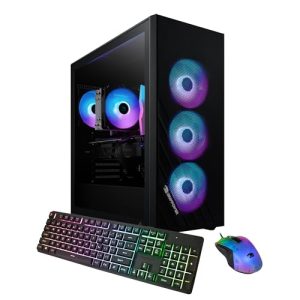
A used card that spent its life in a mining rig may look fine in a listing but carry worn fans and stressed components, and the listing rarely says so. Warning signs include a used card sold without a warranty, a seller with many identical used cards, and a price that seems too low for the model. Ask about the card’s history, check the return terms, and prefer a new card from a retailer when the saving is small. A prebuilt PC can be a fallback when standalone cards are out of stock, since system builders buy cards in bulk.
Which One Fits Your Situation
You want a specific high-demand card
Set up alerts on a GPU-specific tracker for your exact model, and watch the major retailers rather than refreshing pages by hand. Decide your maximum price in advance, keep your payment details ready, and act the minute an alert arrives, because the stock will not last. Check the seller name on every listing before you buy, and skip marketplace resellers.
You want the best value, not a specific model
Watch price-watch pages for the models in your budget and compare them across retailers, since a previous-generation card can cost more than a newer and faster one when only third-party sellers stock it. A prebuilt PC can also be good value when standalone cards are scarce, because system builders buy cards in bulk and pass some of that on.
You live near a Micro Center
Check the local inventory page in the morning and be ready to visit the store the same day a card appears, since high-demand cards are often sold in store only. In-store stock differs from online stock, and a card that is gone online may still be on a shelf. Bring your parts list so you can buy everything you need in one trip.
You want a Founders Edition card
Watch NVIDIA’s official store and a dedicated Founders Edition alert service, since these cards are among the hardest to find and sell out fastest. Best Buy is the other source worth checking, because it has historically stocked Founders Edition cards. Be patient, set alerts, and do not pay a reseller markup for a card that will restock.
Common Mistakes
- Buying from a third-party marketplace seller without checking the seller name, then paying far above the normal price.
- Checking stock once a day and missing a restock that sold out within an hour.
- Buying a used card without reading the condition description and return terms on the individual listing.
- Paying more for a previous-generation card than a newer and faster card costs, because only resellers stock the older model.
- Clicking buy on a scalper listing in a panic instead of waiting for a restock at a normal price.
Frequently Asked Questions
How fast do graphics cards sell out after a restock?
High-demand cards can sell out within minutes of a restock, and sometimes faster, because alert services notify many buyers at the same time. That is why trackers matter more than manual checking: an alert reaches you the moment stock appears, while a manual check may come an hour too late. Less popular models can stay in stock for days.
Are marketplace sellers on Amazon safe for graphics cards?
They can be, but the risk is higher than buying from Amazon itself or from an authorised manufacturer storefront. A marketplace seller may charge far above the normal price, offer worse return terms, or sell a card without a proper warranty. Check the seller name, the condition and the return policy on the listing before you buy, and prefer the retailer when the price is close.
How can I tell if a used card was used for mining?
You often cannot tell from the listing alone, which is the risk. Warning signs include a used card sold without a warranty, a seller listing many identical used cards, and a price that seems too low for the model. Ask the seller about the card’s history, check the return terms, and prefer a new card from a retailer when the saving is small.
Is a prebuilt PC a good way to get a graphics card?
It can be, when standalone cards are out of stock or overpriced. System builders buy cards in bulk, so a prebuilt PC sometimes costs little more than the card alone would, and you get the rest of the computer with it. Compare the total cost against buying the parts separately, and check that the prebuilt uses the exact card model you want.
More from Amazon
Programs that pair well with the guide above. Offers and eligibility are set by Amazon and may change.
Free shipping on eligible items, Prime Video and more. Eligible new members can start with a free trial.
Start a Prime free trialAd-free music streaming. Eligible new subscribers can start with a free trial.
Try Music Unlimited freeA Prime membership for ages 18-24 with a trial period. Eligibility is set by Amazon.
See Prime for Young AdultsAudiobooks and podcasts to listen to on the go. Eligible new members can start with a free trial.
Try Audible freeAs an Amazon Associate we earn from qualifying purchases.