Our Short List of 3
All 5 Picks at a Glance
| Product | Specs | Action |
|---|---|---|
 Insta360 X4 | Check price on Amazon | |
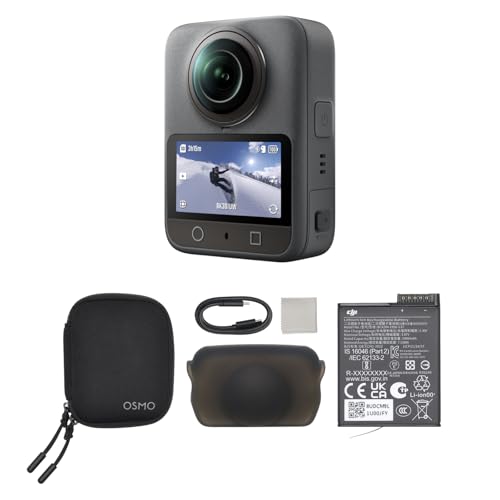 DJI Osmo 360 Standard Combo | Check price on Amazon | |
 Insta360 X3 | Check price on Amazon | |
 GoPro MAX | Check price on Amazon | |
 RICOH THETA X | Check price on Amazon |
Key takeaways
- Compare the best 360 cameras for immersive video, travel and action, with 8K and 5.7K spherical capture, stabilization, waterproofing and battery life.
A 360 camera records everything around it at once, using two wide lenses that face in opposite directions and stitch their images into a single spherical video. That simple idea changes how filming works. Instead of aiming the camera at the action and hoping the framing is right, the camera captures the whole scene, and the framing decisions happen later, during editing. A ride, a hike, a concert, or a family gathering can be reframed into a standard flat video from many different angles, exported as an immersive clip for a headset, or shared as an interactive sphere that viewers can drag around on a phone or computer.
The current generation of 360 cameras has moved well beyond novelty status. Resolutions now reach 8K for spherical video, still photos can exceed 100 megapixels on some models, and stabilization software keeps footage smooth even when the camera is mounted on a helmet, a handlebar, or a selfie stick that disappears from the final shot. At the same time, the category still splits into clear camps: action-focused models built for sports and travel, and stills-focused models built for virtual tours, real estate, and high-resolution spherical photography. This guide compares five dual-lens 360 cameras across those camps, explains the specifications that actually matter, and matches each model to the kind of creator it suits best.
As an Amazon Associate, we earn from qualifying purchases.
How to Choose a 360 Camera
Resolution is the first specification to understand, because spherical video spreads its pixels across the entire sphere. A 5.7K 360 video sounds sharp on paper, yet any single reframed view uses only part of that frame, so the exported flat video looks softer than footage from a dedicated camera of the same headline resolution. That is why 8K models have become the safer choice for creators who plan to reframe heavily: the extra pixels keep cropped views cleaner. Buyers who mainly share full spherical clips, or who view footage in a headset, can still get satisfying results from 5.7K models, especially when the subject stays close to the camera.
Sensor size and low-light behavior matter almost as much. Larger sensors gather more light, which helps at dusk, indoors, and in forests or city streets at night, where smaller-sensor models tend to show noise and smeared detail. Photo resolution follows a similar pattern. High-megapixel spherical stills, up to 72 megapixels on action models and higher on dedicated stills cameras, hold up better when a single frame is cropped, printed, or used for a virtual tour. For real estate and inspection work, stills quality and an easy point-and-shoot workflow usually matter more than video frame rates.
Stabilization and stitching quality decide how usable the footage feels. Modern 360 cameras rely on electronic stabilization that uses the full spherical image, so the horizon can stay level even when the camera rolls or shakes. Good stitching keeps the seam between the two lenses nearly invisible, although close objects crossing the seam can still distort, so subject distance is worth managing while filming. Buyers should also check whether the lenses sit exposed, as they do on most action models, and whether removable lens guards are available, because a single scratch on a protruding fisheye lens affects every shot.
Battery life, storage, and durability round out the decision. Spherical video creates large files, so models differ widely in recording time per charge, from roughly an hour to well over two hours, and in whether they rely on memory cards or include generous built-in storage. Waterproofing without a housing suits travel and watersports, while deeper dives require a dedicated case. Finally, the companion app matters: reframing, subject tracking, and export tools live in the app or desktop software, and a smoother editing workflow can matter more day to day than a small specification advantage on paper.
Insta360 X4
The Insta360 X4 is the action-focused flagship in this roundup, built around 8K spherical recording. Its dual lenses capture 360 video at up to 8K at 30 frames per second, with a 5.7K mode at 60 frames per second for smoother motion, and it can also work as a conventional wide-angle action camera in a single-lens mode that records 4K video. Still photos reach 72 megapixels, which gives reframed images and cropped stills more detail to work with than earlier 5.7K-generation cameras could offer.
For action use, the practical details stand out. The battery is rated for up to 135 minutes of recording in its endurance-friendly modes, the body is waterproof to 33 feet without a housing, and removable lens guards protect the protruding lenses and can be replaced if they get scratched. FlowState stabilization and horizon lock keep footage level during turns and impacts, and the invisible selfie stick effect removes a compatible stick from the stitched image automatically. The Insta360 app adds AI-assisted reframing and editing tools that suit creators who edit on a phone and publish quickly.
Who It Suits
The X4 suits action and travel creators who reframe footage often and want the sharpest spherical video in a rugged, waterproof body. It also fits vloggers who value the single-lens mode, because one device can cover both immersive clips and conventional wide-angle shots on the same trip.
DJI Osmo 360 Standard Combo
The DJI Osmo 360 Standard Combo brings a larger sensor approach to the action 360 category. It records native 8K 360 video using 1-inch 360 imaging, a sensor format that aims to improve low-light performance and dynamic range compared with smaller-sensor rivals. Still photos reach 120 megapixels, the highest figure in this guide, and the camera includes 105GB of built-in storage, which reduces dependence on memory cards during long shooting days.
Recording endurance is another headline figure: the camera is rated for 100 minutes of 8K recording per charge. The body is waterproof, the mounting system uses a magnetic quick-release design shared with DJI action accessories, and a single-lens boost mode records 4K video at up to 120 frames per second with a 170-degree field of view for slow-motion flat footage. For creators already using DJI microphones, drones, or gimbals, the shared accessory and audio ecosystem is an added convenience.
Who It Suits
The Osmo 360 suits creators who shoot in mixed or low light, record long sessions, and want high-resolution spherical stills alongside 8K video. It is also a natural fit for anyone already invested in DJI accessories who prefers built-in storage over swapping cards in the field.
Insta360 X3
The Insta360 X3 remains a widely available step-down option for buyers who want the Insta360 workflow without moving to the 8K generation. It records 5.7K 360 video with active HDR, captures 72 megapixel spherical photos, and offers a 4K single-lens mode for conventional wide-angle clips. A dedicated Me Mode records at 60 frames per second while keeping the selfie stick invisible and the subject centered, which simplifies solo filming.
The hardware is built for everyday action use. The body carries an IPX8 rating and is waterproof to 33 feet, a 2.29-inch touchscreen handles framing and settings, and the removable 1800mAh battery keeps the camera compact. FlowState stabilization and horizon lock carry over from the wider Insta360 range, and the same app-based reframing and AI editing tools apply. The listing referenced here bundles the camera with a selfie stick and a 128GB memory card, so the package arrives ready to record.
Who It Suits
The X3 suits first-time 360 buyers, travelers, and casual action creators who prioritize a proven app workflow, waterproofing, and ready-to-shoot bundle contents over the extra reframing sharpness of 8K models. It also fits creators who mostly publish full spherical clips or lightly reframed edits, where 5.7K capture holds up well.
GoPro MAX
The GoPro MAX is the long-running 360 option in the GoPro range, combining spherical capture with a traditional action camera mode in one body. In 360 mode it records spherical video at up to 5.6K at 30 frames per second and captures 16.6 megapixel 360 photos, while its single-lens HERO mode records conventional wide-angle video for creators who switch between the two styles on the same outing.
GoPro builds the MAX around its familiar interface and mounting system. A touchscreen handles mode changes and previews, the body is waterproof to 16 feet, and Max HyperSmooth stabilization with horizon leveling keeps spherical and flat footage steady. The camera also supports 1080p live streaming, which separates it from most rivals in this guide, and it works with the standard range of GoPro mounts that many action creators already own. Six microphones capture spherical audio that follows the reframed view during playback and editing in the GoPro app.
Who It Suits
The GoPro MAX suits existing GoPro owners who want to add spherical capture without learning a new app or replacing their mounts. It also fits creators who want live streaming from a 360 camera, and anyone who splits time evenly between immersive footage and standard action video.
RICOH THETA X
The RICOH THETA X takes a different path from the action models in this guide. It is a slim, standalone 360 camera designed first for high-resolution spherical stills and straightforward point-and-shoot operation. It captures photos at approximately 60 megapixels, records 5.7K 360 video at 30 frames per second, and runs the whole workflow from a large 2.25-inch OLED touchscreen on the body, so framing, capture, and review can happen without opening a phone app.
Practical features target tour, property, and documentation work. Built-in GPS tags images with location data, the battery is interchangeable for long shooting days, and storage expands with a memory card in addition to internal memory. The tall, pocketable body sets up quickly on a small tripod or monopod, and the Theta ecosystem includes desktop and mobile tools for organizing and sharing spherical images with clients or listing platforms. Video takes a supporting role here; the appeal is fast, repeatable, high-resolution stills capture with minimal setup.
Who It Suits
The THETA X suits real estate photographers, virtual tour creators, surveyors, and businesses that need fast spherical stills with location data. It also fits travelers who want a simple point-and-shoot 360 camera that works entirely on its own screen, without relying on a phone for every step.
FAQ
Is 8K worth it on a 360 camera, or is 5.7K enough?
It depends on how the footage will be used. Because spherical video spreads its resolution across the full sphere, a reframed flat export from an 8K camera such as the Insta360 X4 or DJI Osmo 360 holds noticeably more detail than the same export from a 5.7K model. Viewers who watch full spherical clips on a phone or in a headset put less pressure on each part of the frame, so 5.7K models like the Insta360 X3 and GoPro MAX can still look good, especially with close subjects and bright light.
Can a 360 camera replace a regular action camera?
For many creators, yes. Most models in this guide include a single-lens mode that records conventional wide-angle video, so one device can cover both jobs. The trade-off is that a dedicated action camera may offer higher flat-video frame rates, a wider accessory range for extreme mounts, or better battery life in flat modes. Creators who film mostly standard footage with occasional immersive clips should compare the single-lens specifications carefully before switching entirely.
How does the invisible selfie stick effect work?
The two lenses of a 360 camera each capture slightly more than a hemisphere, and the stitching software blends the overlap into one sphere. A selfie stick mounted in line with the camera body falls into the narrow blind zone between the lenses, so the software removes it from the stitched image automatically. The effect works best with a compatible straight stick held at full extension, and it can break down if the stick bends, the mount angles the camera, or a hand covers one of the lenses.
What should real estate and virtual tour photographers look for?
Stills resolution, workflow speed, and standalone operation matter more than video frame rates for tour work. A model like the RICOH THETA X, with approximately 60 megapixel stills, a large built-in touchscreen, GPS tagging, and an interchangeable battery, is designed around capturing many rooms quickly and consistently. Tour photographers should also confirm that the camera exports in formats their tour platform accepts, and plan on a small tripod or monopod that keeps the camera centered and level in each room.
Final Verdict
The best 360 camera depends on which side of the category matters most. For action and travel video with maximum reframing freedom, the Insta360 X4 leads this guide with 8K capture, long battery life, waterproofing, and replaceable lens guards, while the DJI Osmo 360 Standard Combo answers with a larger 1-inch imaging system, 120 megapixel stills, and generous built-in storage for low-light and long-session work. The Insta360 X3 remains a sensible entry point into the same editing workflow at 5.7K, and the GoPro MAX fits creators who want spherical capture inside the GoPro app, mount system, and live streaming tools they may already use. For stills-led work, the RICOH THETA X stands apart as a standalone camera built for virtual tours and documentation rather than action. Choosing between them comes down to a simple split: pick an 8K action model for reframed video, and pick the THETA X when fast, high-resolution spherical photos are the real job.
Product and ASIN Reference
| Product | ASIN |
|---|---|
| Insta360 X4 | B0CXPWMZQS |
| DJI Osmo 360 Standard Combo | B0DTTZZ6Q3 |
| Insta360 X3 | B0BDP5Q5GF |
| GoPro MAX | B07BPVPV14 |
| RICOH THETA X | B09R6H1THK |
More from Amazon
Programs that pair well with the guide above. Offers and eligibility are set by Amazon and may change.
Free shipping on eligible items, Prime Video and more. Eligible new members can start with a free trial.
Start a Prime free trialAd-free music streaming. Eligible new subscribers can start with a free trial.
Try Music Unlimited freeA Prime membership for ages 18-24 with a trial period. Eligibility is set by Amazon.
See Prime for Young AdultsAudiobooks and podcasts to listen to on the go. Eligible new members can start with a free trial.
Try Audible freeAs an Amazon Associate we earn from qualifying purchases.