Our Short List of 3

- Best for: A main movie room that wants real rear and height speakers included from the start.
- Brand: Samsung
- Model: HW-Q990D/ZA
- Surround sound channel configuration: 11.1.4
- Audio formats in listing: Dolby Atmos and DTS:X

- Best for: Large or open rooms where one subwoofer leaves some seats with thin bass.
- Brand: Nakamichi
- Model name: Shockwafe Ultra 9.2.4 SSE Max
- Channels: 9.2.4
- Audio formats in title: Dolby Atmos and DTS:X

- Best for: A tidy living room that needs DTS:X from one bar with nothing else on the floor.
- Brand: Sony
- Model: HT-A5000
- Channels: 5.1.2
- Output in listing: 450W
All 3 Picks at a Glance
| Product | Specs | Action |
|---|---|---|
| Samsung Q990D |
| Check price on Amazon |
| Nakamichi Shockwafe Ultra 9.2.4 |
| Check price on Amazon |
| Sony HT-A5000 |
| Check price on Amazon |
Key takeaways
- Compare DTS:X soundbars by real channels, rear speakers and eARC path, from the Samsung Q990D to the Nakamichi Shockwafe Ultra and Sony HT-A5000.
The real decision here is not whether a bar mentions DTS:X on the box. It is whether your discs and files can actually reach the bar in that format, and whether the system has real speakers placed where DTS:X expects sound to come from. A single bar can decode the format yet still squeeze height and surround effects through a narrow front stage, while a system with separate rear speakers and up-firing drivers gives those effects physical places to land. That difference, not a wattage headline, decides how a DTS:X soundtrack feels.
This guide is for movie watchers with Blu-ray discs, media players or game consoles that carry DTS soundtracks, and for TV owners whose current bar only handles Dolby formats. Every pick was chosen from its Amazon listing name and stated specifications, where DTS:X appears as a supported format rather than only as DTS Virtual:X processing, so check the exact model code against your own setup before ordering.
Quick Picks
As an Amazon Associate we earn from qualifying purchases
| Product | Best for | Key spec from title |
|---|---|---|
| Samsung Q990D | A complete 11.1.4 system with rears included | 11.1.4ch with wireless Dolby Atmos and rear speakers |
| Nakamichi Shockwafe Ultra 9.2.4 | Large rooms that need dual subwoofers and four rears | 9.2.4 channel with dual 10-inch subwoofers and eARC |
| Sony HT-A5000 | One bar only, with no separate subwoofer to place | 5.1.2ch with DTS:X and 360 Spatial Sound Mapping |
How to Choose
Separate Real DTS:X Decoding From DTS Virtual:X
These two names look alike on a listing and do different jobs. DTS:X is an object-based format carried inside a soundtrack, and a bar that decodes it reads placement information written into the mix itself. DTS Virtual:X is processing applied afterwards, which stretches ordinary stereo or surround material into a wider, taller impression without any DTS:X track being present. A bar can offer both, and many do, but only the first one answers this keyword. Read the format list on the listing carefully, confirm DTS:X appears on its own, and treat a bar that lists only the Virtual form as a different product category altogether.
Follow the Signal Path From Disc to Bar
A DTS:X track only survives if every link in the chain passes it through untouched. Many TVs convert or drop DTS formats on the way out, even when their eARC port handles Dolby formats without trouble, so routing matters as much as the bar itself. The safer layout for disc players and media boxes is source into the bar first, then picture onward to the TV, using a bar with its own HDMI inputs. If you plan to run everything through the TV instead, check the TV manual for DTS passthrough over eARC specifically, because that support varies by brand, model year and sometimes by individual port on the same set.
Count Real Speakers, Not Just Channel Numbers
Channel figures describe the mix a system aims to reproduce, yet the hardware behind those numbers varies widely. An 11.1.4 system with a separate subwoofer and two physical rear speakers places surround and height effects behind and above the seats, which is where a DTS:X mix expects them. A single bar claiming a similar spread relies on side-firing drivers and room reflections, and the result depends heavily on wall distance and ceiling shape. Neither approach is automatically wrong, but they suit different rooms. If your seating sits against a back wall with nowhere for rears to go, a strong single bar is the honest choice rather than a compromised full system.
Match the System to the Room You Actually Have
Size changes which of these systems makes sense. Dual subwoofers smooth out bass across a large or open-plan room, where one small subwoofer can sound strong in one seat and thin in the next. In a compact room, that same dual-subwoofer layout can overwhelm the dialogue you bought the bar to clarify. Rear speakers also need power outlets and a few feet of space behind the listening position to work as intended. Measure the stand width, the distance from seats to the back wall and the corners available for subwoofers first, then pick the largest system that fits those measurements without forcing awkward placement.
The 3 Best Options
Samsung Q990D
- Best for: A main movie room that wants real rear and height speakers included from the start.
- Brand: Samsung
- Model: HW-Q990D/ZA
- Surround sound channel configuration: 11.1.4
- Audio formats in listing: Dolby Atmos and DTS:X
A main movie room that wants real rear and height speakers included from the start.
Confirm your TV or source passes DTS audio as expected, and leave outlet access for both rear speakers.
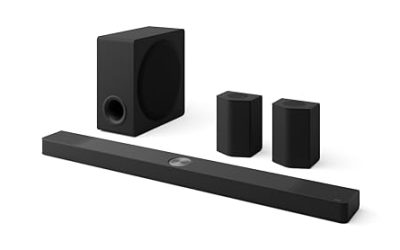
The Q990D suits buyers who want the DTS:X question settled in one box: a full 11.1.4 layout, rear speakers included rather than sold later, and room calibration to tie the pieces together. Its listing leads with wireless Dolby Atmos, Q-Symphony pairing with Samsung TVs and SpaceFit Sound Pro, and the format support behind the headline includes DTS:X alongside the Dolby family. For a household that plays a mix of discs, streaming and console games through one system, this is the most complete arrangement here, provided the room can take a subwoofer and two rear speakers without crowding the seating or blocking walkways behind it.
Nakamichi Shockwafe Ultra 9.2.4
- Best for: Large or open rooms where one subwoofer leaves some seats with thin bass.
- Brand: Nakamichi
- Model name: Shockwafe Ultra 9.2.4 SSE Max
- Channels: 9.2.4
- Audio formats in title: Dolby Atmos and DTS:X
Large or open rooms where one subwoofer leaves some seats with thin bass.
Count the pieces before ordering: two subwoofers and four rear speakers all need floor space and power.
The Shockwafe Ultra is the choice for a big room where bass coverage is the weak point of most soundbar systems. Its listing describes a 9.2.4 channel system with two 10-inch subwoofers and four rear surround effects speakers, a layout built to spread low frequencies and surround effects across a wide seating area instead of concentrating them at the screen. DTS:X appears in the product name itself, next to Dolby Atmos and eARC. This is a large, multi-piece system that asks for floor space and setup time, and it rewards a dedicated movie room far more than a small apartment corner where its extra speakers have nowhere to stand.
Sony HT-A5000
- Best for: A tidy living room that needs DTS:X from one bar with nothing else on the floor.
- Brand: Sony
- Model: HT-A5000
- Channels: 5.1.2
- Output in listing: 450W
A tidy living room that needs DTS:X from one bar with nothing else on the floor.
The bar alone has no physical rear speakers, so surround effects rely on its front array and room reflections.
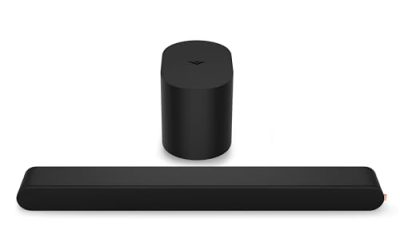
The HT-A5000 answers a different problem: DTS:X support without any separate boxes to place. This single bar carries a 5.1.2 layout with a built-in subwoofer, up-firing speakers and side beam tweeters, and its listing names DTS:X alongside Dolby Atmos and 360 Spatial Sound Mapping. Sony also lists 8K and 4K 120 video passthrough, which helps when a console or player connects through the bar. It will not place sound behind you the way physical rear speakers do, and optional Sony subwoofers and rears exist for later, but as a one-piece bar for a tidy living room with limited shelving and no spare corners, it covers the format honestly.
Which One Fits Your Situation
You Play Discs With DTS Soundtracks Every Week
Choose the Samsung Q990D. Its included rear speakers and 11.1.4 layout give DTS:X mixes the physical speaker positions they were built around, and the complete in-box arrangement avoids piecing a system together from separate purchases. Connect your player through the bar where possible, so the DTS track reaches it without depending on the TV to pass the format through correctly.
Your Room Is Big and the Bass Never Feels Even
Choose the Nakamichi Shockwafe Ultra 9.2.4. Two subwoofers placed apart cover a wide seating area more evenly than one, and four rear speakers keep surround effects present at the back of a deep room. Budget the setup time the system deserves: subwoofer placement and rear positioning decide whether its size becomes an advantage or simply more boxes competing for floor space.
You Have No Floor Space for a Subwoofer or Rears
Choose the Sony HT-A5000. Everything lives inside one bar, including the subwoofer section, so a narrow stand and a clear floor stay that way. You give up physical rear channels, and in exchange the room stays simple, the wiring stays short and DTS:X support remains on the format list rather than being traded away for the compact shape.
You May Expand the System Later
Start with the Sony HT-A5000 as well, because Sony sells matching wireless subwoofers and rear speakers designed to work with this bar family. Buy the bar first, live with its built-in bass for a while, and add pieces only if the room shows a real gap. That staged route costs more patience than the Samsung system, which includes its rears immediately, but it avoids buying hardware your room may never need.
Common Mistakes
- Buying a bar that lists only DTS Virtual:X and assuming it decodes DTS:X soundtracks, when the two names describe different things and only one of them reads a real DTS:X track.
- Running a disc player through a TV that drops DTS audio, then blaming the bar when the format never arrives at its input in the first place.
- Placing rear speakers beside the TV because the back wall feels inconvenient, which collapses the surround field into the front and wastes the speakers you paid for.
- Choosing a dual-subwoofer system for a small room and then turning the bass down so far that dialogue still gets buried under the remaining low-frequency weight.
- Ignoring stand width and rear outlet access until the system arrives and half of it has nowhere sensible to go in the room you actually live in.
Frequently Asked Questions
Does DTS:X Need Special Speakers, or Will Any Soundbar Play It?
The bar has to decode DTS:X, which is a format support question, not a speaker brand question. Height effects then need up-firing drivers or another way to place sound above the screen. A decoding bar without height drivers can still play the track, but the overhead part of the mix has nowhere distinct to go.
Is DTS Virtual:X the Same Thing as DTS:X?
No. DTS:X is a format written into a soundtrack, with placement information the bar reads during playback. DTS Virtual:X is processing that widens ordinary content after the fact, including content with no DTS:X track at all. A listing can include both, so check that DTS:X appears separately before treating a bar as a DTS:X product.
Why Does My TV Setup Only Show Dolby Formats?
Many TVs handle Dolby passthrough more completely than DTS passthrough, and some drop DTS audio entirely on the way to a soundbar. The usual fix is connecting the disc player or media box to an HDMI input on the bar itself, then sending picture from the bar to the TV, so the audio never depends on the TV converting it.
Can I Add Rear Speakers to a Single Bar Later?
Sometimes, and only within the same brand family. The Sony HT-A5000 works with matching Sony wireless subwoofers and rear speakers sold separately, while the Samsung and Nakamichi systems in this guide already include their rear speakers in the box. Check the exact accessory model codes for your bar before assuming any rear kit will pair with it.
More from Amazon
Programs that pair well with the guide above. Offers and eligibility are set by Amazon and may change.
Free shipping on eligible items, Prime Video and more. Eligible new members can start with a free trial.
Start a Prime free trialAd-free music streaming. Eligible new subscribers can start with a free trial.
Try Music Unlimited freeA Prime membership for ages 18-24 with a trial period. Eligibility is set by Amazon.
See Prime for Young AdultsAudiobooks and podcasts to listen to on the go. Eligible new members can start with a free trial.
Try Audible freeAs an Amazon Associate we earn from qualifying purchases.