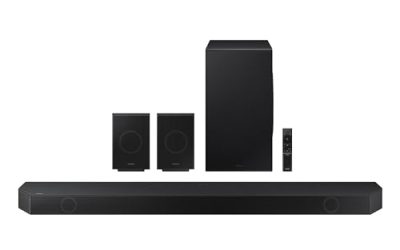
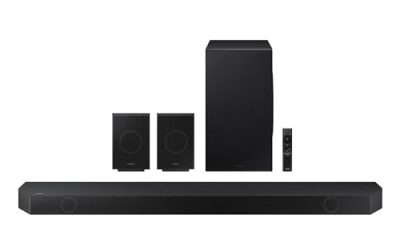
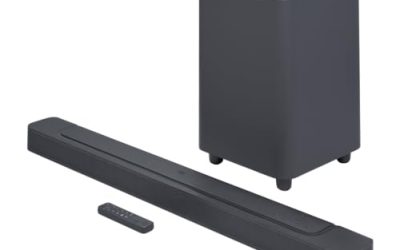
Our Short List of 3

- Best for: Fire TV households that want one remote and the shortest possible setup.
- Channels: 2.0 speaker system
- Surround formats: DTS Virtual:X and Dolby Audio
- Connectivity: Bluetooth, HDMI eARC/ARC, optical, USB-A ports
- EQ modes: Movies, Music, Dialogue

- Best for: Small rooms, desks and bedrooms where clear voices matter more than deep bass.
- Channels: 2.0 channel soundbar
- Maximum output power: 120 watts
- Drivers: bass reflex speaker with integrated tweeter
- Surround: S-Force Front Surround

- Best for: Movie nights in a living room where one extra box is acceptable.
- Channels: 2.1 channel soundbar with wireless subwoofer
- Total power: 240 watts
- Subwoofer: wireless, 5.25-inch driver
- Formats: Dolby Audio, DTS Virtual:X
All 3 Picks at a Glance
| Product | Specs | Action |
|---|---|---|
| Amazon Fire TV Soundbar |
| Check price on Amazon |
| Sony S100F (HT-S100F) |
| Check price on Amazon |
| Hisense HS2100 |
| Check price on Amazon |
Our Top Picks
- Sony S100F 2.0ch Compact and Slim Soundbar for3.5 x 35.5 x 2.537.5 x 6 x 6 inches7.7 poundsCheck on Amazon
Buying your first soundbar comes down to one decision: how much setup and how many boxes are you willing to deal with in exchange for better sound? A single bar with one cable is the easiest upgrade over flat TV speakers, while a bar with a separate wireless subwoofer adds movie bass at the cost of one more thing to place and plug in. Everything else, from voice modes to app control, is secondary to getting that first choice right.
This guide is for first-time buyers who want clearer dialogue and fuller sound without learning home theater jargon. The picks run from the compact Sony S100F and the one-remote Amazon Fire TV Soundbar to wireless-subwoofer sets from Hisense and VIZIO, plus the TCL S45H, which adds Dolby Atmos and auto room calibration to a simple 2.0 bar.
Quick Picks
As an Amazon Associate we earn from qualifying purchases
| Product | Best for | Key spec from title |
|---|---|---|
| Amazon Fire TV Soundbar | Fire TV owners who want one remote | 2.0 speaker with DTS Virtual:X and Dolby Audio |
| Sony S100F (HT-S100F) | Small rooms and simple dialogue clarity | 2.0ch soundbar with Bass Reflex speaker and Bluetooth |
| TCL S45H | Beginners who want Atmos without a subwoofer | 2.0 sound bar with Dolby Atmos and Auto Room Calibration |
| Hisense HS2100 | First bar with real movie bass | 2.1ch soundbar with wireless subwoofer and Bluetooth 5.3 |
| VIZIO V-Series V21x-J8 | Easy 2.1 setup with voice assistant input | 2.1 sound bar with Dolby Audio and wireless subwoofer |
How to Choose
Start With One Cable: HDMI ARC or eARC
The friendliest setup uses a single HDMI cable between the bar and the port on your TV labeled ARC or eARC. That one connection carries the sound and lets your existing TV remote control the bar volume, so there is no second remote to lose and no input switching to learn. Every pick in this guide supports HDMI ARC. If your TV is older and lacks that port, an optical cable is the fallback; it sounds the same for basic use, but the TV remote will not control volume, which is the one daily annoyance beginners notice most.
Decide Whether You Want a Separate Subwoofer
A single bar keeps things simple: one box, one power cord, nothing to position. The trade-off is thinner bass, because small drivers inside a slim cabinet can only move so much air. A 2.1 set adds a wireless subwoofer that pairs automatically and only needs a power outlet, and it makes explosions, scores and sports crowds feel much bigger. The Hisense HS2100 and VIZIO V21x-J8 follow that pattern. Choose the single bar for a bedroom or a tidy living room, and the subwoofer set if movies are the main reason you are upgrading.
Look for a Dialogue or Voice Mode
The most common beginner complaint is not weak bass; it is dialogue buried under music and effects, forcing constant volume changes. A named dialogue, voice or speech mode lifts the center frequencies where voices sit, and it matters more at this level than surround processing. The Fire TV Soundbar offers a Dialogue EQ mode, the Hisense HS2100 includes six EQ modes to cycle through, and the Sony S100F keeps voices forward with its integrated tweeter. If you watch a lot of news, dramas or late-night shows at low volume, put this feature near the top of your list.
Keep Controls Simple: Remote, App and TV Sync
Beginners do best with controls they will actually use. A small included remote with clear buttons beats a deep settings menu, and HDMI CEC sync means the bar wakes and sleeps with the TV instead of needing its own power button routine. Some bars add an app, like the TCL S45H, which can help with updates and sound modes but should never be required for basic volume. Also check what cables come in the box: the Fire TV Soundbar and TCL S45H include an HDMI cable, while some rivals leave you to buy one separately.
The 5 Best Options
Amazon Fire TV Soundbar
- Best for: Fire TV households that want one remote and the shortest possible setup.
- Channels: 2.0 speaker system
- Surround formats: DTS Virtual:X and Dolby Audio
- Connectivity: Bluetooth, HDMI eARC/ARC, optical, USB-A ports
- EQ modes: Movies, Music, Dialogue
Fire TV households that want one remote and the shortest possible setup.
There is no subwoofer, so bass stays modest, and the experience is tuned first for Fire TV gear.
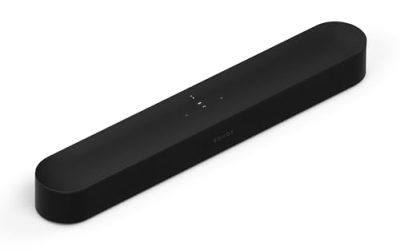
This is the gentlest first step for anyone already using a Fire TV stick or a Fire TV television. Setup is a single HDMI cable, which is included, and the bar is designed to work with one remote for both the TV and the audio. DTS Virtual:X and Dolby Audio widen the sound beyond the bar 24-inch frame, and the dedicated Dialogue mode helps voices stay clear at modest volumes. Bluetooth covers phone streaming, and the compact 2.5-inch height slides under most TVs without blocking the screen or the remote sensor.
Sony S100F (HT-S100F)
- Best for: Small rooms, desks and bedrooms where clear voices matter more than deep bass.
- Channels: 2.0 channel soundbar
- Maximum output power: 120 watts
- Drivers: bass reflex speaker with integrated tweeter
- Surround: S-Force Front Surround
Small rooms, desks and bedrooms where clear voices matter more than deep bass.
No separate subwoofer and no Dolby Atmos, so big action scenes stay polite rather than room-filling.
Sony entry bar keeps the formula as plain as it gets: a slim 2.0 channel cabinet, a bass reflex speaker for a little low-end weight, and an integrated tweeter that keeps dialogue crisp. Bluetooth streaming is built in, HDMI ARC gives one-cable connection and TV remote control, and S-Force Front Surround creates a wider feel from the single bar. It suits smaller TVs and rooms where a subwoofer box would be clutter. For a beginner who wants a familiar brand and almost nothing to configure, this is the low-stress pick.
TCL S45H
The S45H is the pick for beginners who want modern formats without adding boxes. It is still a single 2.0 bar, but it decodes Dolby Atmos and DTS:X, using DTS Virtual:X style processing to give sound more height and width than a plain stereo bar. Auto Room Calibration adjusts the output to your space, which removes the guesswork new owners usually face with manual EQ. TCL includes the HDMI cable and a wall installation kit in the box, and control runs through the remote or the companion app when you want more options.
Specs
- Channels: 2.0 channel sound bar
- Maximum output power: 100 watts
- Formats: Dolby Atmos, DTS:X, DTS Virtual:X
- Feature: Auto Room Calibration
- Connectivity: Bluetooth, HDMI
- Included: HDMI cable, power cord, remote control, wall installation kit
Best for: First-time buyers who want Atmos height effects from one simple bar.
Watch out for: Virtual height is not the same as real ceiling speakers, and there is no subwoofer for deep bass.
Hisense HS2100
- Best for: Movie nights in a living room where one extra box is acceptable.
- Channels: 2.1 channel soundbar with wireless subwoofer
- Total power: 240 watts
- Subwoofer: wireless, 5.25-inch driver
- Formats: Dolby Audio, DTS Virtual:X
Movie nights in a living room where one extra box is acceptable.
The subwoofer needs floor space and its own outlet, and one listing note says no optical cable is included.
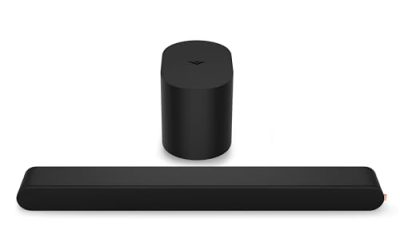
The HS2100 is the easiest way in this group to get genuine movie bass, because the wireless subwoofer uses a 5.25-inch driver and pairs with the bar without a signal cable. Total output is rated at 240 watts, and Dolby Audio with DTS Virtual:X keeps dialogue anchored while effects spread wider. Six EQ modes let a beginner fix thin or boomy sound with one button instead of menus. The bar itself is 31.5 inches wide, and Bluetooth 5.3, HDMI ARC, optical, AUX and USB give it the broadest input set here.
VIZIO V-Series V21x-J8
VIZIO V-Series 2.1 is built around the idea that a first system should be running within minutes. The bar and wireless subwoofer deliver Dolby Audio and DTS Virtual:X, HDMI ARC handles the TV connection, and Bluetooth covers music from a phone. A voice assistant input lets you route an existing smart speaker through the bar, which is a nice touch for households already using one. The included remote keeps modes and bass level one button away. It is a balanced starter set for a main living room TV.
Specs
- Channels: 2.1 home theater sound bar
- Formats: Dolby Audio, DTS Virtual:X
- Subwoofer: wireless subwoofer included
- Connectivity: Bluetooth, HDMI ARC
- Extra: voice assistant compatible input
- Included: remote control; model V21x-J8
Best for: Living rooms that want subwoofer bass plus a voice assistant connection.
Watch out for: The subwoofer still needs placement and power, and advanced tuning is limited compared with mid-range bars.
Which One Fits Your Situation
You Just Want the TV to Sound Clearer Tonight
Pick the Amazon Fire TV Soundbar or the Sony S100F. Both connect with one HDMI cable, work with your TV remote, and focus on the thing beginners notice first: voices you can follow without riding the volume. The Fire TV bar suits Fire TV homes best, while the Sony is the safer match for a mixed-brand setup or a smaller screen in a bedroom or office corner.
Movies Feel Flat and You Have Floor Space
Choose a 2.1 set, either the Hisense HS2100 or the VIZIO V21x-J8. The wireless subwoofer is what turns a polite TV upgrade into something that feels like a home theater, and both pair the sub automatically. The Hisense offers more EQ modes and inputs; the VIZIO adds a voice assistant input. Either way, plan a spot near an outlet and keep the sub a short distance from the bar.
Your TV Is Older or Not a Smart TV
Look at the Sony S100F or the Hisense HS2100, because both keep an optical input alongside HDMI ARC, so an older panel without ARC still gets a clean digital connection. You will use the bar remote for volume on optical, which is a small daily trade-off. If the TV also lacks streaming apps, remember a soundbar alone does not add them; that calls for a separate streaming stick later.
You Want Room to Grow Without Starting Over
The TCL S45H gives a beginner the longest runway. Dolby Atmos and DTS:X decoding means newer streaming content is handled properly today, and Auto Room Calibration keeps the sound balanced if you move furniture or rooms. It is still one bar with one cable, so the learning curve stays flat, but the format support means you are less likely to replace it when you upgrade the TV in a few years.
Common Mistakes
- Plugging into the wrong HDMI port: only the port labeled ARC or eARC sends TV sound to the bar and enables TV remote volume control.
- Leaving the TV speakers on alongside the bar, which creates an echo; set the TV audio output to the external device or PCM.
- Hiding a wireless subwoofer inside a closed cabinet, which muffles bass; it needs open air and a nearby outlet.
- Judging a bar only by its wattage figure, when channel layout, dialogue modes and your room size shape the result far more.
- Skipping the firmware or app setup prompts on smarter bars, which can leave connection and lip-sync fixes uninstalled.
Frequently Asked Questions
Do I need HDMI eARC, or is ARC enough for a first soundbar?
ARC is enough for every pick in this guide. Entry level bars use Dolby Audio and virtual surround formats that travel fine over standard ARC, and you still get TV remote volume control. eARC matters mainly for higher-end systems passing uncompressed formats from external players, which is beyond what a beginner setup needs today.
Will a soundbar work with my TV remote?
Usually yes, when the bar connects over HDMI ARC or eARC and the TV HDMI-CEC setting is switched on. The bar then powers on with the TV and follows its volume commands. Over an optical cable that sync does not apply, so you would use the small remote included with the bar instead.
Is a separate subwoofer worth it for a beginner?
It depends on what you watch. For news, sitcoms and dialogue-heavy drama, a single bar already fixes the main problem, which is clarity. For action films, sports and games, a wireless subwoofer adds weight that a slim bar cannot produce alone. Because the sub pairs automatically, the extra setup effort is mostly finding it a spot.
Can I stream music from my phone to these soundbars?
Yes. Every pick here includes Bluetooth, so a phone, tablet or laptop can pair and play music or podcasts through the bar when the TV is off. Sound quality for music varies by model, and the 2.1 sets with a subwoofer generally sound fuller, but for casual listening any of these bars beats a phone speaker easily.
More from Amazon
Programs that pair well with the guide above. Offers and eligibility are set by Amazon and may change.
Free shipping on eligible items, Prime Video and more. Eligible new members can start with a free trial.
Start a Prime free trialAd-free music streaming. Eligible new subscribers can start with a free trial.
Try Music Unlimited freeA Prime membership for ages 18-24 with a trial period. Eligibility is set by Amazon.
See Prime for Young AdultsAudiobooks and podcasts to listen to on the go. Eligible new members can start with a free trial.
Try Audible freeAs an Amazon Associate we earn from qualifying purchases.