Key takeaways
- See the best 5.1.2-channel soundbar systems with HDMI eARC for living room theaters, comparing wireless subwoofers, height channels and Dolby Atmos in full.
Five ear-level channels, one subwoofer and two height channels is the smallest layout that still behaves like a theater system. The front trio handles dialogue and screen action, the two height drivers bounce sound off the ceiling for a sense of space above, and the wireless subwoofer supplies the low end that television speakers cannot reach. What decides the outcome is not the channel count alone but the room: a flat ceiling, a sofa two to three metres from the screen, and a television with HDMI eARC.
This guide helps three kinds of buyer. Apartment dwellers want cinema sound without rear speakers on stands. Households upgrading from a television soundbar want a clear step up in immersion. And viewers with a mid-size living room want a complete system that fits under the television and beside the sofa. Products below were picked from the names and specifications on their Amazon product pages, so every channel count and included component comes from the listing itself.
Quick Picks
As an Amazon Associate we earn from qualifying purchases
| Product | Best for | Key spec from title |
|---|---|---|
| Samsung HW-Q800D | Samsung TV owners who want a bar and subwoofer only | 5.1.2ch soundbar with wireless Dolby Atmos audio |
| Sony HT-A5000 | Viewers who want strong height effects from a single bar | 5.1.2ch Dolby Atmos sound bar with 360 Spatial Sound Mapping |
| Samsung HW-Q800C | Buyers who want the previous generation at a lower outlay | 5.1.2ch soundbar with wireless Dolby audio and Q-Symphony |
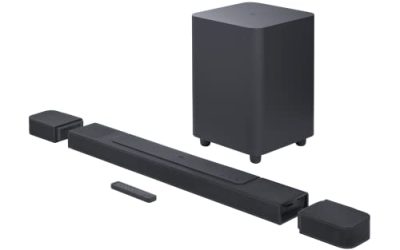
| JBL Bar 800 | Flexible rooms that need rear speakers only sometimes | 5.1.2-channel soundbar with detachable surround speakers |
How to Choose
Channel layout and room size
Two height channels create a believable sense of vertical space, but only when the ceiling cooperates. A flat ceiling between 2.3 and 3.5 metres high reflects the up-firing drivers cleanly toward the sofa, while vaulted, beamed or heavily textured ceilings scatter the effect. Rooms of 12 to 25 square metres suit 5.1.2 best, because the front stage stays wide enough for the height channels to separate from the dialogue. In a very small room the height effect collapses into the front speakers, and in a very large one the single subwoofer runs out of authority.
eARC and HDMI inputs
HDMI eARC is the single connection that matters most for a 5.1.2 system, since it carries lossless Dolby Atmos from the television back to the bar. Find the port marked eARC on the television, not a plain ARC socket, and set the television audio output to bitstream or passthrough so nothing is downmixed on the way. A bar with two HDMI inputs can take a console and a streaming stick directly, which preserves the best audio path for each source. One input is workable when everything else connects to the television, but it leaves less room to grow.
Subwoofer and rear speakers
Most 5.1.2 systems ship as a bar plus a wireless subwoofer, with rear speakers optional or detachable. The subwoofer still needs a power outlet and a clear spot, and placing it near a wall adds output while placing it in a corner can make bass uneven. If the system includes detachable rears, they should sit behind the sofa at about ear height for films and return to the bar to charge between sessions. If it has no rears at all, the bar relies on processing to widen the front stage, which works well in smaller rooms but cannot place sounds behind the listener.
Where compact systems cut corners
Manufacturers of 5.1.2 systems often save money on the parts buyers notice last. A bar may list two height channels yet share a driver with the front left and right channels, which weakens the overhead image during busy scenes. The included subwoofer may use a smaller driver than the flagship model, trading deep bass for a tidier box. Some bars also ship with a single HDMI input or skip automatic room calibration entirely. Compare the driver layout, subwoofer size and port count in the listing rather than trusting the channel number to tell the whole story.
The 4 Best Options
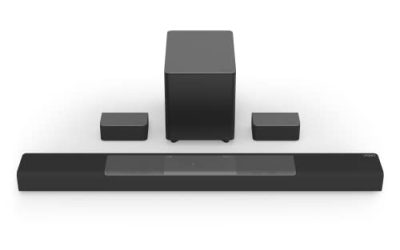
Samsung HW-Q800D

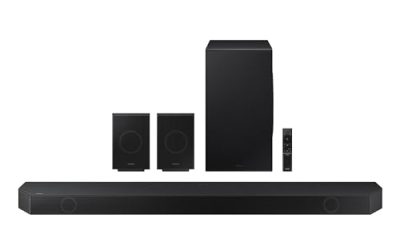
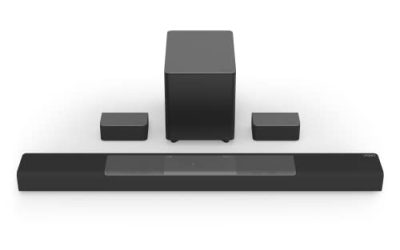
The HW-Q800D is the straightforward choice for a living room that wants a bar and a subwoofer and nothing else to manage. Its 5.1.2 layout delivers wireless Dolby Atmos with eleven speakers in the bar and a wireless subwoofer handling the low end, so films gain height and weight without rear speakers cluttering the room. Q-Symphony lets a compatible Samsung television add its own speakers to the front stage, and SpaceFit Sound Pro adjusts the output to the room once the system is in place.
Specs
- 5.1.2 channels with wireless Dolby Atmos audio
- 11 speakers in the main soundbar
- Wireless subwoofer included
- Q-Symphony and SpaceFit Sound Pro
- Adaptive Sound and Game Mode Pro
- Alexa built in
Best for: Living rooms that want Atmos height and bass without any rear speakers.
Watch out for: Measure the television stand before ordering, since the bar is wider than many compact media consoles and needs a flat, stable surface.
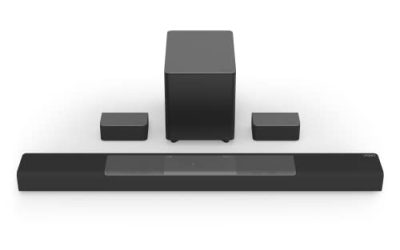
Sony HT-A5000
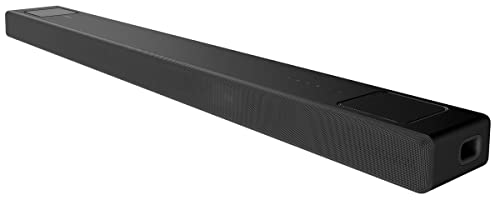
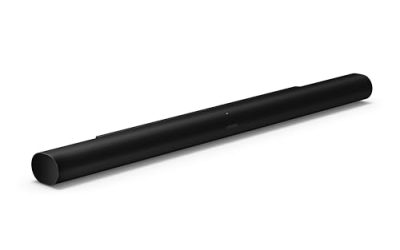
The HT-A5000 suits viewers who want the most convincing height effects a single bar can produce. Its up-firing speakers and 360 Spatial Sound Mapping create a wide, tall sound field from one unit, and the built-in dual subwoofer supplies bass without a separate box on the floor. That makes it a strong fit for rooms where a standalone subwoofer would block a walkway or clash with the furniture, and it pairs well with Sony televisions through Acoustic Center Sync.
Specs
- 5.1.2 channels with Dolby Atmos and DTS:X
- 360 Spatial Sound Mapping
- 450W total output power
- Built-in dual subwoofer
- S-Force Pro Front Surround and Vertical Surround Engine
- HDMI eARC, Alexa and Google Assistant
Best for: Rooms where a separate subwoofer box does not fit the layout.
Watch out for: The bar has no separate wireless subwoofer, so check the listing carefully if deep, room-filling bass is a priority.
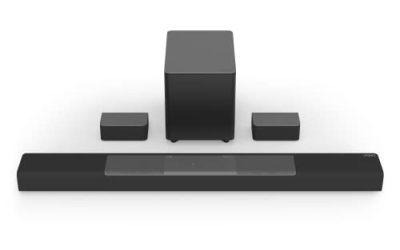
Samsung HW-Q800C

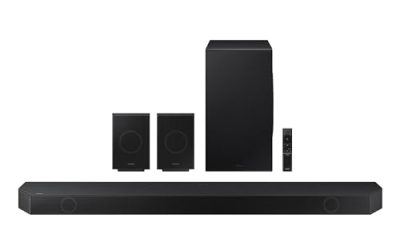
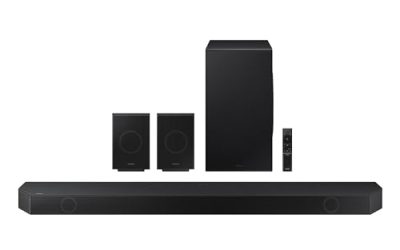
The HW-Q800C is the previous generation of the Q800D formula, and it fits buyers who want the same bar-and-subwoofer shape with a proven feature set. It delivers true 5.1.2 sound with wireless Dolby Atmos, Q-Symphony pairing with Samsung televisions, and an 8-inch wireless subwoofer that gives films a firm low end. Adaptive Sound adjusts the balance between dialogue and effects automatically, which helps when viewing switches between films, sport and late-night television.
Specs
- 5.1.2 channels with wireless Dolby audio
- 8-inch wireless subwoofer
- Q-Symphony and SpaceFit Sound Pro
- Adaptive Sound and Game Mode Pro
- AirPlay 2 and Alexa built in
- 360W total output power
Best for: Buyers who want the Q800 formula from the previous model year.
Watch out for: Confirm the HDMI eARC port on the television is free before installation, since the bar relies on it for lossless Atmos.
JBL Bar 800

The JBL Bar 800 is the flexible option in this group, because its two rear speakers detach from the bar for films and dock back on to recharge. With the rears behind the sofa it behaves like a full 5.1.2 surround system, and with them docked it works as a single bar for everyday viewing. The 10-inch wireless subwoofer gives action scenes genuine punch, PureVoice keeps dialogue clear, and the HDMI eARC connection passes 4K Dolby Vision from connected sources.
Specs
- 5.1.2-channel soundbar with detachable surround speakers
- True Dolby Atmos with two up-firing drivers
- 720W total output power
- 10-inch wireless subwoofer
- PureVoice dialogue enhancement technology
- HDMI eARC with 4K Dolby Vision pass-through
- Built-in Wi-Fi with AirPlay, Alexa Multi-Room Music and Chromecast
Best for: Rooms where rear speakers come out for films and dock away the rest of the time.
Watch out for: The detachable speakers hold about ten hours of charge, so return them to the bar after a long film session.
Which One Fits Your Situation
A small apartment with no space behind the sofa
Choose the Samsung HW-Q800D. It needs only a bar and a subwoofer, so there is nothing to place behind the seating, and the height channels still add a sense of space above the screen. Keep the subwoofer level moderate so the bass does not travel through shared walls and floors.
A room where a separate subwoofer will not fit
Choose the Sony HT-A5000. Its built-in dual subwoofer removes the floor box entirely, which suits narrow living rooms and open-plan spaces where every square metre counts. The 360 Spatial Sound Mapping still creates a wide, tall presentation from the single bar, so the room gains a theater feel without giving up any floor space at all.
A Samsung television already on the wall
Choose the Samsung HW-Q800C. Q-Symphony lets the television speakers join the front stage, and the 8-inch wireless subwoofer supplies the low end the television cannot. It is a natural match for a Samsung setup where the bar, television and remote work as one system, and the previous-generation feature set covers everything a living room theater needs.
A family room that changes use through the day
Choose the JBL Bar 800. The detachable rears turn the room into a theater for films and disappear onto the bar for homework, video calls and everyday television. That flexibility matters more than a fixed layout when the room serves several purposes at once, and the charging routine is as simple as docking the speakers after the credits roll.
Common Mistakes
- Expecting strong height effects from a vaulted or very high ceiling that scatters reflected sound.
- Connecting the bar through standard ARC and losing the lossless Atmos signal.
- Hiding the wireless subwoofer inside a cabinet, which muffles bass and traps heat.
- Placing the bar inside a recessed shelf where the up-firing drivers hit the shelf above.
- Buying a bar-only model and assuming matching rear speakers can be added later.
Frequently Asked Questions
Is 5.1.2 enough for a living room theater?
For rooms up to about 25 square metres, a well-placed 5.1.2 system delivers a convincing theater feel. The two height channels add vertical space, the front trio anchors dialogue, and the subwoofer supplies the low end. Larger rooms benefit from rear speakers or a bigger configuration, because the single subwoofer and front-focused layout cover less ground.
Do I need rear speakers with a 5.1.2 system?
Not necessarily. A 5.1.2 bar with a subwoofer already creates height and width from the front, which suits smaller rooms and apartments. Rear speakers add sounds behind the listener, so they matter most for films where effects move around the room. Detachable rears give a middle ground for rooms that only need them on film nights.
Will a 5.1.2 soundbar work with any television?
It works best with a television that has an HDMI eARC port, which carries lossless Dolby Atmos to the bar. Older televisions with standard ARC still connect, but the audio may fall back to compressed formats. Check the television ports and audio output settings before buying, and use the HDMI cable supplied with the system.
Where should the subwoofer go in a 5.1.2 setup?
Start near the front wall, a short distance from a corner, with the driver facing into the room and nothing blocking it. Corner placement boosts output but can make bass boomy, while a spot mid-wall usually sounds tighter. Run the automatic calibration after placement, then adjust the level by ear at normal listening volume.
More from Amazon
Programs that pair well with the guide above. Offers and eligibility are set by Amazon and may change.
Free shipping on eligible items, Prime Video and more. Eligible new members can start with a free trial.
Start a Prime free trialAd-free music streaming. Eligible new subscribers can start with a free trial.
Try Music Unlimited freeA Prime membership for ages 18-24 with a trial period. Eligibility is set by Amazon.
See Prime for Young AdultsAudiobooks and podcasts to listen to on the go. Eligible new members can start with a free trial.
Try Audible freeAs an Amazon Associate we earn from qualifying purchases.