Key takeaways
- Compare the best 9.1.4-channel soundbar systems with HDMI eARC for living room theaters, with 17-speaker layouts, wireless rears and Dolby Atmos compared.
Nine ear-level channels, one subwoofer and four height channels is a serious layout, and it only pays off when the space can host it properly. The front stage alone carries nine channels of dialogue, music and effects, the wireless rear speakers add height drivers of their own, and the subwoofer anchors everything below. That much hardware demands a rectangular room with the sofa two to three metres from the screen, space behind the seating for the rears, a flat ceiling for the height drivers, and a television with an HDMI eARC port to carry lossless Dolby Atmos.
This guide is written for households building a proper living room theater around a single system, for Samsung television owners who want the bar and screen working together, and for film lovers who want overhead effects without assembling a receiver-based setup. Both systems below were chosen from the names and specifications on their Amazon product pages, so the channel counts, speaker totals and connection details are exactly what each listing states.
Quick Picks
As an Amazon Associate we earn from qualifying purchases
| Product | Best for | Key spec from title |
|---|---|---|
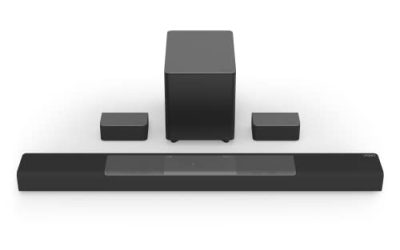
| Samsung HW-Q930F | Large living rooms that want the newest 9.1.4 layout | 9.1.4 ch soundbar with subwoofer and rear speaker, 17 speakers |
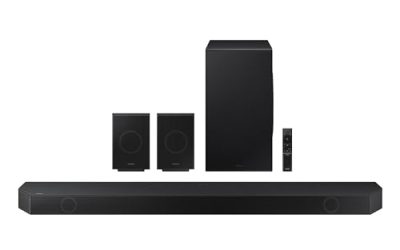
| Samsung HW-Q930D | Buyers who want the proven 2024 layout with full rear height channels | 9.1.4 ch soundbar with wireless Dolby Atmos and Q-Symphony |
How to Choose
Channel layout and room size
A 9.1.4 system spreads nine ear-level channels across the front and sides, which gives dialogue and effects more room to separate than a 5.1.2 or 7.1.4 layout. The format suits living rooms of roughly 20 to 35 square metres, where the sofa sits far enough from the screen for the side channels to form distinct positions. In a room below about 15 square metres the extra front channels crowd together and the rear speakers end up too close to the listener, so the system sounds busy rather than spacious. Measure the screen-to-sofa distance and the space behind the seating before committing, because those two measurements decide whether the format earns its keep.
eARC and HDMI inputs
HDMI eARC carries lossless Dolby Atmos from the television to the soundbar, and a 9.1.4 system is built around that signal. Check the television for a port labelled eARC rather than ARC, then set the audio output to bitstream or passthrough so the full soundtrack reaches the bar untouched. Count the HDMI inputs on the soundbar as well: a console, a streaming device and a Blu-ray player fill three ports quickly, and systems in this class often provide fewer inputs than buyers expect. When inputs run short, connect the most demanding source directly to the bar and route the rest through the television.
Subwoofer and rear speakers
The wireless subwoofer and the rear pair carry the parts of the experience that a bar alone cannot fake. A subwoofer near a wall gains output, while one tucked in a corner can sound uneven, so try a spot a short distance from the corner with the driver facing the room. Rear speakers should sit slightly behind the sofa and a little above ear level, angled toward the main seat, and in a 9.1.4 system they carry their own up-firing drivers, which makes their placement doubly important. Both the subwoofer and the rears need power outlets, so map the sockets behind the seating before the boxes arrive.
Where 9.1.4 systems cut corners
Even premium 9.1.4 systems hide trade-offs behind the channel count. Some bars count side-firing drivers toward the nine ear-level channels while giving the rear speakers a smaller role than the headline suggests. Others pair a capable bar with a modest subwoofer, so the low end feels thin next to the wide front stage. A third shortcut is calibration: automatic room tuning makes a large difference when nine channels and four height drivers must blend, and systems that skip it leave the owner to balance levels by ear. Read the listing for the speaker total, the subwoofer design and the calibration features before comparing two models on channels alone, and check the rear speakers for up-firing drivers of their own.
The 2 Best Options
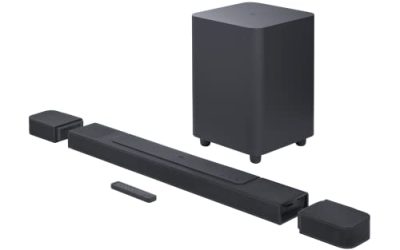
Samsung HW-Q930F

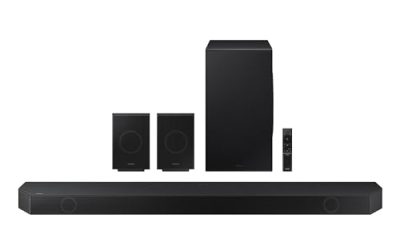
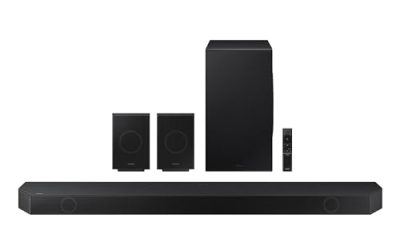
The HW-Q930F is the newest 9.1.4 system in this guide, and it fits a large living room where the theater setup is used most evenings. Seventeen speakers spread across the bar, the wireless subwoofer and the rear pair, with four height channels creating overhead movement for rain, aircraft and crowd scenes. The rear speakers carry their own up-firing drivers, so the height image stays stable even for seats off to the side. Wireless Dolby Atmos removes the cable between the television and the bar for compatible Samsung televisions, and SpaceFit Sound Pro tunes the system to the room after placement, which matters when furniture shifts.
Specs
- 9.1.4 channels with subwoofer and rear speaker
- 17 speakers across the full system
- Wireless Dolby Atmos and DTS:X
- 6.5-inch active subwoofer with 8-inch passive radiator
- Rear speakers with up-firing channels
- Q-Symphony and SpaceFit Sound Pro
- Active Voice Amplifier Pro and Adaptive Sound
Best for: Large living rooms where the newest 9.1.4 layout and widest front stage matter most.
Watch out for: The main bar is over 1.1 metres wide, so measure the television stand and confirm the eARC port is free before installation.
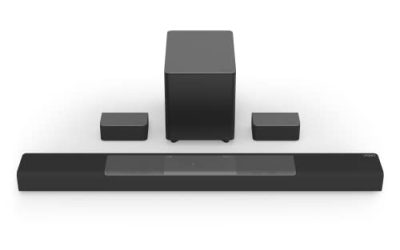
Samsung HW-Q930D

The HW-Q930D is the 2024 model that established this layout, and it suits buyers who want a proven 9.1.4 package with a strong record. Its seventeen speakers include a wireless subwoofer and two rear speakers with up-firing drivers, giving the same four height channels as the newer model in a slightly different tuning. Q-Symphony pairs the bar with a Samsung television so the screen speakers contribute to the front stage, while SpaceFit Sound Pro calibrates the output to the room. Dialogue stays anchored to the centre during busy scenes, the rear pair handles the movement around the room, and the system keeps working smoothly with the television remote.
Specs
- 9.1.4 channels with wireless subwoofer and rear speakers
- 17 speakers across the full system
- 540W total output power
- Wireless Dolby Atmos and DTS:X
- 8-inch wireless subwoofer
- Rear speakers with up-firing drivers
- Q-Symphony and SpaceFit Sound Pro
- Adaptive Sound and Alexa built in
Best for: Households that want the established 2024 flagship layout with full rear height channels.
Watch out for: Each rear speaker needs a power outlet behind the sofa, so check the socket positions before deciding where the speakers will live.
Which One Fits Your Situation
A large living room used for films most nights
Choose the Samsung HW-Q930F. Its newer tuning and refined subwoofer design give the low end more control at higher volumes, and the wider front stage covers several seats more evenly. The system suits a room where the theater is the main evening activity and the bar earns its place every day.
A Samsung television already mounted on the wall
Choose the Samsung HW-Q930D if the priority is a proven pairing with a Samsung screen. Q-Symphony lets the television speakers join the front stage instead of switching off, and the 2024 layout has a long record of working well with Samsung televisions. It also suits buyers who prefer a model with a full year of owner feedback behind it.
A wide seating area with guests off to the sides
Choose the Samsung HW-Q930F. Its rear speakers carry their own up-firing drivers, which keeps the height effects stable for seats away from the centre, and the broader front stage spreads dialogue more evenly across a wide sofa. Guests at the ends of the seating still hear a balanced picture instead of a centre-heavy one.
A room where the sofa sits against the back wall
Choose the Samsung HW-Q930D and mount the rear speakers on the wall slightly above ear level. With no space behind the sofa, wall mounting keeps the rear channels in their proper position instead of crowding the listener. Run the automatic calibration after mounting, since the reflected sound changes once the speakers move off stands and onto the wall.
Common Mistakes
- Buying a 9.1.4 system for a room too small to separate nine front and side channels.
- Using a standard ARC port instead of eARC and losing the lossless Atmos signal.
- Placing rear speakers on the floor, which buries the surround and height effects behind the sofa.
- Putting the subwoofer inside a closed cabinet where bass becomes muffled and uneven.
- Skipping calibration after moving the sofa or rear speakers, then wondering why the soundstage shifted.
Frequently Asked Questions
Is 9.1.4 overkill for a normal living room?
It depends on the room rather than the label. In a living room of 20 square metres or more with the sofa two to three metres from the screen, nine ear-level channels and four height channels create a wider and taller sound field than smaller layouts. In a compact room under 15 square metres the extra channels crowd together, and a 5.1.2 or 7.1.4 system sounds cleaner for less.
What is the difference between the HW-Q930F and the HW-Q930D?
Both are Samsung 9.1.4 systems with seventeen speakers, a wireless subwoofer and rear speakers with up-firing drivers. The HW-Q930F is the 2025 model with a redesigned subwoofer and updated tuning, while the HW-Q930D is the 2024 model with a longer track record. The channel layout, Q-Symphony pairing and SpaceFit calibration are shared, so the choice comes down to the room and which generation fits the setup.
Do the rear speakers need their own power outlets?
Yes. Each wireless rear speaker and the subwoofer connects to the bar over a wireless link, but each still needs mains power. Plan for three outlets in total: one for the bar, one for the subwoofer and one per rear speaker, or two outlets behind the sofa with a short extension. Check the socket positions before ordering so the speakers land where they belong.
Can a 9.1.4 soundbar replace a receiver-based home theater?
For most living rooms, yes. A 9.1.4 soundbar system delivers real surround and height channels from a single box with a subwoofer and rears, without a receiver, speaker wire runs or separate amplification. A receiver system still gives more upgrade paths and larger speakers, but it demands more space, more cabling and more setup time than most households want, and it needs a dedicated spot for the receiver itself.
More from Amazon
Programs that pair well with the guide above. Offers and eligibility are set by Amazon and may change.
Free shipping on eligible items, Prime Video and more. Eligible new members can start with a free trial.
Start a Prime free trialAd-free music streaming. Eligible new subscribers can start with a free trial.
Try Music Unlimited freeA Prime membership for ages 18-24 with a trial period. Eligibility is set by Amazon.
See Prime for Young AdultsAudiobooks and podcasts to listen to on the go. Eligible new members can start with a free trial.
Try Audible freeAs an Amazon Associate we earn from qualifying purchases.