
Key takeaways
- The best cellular routers with built-in modems and SIM slots: two 5G picks and a 4G option, with the specs that matter for fixed and mobile installs.
A cellular router does the job of a mobile hotspot and a home router at the same time: it takes a SIM card, connects to a 4G or 5G network through a built-in modem, and shares that connection over Wi-Fi and Ethernet like any ordinary router. That makes it the right tool for rural homes beyond the reach of cable, RVs and boats, construction sites, retail pop-ups, and anyone who wants a backup connection that keeps working when the landline goes down.

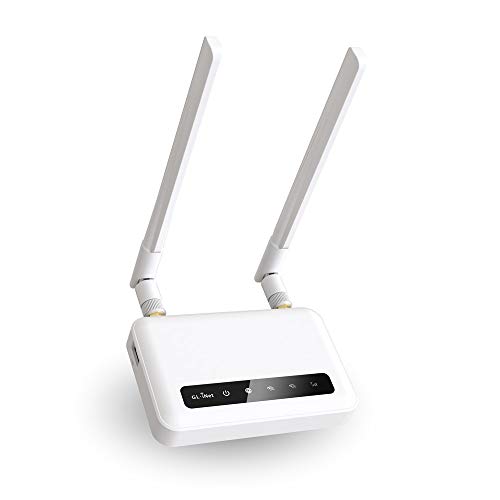
This guide is strict about what counts. Every pick below has a built-in cellular modem and a physical SIM slot, confirmed on its own Amazon product page. Ordinary Wi-Fi routers that merely accept a USB dongle are a different product type and are excluded, even when roundups elsewhere blur that line. Three routers verified cleanly under that standard: two 5G models at very different sizes, and one compact 4G model for lighter duty.
One honesty note up front: on all three listings, the opened page copy did not show a confirmed featured offer at check time, so availability on these specific listings is unconfirmed. Check the live listing before planning a purchase around any of them.
As an Amazon Associate, we earn from qualifying purchases.
Quick answer
For most people, the Cudy P5 (ASIN B0B711GG7N) is the cellular router to start with: a fixed 5G unit with dual Nano SIM slots, Wi-Fi 6 AX3000, detachable SMA antennas, and a deep settings toolkit including band lock and five VPN options. If you need the connection to travel, the GL.iNet GL-XE3000 (Puli AX) (ASIN B0C6XVCM6L) is the verified 5G router with a dual SIM slot and a built-in battery, so it keeps working away from a wall outlet. On a tighter brief, the GL.iNet GL-X750V2 (Spitz) (ASIN B08TRCSSZ4) is a 4G LTE Cat 4 router with a Micro SIM slot, OpenWrt, and AT&T certification, suited to cabins, vehicles, and light fixed installs. Availability was unconfirmed on all three listings when checked, as noted above.
Key takeaways
- All three picks have a built-in modem and a real SIM slot — no USB dongles involved.
- The Cudy P5 is the fixed-install choice: dual Nano SIM redundancy, external SMA antenna connectors, and published 5G peak rates of 3.4 Gbps down (NSA) and 900 Mbps up (SA).
- The GL-XE3000 is the only pick here with a built-in battery, and its opened page copy is thin — it publishes no Wi-Fi speed figures, so judge it on its 5G, dual SIM, and battery design rather than on wireless numbers.
- The GL-X750V2 is 4G only and uses a Micro SIM; its listing’s “batteries required” field is a template error — the router has no battery.
- Carrier fit is published per model: the Spitz is AT&T-certified and T-Mobile compatible, while the Cudy’s dual SIM slots let you load two carriers and switch between them.
- Every listing here was availability-unconfirmed at check time; confirm stock on the live page before ordering.
The picks
1. Cudy P5 — the fixed 5G router with real antenna options
The Cudy P5 is built for the classic cellular-router job: sit in one place, hold a 5G signal, and feed a whole home or small site. Its modem is a Qualcomm SDX62 (X62) paired with an IPQ5018 platform, running 5G NR in both SA and NSA modes to the 3GPP Release 16 standard. The page publishes peak rates of 3.4 Gbps downlink in NSA mode and 900 Mbps uplink in SA mode — ceiling figures rather than promises, but they tell you the modem is a current-generation part rather than a cut-down one.
The detail that separates the P5 from most rivals is its antenna arrangement. The cellular antennas are detachable and connect over SMA, and the page notes extension cables up to 12 m, which means you can route the antennas to a window or an exterior wall while the router stays inside. Combined with published 4G/5G band lock, that makes this the pick for weak-signal locations where placement decides whether the connection works at all. Two Nano SIM slots can both be filled, with automatic or manual redundancy, so a second carrier’s plan can stand by as failover. On the local side you get Wi-Fi 6 AX3000 with 2402 Mbps on the 5 GHz band over a 160 MHz channel, mesh support, and a configurable WAN/LAN port. The settings list is unusually deep for the class: TTL controls and VPN support spanning PPTP, L2TP, OpenVPN, WireGuard, and ZeroTier.
Specs
- Modem: 5G NR SA/NSA, 3GPP Release 16 (Qualcomm SDX62 / IPQ5018)
- Published 5G peaks: 3.4 Gbps down (NSA), 900 Mbps up (SA)
- SIM: dual Nano SIM slots, auto/manual redundancy
- Wi-Fi: Wi-Fi 6 AX3000; 2402 Mbps on 5 GHz (160 MHz channel)
- Antennas: detachable cellular antennas, SMA connectors, extension cables up to 12 m
- Extras: 4G/5G band lock, TTL settings, mesh support, configurable WAN/LAN port
- VPN: PPTP, L2TP, OpenVPN, WireGuard, ZeroTier
- Transmit power: 23 dBm
- Availability: unconfirmed on the opened listing copy — check the live page
2. GL.iNet GL-XE3000 (Puli AX) — 5G that runs on its own battery
The Puli AX takes the same basic idea — 5G modem, SIM slot, Wi-Fi for the room — and makes it portable. The listing confirms a 5G router with a dual SIM card slot and a built-in battery (one lithium-ion battery is included), plus Multi-WAN, VPN support, and OpenWrt firmware. Connectivity is listed as 5G, Ethernet, and Wi-Fi, so it can work as a fixed router on a desk or keep a vehicle, market stall, or temporary office online when the power situation is improvised.
Be clear-eyed about what its page does and does not say. The opened copy is thin: it confirms the dual-band Wi-Fi 6 (802.11ax) radio but publishes no Wi-Fi speed figures, and it does not state a battery capacity on the US page. So this pick rests on the combination its page does verify — 5G, two SIM slots, an internal battery, OpenWrt, and GL.iNet’s Multi-WAN failover — rather than on headline numbers. If you need published wireless rates before buying, that is a genuine gap here, and the Cudy above is the safer documented choice for a fixed install.
Specs
- Modem: 5G, built in
- SIM: dual SIM card slot
- Wi-Fi: Wi-Fi 6 (802.11ax), dual-band (no speed figures published on the opened page)
- Battery: built-in, 1 lithium-ion battery included (capacity not stated on the US page)
- Firmware/features: OpenWrt, Multi-WAN, VPN
- Connectivity: 5G, Ethernet, Wi-Fi
- Availability: unconfirmed — the opened copy showed no featured offer; check the live page
See the GL.iNet GL-XE3000 (Puli AX) on Amazon
3. GL.iNet GL-X750V2 (Spitz) — the compact 4G workhorse
Not every cellular install needs 5G. The Spitz is a 4G LTE router with a Cat 4 module and a Micro SIM slot, and for a cabin, a work vehicle, a kiosk, or a telemetry point, that class of connection is often enough. Carrier fit is published plainly: the page describes it as an AT&T-certified IoT device that is also T-Mobile compatible, and it lists its LTE-FDD bands — B2, B4, B5, B12, B13, B14, B66, and B71 — so you can check band support against your carrier before buying rather than after.
Around the modem you get AC750 dual-band Wi-Fi (300 Mbps on 2.4 GHz and 433 Mbps on 5 GHz), two 10/100 Mbps Ethernet ports, and two detachable external antennas. OpenWrt is pre-installed, the router supports more than 30 VPN providers, DNS over TLS via Cloudflare is built in, and a MicroSD slot takes cards up to 128 GB. It also lists four internet access methods — cable, repeater, 3G/4G modem, and tethering — so it can double as a travel router when it is not on SIM duty. One listing quirk to ignore: a spec field claims a lithium polymer battery is required, but the page’s own comparison table marks this model as having no battery, and it has none — it runs on mains power.
Specs
- Modem: 4G LTE Cat 4, built in
- SIM: Micro SIM slot
- Carrier notes: AT&T-certified IoT device; T-Mobile compatible
- LTE-FDD bands: B2/B4/B5/B12/B13/B14/B66/B71
- Wi-Fi: AC750 dual-band — 300 Mbps (2.4 GHz) + 433 Mbps (5 GHz)
- Ports/storage: 2× 10/100 Mbps Ethernet; MicroSD slot up to 128 GB
- Antennas: 2 detachable external antennas
- Firmware/features: OpenWrt pre-installed, 30+ VPN providers, DNS over TLS
- Battery: none — the listing’s “batteries required” field is a template error
- Availability: unconfirmed on the opened listing copy — check the live page
See the GL.iNet GL-X750V2 (Spitz) on Amazon
How to choose
Start with the network, not the router. Check which carriers actually cover your location and which bands they use there, then match that against what each page publishes: the Spitz lists its LTE bands explicitly, the Cudy’s band lock lets you pin the modem to the bands that work, and dual SIM models let you keep a second carrier loaded as insurance. A 5G router on a 4G-only tower still works, but you are paying for a modem you cannot feed.
Next, decide fixed versus portable. A fixed install rewards antenna flexibility and Ethernet: the Cudy’s SMA connectors and extension-cable support matter more than any peak-rate figure, because signal placement is what turns a marginal tower into a stable connection. A portable install rewards the opposite — the Puli AX’s internal battery and dual SIM slots — because the router has to survive being moved, unplugged, and re-homed daily.
Then look at the software. All three picks here run open or open-derived firmware ecosystems — OpenWrt on both GL.iNet models, and a deep settings toolkit with five VPN protocols on the Cudy — which matters if you need a VPN tunnel, custom DNS, or failover rules. Finally, mind the SIM format: the Cudy takes Nano SIMs, the Spitz takes a Micro SIM, and adapters are a common point of failure, so order the right size or a reliable adapter kit with the router.
Who should skip
Skip this category entirely if you have a good wired broadband option at a fair price — cellular data plans carry caps and deprioritization that cable and fiber usually do not. Skip the 5G picks if your area has no 5G coverage on any carrier you would use; the 4G Spitz will serve you just as well for light duty. Skip the Puli AX if you need published Wi-Fi performance figures before buying, because its US page does not state them. And skip any router sold as “cellular” that turns out to need a USB dongle for its modem — that is a different product type with a different failure profile, and it is deliberately not what this guide covers.
FAQ
Do these routers need a special data plan?
They need a SIM with a data plan that allows router or hotspot use, and plan terms vary by carrier. What the product pages establish is the hardware side: the Cudy accepts two Nano SIMs with redundancy, the Puli AX has a dual SIM slot, and the Spitz takes a Micro SIM and is published as AT&T-certified and T-Mobile compatible. Check your carrier’s router-plan rules before assuming a phone plan will work.
Can a cellular router replace home broadband?
For many households, yes, provided coverage is strong. The Cudy P5 is the pick shaped for that job, with Wi-Fi 6 AX3000, mesh support, external antenna options for weak-signal homes, and a second SIM slot for failover. The honest limits are on the plan side — data allowances and network management policies — not the hardware side.
What is the difference between the Puli AX and a phone hotspot?
The Puli AX is a dedicated router: it publishes a dual SIM slot, a built-in battery, Ethernet and Wi-Fi connectivity, Multi-WAN, and OpenWrt, so it can serve a whole room or vehicle persistently and fail over between sources. A phone hotspot is a side feature of a device doing other work, with no Ethernet, no external antenna path, and no dual SIM redundancy.
Does the GL-X750V2 Spitz have a battery?
No. Its listing contains a “batteries required” spec field, but that is a template error — the page’s own comparison table marks this model as having no battery, and the router is mains-powered. If battery operation is essential, the Puli AX is the pick in this guide whose page confirms an included battery.
Final verdict
The Cudy P5 is the most complete cellular router in this guide: a current-generation 5G modem, dual Nano SIM redundancy, band lock, and SMA antennas you can actually relocate. Choose the GL.iNet GL-XE3000 (Puli AX) when the connection has to move and run untethered — its verified 5G, dual SIM, and battery combination is rare — while accepting that its page publishes few wireless details. Choose the GL-X750V2 (Spitz) when 4G is enough and you want published band support, carrier certification, and OpenWrt in a small mains-powered box. Whichever you pick, confirm live availability on the listing first: all three pages were availability-unconfirmed when checked.
Product and ASIN Reference
| Product | ASIN | Type | SIM | Battery | Availability at check |
|---|---|---|---|---|---|
| Cudy P5 | B0B711GG7N | 5G NR SA/NSA Wi-Fi 6 router | Dual Nano SIM | None (mains) | Unconfirmed |
| GL.iNet GL-XE3000 (Puli AX) | B0C6XVCM6L | 5G Wi-Fi 6 router | Dual SIM slot | Built-in (included) | Unconfirmed |
| GL.iNet GL-X750V2 (Spitz) | B08TRCSSZ4 | 4G LTE Cat 4 Wi-Fi router | Micro SIM | None (mains) | Unconfirmed |
More from Amazon
Programs that pair well with the guide above. Offers and eligibility are set by Amazon and may change.
Free shipping on eligible items, Prime Video and more. Eligible new members can start with a free trial.
Start a Prime free trialAd-free music streaming. Eligible new subscribers can start with a free trial.
Try Music Unlimited freeA Prime membership for ages 18-24 with a trial period. Eligibility is set by Amazon.
See Prime for Young AdultsAudiobooks and podcasts to listen to on the go. Eligible new members can start with a free trial.
Try Audible freeAs an Amazon Associate we earn from qualifying purchases.









