Key takeaways
- Carport or portable shelter: Good for sun and rain, easier than wrestling a big cover on and off. Needs anchoring and space.
- Roof and seat covers only: Useful for protecting seats and dash for short stops, though not a full storage solution.
- Enclosed trailer or shed: The strongest protection and security if space allows.
The best UTV cover depends on cab configuration and storage: a fitted, heavy-duty cover for a side-by-side that stays outdoors, a trailerable cover with strong strap points if you tow it, and a lighter breathable cover for garage dust protection. Because UTVs are larger and taller than ATVs, and often carry roofs, windshields, light bars and roll cages, fit is the first thing to settle. Makers including Classic Accessories, Kolpin, Nelson-Rigg and Seizmik offer UTV-specific covers, usually sold by length range and number of seats.
Our top picks


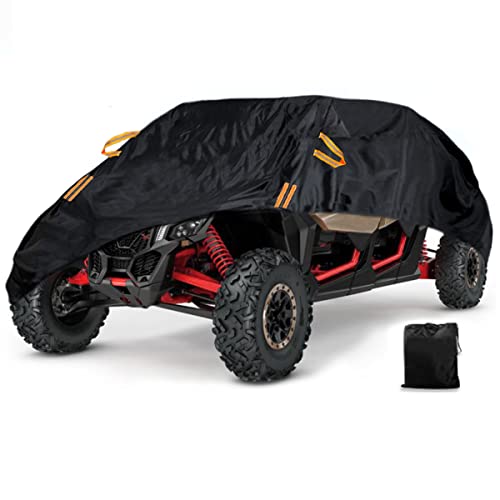
As an Amazon Associate we earn from qualifying purchases at no extra cost to you.
UTV Covers at a Glance
| Cover type | Best for | Typical stated features | Limits |
|---|---|---|---|
| Fitted heavy-duty outdoor cover | Year-round outdoor storage | Makers list coated polyester, UV treatment, vents, elastic hem and buckle straps | Bulky; water-resistant, not designed to sit in standing water |
| Trailerable cover | Towing on an open trailer | Reinforced stitching, multiple tie-down points, under-body strap system | Must be pulled tight; check at stops |
| Roof-compatible cover | UTVs with a hard or soft top, or a cab frame | Sized for a stated overall height and length | Open-top UTVs may leave gaps if sized for roofed models |
| Interior or garage cover | Dust and scratch protection indoors | Light, breathable fabric | Minimal weather protection |
| Seat or cab cover only | Protecting seats from sun and rain | Partial coverage, quick to fit | Leaves the rest of the machine exposed |
What to Look for in a UTV Cover
Seats, length and height
UTV covers are generally listed for two-seat, four-seat or six-seat machines, with a maximum length and sometimes a maximum height or width. Measure the whole machine as it is set up: bumpers, a winch, a cargo bed extension, a rear rack, a spare tire carrier and a roof overhang all change the dimensions. Oversize tires and lift kits can also increase width and height beyond stock numbers. A cover that is too small leaves the front or rear exposed, so owners with modified machines often need to size up and cinch the cover down.
Check that the maker’s stated fitment includes your cab setup. A cover for a roofed UTV and a cover for an open-top UTV are not always interchangeable.
Fabric, coating and seams
Like ATV covers, most UTV covers use polyester with a water-resistant coating. Denier ratings give a rough idea of thickness, while seam quality determines how well rain is shed. Taped or welded seams tend to hold up better than plain stitching. UV treatment is important for any machine parked in direct sun because it slows fading and brittleness.
Ventilation and condensation
Vents let humid air out and reduce the risk of mildew and rust. They are especially useful after a muddy ride, though rinsing and drying the machine before covering is always better. Avoid sealing a damp UTV under a cover for weeks.
Securing it
A big surface area catches wind. Look for adjustable hem cords, buckle straps and at least one under-body strap. Some covers add grommets for tie-downs. For trailering, only use a cover the maker specifically says is trailerable, and check it often because wind load at highway speed is much greater than at a campsite.
Heat and engine safety
Allow the engine, exhaust and any heat shields to cool completely before covering. Many makers warn that covering hot components can melt fabric. Follow your owner’s manual for storage guidance, and keep the cover away from hot tailpipes.
Budget Tiers
Budget
Universal or semi-universal covers cover the basics for dust and light rain. They suit garage storage or short-term outdoor use, but fit is looser, fabric thinner and straps fewer. Strong wind and sun will age them quickly.
Mid-range
Brand-name UTV-specific covers in this tier typically add UV-treated heavier fabric, vents and sturdier straps. For most owners keeping a side-by-side outside, this is the sensible middle ground.
Premium
Premium covers focus on thicker materials, reinforced seams, model-specific patterns and more tie-down points. They are the better choice for frequent towing, harsh climates or expensive machines with accessories you want to protect.
Pick X If… Decision Table
| Your situation | Pick |
|---|---|
| Parked outdoors all year | Heavy-duty, UV-treated, vented fitted cover |
| You tow on an open trailer | Trailerable cover with multiple tie-down points |
| Four- or six-seat machine | Cover listed for that seat count and length range |
| Hard roof or cab frame installed | Roof-compatible cover with stated height clearance |
| Open-top, no windshield | Standard fitted cover; check hem cord for secure fit |
| Garage only | Light breathable indoor cover |
| Heavily modified (lift, big tires, light bars) | Size up and check maker’s width and height figures |
Care Tips
Rinse mud, sand and road salt off the UTV before covering it. Dried grit under the cover rubs against paint and clear plastics in the wind. Clean the cover with mild soap and water as the maker advises, and let it dry fully before folding. Avoid harsh chemicals and machine washing unless the care label says it is safe. In snowy regions, clear heavy snow so the weight does not stress seams. Inspect straps and buckles each season and replace any that are frayed.
If storing outdoors, park on a pad or gravel instead of bare ground to limit moisture rising under the machine.
Alternatives to a Fitted Cover
- Carport or portable shelter: Good for sun and rain, easier than wrestling a big cover on and off. Needs anchoring and space.
- Roof and seat covers only: Useful for protecting seats and dash for short stops, though not a full storage solution.
- Enclosed trailer or shed: The strongest protection and security if space allows.
Common Mistakes to Avoid
The most common mistake is ordering from the seat count alone. Two machines with the same number of seats can differ in length by a foot or more once bumpers, bed extensions and winches are added. Another is ignoring height: roofs, roll cages, antennas and light bars can push the machine past a cover’s stated clearance. Some owners also forget about the wheel and tire size on lifted machines, which widens the footprint. Others fit a cover over a hot exhaust or a muddy body, shortening its life. A final mistake is leaving straps loose, so wind lifts the cover and chafes it against the paint. Take the measurements with a tape, write them down, and compare them with the maker’s stated range before ordering.
Storage location matters as much as the cover. A UTV parked on soft ground can wick moisture upward, and a tight cover can hold it in. A pallet, gravel pad or concrete slab helps. Cleaning the cover once or twice a season and letting it dry fully also extends its life, as does folding it loosely rather than crushing it into a bin while damp. If you carry the UTV on a trailer often, consider keeping a separate lightweight cover for towing and a heavier one for storage.
Frequently Asked Questions
How do I measure my UTV for a cover?
Measure the overall length from the front bumper to the rear of the bed or rack, then the width at the widest point and the height to the top of the roof or roll cage. Include accessories such as winches, light bars and spare tires. Compare these numbers with the maker’s fit range.
Will a cover fit if I have a roof and windshield?
Only if the maker lists fitment for that configuration. Covers designed for open machines may be too short in height, while roofed versions are cut taller. Check the product description carefully before buying.
Can I tow my UTV with the cover on?
Only with a cover the maker describes as trailerable. Even then, secure every strap, tighten the hem and stop to inspect it during a long trip. Regular storage covers can tear at road speed.
Is a UTV cover waterproof?
Most are water-resistant rather than fully waterproof. Water-resistant coatings with vents balance rain protection against trapped condensation. Sealed seams help in wet climates.
Should I cover the UTV while it is still wet or muddy?
It is better to rinse off mud and let the machine dry first. Covering a wet machine traps moisture, which can encourage rust, mildew and unpleasant smells. Let hot components cool, too.
How long should a UTV cover last?
Lifespan depends on fabric quality, sun, wind and handling. UV-treated heavier covers last longer than thin budget ones. Replace a cover when the coating cracks, seams split or the fabric turns brittle.