Key takeaways
- Pro: HDMI 2.1 and WiFi 6 combined at this price point.
- Pro: Dolby Vision and Atmos support on a Google TV platform.
- Con: 32GB of internal storage fills quickly if you sideload apps or cache large media libraries.
A buyer searching for an android tv box usually has one of two problems: their television’s built-in apps are slow and abandoned, or they want a single device that consolidates six streaming subscriptions onto one remote. Both scenarios end with the same search and the same wall of similar-looking listings. The devices that separate themselves in this category do it on a short list of verifiable differences — whether they decode Dolby Vision, whether they carry WiFi 6 and HDMI 2.1, how much RAM they pack, and whether their software is maintained by a major platform owner or a no-name factory.
That is the lens we applied here: published specifications, listed prices, and what owners consistently praise or flag. A box can look identical on a spec sheet to its competitor and still deliver a noticeably worse experience if its memory allocation is too lean or its wireless radio drops to half speed during peak hours. The eight options below cover every budget tier from under forty dollars to nearly a hundred and fifty, and they answer very different buyer needs.
Our top picks



As an Amazon Associate we earn from qualifying purchases at no extra cost to you.
Quick Picks
| Product | Best for | Price |
|---|---|---|
| Xiaomi TV Box S 3rd Gen | Best overall value | $88.88 |
| TiVo Stream 4K | Simplest setup on a tight budget | $39.98 |
| Android 14 TV Box (Quad-Core) | Lowest cost with WiFi 6 | $37.99 |
| Android TV Box 12.0 | Wired Ethernet connections | $44.99 |
| R69 Max Android TV Box | Local file playback and storage | $58.99 |
| Android TV Box 4GB RAM 32GB | Upgrading a non-smart TV | $56.99 |
| ONN Android TV 4K | Voice control bundled in the box | $58 |
| Google TV Streamer 4K | Best software experience | $149 |
How We Picked
Four criteria drove this shortlist. First, video and audio format support — Dolby Vision, HDR10+, and Atmos matter if your display or soundbar can use them, and their absence on a premium-priced device is a deal-breaker. Second, connectivity generation: WiFi 6 and HDMI 2.1 are now realistic expectations in this class, and a box still on older standards will bottleneck a fast internet plan. Third, RAM and storage headroom, which determines whether the interface stays responsive after installing several streaming apps. Fourth, software ecosystem and update commitment, because an unpatched Android box becomes a security risk and an app-incompatibility problem within a year or two.
The 8 Best Android Tv Box in 2026
Xiaomi TV Box S 3rd Gen
The strongest all-around pick for most buyers who want current-generation connectivity and premium video support without crossing the hundred-dollar line. Xiaomi runs Google TV here, which means a curated home screen, assistant integration, and a long update runway. Dolby Vision and Atmos are both onboard, and the pairing of WiFi 6 with HDMI 2.1 puts it ahead of every other device under ninety dollars in pure interface bandwidth.
- Pro: HDMI 2.1 and WiFi 6 combined at this price point.
- Pro: Dolby Vision and Atmos support on a Google TV platform.
- Con: 32GB of internal storage fills quickly if you sideload apps or cache large media libraries.
Skip it if you need a voice remote included in the box and do not want to buy one separately.
TiVo Stream 4K
TiVo built this for people who want streaming apps and live TV consolidated into one guide-driven interface without touching a settings menu. It runs Android TV, so the Google Play store is available, and the Dolby Vision plus Atmos combination at this price is hard to beat. Setup is genuinely plug-in simple for anyone unfamiliar with streaming hardware.
- Pro: Full Dolby Vision and Atmos support under forty dollars.
- Pro: TiVo’s unified guide pulls live TV and streaming apps onto one screen.
- Con: No published WiFi standard suggests it likely trails WiFi 6-equipped rivals in wireless throughput.
Skip it if you want HDMI 2.1 passthrough or the latest wireless standards for a fast broadband plan.
Android 14 TV Box, Quad-Core 64bit CPU
At thirty-eight dollars, this is the cheapest entry point that still advertises WiFi 6 and Android 14. The quad-core 64-bit processor handles 4K HDR10+ output, and USB 3.0 gives you a fast path for external drives. For a bedroom or guest room where you just need YouTube and Netflix to load quickly, this covers the basics without overspending.
- Pro: WiFi 6 and USB 3.0 at the lowest price in this roundup.
- Pro: Android 14 ensures current app compatibility for the next couple of years.
- Con: 2GB of RAM is tight; expect slower app switching once you install more than three or four streaming services.
Skip it if your primary TV is your living-room centerpiece and you want smooth multitasking with a full app library.
Android TV Box 12.0, Quad-core CPU 4GB RAM
The standout feature here is the dedicated 100M Ethernet port, which makes this the go-to option for anyone whose router is too far away for reliable wireless or whose network environment is congested. Four gigabytes of RAM and 32GB of storage give Android 12 headroom for a comfortable daily interface, and H.265 decoding means 4K streams stay efficient on bandwidth.
- Pro: Wired Ethernet built in, uncommon at this price tier.
- Pro: 4GB RAM keeps the UI responsive across multiple installed apps.
- Con: WiFi standard is listed only as dual-band, with no confirmation of WiFi 6 speeds.
Skip it if you need WiFi 6 specifically or want a voice remote bundled in the package.
R69 Max Android TV Box
R69 Max targets a niche that most mainstream boxes ignore: local media playback from a NAS or external drive. Sixty-four gigabytes of ROM is double what most competitors offer, and 8K decoding means the hardware path can handle high-bitrate files from cameras or future content formats. The 4GB of RAM supports that workflow without stuttering during file browsing.
- Pro: 64GB ROM provides generous room for apps, cached media, and a local library.
- Pro: WiFi 6 across both 2.4GHz and 5GHz bands plus 8K decoding.
- Con: No mention of Dolby Vision or Atmos, so premium streaming picture and sound quality may fall short.
Skip it if your main use case is Google TV or Netflix streaming rather than local file playback.
Android TV Box 4GB RAM 32GB ROM, 4K Ultra HD HDR
This one markets itself directly at owners of older non-smart TVs, and it delivers on that promise with true plug-and-play simplicity. The quad-core processor paired with 4GB RAM handles the Android interface smoothly, and dual-band WiFi with Bluetooth 5.0 covers the standard connectivity needs. It is the most straightforward answer for someone who just wants a large-screen web browser and a few streaming apps on a panel that predates smart TV technology.
- Pro: 4GB RAM on a compact, low-cost device keeps navigation fluid.
- Pro: Explicitly designed as a non-smart TV upgrade path, reducing setup confusion.
- Con: WiFi standard is not specified as WiFi 6, which may bottleneck on busy home networks.
Skip it if you already have a smart TV and are looking for advanced HDR formats beyond HDR10.
ONN Android TV 4K UHD Streaming Device
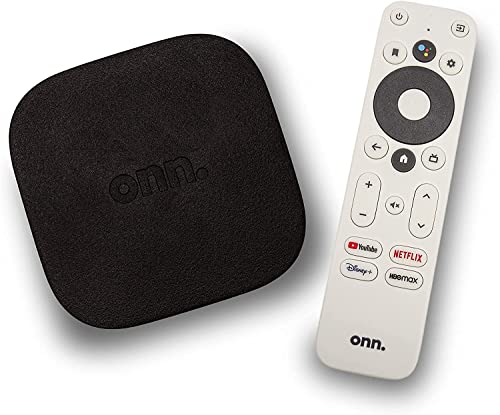
Walmart’s ONN brand has been aggressive on price across electronics, and this box continues that trend while bundling a voice remote with Google Assistant and a high-speed HDMI cable in the same package. For a first-time buyer who does not want to worry about cable compatibility or remote selection, the all-in-one approach removes friction from the checkout decision.
- Pro: Voice remote and HDMI cable included, eliminating accessory add-on purchases.
- Pro: Google Assistant integration on a budget-priced Android TV device.
- Con: Limited published hardware detail on storage, RAM, and WiFi generation makes it harder to compare against the field.
Skip it if you need confirmed specs for a performance-critical setup or want the highest-availability software update track.
Google TV Streamer 4K
Google’s own hardware in this space comes with a clear advantage: first-party software. The Google TV interface gets updates and new features before any licensed Android TV device, and smart home controls are native rather than bolted on. The voice search remote is polished, HDR content from Netflix and other services is optimized, and the build quality reflects the price premium.
- Pro: First-party Google TV software with the longest guaranteed update path in this category.
- Pro: Built-in smart home hub control, not just streaming.
- Con: The $149 price is nearly seventy dollars above the Xiaomi TV Box S 3rd Gen, which matches or exceeds it on connectivity specs.
Skip it if you want the best specs-per-dollar ratio and can accept a slightly older software update cadence from a third-party manufacturer.
Buying Guide
Video and Audio Format Support
Dolby Vision and HDR10+ are competing premium HDR formats. If your TV supports one, match your box to it or you are paying for dynamic metadata processing that cannot reach your panel. Atmos works independently through your audio system but requires the box to decode the stream. A device that handles both at under fifty dollars, like the TiVo Stream 4K, is a genuine value signal in a market where many budget boxes skip one or both.
Connectivity Standards
WiFi 6 has moved from luxury to expectation in this category. A box still shipping with WiFi 5 will show slower app loading and more buffering on multi-device home networks. HDMI 2.1 matters less for streaming itself but becomes relevant if you want your box to pass through high-refresh content or serve as a hub for other devices. The Xiaomi and R69 Max both confirm WiFi 6; the Android TV Box 12.0 compensates with a wired port instead, which is the most stable option when available.
RAM and Storage Realities
Two gigabytes of RAM is the practical floor for Android TV boxes that run Google TV or Android 12 and above without lag. Thirty-two gigabytes of storage is comfortable for a dozen apps and their caches. Sixty-four gigabytes, as seen on the R69 Max, is meaningful only if you keep downloaded content or many media player libraries. The difference between a $38 box with 2GB and a $56 box with 4GB is not a line-item on the spec sheet — it is the responsiveness you feel after six months of updates.
Our Verdict
The Xiaomi TV Box S 3rd Gen is the top pick for most buyers: it combines Dolby Vision, Atmos, WiFi 6, HDMI 2.1, and Google TV software at $88.88, a feature set no other device in this roundup matches within fifteen dollars either direction. The budget pick is the TiVo Stream 4K at $39.98 — it brings Dolby Vision and Atmos to the entry tier, which is remarkable at that price. However, if your setup depends on a wired Ethernet connection for stability or your network is heavily congested, the Android TV Box 12.0 at $44.99 wins because its dedicated port eliminates the variable that makes wireless streaming unpredictable.
FAQ
Can an android tv box replace a smart TV?
Yes, and often better. Smart TV built-in processors and software tend to receive fewer updates than dedicated streaming hardware, so adding a current android tv box to an older or mid-range television typically delivers faster navigation, newer apps, and longer security support than the TV’s own interface ever will.
Is WiFi 6 important for a streaming box?
It becomes important once your home network carries multiple devices or your broadband plan exceeds roughly 200 Mbps. WiFi 6 handles congestion far better than the older standard, reducing buffering during peak hours. If you use a wired Ethernet connection, WiFi 6 is irrelevant.
Do I need Dolby Vision for Netflix or Disney+?
Not to watch content, but to see it as the creators intended. Netflix and Disney+ both offer Dolby Vision titles when both the streaming device and the display support it. A box without Dolby Vision will fall back to standard HDR10, which still looks good but loses the dynamic scene-by-scene tone mapping.
What is the difference between Android TV and plain Android on a box?
Android TV is Google’s curated, TV-optimized operating system with a controlled app store, voice assistant, and guaranteed update commitments. Plain Android on a generic box uses a phone-oriented interface with more sideloading flexibility but fewer security guarantees and typically no formal update path from the manufacturer.