Key takeaways
- The best 65 inch TVs in 2026 are the LG G5 for a dark-room cinema, Samsung S95F for bright-room OLED viewing, TCL QM8K for value, and Samsung QN90F for sports in rooms with strong daylight. A 65-inch television is usually…
The best 65 inch TVs in 2026 are the LG G5 for a dark-room cinema, Samsung S95F for bright-room OLED viewing, TCL QM8K for value, and Samsung QN90F for sports in rooms with strong daylight.
A 65-inch television is usually about 56.7 inches wide and 32.7 inches tall before its stand. Allow at least 60 inches of wall width, and choose your seating distance based on resolution and viewing habits: roughly 6.5–9 feet suits most 4K viewing, while 10–11 feet gives a more relaxed cinema perspective. The picks below separate OLED’s black-level advantage from mini-LED’s higher brightness and better tolerance for sustained sunlight.
Our top picks
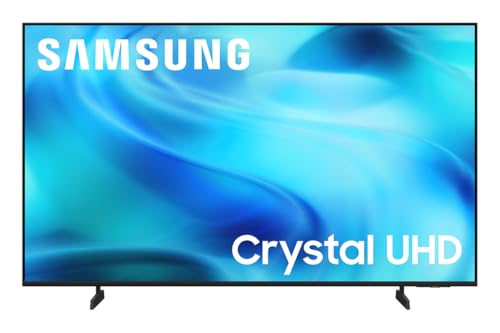


As an Amazon Associate we earn from qualifying purchases at no extra cost to you. Ratings are shown as listed on Amazon.
Quick picks by room and priority
| Situation | Best choice | Why it fits | Typical 65-inch price range |
|---|---|---|---|
| Dark or controlled room | LG G5 OLED | Exceptional contrast, high HDR brightness and a flush wall-mount design | $2,500–$3,500 |
| Bright room with reflections | Samsung S95F OLED | Very bright QD-OLED picture and one of the strongest anti-reflection screens | $2,000–$3,000 |
| Sports and daytime viewing | Samsung QN90F | High sustained brightness, strong glare control and no OLED burn-in concern | $1,500–$2,500 |
| Best value | TCL QM8K | Mini-LED brightness and local dimming at a lower price | $900–$1,500 |
| Film-focused processing | Sony BRAVIA 8 II | Natural motion, accurate upscaling and excellent cinematic tone | $2,000–$3,000 |
| Built-in sound quality | Panasonic Z95B | OLED contrast with a more capable integrated speaker system | $2,500–$3,500 |
1. LG G5 OLED: best overall for a dedicated movie room
The LG G5 is the strongest all-round choice when picture quality matters more than price. Its OLED panel produces perfect per-pixel black, so stars, subtitles and shadow detail remain clean without the halos common to LCD televisions. The 2025-generation OLED panel is also substantially brighter than older standard OLED designs, with independent measurements commonly placing small HDR highlights around or above 2,000 nits depending on the picture mode and test window.
Its anti-reflection coating is good, but it is still not the ideal choice opposite a large uncovered window. Bright objects can appear slightly tinted or hazy at certain angles. The G5 is only a few centimeters thick in its wall-mounted portion, making it especially suitable for a 60-inch-wide media wall with limited depth.
Choose it for films, premium gaming and seating between about 6.5 and 9 feet. Look elsewhere if daytime sports dominate or if the television will run the same news ticker for many hours every day.
2. Samsung S95F: best OLED for a bright living room
The Samsung S95F combines a QD-OLED panel with a matte-style glare-reducing screen. That surface can make reflections less distracting than on glossy OLED televisions, particularly when lamps or windows are positioned in front of the viewer. Its measured HDR highlights can approach roughly 2,000 nits in small areas, while full-screen brightness remains lower, as it does on every consumer OLED.
Colors are vivid and wide-ranging, and four HDMI 2.1 inputs support 4K gaming at up to 144Hz on compatible hardware. Samsung does not support Dolby Vision, so streaming services that offer it will use HDR10 or HDR10+. That is rarely a deal-breaker, but it matters if your priority is format flexibility.
The S95F is a strong match for seating 7–10 feet away in a mixed-use room. Its matte screen reduces distracting mirror-like reflections, though it can soften perceived black depth compared with a glossy OLED in a completely dark room.
3. Samsung QN90F: best for sports, windows and long daily use
The QN90F is a premium mini-LED LCD television rather than an OLED. That distinction matters in a bright family room: it can maintain high full-screen brightness for a football field, ski slope or daytime broadcast without the automatic brightness behavior associated with OLED panels. Independent measurements of comparable QN90F modes commonly show approximately 1,500–2,000 nits in small HDR highlights and several hundred nits across much larger portions of the screen.
Its local dimming produces deep blacks, but subtitles and bright objects can still create some blooming against a dark background. Viewing angles are good for an LCD, although OLED remains more uniform when watched far off-center. Motion handling is effective for sports when the television’s motion interpolation is used conservatively.
Pick the QN90F for a room with direct daylight, a household that watches many hours daily, or anyone who prefers not to think about OLED image retention. It is also a safer choice for persistent channel logos and game HUDs.
4. TCL QM8K: best value mini-LED
The TCL QM8K offers the most brightness per dollar among these recommendations. Its mini-LED backlight and large local-dimming zone count produce punchy HDR highlights, with independent testing of this class of TCL sets often reaching roughly 2,000–3,000 nits in small windows. That makes it more convincing than budget edge-lit LCD models for sunsets, explosions and bright sports graphics.
There is still some blooming, especially around white subtitles, and factory accuracy can vary more than on Sony, Panasonic or LG models. A short calibration using the built-in Movie or Filmmaker-style mode is worthwhile. Reflection handling is competent rather than exceptional, so place it perpendicular to windows where possible.
The QM8K makes sense at 7–11 feet, particularly when the budget must also cover a soundbar. It is the practical choice for a large, bright living room where OLED’s contrast advantage would be diluted by ambient light.
5. Sony BRAVIA 8 II: best for film processing and motion
The Sony BRAVIA 8 II is an OLED designed around picture processing rather than maximum brightness. Sony’s upscaling is particularly valuable when a 65-inch screen is fed cable, broadcast television or older HD films. Motion tends to look natural with less artificial “soap opera” effect when the default settings are adjusted carefully.
Expect small HDR highlights in the broad range of 1,000–1,500 nits depending on mode and measurement method, with the usual OLED reduction on large bright scenes. Its glossy screen delivers excellent dark-room contrast but can show window and lamp reflections clearly.
Choose the BRAVIA 8 II if your library contains many films and lower-quality sources, you sit around 7–9 feet away, and you value faithful tone mapping over the brightest possible HDR picture. Gamers should note that it has fewer gaming-oriented HDMI 2.1 connections than some rivals.
6. Panasonic Z95B: best built-in audio and cinematic accuracy
The Panasonic Z95B pairs a premium OLED panel with an integrated speaker system that is more substantial than the thin audio found in most televisions. It can produce clearer dialogue and a wider front soundstage, although a separate soundbar or AV receiver remains better for bass and surround effects.
Its OLED picture is suited to dark rooms, with effectively perfect black levels and HDR highlights generally in the high-hundreds to low-thousands of nits depending on the test. The screen is reflective, so avoid placing it directly opposite a bright window. Panasonic’s picture modes are aimed at accurate film reproduction rather than exaggerated showroom brightness.
This is a good fit when wall space is limited, external speakers are undesirable, and movie viewing is more important than competitive gaming.
7. LG C5 OLED: best mainstream OLED
The LG C5 gives up some of the G5’s peak brightness and flush-mount design while retaining OLED contrast, four HDMI 2.1 ports and a strong gaming interface. It is easier to recommend for mixed movie and gaming use because it supports 4K at up to 144Hz, variable refresh rate and low input lag.
Independent measurements typically place its small HDR highlights around 1,000–1,500 nits, with performance varying by picture mode and screen area. Reflection handling is average for a glossy OLED. In a dark room, that glossy surface can look richer than a matte display; in a bright room, it can act like a mirror.
Buy the C5 when you want OLED’s black levels but do not need the G5’s wall-thin construction or maximum HDR brightness. It is especially sensible at 6.5–9 feet.
8. Hisense U8QG: best high-brightness alternative
The Hisense U8QG is another mini-LED LCD option for viewers who prioritize brightness and a large, dramatic HDR image. Its peak measurements can exceed 2,000 nits in suitable modes, while local dimming keeps black levels much better than those of conventional LED televisions.
Panel uniformity, blooming and factory calibration can vary between units more than with the premium OLED choices. Its anti-reflection performance is useful but not a substitute for repositioning the television away from direct glare. Check motion settings carefully for sports, since aggressive smoothing can create artifacts around fast-moving players.
The U8QG suits a bright room, frequent sports viewing and buyers who want premium-looking HDR without premium OLED pricing. It is less attractive for a completely dark room where blooming becomes easier to notice.
How to match a 65-inch TV to your wall and seats
- Measure the wall: reserve at least 60 inches of clear horizontal width and about 36 inches of vertical height above furniture. A wall mount usually makes the television look less imposing than a wide stand.
- Measure the eye-to-screen distance: divide the distance in inches by about 1.5 to 1.8 for a comfortable 4K viewing angle. At 96 inches, or 8 feet, that calculation gives a 53–64-inch screen range, making 65 inches a strong fit.
- Identify the brightest light source: if it faces the screen, favor the Samsung S95F, QN90F, TCL QM8K or Hisense U8QG. If light is controllable, favor the LG G5, C5, Sony or Panasonic OLED models.
- Plan ventilation and cables: leave several inches around a stand-mounted television and avoid trapping a hot set inside a sealed cabinet. Confirm that the wall mount supports the set’s VESA pattern and weight.
Ownership details that affect the decision
Dust the screen with a dry, clean microfiber cloth. Do not spray cleaner directly onto the panel, press hard, or use paper towels; coatings can mark more easily than the glass on a phone. Keep automatic pixel-refresh and panel-care features enabled on OLED televisions, but do not run manual compensation cycles unnecessarily.
OLED is not guaranteed to burn in, but repeated static logos, desktop taskbars and news tickers increase the risk of permanent uneven wear over time. Varying content and using screen-off timers reduce that risk. Mini-LED LCD sets avoid OLED burn-in concerns, but their LED backlights and local-dimming components can still age, and no LCD is immune to panel uniformity problems.
For most households, the final choice is simple: select an OLED for the darkest, cleanest movie image; select a mini-LED LCD for direct daylight, sustained brightness and heavy sports use; and choose the TCL QM8K when the budget needs to stay below premium-TV territory.