Key takeaways
- Pro: Full modern codec and connectivity stack in one compact unit
- Pro: Google TV home screen organizes content across apps better than stock Android TV
- Con: 32GB fills quickly once system updates and a handful of apps are installed
A 4K TV sitting idle without a smart platform is a missed opportunity, and the fastest fix is a compact android tv box 4k device plugged into an open HDMI port. The problem is that the market is genuinely confusing. Prices swing from under $40 to roughly $150, RAM ranges from 2GB to 4GB, storage from 16GB to 128GB, and codec labels mean almost nothing on the cheapest unbranded units.
What separates a box that runs smoothly for years from one that frustrates you within months comes down to three things: adequate memory headroom for Android’s overhead, modern video and audio codec support so your display is actually utilized, and connectivity standards that won’t bottleneck high-bitrate streams. Owner feedback fills in what spec sheets omit — remote reliability, interface stutter, and thermal throttling that only surface after weeks of daily use. This roundup compares all eight candidates on published specs, current pricing, and what real buyers report over time.
Our top picks




As an Amazon Associate we earn from qualifying purchases at no extra cost to you.
Quick Picks
| Product | Best for | Price |
|---|---|---|
| Xiaomi TV Box S 3rd Gen | Most buyers who want a polished all-rounder | $88.88 |
| TiVo Stream 4K | Cord-cutters unifying live TV and apps | $39.98 |
| 2026 Android 14 TV Box (RK3539) | Budget second-screen with current software | $41.99 |
| ONN Android TV 4K | Buyers wanting a bundled remote on a tight budget | $58 |
| Google TV Streamer 4K | Smart home integrators and Google ecosystem users | $149 |
| Smart TV Box Android 14.0 (RK3528) | Best value 4GB RAM under $50 | $48.99 |
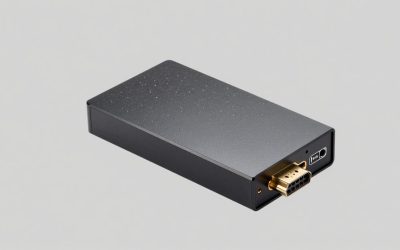
| Android 14 TV Box (Quad-Core) | Absolute cheapest entry with WiFi 6 | $37.99 |
| 2026 Android 13.0 TV Box (4G/128G) | Maximum local storage without premium pricing | $59.99 |
How We Picked
We compared these eight units on four criteria that consistently shape the ownership experience. First, RAM and ROM: Android TV demands at least 2GB to stay responsive, and 4GB gives noticeably more headroom against background-app eviction. Second, HDR and audio standards: Dolby Vision or HDR10+ support matters when your display can actually render those formats. Third, connectivity: WiFi 6, HDMI 2.1, and Bluetooth 5.x reduce buffering and future-proof the box against router upgrades. Fourth, price-to-capability: whether the sticker price tracks the internal spec sheet or pays for brand tax.
The 8 Best Android TV Box 4K in 2026
Xiaomi TV Box S 3rd Gen
For most buyers, this is the easiest recommendation in the lineup. The Xiaomi TV Box S 3rd Gen pairs 32GB storage with Google TV’s polished interface, Dolby Vision and Atmos support, WiFi 6, and HDMI 2.1 — a combination that covers every practical need for 4K streaming. Owners praise its compact footprint and quiet operation during sustained playback sessions.
- Pro: Full modern codec and connectivity stack in one compact unit
- Pro: Google TV home screen organizes content across apps better than stock Android TV
- Con: 32GB fills quickly once system updates and a handful of apps are installed
Skip this if you maintain large sideloaded media libraries or need maximum internal storage at any price.
TiVo Stream 4K
The TiVo Stream 4K wins on raw value at under $40. Its interface unifies live TV and on-demand apps on a single screen, which suits cord-cutters who bounce between services without juggling remotes. Dolby Vision HDR and Dolby Atmos output mean it drives a quality display properly for the price. Owner feedback highlights the one-screen guide layout as a genuine convenience.
- Pro: Live TV and streaming apps presented in one unified interface
- Pro: Dolby Vision and Atmos at a price most competitors cannot match
- Con: Modest internal storage prevents offline caching and may slow over time
Skip this if you want local file playback or plan to keep the box for many years without a hardware swap.
2026 Android 14 TV Box (RK3539)
At $42, this RK3539-powered unit runs Android 14 and includes WiFi 6, placing current software and modern connectivity in a budget shell. It suits a guest bedroom or office TV where you want up-to-date Android without paying premium prices. The RK3539 handles 4K decoding for mainstream apps, and early owner reviews note a snappy initial setup.
- Pro: Android 14 with WiFi 6 at near the lowest price in the roundup
- Pro: Compact form factor disappears behind the TV
- Con: 2GB RAM and 16GB storage leave little headroom after a system update
Skip this if your primary viewing involves heavy HDR content where a more capable processor prevents frame drops during app switching.
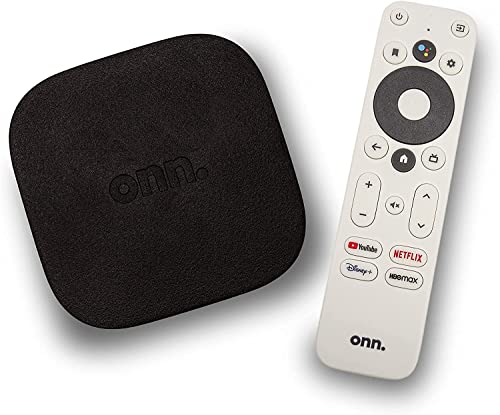
ONN Android TV 4K
ONN’s streaming device lands at $58 and bundles a voice remote with Google Assistant, eliminating a separate accessory purchase. It runs Android TV, so app availability is broad, and the included high-speed HDMI cable is a small but welcome convenience. Owner reviews consistently mention the remote’s reliability as a positive surprise at this price point.
- Pro: Voice remote and Google Assistant included in the box price
- Pro: Full Android TV app ecosystem without a premium markup
- Con: Historically slow firmware updates make the software feel dated within a year
Skip this if you prioritize long-term OS updates or want the fastest interface response available at any tier.
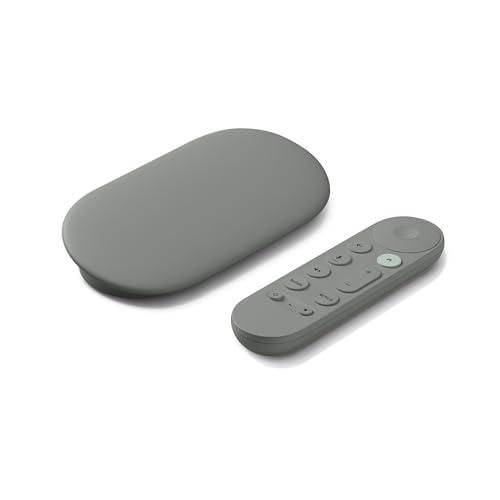
Google TV Streamer 4K
Google’s own hardware commands the highest price here at $149, and it justifies that gap with 32GB storage, a redesigned voice-search remote, and first-party smart home control with Matter-based device integration. The Google TV interface organizes content across services more effectively than stock Android TV, and the Hazel finish signals Google treating the box as a living-room object. Owners report noticeably faster app launches versus budget competitors.
- Pro: Deep smart home bridge with Matter and Thread support built in
- Pro: First-party Google updates guarantee the longest software lifespan
- Con: Price is nearly double the Xiaomi while streaming-only capability is comparable
Skip this if you need a streaming box only and have no interest in controlling lights, locks, or cameras from your TV remote.
Smart TV Box Android 14.0 (RK3528 4G/32G)
This unit stands out in the sub-$50 tier by pairing 4GB RAM and 32GB storage with the RK3528 chipset, WiFi 6, Bluetooth 5.4, USB 3.0, and HDR10+ support. The memory configuration means Android 14 runs without the constant background-app eviction that plagues 2GB boxes. Owners appreciate Bluetooth 5.4 pairing with game controllers and soundbars.
- Pro: 4GB RAM and 32GB storage under $50 is rare in this category
- Pro: Bluetooth 5.4 and USB 3.0 for accessories and local playback
- Con: Unbranded unit carries uncertainty about firmware update longevity
Skip this if you need a recognizable brand’s app-store guarantee or confirmed multi-year patch commitments.
Android 14 TV Box (Quad-Core 2GB/16GB)
At $38, this is the cheapest entry in the roundup, and it still runs Android 14 on a quad-core 64-bit CPU with dual-band WiFi 6, Bluetooth, USB 3.0, and HDR10+ decoding. For basic streaming on a secondary display, it covers the essentials without compromising on connectivity standards.
- Pro: Lowest price with WiFi 6 and Android 14
- Pro: USB 3.0 port available for local storage expansion
- Con: 2GB RAM ceiling forces app reloads between multitasking
Skip this if the box feeds your primary living-room display or you run media-center software that demands more working memory.
2026 Android 13.0 TV Box (4GB/128GB)
This is the storage king of the group: 4GB RAM paired with 128GB ROM and the RK3528 chipset at under $60. For anyone keeping large media files on internal storage or running multiple heavy apps simultaneously, this capacity is unmatched elsewhere near the price. WiFi 6 and dual-band support keep streaming buffers full during 4K playback.
- Pro: 128GB ROM eliminates external drive dependency for most media libraries
- Pro: 4GB RAM handles multitasking without reloading background apps
- Con: Ships on Android 13.0, so a few newer interface features are absent at setup
Skip this if a stock Android TV experience with guaranteed vendor updates matters more than raw storage volume.
Buying Guide
RAM and Storage: The Real Bottleneck
Android TV is not a lightweight operating system. With only 2GB of RAM, the platform keeps roughly one or two apps in memory at once; anything else reloads from flash every time you navigate back. Four gigabytes changes that experience materially. Storage matters secondarily but compounds over time: 16GB leaves almost no room after the OS, a system update, and five apps. Aim for 32GB minimum if you install more than a dozen packages.
HDR Standards and Audio Decoding
Not every box that outputs 4K uses your display’s HDR capability. Dolby Vision and HDR10+ are distinct tone-mapping formats; if your TV supports Dolby Vision and the box does not, you lose the dynamic metadata that makes the image look its best. On the audio side, Dolby Atmos passthrough to a compatible soundbar or receiver only works when the box decodes or bitstreams the Atmos layer. Check the spec sheet for both before purchasing.
Connectivity That Won’t Bottleneck Your Streams
WiFi 6 reduces interference and maintains higher sustained throughput than WiFi 5 on congested networks — relevant when streaming 4K HDR content at 50 Mbps or above. HDMI 2.1 extends bandwidth to 48 Gbps, which only matters if you pass through to a receiver or want variable refresh rate. Bluetooth version affects remote latency and controller pairing. A box with outdated wireless radios will bottleneck the rest of its hardware regardless of RAM or chipset.
Our Verdict
The Xiaomi TV Box S 3rd Gen is the top pick for most buyers: it balances Google TV polish, full Dolby Vision and Atmos support, HDMI 2.1, WiFi 6, and a compact design at a mid-range price. The Android 14 TV Box Quad-Core at $38 is the budget pick for anyone who just needs WiFi 6 and Android 14 on a secondary screen without paying more. However, if your priority is storing a large local media library without an external drive, the 2026 Android 13.0 TV Box with 128GB ROM is the only unit in this group that solves that problem under $60.
FAQ
Do I need HDMI 2.1 for 4K streaming?
No. 4K at 60Hz with HDR fits comfortably within HDMI 2.0 bandwidth. HDMI 2.1 matters for 4K at 120Hz, variable refresh rate, or eARC passthrough to a modern receiver — none of which streaming-only boxes require.
Is Android TV the same as Google TV?
Android TV is the underlying operating system; Google TV is a newer interface layer that reorganizes content across apps into a single home screen. Both access the same Play Store, but Google TV’s discovery experience is more polished and actively developed.
How much RAM does a streaming box actually need?
Two gigabytes is the practical floor for a responsive experience on any current Android TV or Google TV build. Four gigabytes lets you keep several apps in memory simultaneously without reload delays, which is noticeable during daily use.
Will an unbranded box get long-term updates?
Rarely. Branded manufacturers such as Xiaomi, Google, and ONN publish firmware and security patches for multiple years. Unbranded RK-series boxes typically receive only initial builds, so plan for a hardware replacement cycle of roughly three years rather than expecting sustained software support.