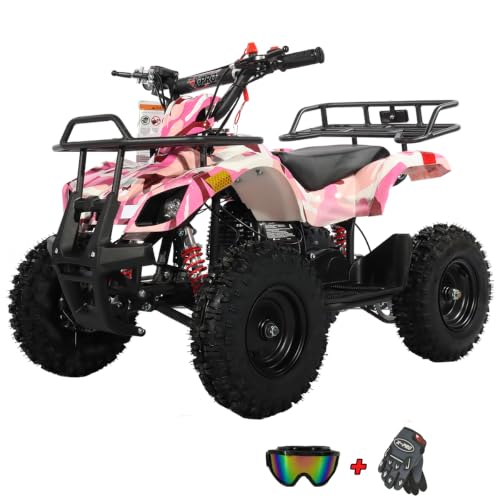
For young children moving from a ride-on toy to their first real quad, a small-displacement youth ATV with a throttle limiter and automatic transmission, such as the Yamaha YFZ50 or Raptor 90 class, the Polaris Outlaw 70 or the Honda TRX90X, is the usual starting category, while very young or first-time riders may be better served by an electric kids ATV. Age, size and supervision matter more than any model name.
Our top picks


As an Amazon Associate we earn from qualifying purchases at no extra cost to you.
Safety First: Age and Size
Safety organisations, including the Consumer Product Safety Commission and the ATV Safety Institute, advise that children ride only machines sized for their age and that adult-size ATVs are not safe for children. Makers print a minimum rider age on youth models, commonly around six for the smallest gas models and about ten or older for 70cc to 90cc machines. Follow the label and owner’s manual, and do not buy a bigger machine for a child to grow into.
Many injuries involve children on adult machines or riding without a helmet. Always require a DOT- or equivalent-approved helmet, eye protection, gloves, boots and long sleeves and pants. Many regions require training or restrict public-land riding for minors, so check local rules. If you have questions about your child’s readiness, ask an instructor or a qualified safety course provider.
At a Glance: Kids ATV Options Compared
| Option | Type | Best for | Notes from makers and reviewers | Limits |
|---|---|---|---|---|
| Yamaha YFZ50 / similar small youth quad | Gas, about 50cc class | Youngest eligible riders with adult supervision | Maker lists a minimum rider age and automatic transmission; throttle limiter is common on youth models | Small; outgrown quickly |
| Kawasaki KFX50 class | Gas, about 50cc class | First sport-style quad | Pull-start or electric start depending on year; automatic transmission | Availability varies by model year |
| Polaris Outlaw 70 class | Gas, about 70cc class | Older children stepping up | Maker lists higher minimum age; adjustable throttle limiter on youth models | Heavier; needs more control |
| Yamaha Raptor 90 / Honda TRX90X class | Gas, about 90cc class | Pre-teens with experience | Faster and larger; maker lists a higher minimum age | Not a toy; needs training and supervision |
| Razor Dirt Quad and similar electric quads | Battery electric | Younger children and backyard use | Quiet, lower speed, simple controls | Limited run time; modest terrain capability |
| Battery ride-on ATVs (6V to 24V toy class) | Toy electric | Toddlers and preschoolers on flat ground | Parent-controlled speed features on some models | Toy-grade; not for rough terrain |
Model availability changes by year and region, and some gas youth models are sold only through dealers. Confirm the current lineup, the minimum age and the weight limit with the maker or dealer before buying.
How to Choose
Match engine size to age and skill
Engine displacement is a rough guide to power. Small 50cc models are intended for the youngest eligible riders, 70cc suits older children with some experience, and 90cc is for pre-teens and early teens who can handle it. Maker age guidelines are minimums, not recommendations to buy at the earliest age. A cautious approach is to start smaller than the limit.
Look for safety features
- Throttle limiter: Lets an adult restrict top speed as the child learns.
- Tether or kill cord: Some youth models include a remote or lanyard stop switch an adult can use.
- Automatic transmission: Simplifies control for beginners.
- Reverse gear: Useful when the child gets stuck.
- Safety flag: Increases visibility.
Consider gas vs. electric
Electric models are quieter, need less maintenance and are easier for very young children, but they offer lower power and limited run time. Gas models have more range and capability but need fuel, maintenance and storage care. Store gasoline safely and keep machines out of children’s reach when not in supervised use.
Budget Tiers
Budget tier
Battery-powered toy ATVs and lesser-known imported gas models sit at the low end. Quality and parts support can vary, so look at warranty terms and local service availability. Imported gas quads of unclear origin may not meet safety standards.
Mid-range tier
Electric quads from established toy and powersports names and used youth gas models from major brands sit here. They offer a reasonable balance of price, support and resale.
Premium tier
New youth ATVs from Yamaha, Honda, Polaris and Kawasaki cost the most but come with dealer networks, parts and clear age and safety guidance.
Pick X If… Decision Table
| Pick this | If your child… |
|---|---|
| Battery ride-on ATV | Is a toddler or preschooler and will ride on flat ground |
| Electric youth quad (Razor-style) | Is a young child riding in a yard |
| 50cc class (Yamaha YFZ50, Kawasaki KFX50) | Meets the age label and has adult supervision |
| 70cc class (Polaris Outlaw 70) | Has outgrown a 50cc quad and rides with training |
| 90cc class (Raptor 90, Honda TRX90X) | Is a mature pre-teen with experience and supervision |
| A used youth model from a major brand | Needs value, with an inspection of the throttle limiter, brakes and frame |
Buying Used
Used youth ATVs can save money, but inspect them carefully. Check the throttle limiter and brakes work, that the frame has no cracks or bends, that the tyres are in good shape and that the engine starts cleanly. Ask for a service history and confirm the machine has not been modified for more speed. Avoid machines with missing guards or damaged safety features.
Gear and Training
- Approved helmet, goggles or face shield, gloves, over-the-ankle boots, and long sleeves and trousers.
- A chest protector and knee guards for more active riding.
- A riding course for the child and an adult who will supervise. Many dealers or safety groups provide one.
- A defined, safe riding area away from roads, water and steep slopes.
Children should never ride on public roads. Never carry passengers on a single-rider ATV. Keep adult supervision constant, especially while the child is learning.
Alternatives Worth Considering
Youth dirt bikes and pit bikes
Small motorcycles teach balance and throttle control, but they have a steeper learning curve and a different risk profile.
Electric balance bikes and bicycles
For younger children, pedal bikes and electric balance bikes build skills with lower speed and weight.
Go-karts and UTV-style kids vehicles
Enclosed or caged youth vehicles sometimes provide more structure, though they still require supervision and appropriate age limits.
Maintenance and Storage
Youth ATVs need regular checks to stay safe. Before each ride, an adult should inspect the tyres for pressure and damage, test the brakes, confirm the throttle returns when released, check the steering for play, and make sure the throttle limiter is set appropriately. Gas models need clean fuel, an air filter inspection and oil changes as described in the manual. Electric models need battery charging per the maker’s directions, and should not be left charging unattended or stored with a damaged battery.
Store the machine in a dry place out of reach of children when not in use, and remove keys or kill cords. Keep fuel in approved containers away from living areas. If you notice damage to the frame, brakes or throttle, stop riding and have a qualified technician inspect the machine.
Local rules and insurance
Rules for children on ATVs vary widely. Some regions restrict riders under a certain age, require helmets by law, ban riding on public roads or on certain public lands, or require a safety course. Check the rules where you ride, and ask your insurer whether the machine is covered on your property, since policies differ.
Teaching a child to ride
Begin in a flat, open, fenced area with no traffic. Start with the throttle limiter set low, practise starting, stopping and gentle turns, and add difficulty only as control improves. Keep sessions short, since tired children make mistakes. An adult should stay within sight and reach and set clear rules about speed, boundaries and stopping when told. Never allow riding at dusk or in the dark unless the machine has proper lighting and the area is safe.
Frequently Asked Questions
What age can a child ride an ATV?
Makers list minimum ages on youth models, commonly around six for the smallest gas quads and higher for larger ones. Follow the label and local law, and consider your child’s maturity and size.
Is an electric kids ATV safer than a gas one?
Electric models are slower and simpler, which makes them a gentler starting point. They still need helmets, supervision and a safe riding area.
Can my child ride an adult ATV if they are tall?
Safety groups advise against it. Adult machines are heavier and faster, and children lack the strength and judgement to control them.
What gear does a child need?
At minimum an approved helmet, eye protection, gloves, boots and long clothing. Add chest and knee protection for more active riding.
Do I need training or a licence?
Rules vary by region. Many places require or encourage a safety course for young riders, and public-land riding is often restricted. Check local regulations.
Should I buy new or used?
New models include warranty and dealer support. Used models save money but need careful inspection of the brakes, throttle limiter and frame.