Key takeaways
- Headphones and a small monitor pair: A practical option for apartment dwellers who need quiet practice.
- Portable PA systems with built-in mixer: All-in-one column or tower systems are simple to set up for small events.
- Rental gear: For one-off events, renting a larger system can be more sensible than buying.
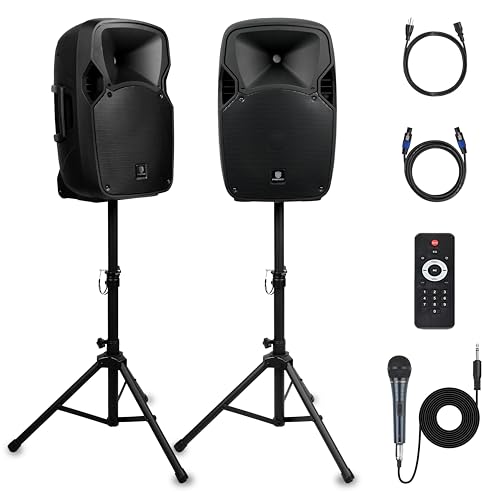
The best DJ speakers depend on where you play: compact powered studio monitors such as the Pioneer DJ VM series or Alpha Theta units suit bedroom and practice setups, while powered PA speakers like the JBL EON, Yamaha DBR, Mackie Thump or Electro-Voice ZLX families suit parties and small venues. Whichever route you take, look for active (powered) speakers, balanced inputs, and enough output to be clean at the volume you actually need.
Our top picks


As an Amazon Associate we earn from qualifying purchases at no extra cost to you.
DJ Speakers at a Glance
| Type | Best for | Typical stated features | Limits |
|---|---|---|---|
| DJ monitor speakers (Pioneer DJ VM series, Alpha Theta, similar) | Home practice, mixing, small rooms | Makers list powered cabinets, 5 to 8 inch woofers, balanced and RCA inputs | Not designed to fill a party space or large room |
| Studio monitors (Yamaha HS series, Kali, KRK) | Accurate sound while learning to mix | Flat-leaning response, XLR/TRS inputs, room-tuning switches | Less bass punch and lower maximum level than PA speakers |
| Powered PA speakers, 10 to 12 inch (JBL EON, Yamaha DBR, Mackie Thump, EV ZLX) | House parties, small gigs, mobile DJs | Built-in amp, lightweight cabinet, pole-mount socket, multiple inputs | Need space; some are bulkier to carry |
| Powered PA speakers, 15 inch | Larger rooms, dance floors | More low-end output, higher stated SPL | Heavier, needs more space |
| Speaker plus subwoofer systems | Bass-heavy genres, bigger events | Satellite tops with powered subs, crossover built in | More setup, more cables, more weight |
| Bluetooth party speakers | Casual, portable gatherings | Battery, wireless streaming, some with DJ input | Compression and latency can limit serious DJing |
Model lineups update regularly, so confirm the current version of any named series on the maker’s site.
What to Look for in DJ Speakers
Powered versus passive
Powered (active) speakers have amplifiers built into the cabinet, so you just plug in a mixer or controller and a power cable. Passive speakers need a separate amplifier, which adds cost and complexity. Almost all beginner and mobile DJ buyers should choose powered speakers.
Monitors versus PA speakers
Studio and DJ monitors are built for close listening, usually from an arm’s length away. PA speakers are designed to project sound further and louder, with sturdier cabinets and mounts for stands. If you are a bedroom DJ, monitors are the better fit. If you play for friends or at events, a PA speaker will deliver the volume and coverage.
Woofer size and bass
A larger woofer generally moves more air and produces deeper low frequencies. Five- and six-inch monitors are fine for small rooms but struggle with deep bass. Twelve- and 15-inch PA speakers reach lower and louder, and adding a subwoofer extends this further. Remember that cabinet design and amplifier power also matter, not only woofer size.
Output level and clean headroom
Makers usually list maximum SPL, which is a peak figure under ideal conditions. Reviewers tend to point out that clean, undistorted output at party volume is the more useful measure. When in doubt, pick a speaker with more capacity than you need, so you are not pushing it to the limit all night.
Inputs and connections
DJ use calls for balanced XLR or TRS inputs for clean signals over long cables, plus RCA for casual setups. A mic input is useful for announcements, and a link or thru output makes it simpler to chain a second speaker. Bluetooth is handy for background music but should not replace a wired connection for mixing.
Portability and mounting
Check weight, handles and the pole-mount socket if you plan to use speaker stands. Plastic cabinets are lighter and are popular among mobile DJs, while wooden cabinets sometimes offer a fuller sound but weigh more. Use stands rated for the speaker’s weight and keep cables tidy to prevent trips.
Hearing safety
Loud music can damage hearing over time. Keep volume at a comfortable level, take listening breaks, and consider hearing protection for long sets or loud venues. Follow the maker’s guidelines on power and placement.
Budget Tiers
Budget
Entry-level DJ monitors and compact PA speakers are suitable for bedrooms, small apartments and casual get-togethers. Expect lighter cabinets and less headroom, which is fine at low to moderate volumes.
Mid-range
Mid-priced PA speakers from Yamaha, JBL, Mackie and Electro-Voice are the usual choice for mobile DJs and small venues. They offer stronger build quality, more power and a wider range of inputs. Many working DJs start in this tier.
Premium
Premium systems, including QSC and higher-end Yamaha or JBL lines, are built for frequent gigging, with tougher cabinets, more refined processing and greater output. They cost more and are heavier, so they suit professionals or serious enthusiasts.
Pick X If… Decision Table
| Your situation | Pick |
|---|---|
| Learning to mix at home | Compact DJ or studio monitors |
| House parties up to a medium room | Pair of 10 to 12 inch powered PA speakers |
| Dance floor with heavy bass genres | 12 to 15 inch speakers plus a powered sub |
| Frequent gigs, need to carry gear | Lightweight powered PA speakers with handles and pole mounts |
| Casual party, portable, no controller | Bluetooth party speaker |
| Want accurate sound for mix practice | Studio monitors with balanced inputs |
| Tight budget | Entry-level monitors or a single compact PA speaker |
Setup Tips
Place speakers at ear height on stands or sturdy surfaces, angled toward the listening area and away from reflective walls. In a small room, keep them away from corners to avoid boomy bass. Use balanced cables and keep power and audio cables separate to reduce hum. Set mixer gain so the signal is strong without clipping, then bring up speaker volume gradually. Switch on the speakers last and off first to avoid pops that can stress drivers. Follow the manual for power, ventilation and safe handling.
Alternatives
- Headphones and a small monitor pair: A practical option for apartment dwellers who need quiet practice.
- Portable PA systems with built-in mixer: All-in-one column or tower systems are simple to set up for small events.
- Rental gear: For one-off events, renting a larger system can be more sensible than buying.
Common Mistakes to Avoid
The most common error is buying speakers that are too small for the room, then running them at their limit, which causes distortion and shortens their life. The reverse also happens: oversized speakers in a small apartment can overwhelm the room and annoy neighbors. Using unbalanced cables over long runs invites hum and noise, and plugging a laptop headphone output into the speakers may produce weak, noisy sound compared with a proper mixer output. Another mistake is placing speakers on the floor or in a corner, which exaggerates bass and muddies the mix. Finally, many beginners overlook stands, so speakers sit at the wrong height and the sound misses the audience’s ears.
Think about how the system will grow. If you start with a pair of compact tops, check whether the maker offers a matching subwoofer and whether the tops include a pole socket and a thru output. Keep an eye on weight and handles if you will carry the gear regularly, and use padded covers or cases to protect cabinets. Replace worn cables rather than trying to nurse them through another event, because a failing cable can cause loud pops that stress drivers and ears.
Frequently Asked Questions
Can I use studio monitors for DJing?
Yes, especially for practice at home. They give an accurate picture of your mixes but lack the output of PA speakers for parties. Many DJs use monitors at home and PA speakers when playing out.
What size speaker is best for a house party?
A pair of 10 or 12 inch powered speakers is usually enough for a living room or small hall. For a larger space or bass-heavy music, consider 15 inch units or add a subwoofer. Always match the system to the room.
Do I need a subwoofer?
Not always. Compact tops cover most casual use, but electronic and hip-hop sets benefit from deep low end. A powered sub extends bass and takes strain off the main speakers.
Can I use Bluetooth speakers for DJing?
You can for casual use, but Bluetooth adds latency and compression, which is a problem when beatmatching or cueing. A wired connection from your mixer or controller is the dependable option.
How do I connect my DJ controller to speakers?
Use the controller’s master output with balanced XLR, TRS or RCA cables to the speaker inputs, matching connector types. Keep levels moderate and check the manuals for both devices.
How loud is too loud?
Prolonged exposure to high volume can harm hearing. If you need to shout at close range, it is likely too loud. Use hearing protection at events and give your ears breaks.