Key takeaways
- Place the TV on a wall perpendicular to windows so sunlight does not reflect directly into the screen.
- Use curtains, blinds or sheer shades for the brightest part of the day.
- Choose lamps with dimmers and avoid bare bulbs facing the screen.
- Enable the TV’s bright-room or auto-brightness mode if available, and calibrate to your viewing conditions.
- Consider a mount that allows tilting if the room has overhead lighting.
- Follow the maker’s guidance on wall-mount weight and VESA compatibility, and use studs or suitable anchors.
For a bright room, a Mini LED or QLED television with high peak brightness and an anti-glare screen treatment, such as Samsung’s Neo QLED line, Hisense’s U8 series or TCL’s QM8 series, is usually the best fit, while a premium OLED such as the LG G-series suits rooms where you can control the light at least some of the time. Brightness, screen coating and viewing angle matter more than headline specifications like resolution, since 4K is nearly universal at this point.
Our top picks



As an Amazon Associate we earn from qualifying purchases at no extra cost to you.
At a Glance
| Line | Best for | Key traits as listed by makers or reviewers | Limits |
|---|---|---|---|
| Samsung Neo QLED (QN90 and QN85 class) | Bright living rooms with lots of windows | Mini LED backlight; Samsung describes an anti-glare screen on higher models | Higher price tier; local dimming and viewing angles vary by model |
| Samsung S90 / S95 OLED | Mixed lighting with superior contrast | Samsung lists an anti-glare treatment on its S95 class | OLED peak brightness is lower than the brightest Mini LED sets |
| Hisense U8 series | Value for a very bright Mini LED panel | Hisense lists high peak brightness and a Mini LED backlight | Viewing angle and reflections can limit use in bright side-lit rooms |
| TCL QM8 / QM7 series | Brightness at a lower price | TCL lists Mini LED with a high number of local dimming zones | Software and uniformity vary by size |
| Sony Bravia Mini LED series | Natural picture processing and balanced performance | Sony markets Mini LED models with its processing technology | Often higher priced than rivals with similar brightness |
| LG G-series OLED evo | Premium OLED with strong brightness among OLEDs | LG lists brightness-boosting technology and a gallery design | Reflections still show in very bright rooms |
What Makes a TV Good in a Bright Room
A bright room challenges a television in two ways. Ambient light washes out the picture, which makes dark scenes look gray, and reflections from windows and lamps bounce off the screen. The solution has three parts: a bright panel, a screen finish that reduces reflections, and a placement that avoids direct light on the display.
Peak and Sustained Brightness
Peak brightness is the maximum brightness a TV can reach in a small area, and it is measured in nits. Higher is better in bright rooms, and Mini LED sets generally reach higher numbers than OLEDs. Be careful with marketing numbers, since peak figures are measured in small test windows and not all content looks that bright. Independent reviewers such as RTINGS and Tom’s Guide publish measured brightness figures that are more useful than maker claims.
Anti-Glare and Anti-Reflective Coatings
A matte or anti-reflective finish reduces reflections but can reduce contrast slightly. Samsung describes a glare-free or anti-glare treatment on certain models, and several reviewers have praised how it performs in bright rooms. Glossy screens, which include many OLED models and some budget LED sets, can look richer in dim rooms but reflect more light.
Viewing Angle
If seating is off to the side, viewing angle matters. OLED panels tend to hold color and contrast at wide angles, while some LED panels lose contrast. Mini LED sets with wide-angle layers help but may add cost.
Local Dimming
Local dimming lets zones of the backlight turn up or down. More zones generally means better contrast, but also depends on the algorithm. In bright rooms, blooming around bright objects is less obvious than in the dark, so a bright panel with decent dimming often looks good.
Product Notes
Samsung Neo QLED
Samsung’s Neo QLED models combine a Mini LED backlight with quantum-dot color. The company markets high peak brightness and an anti-glare screen on higher tiers, and outlets covering televisions regularly name Samsung’s brighter models as strong choices for sunlit living rooms. Typical trade-offs include higher prices at larger sizes and, on some models, narrower viewing angles. Confirm the model year since new lineups arrive each spring, and look for successors to the models above.
Samsung OLED S90 and S95 Class
Samsung’s OLED sets use a QD-OLED panel in some models. The maker lists a glare-reducing treatment on the top model, and reviewers praise reflection handling while noting that bright-room peak brightness is still lower than Mini LED sets. If your room is bright during the day but you watch movies at night, an OLED can be a good compromise.
Hisense U8 Series
Hisense’s U8 series is well known as a value choice with a bright Mini LED panel. The maker emphasizes high peak brightness, a large number of local dimming zones and gaming features. Reviewers often name it as one of the best bright-room TVs for the price, with the caveats that viewing angles are narrower and the screen finish is more reflective than Samsung’s anti-glare options.
TCL QM8 and QM7 Series
TCL’s QM-series sets are Mini LED televisions positioned as high-brightness options at lower prices. TCL lists high local dimming zone counts and strong brightness. Reviewers generally praise the brightness and value but note that quality control, software polish and uniformity can vary between sizes and models.
Sony Bravia Mini LED
Sony’s higher-end Mini LED televisions combine its processing with a bright backlight. The company is known for accurate color and motion handling. They tend to cost more than rivals with similar brightness. They suit buyers who value processing and smooth video, and who can accept a higher cost.
LG G-Series OLED evo
LG’s G-series OLED televisions are among the brightest OLEDs available, according to the maker’s brightness-boosting claims. They are better suited to rooms with controlled light, since glossy OLED screens reflect light sources. For a living room with large windows and no curtains, a Mini LED set will generally perform better.
Room Setup Tips
- Place the TV on a wall perpendicular to windows so sunlight does not reflect directly into the screen.
- Use curtains, blinds or sheer shades for the brightest part of the day.
- Choose lamps with dimmers and avoid bare bulbs facing the screen.
- Enable the TV’s bright-room or auto-brightness mode if available, and calibrate to your viewing conditions.
- Consider a mount that allows tilting if the room has overhead lighting.
- Follow the maker’s guidance on wall-mount weight and VESA compatibility, and use studs or suitable anchors.
Size and Distance Notes
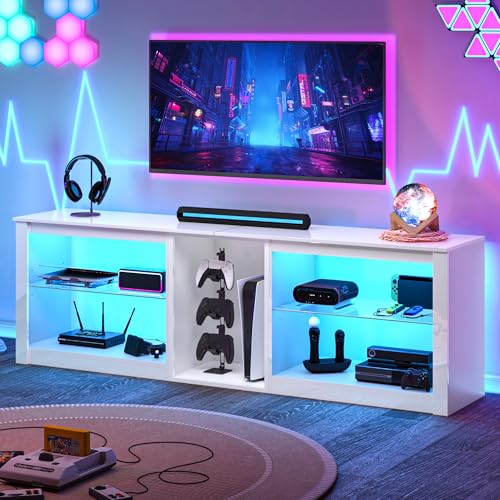
Larger screens fill more of your field of view and can overcome some ambient light by increasing perceived impact. Common guidance is to choose a size that fits your seating distance, for example 65 inches at about 8 to 10 feet, but this depends on preferences. Check the stand width against your furniture, as big TVs may need wider consoles.
Budget Tiers
- Budget: TCL QM-series and Hisense U-series sets in smaller sizes.
- Mid-range: Hisense U8 and larger TCL sets, plus entry Samsung Neo QLED models.
- Premium: higher-end Samsung Neo QLED, Sony Bravia and LG G-series OLED.
Pick X If You Want Y
| Pick this | If you want |
|---|---|
| Samsung Neo QLED | A bright room with anti-glare and a polished experience |
| Hisense U8 | High brightness with strong value |
| TCL QM8 / QM7 | The lowest cost for a Mini LED set |
| Sony Bravia Mini LED | Strong processing and balanced performance |
| LG G-series | An OLED with contrast and decent brightness for mixed lighting |
Alternatives
- Standard LED/QLED sets: fine for moderate light at a lower cost, but less bright.
- Projectors with ambient-light-rejecting screens: they can work in a lit room but cost more and need careful setup.
- Previous-generation models: last year’s higher-end sets often drop in price, though specifications and software support should be checked.
Care, Setup and Settings
Once the set is in place, spend a few minutes in the picture menu. Many televisions ship with a vivid or dynamic mode that boosts brightness at the cost of accuracy, and a bright-room or standard mode may be a better daytime choice. Turn off unnecessary motion smoothing for films if it looks unnatural, and consider creating a separate evening profile with lower brightness to reduce eye strain. Clean the screen only with a dry microfiber cloth or a cloth slightly dampened with water, as makers commonly advise, and avoid sprays or alcohol-based cleaners that can damage coatings. Keep vents clear for airflow, and use a surge protector if your area has frequent power fluctuations. When wall mounting, confirm the mount’s weight rating and the TV’s VESA pattern in the manual, and have a second person help with lifting because large panels are heavy and fragile.
Frequently Asked Questions
Is OLED bad for a bright room?
Not necessarily. Modern OLEDs are brighter than before and some have anti-reflective coatings, but they are generally not as bright as top Mini LED sets. If the room is bright during the day and viewing is in the evening, OLED can still be a good choice.
What brightness do I need?
Higher is better, and reviewers publish measured figures. Rather than a single target, compare measured peak and sustained brightness for the models you are considering.
Does a matte screen reduce picture quality?
It can slightly reduce contrast and sharpness, but it reduces reflections. For bright rooms, the trade-off is usually worth it.
Are Mini LED TVs better than regular LED?
They use a smaller backlight with more dimming zones, which usually improves brightness and contrast. Implementation differs by model, so read independent reviews.
Can I fix a reflective screen?
You can reduce glare by changing the TV’s position and controlling light with curtains and lamps. Screen films are not generally recommended by makers and may void warranties.
How often do new models come out?
Most makers refresh lineups annually, usually in spring. Previous-generation models often remain good choices when prices fall.