Key takeaways
- Most soundbars cannot plug into a stereo receiver. These four state an AUX or RCA analog input, so a receiver line-out or headphone jack can feed them.
Most soundbars are built to replace a receiver, not to work with one, and that is the real decision here. If your turntable, CD player and streamer already run through a stereo receiver you like, you need a bar that can accept that receiver’s analog output, and most current bars cannot: their listings stop at HDMI ARC, optical and Bluetooth, with no analog input at all. The shortlist is therefore defined by a single spec, a stated AUX or RCA line-in.


This guide serves three groups: owners whose receiver offers RCA pre-outs or a tape line-out, owners whose only usable output is a headphone jack, and listeners building a small second system around an older receiver. Every pick below was chosen because its Amazon listing explicitly states an analog input, and the four split by input type, subwoofer arrangement and size.
Quick Picks
As an Amazon Associate we earn from qualifying purchases
| Product | Best for | Key spec from title |
|---|---|---|
| Bose TV Speaker | A headphone-jack feed in a small, dialogue-heavy room | AUX in listed beside HDMI ARC and optical |
| Polk Audio Signa S2 | Movie bass in a larger living room | Wireless subwoofer with AUX (3.5mm) input |
| Majority Bowfell | A receiver with RCA line-out or pre-out jacks | RCA input, with an RCA cable in the box |
| BESTISAN 16-Inch Sound Bar | A desk or bedroom second system | AUX input plus a Sub Out for a powered subwoofer |
How to Choose
Start From the Output Your Receiver Actually Offers
Check the back of your receiver before you shop, because the output decides the cable and the volume behavior. RCA pre-outs or a tape/record line-out send a fixed, line-level stereo signal, which is exactly what a soundbar’s analog input expects; you then control volume on the bar’s own remote. A headphone jack also works and is often the only output on compact or older receivers, but its level follows the receiver’s volume knob, so the receiver stays in charge. Never use speaker terminals: that amplified signal is far too strong for a line input and can damage the bar.
Match the Analog Input Stated on the Bar
Analog inputs come in two shapes, and the listing tells you which one you get. A 3.5mm AUX socket is the common one, and it accepts a headphone output directly or an RCA line-out through an inexpensive RCA-to-3.5mm cable. A true RCA line-in, like the one on the Majority Bowfell below, takes a plain RCA interconnect from a receiver’s pre-outs with no adapter at all, which is the tidiest run. Whichever shape you choose, confirm the input is printed in the listing’s connectivity list before ordering, because many similar-looking model variants quietly drop the analog socket.
Decide Channels and Whether Bass Gets Its Own Box
A receiver feed is plain stereo, so the bar’s channel format is about fullness, not surround decoding. A compact 2.0 bar keeps dialogue clear and the setup to one box, which suits news, sport and speech-heavy viewing. A 2.1 system with a wireless subwoofer, like the Polk below, adds the low-end weight movies want, at the cost of a second box that needs its own power outlet. A third route is a Sub Out socket, found on the BESTISAN, which lets you add a powered subwoofer later. Match the choice to the room: small rooms rarely need the separate sub.
Measure the Bar Against Your TV and Room
Width matters twice in a receiver-fed setup, because the bar usually sits under the TV while the receiver lives on a shelf nearby, and the analog cable has to span that distance. Compact bars around 15 to 24 inches suit desks, bedroom TVs and small stands, while a bar near 35 inches matches larger screens and fills a bigger room more convincingly. Height matters too: a bar much over three inches can block the bottom of the picture or the TV’s remote sensor. Finally, plan the cable run in advance, since long analog runs pick up hum more easily than digital ones.
The 4 Best Options
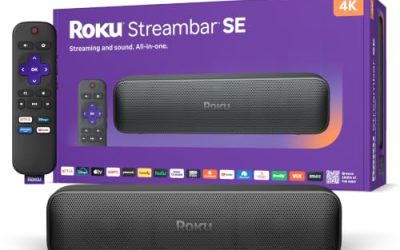
Bose TV Speaker
The Bose TV Speaker is the simplest receiver feed in this group because its Amazon listing names an AUX in alongside HDMI ARC and an optical input, so a receiver’s headphone jack or line-out connects with one analog cable. Bose aims the bar at speech clarity, with a dedicated Dialogue mode and two angled full-range drivers in a cabinet only about 23 inches wide, which suits smaller rooms where the receiver and TV share one stand. A BASS port on the back also leaves a path to a Bose Bass Module later, and Bluetooth covers phone streaming when the receiver is off.
Specs
- Brand: Bose; model number 838309-1100
- Channels: 2.0
- Connectivity: Bluetooth 4.2, HDMI ARC, optical in, AUX in; USB for service only
- Speaker maximum output power: 35 watts
- Dimensions: 2.21 x 23.38 x 4.02 inches
- Included: remote control with battery pre-installed, optical cable, power cord, quick start guide
- Extras: Dialogue mode; BASS port for a Bose Bass Module 500 or 700
Best for: A receiver with a headphone jack in a small room where dialogue clarity matters most.
Watch out for: No HDMI cable or AUX cable is listed in the box, so budget for the analog cable your receiver output needs.
ASIN: B088KRPCQJ
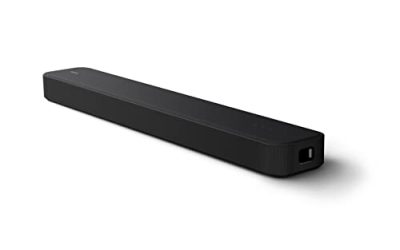
Polk Audio Signa S2
The Polk Audio Signa S2 is the pick when the receiver feed also has to carry movie night. Its listing and Polk’s spec sheet both state an analog 3.5mm AUX input beside HDMI ARC and optical, and the 2.1 system pairs the slim bar with a wireless subwoofer, so a stereo line-out from your receiver gains the low-end weight a single bar cannot produce. Polk’s VoiceAdjust control lets you raise dialogue level independently of overall volume, which helps when the source is a receiver mixing TV, discs and streaming. The bar itself is under two and a quarter inches tall, so it clears most TV screens.
Specs
- Model: Signa S2 (SKU AM6214-A)
- Channels: 2.1, with wireless subwoofer
- Inputs: HDMI ARC, optical, AUX (3.5mm), Bluetooth
- Subwoofer driver: 5.25 inches
- Frequency response: 45Hz to 20kHz
- Bar dimensions: 35.43 x 2.15 x 3.22 inches; 3.9 pounds
- Sound features: Dolby Digital decoding, VoiceAdjust dialogue control
- Included: HDMI cable, optical cable, remote control
Best for: A larger living room where the receiver feed needs real bass for films as well as clear speech.
Watch out for: The subwoofer needs its own power outlet, and at over 35 inches wide the bar needs a stand that can actually hold it.
ASIN: B07H1B3PY9
Majority Bowfell
The Majority Bowfell is the only bar here whose listing states a genuine RCA line-in, which makes it the natural partner for a receiver with RCA pre-outs or a tape line-out: one standard interconnect, no adapter, and Majority even includes the RCA cable in the box. At just over 15 inches wide it is a desktop-scale 2.0 bar, so it fits the second-system role well, under a bedroom TV or beside a monitor while the receiver does source duty. Five EQ modes and a supplied remote handle day-to-day adjustment, and optical, AUX and USB inputs cover sources that bypass the receiver entirely.
Specs
- Output power: 50 watts
- Channels: 2.0 stereo
- Inputs: AUX, RCA, optical, USB; Bluetooth
- Dimensions: 2.83 x 15.2 x 2.12 inches; 3.3 pounds
- EQ: 5 audio modes, adjusted by remote control
- Included: remote control, RCA cable, AUX cable, power cable, user manual
- Finish on this listing: white
Best for: A receiver with RCA line-out or pre-out jacks, where you want a direct RCA run with the cable included.
Watch out for: There is no HDMI ARC, so a TV remote will not control volume, and no optical cable is included in the box.
ASIN: B0CF2GPLPX
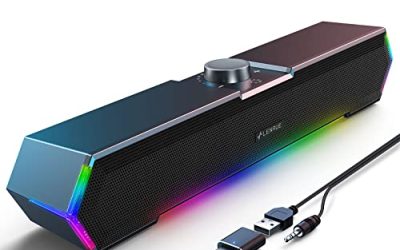
BESTISAN 16-Inch Sound Bar
The BESTISAN 16-inch bar suits the desk or bedroom system built around a small receiver, because its listing states an AUX input among a wide connection set that also includes HDMI ARC, optical and Bluetooth. Two full-range speakers and a bass tube handle the sound, with movie, music and dialogue EQ modes plus separate bass and treble adjustment on the remote. The unusual extra at this size is a Sub Out socket, which lets you add a powered subwoofer later if the room outgrows the bar alone. At 16 inches long and under three inches high, it fits under most monitors and smaller TVs.
Specs
- Output power: 50 watts
- Drivers: 2 full-range speakers with bass tube
- Connections: Bluetooth 5.0, HDMI ARC, optical, Sub Out, AUX, USB
- EQ modes: movie, music, dialogue; bass and treble adjustable
- Size: 16 inches long, 2.8 inches high; wall mountable
- Included: audio cable, optical cable, remote control, power adapter, mount accessories
- Support: 12-month after-sales support stated in the listing
Best for: A compact second system fed from a receiver’s headphone jack, with the option to add a subwoofer later.
Watch out for: BESTISAN sells several similar 16-inch models, so confirm the listing you order actually shows AUX and Sub Out before buying.
ASIN: B0C14B4H6Y
Which One Fits Your Situation
Your Receiver Has RCA Pre-Outs and You Want One Clean Cable Run
Choose the Majority Bowfell. It is the only pick with a stated RCA line-in, so a standard interconnect runs straight from the receiver’s pre-outs or tape-out to the bar, and the cable is already in the box. Because a line-out is fixed level, keep the Bowfell’s remote handy for volume, and enjoy the simplest wiring of any setup in this guide.
Your Receiver Only Has a Headphone Jack
Any of the three AUX bars works, and the Bose TV Speaker is the most forgiving choice. A headphone output is variable, so set the bar’s volume once at a healthy level and then ride the receiver’s knob day to day. The Bose adds a Dialogue mode that keeps speech intelligible at the modest volumes this arrangement usually runs at.
You Want Movie Bass From a Receiver-Fed System
Pick the Polk Audio Signa S2. The wireless subwoofer supplies the low end that a stereo receiver feed deserves during films, while VoiceAdjust keeps dialogue separate from the effects volume. Run the receiver’s line-out or headphone output into the bar’s AUX socket with an RCA-to-3.5mm cable, and place the subwoofer near a wall outlet wherever it sounds best.
The Bar Belongs to a Desk or Bedroom Second System
Take the BESTISAN 16-inch bar. Its footprint suits a monitor or small TV, the AUX input takes the receiver’s headphone output directly, and the Sub Out leaves room to grow. The three EQ modes cover the mix of music, video and calls a desk system handles, and wall-mount hardware is included if desk space is tight.
Common Mistakes
- Connecting a receiver’s speaker terminals to a soundbar’s AUX input, which feeds an amplified signal into a line-level socket and can damage the bar.
- Assuming every soundbar has an analog input, when many current models list only HDMI ARC, optical and Bluetooth.
- Feeding the bar from a phono output, which is far too quiet and equalized for records rather than line-level sources.
- Running both the receiver volume and the bar volume high at once on a headphone-jack feed, which adds noise and distortion.
- Ordering a lookalike model variant whose listing drops the AUX or RCA socket that the reviewed version had.
Frequently Asked Questions
Can I connect a soundbar to my receiver’s speaker outputs?
No. Speaker terminals carry an amplified signal meant to drive passive speakers, and a soundbar is already powered, with inputs designed for line level only. Use a line-out, pre-out, tape-out or headphone jack instead. If your receiver offers none of these, it cannot feed a soundbar safely and the bar should connect to the TV instead.
Which receiver output sounds best into a soundbar?
A fixed line-level output, such as RCA pre-outs or a tape/record out, is the cleanest choice because it bypasses the receiver’s volume control and sends a steady signal. A headphone jack is the practical fallback and works well, but keep its volume moderate to limit noise, and expect to manage two volume controls until levels are set.
Do I need a special cable to connect the two?
Usually just one analog cable. A receiver with RCA outputs needs an RCA interconnect for a bar with RCA inputs, or an RCA-to-3.5mm cable for the more common AUX socket. A headphone jack needs a plain 3.5mm cable. The Bowfell includes both RCA and AUX cables; with the other picks, check the box contents and order the cable alongside.
Will my receiver remote still control the volume?
That depends on the output you used. From a fixed line-out or pre-out, the signal level never changes, so volume control moves to the soundbar’s remote. From a headphone jack, the receiver’s knob and remote still work, and the bar’s volume becomes a one-time setting. Pick the arrangement that matches the remote you would rather keep in your hand.
More from Amazon
Programs that pair well with the guide above. Offers and eligibility are set by Amazon and may change.
Free shipping on eligible items, Prime Video and more. Eligible new members can start with a free trial.
Start a Prime free trialAd-free music streaming. Eligible new subscribers can start with a free trial.
Try Music Unlimited freeA Prime membership for ages 18-24 with a trial period. Eligibility is set by Amazon.
See Prime for Young AdultsAudiobooks and podcasts to listen to on the go. Eligible new members can start with a free trial.
Try Audible freeAs an Amazon Associate we earn from qualifying purchases.