Our Short List of 3
All 4 Picks at a Glance
| Product | Specs | Action |
|---|---|---|
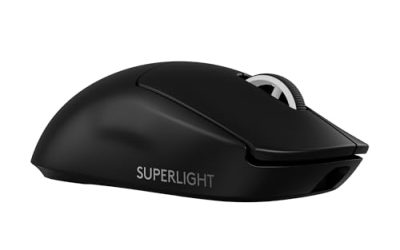
 Logitech G PRO X Superlight 2 | Check price on Amazon | |
 Razer DeathAdder V3 Pro | Check price on Amazon | |
 Logitech G PRO X Superlight 2 DEX | Check price on Amazon | |
 Pulsar X2 v2 | Check price on Amazon |
Our Top Picks
- Razer DeathAdder V3 Pro Wireless Gaming Mouse1000 Hz5.01 x 2.65 x 1.69 inches0.1 poundsCheck on Amazon
In a first-person shooter, the mouse is the aiming tool, and small delays or an awkward shape show up immediately as missed flicks, overshot targets, and tired hands during long ranked sessions. The best FPS gaming mouse removes friction from that process: it is light enough to move quickly, balanced enough to stop cleanly, and fitted with a sensor that tracks fast swipes without spinning out or smoothing the input in ways that feel unpredictable.
The five mice in this guide are all wireless models built for competitive shooters such as tactical round-based games and fast arena titles. They share modern optical sensors, optical or hybrid switches, and high polling options, but they differ in shape, weight, and grip fit. One is a symmetrical esports shell, one is a right-handed ergonomic design, and one is a compact option for smaller hands, so the right choice depends less on headline sensitivity figures and more on how the shell sits in the hand.
As an Amazon Associate, we earn from qualifying purchases.
How to Choose an FPS Gaming Mouse
Weight is the first filter for shooter play. Lighter mice reduce the effort needed to start and stop a flick, which helps with repeated target changes and with low-sensitivity arm aiming. Every pick here weighs between 53 and 63 grams, a range that keeps the mouse easy to move while still feeling planted on the pad. Going lighter is not automatically better, though. Players who use a very light touch or a fast pad sometimes prefer a little extra mass for control during slow tracking, so treat weight as a match for grip pressure and pad speed rather than a race to the lowest number.
Shape matters more than most specification lists suggest. Symmetrical shells suit claw and fingertip grips because both sides mirror each other and the fingers can pull the mouse into the palm from either side. Right-handed ergonomic shells suit palm and relaxed claw grips because the raised right side and curved back fill the hand and reduce finger drag. Hand size decides which end of the range fits: a longer mouse supports a larger palm, while a shorter, lower mouse gives smaller hands room to curl the fingers for micro-adjustments. If a current mouse causes the pinky to drag or the palm to cramp, change shape family first before changing sensitivity settings in game.
The sensor should track cleanly at the speeds a shooter demands. All five models use flagship optical sensors rated well beyond the hand speeds reached in normal play, so spin-outs and acceleration quirks are not a practical concern at this level. Sensitivity, listed as DPI or CPI, is a personal setting rather than a quality score. Most competitive players settle between 400 and 1,600 DPI and then adjust in-game sensitivity, so a very high maximum figure is headroom, not a reason to buy. What matters more is that the sensor behaves the same at the setting actually used, with no obvious smoothing or angle snapping that fights small corrections.
Polling rate describes how often the mouse reports its position. A standard 1,000 Hz report rate already updates every millisecond, and the higher rates offered here, up to 8,000 Hz on several models, shorten that interval further. The gain is most relevant on high-refresh monitors and in games that support high-rate input, and it usually costs battery life when turned up. For most players, running a high polling rate at home and dropping to 1,000 Hz for longer sessions is a sensible balance. Wired-like response no longer requires a cable, since each wireless system here is designed for competitive latency, but a wired mode remains useful for charging while playing.
Switches and feet complete the feel. Optical switches register clicks with light rather than metal contacts, which removes the debounce delay used to prevent double clicks and gives a consistent response over time. The Logitech models use a hybrid design that pairs an optical actuation with a mechanical feel. Glide matters as well: full-size PTFE feet and a smooth cloth or hybrid pad let a light mouse move without scratching or catching, and worn feet should be replaced before blaming a sensor for rough tracking. Battery figures quoted in the specifications are at standard polling, so expect shorter runtimes at the highest report rates.
Razer Viper V3 Pro
The Viper V3 Pro is the clearest expression of the modern FPS formula in this guide: a symmetrical shell at 54 grams in the black finish, a flagship optical sensor, and true 8,000 Hz wireless polling from the included HyperPolling dongle. The shape uses a raised central hump and flared sides that give claw and fingertip players a secure hold during fast lateral flicks, while the smooth-touch finish keeps the shell from feeling slippery when hands warm up. For players who want one mouse aimed squarely at competitive shooters, this is the benchmark the others are measured against.
Specs
| Specification | Detail |
|---|---|
| ASIN | B0CW25XR5R |
| Weight | 54 grams, black finish |
| Sensor | Razer Focus Pro 35K Optical Sensor Gen-2 |
| Maximum sensitivity | 35,000 DPI |
| Polling rate | Up to 8,000 Hz with HyperPolling wireless dongle |
| Switches | Razer Optical Mouse Switches Gen-3 |
| Buttons | 8 programmable controls |
| Battery life | Up to 95 hours at 1,000 Hz |
| Connection | Razer HyperSpeed Wireless and wired USB-C |
| Shape | Symmetrical, right-handed use with side buttons on the left |
Who It Suits
Claw and fingertip players with medium to large hands who play flick-heavy shooters will get the most from this shape and weight. Palm players who prefer a shell that fills the hand, and players who want a large ergonomic curve, should look at the DeathAdder V3 Pro or the Superlight 2 DEX instead. The higher polling rate also suits players with high-refresh monitors who are willing to charge more often in exchange for the fastest report rate on the list.
Logitech G PRO X Superlight 2
The PRO X Superlight 2 keeps the familiar symmetrical PRO shape that has been a staple of professional shooter play for years and updates the internals around it. At 60 grams it is a touch heavier than the lightest picks here, but the HERO 2 sensor, 8 kHz report rate, and LIGHTFORCE hybrid switches bring it level on response. The shape is a safe, medium-sized shell with a gentle hump that works across claw, palm, and fingertip grips, which makes it the easiest recommendation for a player who does not yet know a preferred shape family.
Who It Suits
Players who want a proven symmetrical shape with no learning curve, and who split time between shooters and general desktop use, will find this the most forgiving option. The five-button layout keeps the focus on aim rather than extra controls, so players who rely on many side-button binds for abilities may prefer the Viper V3 Pro. It also suits players who value long battery life at standard settings and a widely supported software and accessory ecosystem.
Razer DeathAdder V3 Pro
The DeathAdder name has been tied to ergonomic mice for a long time, and the V3 Pro strips that shape down to 63 grams for shooter play. The right-handed shell is taller and more curved than the symmetrical picks, with a raised back that supports the palm and a narrower waist that still allows claw control. Inside, the Focus Pro 30K optical sensor and Gen-3 optical switches keep response in the same class as the Viper, while HyperSpeed Wireless runs at 1,000 Hz as standard and can be raised with a separate HyperPolling dongle.
Who It Suits
Palm and relaxed claw players with medium to large hands are the natural audience, especially players coming from an older ergonomic mouse who want the same support at a much lower weight. Fingertip players with small hands may find the taller back pushes the fingers flatter than they like, in which case the Pulsar X2 v2 or the Viper V3 Pro gives a lower, more open hold. It is also the pick for long sessions, since the supported shape spreads contact across the hand instead of concentrating it in the fingers.
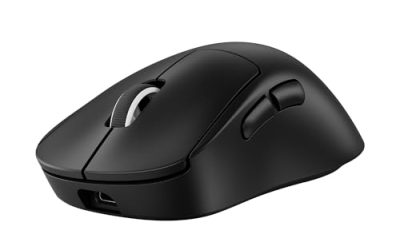
Logitech G PRO X Superlight 2 DEX
The Superlight 2 DEX takes the same flagship internals as the standard Superlight 2 and reshapes the shell for right-handed players. The DEX is an asymmetrical ergonomic design at 60 grams, with a sculpted right side that guides the ring and pinky fingers and a back that fills more of the palm than the symmetrical model. The HERO 2 sensor, 8 kHz polling, and LIGHTFORCE switches carry over, so the difference between the two Logitech models is purely about fit rather than tracking performance.
Who It Suits
Right-handed palm and claw players who liked the Superlight formula but wanted a shell that locks into the hand rather than a neutral shape will prefer the DEX. Left-handed players cannot use this design and should stay with a symmetrical model such as the Viper V3 Pro or the standard Superlight 2. It also suits players who rest more weight on the mouse during slow tracking, since the sculpted side gives the outer fingers a defined place to brace against during stops.
Pulsar X2 v2
The Pulsar X2 v2 is the compact, value-minded route into a serious FPS mouse. The medium white model listed here weighs 53 grams, making it the lightest pick in the guide, and its symmetrical shell uses a low hump and a wide waist that encourage a claw grip without forcing the palm onto the back of the mouse. The PixArt PAW3395 sensor is a proven flagship unit, optical switches keep clicks fast and consistent, and the 2.4 GHz wireless connection reports at 1,000 Hz, with higher polling available through a separate 4K or 8K dongle setup.
Who It Suits
Claw players with small to medium hands, and fingertip players who want the lowest weight here without paying flagship Logitech or Razer money, are the best fit. The shorter battery life and the standard 1,000 Hz polling mean competitive players chasing the highest report rates out of the box should choose the Viper V3 Pro instead. Players with large hands may also find the medium shell short, and should confirm the length against a current mouse before ordering.
FAQ
What weight is best for an FPS gaming mouse?
For most players, the practical sweet spot sits between about 50 and 65 grams, which covers every mouse in this guide. That range is light enough for fast flicks and repeated stops without making slow tracking feel twitchy. Players with a heavier hand or a fast hard pad sometimes aim better at the upper end of the range, while fingertip players on cloth pads often prefer the lower end. Weight only helps when the shape also fits, so choose the shell first and the gram count second.
Does a higher polling rate actually help in shooters?
A higher polling rate shortens the time between the mouse moving and the computer receiving that movement, so the cursor or crosshair updates more often. The step from 1,000 Hz to 8,000 Hz is real but subtle, and it is most noticeable on high-refresh monitors in games that handle high-rate input well. It also drains the battery faster and can use more processor headroom. Treat it as a finishing touch for a competitive setup rather than the main reason to pick one mouse over another.
Should FPS players choose a symmetrical or ergonomic mouse?
Choose by grip rather than by game. Symmetrical mice such as the Viper V3 Pro, the Superlight 2, and the X2 v2 suit claw and fingertip grips because the fingers control the mouse from both sides. Ergonomic mice such as the DeathAdder V3 Pro and the Superlight 2 DEX suit palm and relaxed claw grips because the shell supports the whole hand. Neither family tracks better than the other at this level, since the sensors are closely matched, so comfort over a full session is the deciding factor.
What DPI should be used for FPS games?
Most competitive shooter players use between 400 and 1,600 DPI and then fine-tune with the in-game sensitivity setting, giving an effective sensitivity that allows a full swipe to turn the character while still leaving room for small corrections. The very high maximum figures in the specification tables are sensor headroom, not recommended settings. A useful starting point is 800 DPI, adjusted in small steps until one comfortable arm swipe covers the turn most often needed in the game played most.
Final Verdict
There is no single winner here because the five mice split cleanly by shape. The Razer Viper V3 Pro is the strongest all-out FPS pick, pairing the lowest-friction combination of a 54 gram symmetrical shell, a flagship sensor, and 8,000 Hz wireless polling in the box. The Logitech G PRO X Superlight 2 is the safer symmetrical alternative, with the same class of sensor performance, a longer track record in its shape, and hybrid switches that many players prefer for click feel. Between those two, grip comfort on the hump and the side profile should decide.
For right-handed players, the choice is between support and neutrality. The Razer DeathAdder V3 Pro offers the most palm support and the longest history as an ergonomic shooter shape, while the Logitech G PRO X Superlight 2 DEX offers the newer sculpted take on the same idea with 8 kHz polling included. The Pulsar X2 v2 closes the guide as the light, compact, lower-cost entry point, and for smaller hands it may fit better than either flagship. Match the shell to the hand and grip first, set a sensible sensitivity, and any of these five will remove the mouse as a limiting factor in a shooter.
Product and ASIN Reference
| Product name | ASIN |
|---|---|
| Razer Viper V3 Pro | B0CW25XR5R |
| Logitech G PRO X Superlight 2 | B09NBWL8J5 |
| Razer DeathAdder V3 Pro | B0B6XZLNHQ |
| Logitech G PRO X Superlight 2 DEX | B0DB5JJTC9 |
| Pulsar X2 v2 | B0CH9Z587R |
More from Amazon
Programs that pair well with the guide above. Offers and eligibility are set by Amazon and may change.
Free shipping on eligible items, Prime Video and more. Eligible new members can start with a free trial.
Start a Prime free trialAd-free music streaming. Eligible new subscribers can start with a free trial.
Try Music Unlimited freeA Prime membership for ages 18-24 with a trial period. Eligibility is set by Amazon.
See Prime for Young AdultsAudiobooks and podcasts to listen to on the go. Eligible new members can start with a free trial.
Try Audible freeAs an Amazon Associate we earn from qualifying purchases.