
Our Short List of 3
- Best for: whole-home cellular internet in a rural house, cabin, or rental where cable is unavailable.
- Best for: RV trips, cabins, and small setups where size, weight, and advanced firmware matter more than port count.
- Best for: a small business, shop, or remote site that needs a durable router with gigabit wired ports and strong LTE band coverage.
All 3 Picks at a Glance
| Product | Specs | Action |
|---|---|---|
| Cudy LT500 — ASIN B089JW8H4N |
| Check price on Amazon |
| GL.iNet GL-X750V2 Spitz — ASIN B08TRCSSZ4 |
| Check price on Amazon |
| MOFINETWORK MOFI5500-5GXeLTE-EM7411 — ASIN B0CTGSMMK7 |
| Check price on Amazon |
Key takeaways
- The best 4G LTE routers turn a cellular signal into home Wi-Fi. Compare Cat 4 and Cat 7 picks for rural homes, RVs, and backup internet use for streaming.
The best 4G LTE router for most homes is the Cudy LT500, because it pairs an AC1200 dual-band Wi-Fi radio with a Cat 4 LTE modem, four high-gain antennas, and a simple SIM slot setup that gets a whole home online without a cable line. For travel, RV use, and advanced network control, the GL.iNet Spitz GL-X750V2 is the stronger alternative, thanks to its compact size and OpenWrt firmware. The right choice depends on where the router will live, how many devices it must serve, and whether the cellular signal at the location is strong or weak.
A 4G LTE router takes a mobile data signal and turns it into Wi-Fi and wired Ethernet for a home, cabin, RV, or small office. It is the practical answer when cable and fiber are unavailable, too slow, or too expensive to install, and it also works as a backup connection when a wired line goes down. The models below all accept a SIM card directly, so there is no separate modem or phone tethering step in the middle.
Our top pick: Cudy LT500. Runner-up: GL.iNet GL-X750V2 Spitz. This guide compares published specifications only: every speed, port count, and antenna figure comes from the manufacturer listing or the Amazon product page.
At a Glance
| Product | Best for | Key specification |
|---|---|---|
| Cudy LT500 — ASIN B089JW8H4N | Whole-home cellular internet | AC1200 dual-band Wi-Fi, LTE Cat 4, 4 x 5dBi antennas |
| GL.iNet GL-X750V2 Spitz — ASIN B08TRCSSZ4 | RV, travel, and OpenWrt control | AC750 dual-band Wi-Fi, LTE Cat 4, 86 g |
| MOFINETWORK MOFI5500-5GXeLTE-EM7411 — ASIN B0CTGSMMK7 | Heavy-duty and business use | LTE Cat 7, 4 gigabit LAN ports, rugged metal housing |
| GL.iNet GL-X3000 Spitz AX — ASIN B0C5RCQ8N5 | Wi-Fi 6 and dual-SIM failover | Wi-Fi 6 AX3000, dual nano SIM, multi-gigabit Ethernet |
How to Choose
1. Match the LTE category to the signal
LTE category describes the modem inside the router. Cat 4 modems reach up to 150 Mbps down and 50 Mbps up, which covers streaming, video calls, and general browsing for a household. Cat 7 modems add carrier aggregation and reach up to 300 Mbps down and 150 Mbps up, which helps in areas where the tower supports aggregation and where several people stream at once. A higher category only helps if the carrier and the tower support it, so check the bands the router lists against the carrier in use.
2. Check carrier and band support
A router that works on one carrier may not work on another. Look for the LTE bands in the published specifications and confirm they include the bands the local carrier uses, including low bands such as Band 71 for T-Mobile and Band 14 for AT&T, which travel farther and penetrate buildings better. Unlocked routers accept SIM cards from multiple carriers, while carrier-locked units do not. The picks in this guide are unlocked models listed for AT&T, T-Mobile, and Verizon use.
3. Count the antennas and the ports
External antennas matter more than they look. Four detachable antennas give more placement flexibility and more signal gain than two fixed ones, and detachable antennas can be swapped for higher-gain or directional antennas in weak-signal locations. On the wired side, count the Ethernet ports: four LAN ports let a desktop, a TV, a console, and a printer connect by cable at once, while a single LAN port forces the use of an extra switch. Gigabit ports matter when the LTE link is fast enough to fill a 100 Mbps port.
4. Pick the Wi-Fi class for the household
AC1200 dual-band Wi-Fi splits traffic across 2.4 GHz and 5 GHz, with the 5 GHz band carrying the faster streams and the 2.4 GHz band reaching farther through walls. AC750 is enough for a small space with a few devices. Wi-Fi 6 adds better handling of many connected devices at once, which suits a household full of phones, laptops, cameras, and smart speakers. Match the Wi-Fi class to the number of devices, not to the LTE speed alone.
5. Decide between fixed and portable
A fixed router sits on a shelf, plugs into wall power, and serves a home or office around the clock. A compact router runs on low power, fits in a bag, and moves between a cabin, an RV, and a job site. Portable models trade port count and antenna size for weight and size, so they suit one or two users better than a full household. Decide where the router will spend most of its life before choosing the form factor.
6. Look for failover and dual SIM
Dual SIM slots let a router switch to a second carrier when the first one drops, which keeps a home office or a shop online during an outage. Some routers also accept a wired WAN connection, so the LTE link can serve as a backup to cable or fiber instead of the main link. Failover adds cost and complexity, so it matters most where uptime is part of the job.
7. Consider the software and security features
OpenWrt-based firmware gives advanced control over VPN tunnels, DNS settings, and traffic rules, which suits users who manage their own network. Built-in VPN client support lets every device on the network use the tunnel without separate software on each device. DDNS support keeps a remote camera or server reachable when the carrier changes the public address. Check the published feature list rather than assuming any of these are present.
Our Picks
Cudy LT500 — ASIN B089JW8H4N
- Best for: whole-home cellular internet in a rural house, cabin, or rental where cable is unavailable.
whole-home cellular internet in a rural house, cabin, or rental where cable is unavailable.
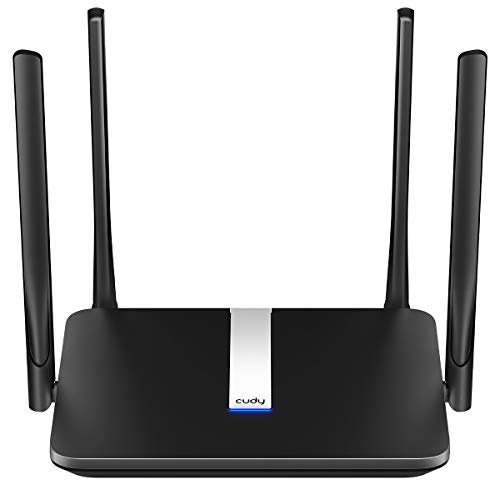
The Cudy LT500 is an AC1200 dual-band 4G LTE router with a nano SIM slot, four 5dBi high-gain antennas, and four RJ45 Ethernet ports. Its Cat 4 LTE modem reaches up to 150 Mbps down and 50 Mbps up, while the Wi-Fi radio delivers up to 300 Mbps on 2.4 GHz and up to 867 Mbps on 5 GHz. The listing states mesh Wi-Fi support, DDNS, and VPN support, plus a Qualcomm EC25-AFX chipset, and it is listed for use with AT&T, T-Mobile, and Verizon.
Consideration: the four Ethernet ports are 10/100 Mbps, so a wired device cannot exceed that link speed even when the LTE connection is faster.
GL.iNet GL-X750V2 Spitz — ASIN B08TRCSSZ4
- Best for: RV trips, cabins, and small setups where size, weight, and advanced firmware matter more than port count.
RV trips, cabins, and small setups where size, weight, and advanced firmware matter more than port count.
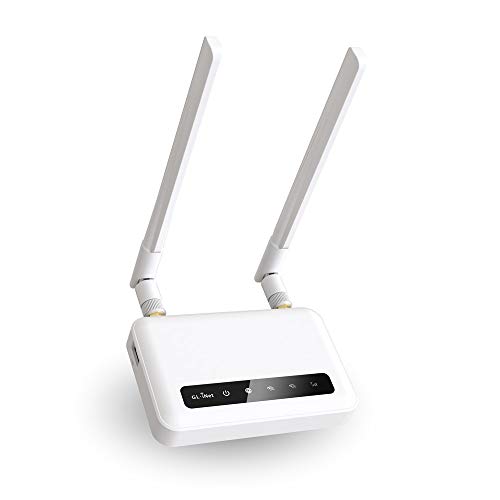
The GL.iNet GL-X750V2 Spitz is a compact AC750 dual-band 4G LTE router built on OpenWrt, with a Cat 4 LTE modem using the Quectel EC25-AF module for North America. It weighs 86 g, takes a micro SIM, and includes a microSD card slot with support for cards up to 128 GB. The listing states T-Mobile and AT&T IoT device certification, VPN client and server support, and use for RV and offshore internet, and the unit runs on 12 V DC power.
Consideration: AC750 Wi-Fi and a two-antenna layout suit a small space better than a large house full of devices.
MOFINETWORK MOFI5500-5GXeLTE-EM7411 — ASIN B0CTGSMMK7
- Best for: a small business, shop, or remote site that needs a durable router with gigabit wired ports and strong LTE band coverage.
a small business, shop, or remote site that needs a durable router with gigabit wired ports and strong LTE band coverage.
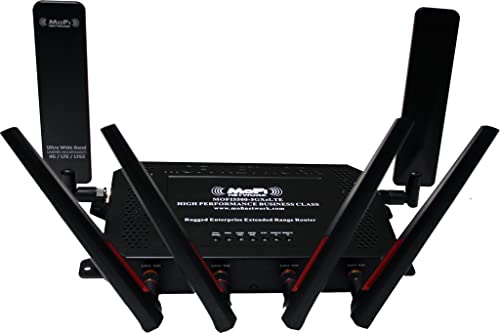
The MOFINETWORK MOFI5500-5GXeLTE-EM7411 is a rugged metal 4G LTE router built around a Sierra Wireless EM7411 Cat 7 modem, with support for 2x carrier aggregation and LTE bands including 14, 66, and 71. The manufacturer spec sheet lists download speeds up to 300 Mbps and upload speeds up to 150 Mbps, four gigabit LAN ports plus one gigabit WAN port, and dual-band Wi-Fi reaching up to 600 Mbps on 2.4 GHz and up to 1734 Mbps on 5 GHz. It takes one full-size SIM card, includes one USB 2.0 port and one USB 3.0 port, and is built for continuous operation in a business or remote site.
Consideration: the metal housing and enterprise feature set put it in a different size and weight class than the compact picks, and the full-size SIM slot needs an adapter for nano SIM cards.
GL.iNet GL-X3000 Spitz AX — ASIN B0C5RCQ8N5
The GL.iNet GL-X3000 Spitz AX is a Wi-Fi 6 cellular gateway with dual nano SIM slots, six detachable antennas, and multi-gigabit Ethernet ports, built for a house or an RV. It supports 5G NR in addition to 4G LTE, with T-Mobile and AT&T IoT device certification, and it runs OpenWrt with VPN support and multi-WAN failover between cellular, wired, and Wi-Fi sources. The dual SIM design lets the router fall back to a second carrier when the first one drops, which keeps the network up during a carrier outage.
Best for: a household or RV that wants Wi-Fi 6, dual-carrier failover, and a gateway that can grow from 4G LTE to 5G later.
Consideration: the 5G capability adds cost and antenna bulk, so it is more router than a single-user setup needs.
Which One Is Right for You?
For a whole home with several people streaming and working, the Cudy LT500 covers the most ground with its four antennas and AC1200 Wi-Fi. For an RV, a cabin, or a setup that moves, the GL-X750V2 Spitz packs the essentials into a pocket-size body with firmware that advanced users can shape to their needs. For a business or a site where the connection must stay up, the MOFI5500-EM7411 brings the strongest modem, gigabit ports, and a metal housing built for continuous use. For a household that wants Wi-Fi 6 and a second SIM as insurance, the GL-X3000 Spitz AX is the forward-looking pick. In every case, confirm the LTE bands against the carrier in use before ordering, and place the router near a window or an outside wall for the strongest signal.
Frequently Asked Questions
Do I need a data plan for a 4G LTE router?
Yes. A 4G LTE router needs an active SIM card with a data plan from a mobile carrier. The router itself provides the Wi-Fi and Ethernet network, while the plan provides the internet connection, so the monthly data allowance and the carrier coverage at the location decide how well it works.
Can a 4G LTE router replace home cable internet?
It can where cable or fiber is unavailable or unreliable. A Cat 4 router handles streaming, video calls, and browsing for a household, while a Cat 7 router adds headroom for more users at once. Check the data allowance first, because video streaming uses far more data than browsing, and a capped plan can run out before the month ends.
What is the difference between Cat 4 and Cat 7 LTE?
Cat 4 modems reach up to 150 Mbps down and 50 Mbps up on a single carrier channel. Cat 7 modems add carrier aggregation and reach up to 300 Mbps down and 150 Mbps up, with support for more LTE bands. The faster category only shows its advantage where the tower supports aggregation and the signal is strong.
Will a 4G LTE router work in an RV?
Yes, and RV use is one of the most common reasons to buy one. Compact models such as the GL-X750V2 Spitz run on 12 V DC power and fit in a small space, while larger models suit a parked RV that stays in one place. Signal strength varies by location, so an external antenna or a window placement helps in weak coverage areas.
Do I need an external antenna for a 4G LTE router?
Not always, but it helps in weak-signal locations. The built-in or included antennas are enough near a tower, while a high-gain or directional antenna can lift a marginal signal into a usable one. Routers with detachable antennas make this upgrade simple, since the stock antennas unscrew and the new ones screw on in their place.
Bottom Line
The Cudy LT500 is the best 4G LTE router for most homes, with AC1200 Wi-Fi, four high-gain antennas, and a straightforward SIM setup. The GL-X750V2 Spitz is the pick for travel and advanced control, the MOFI5500-EM7411 is the pick for heavy-duty and business use, and the GL-X3000 Spitz AX is the pick for Wi-Fi 6 and dual-SIM failover. Whichever one fits, match its LTE bands to the carrier, place it where the signal is strongest, and confirm the data plan covers the household’s streaming habits.
Disclosure: As an Amazon Associate, this site earns from qualifying purchases.
More from Amazon
Programs that pair well with the guide above. Offers and eligibility are set by Amazon and may change.
Free shipping on eligible items, Prime Video and more. Eligible new members can start with a free trial.
Start a Prime free trialAd-free music streaming. Eligible new subscribers can start with a free trial.
Try Music Unlimited freeA Prime membership for ages 18-24 with a trial period. Eligibility is set by Amazon.
See Prime for Young AdultsAudiobooks and podcasts to listen to on the go. Eligible new members can start with a free trial.
Try Audible freeAs an Amazon Associate we earn from qualifying purchases.









