Our Short List of 3

- Processor: AMD Ryzen AI Max+ 395 (16 cores, up to 5.1 GHz)
- Integrated graphics: AMD Radeon 8060S (40 RDNA 3.5 compute units)
- Memory: 32GB LPDDR5X unified memory
- Storage: 1TB PCIe Gen 4 SSD

- Processor: AMD Ryzen AI 9 HX 375 (12 cores, up to 5.1 GHz)
- Integrated graphics: AMD Radeon 890M (16 RDNA 3.5 compute units)
- Memory: 32GB LPDDR5
- Storage: 1TB SSD

- Processor: AMD Ryzen 7 8840HS (8 cores, up to 5.1 GHz)
- Integrated graphics: AMD Radeon 780M (12 RDNA 3 compute units)
- Memory: 16GB LPDDR5X
- Storage: 512GB PCIe Gen 4 SSD
All 4 Picks at a Glance
| Product | Specs | Action |
|---|---|---|
| ASUS ROG Flow Z13 (2025): Radeon 8060S Power in a Tablet Body |
| Check price on Amazon |
| HP OmniBook Ultra 14: Radeon 890M in a Business-Class Shell |
| Check price on Amazon |
| ASUS Zenbook 14 OLED: Radeon 780M, the Proven All-Rounder |
| Check price on Amazon |
 Lenovo Yoga 7 2-in-1 16: Radeon 680M Convertible Value |
| Check price on Amazon |
Key takeaways
- The best AMD laptop graphics cards integrated are built into the laptop itself. Compare five picks with Radeon 8060S, 890M, 880M, 780M and 680M graphics.
Search for a standalone AMD laptop graphics card and you will quickly run into a simple fact: integrated AMD laptop GPUs are not sold as separate cards. A Radeon 780M, 880M, 890M or 8060S is built directly into the AMD Ryzen processor, sharing the same silicon die and the same pool of system memory as the CPU. There is no box to buy, no slot to fill and no upgrade path after the fact. The only way to buy one of these graphics processors is to buy the laptop wrapped around it.
That is exactly how this guide is built. Instead of pretending these chips are retail products, we picked five laptops chosen specifically for the strength of their AMD integrated graphics, from the desktop-class Radeon 8060S in AMD’s Strix Halo processors down to the Radeon 680M that still anchors plenty of affordable convertibles. Every machine below runs on AMD integrated graphics alone, with no discrete GPU doing the heavy lifting, so the chip named in each Specs list is genuinely the graphics hardware you are paying for.
Integrated graphics have also closed much of the gap that used to separate them from entry-level discrete cards. Modern Radeon integrated GPUs handle esports titles, older AAA games at modest settings, photo editing, 4K video playback and multi-monitor office work without a second graphics chip draining the battery. What changes from one pick to the next is how much graphics power you get, how fast the memory feeding it runs, and how much cooling the chassis gives the processor to sustain that performance.
As an Amazon Associate, we earn from qualifying purchases.
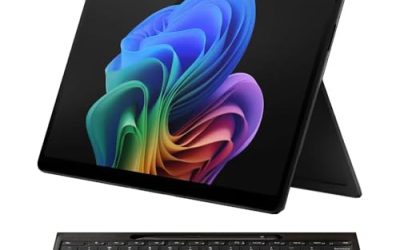
ASUS ROG Flow Z13 (2025): Radeon 8060S Power in a Tablet Body
- Processor: AMD Ryzen AI Max+ 395 (16 cores, up to 5.1 GHz)
- Integrated graphics: AMD Radeon 8060S (40 RDNA 3.5 compute units)
- Memory: 32GB LPDDR5X unified memory
- Storage: 1TB PCIe Gen 4 SSD
The ROG Flow Z13 is the clearest proof of how far integrated graphics have come. Its Ryzen AI Max+ 395 processor carries the Radeon 8060S, an integrated GPU with 40 RDNA 3.5 compute units, more graphics hardware than many dedicated entry-level laptop cards. Because the chip pairs those graphics cores with fast unified memory, it plays modern games at settings no other integrated solution on this list can match, and it accelerates GPU-heavy creative work like video encoding and 3D previews.
The detachable tablet form factor is the trade-off. The 13.4-inch 2.5K touchscreen refreshes at 180Hz, which suits fast-paced games, and the included keyboard cover turns it into a workable laptop. Sustained loads make the slim body work hard, and the fans are audible under gaming loads, but that is the cost of this much graphics power in a machine that weighs about 2.6 pounds before the keyboard. For buyers who want the strongest AMD integrated graphics available in any portable, this is the premium pick and the benchmark everything else here is measured against.
HP OmniBook Ultra 14: Radeon 890M in a Business-Class Shell
- Processor: AMD Ryzen AI 9 HX 375 (12 cores, up to 5.1 GHz)
- Integrated graphics: AMD Radeon 890M (16 RDNA 3.5 compute units)
- Memory: 32GB LPDDR5
- Storage: 1TB SSD
The OmniBook Ultra 14 pairs the Ryzen AI 9 HX 375 with the Radeon 890M, the strongest integrated GPU in AMD’s mainstream Strix Point lineup. With 16 RDNA 3.5 compute units, the 890M is the integrated chip to pick for 1080p gaming at sensible settings, GPU-accelerated photo and video work, and driving a pair of external monitors without complaint. The HX 375 also brings a fast 12-core CPU, so the graphics never wait on the processor.
HP wraps that hardware in a metal 14-inch chassis aimed at professionals. The 2.2K touchscreen is sharp for documents and detailed editing work, the 9MP IR camera is a genuine step up for video calls, and the 68Wh battery is sized for long workdays rather than short bursts. At about 3.5 pounds it is not the lightest machine here, but it is the most complete package for someone who wants top-tier integrated graphics in a laptop that looks at home in a meeting room. This is a premium-tier pick, and the graphics justify it.
ASUS Zenbook S 16: Radeon 880M With a Big OLED Canvas
One step down AMD’s range, the Ryzen AI 9 365 carries the Radeon 880M, a 12-compute-unit version of the same RDNA 3.5 architecture as the 890M. In practice it gives up a modest slice of frame rate in games while keeping the same video encode hardware, the same display engine and the same efficiency. The Zenbook S 16 builds around it a thin 16-inch laptop whose 3K OLED touchscreen is the real headline: deep contrast and full DCI-P3 colour coverage make it a strong fit for photo work and media, and the 120Hz refresh keeps motion smooth.
The chassis is remarkably slim for a 16-inch machine at about 3.3 pounds, and the 78Wh battery is the largest in this roundup, which suits the big screen. Memory is soldered, as it is on every pick here, so the 24GB configuration is the one to get if you plan to keep the laptop for years, because integrated graphics borrow from system memory and more RAM means more headroom for games and large files alike. This is the mid-range pick for buyers who value screen quality and battery life as much as raw graphics output.
Specs
- Processor: AMD Ryzen AI 9 365 (10 cores, up to 5.0 GHz)
- Integrated graphics: AMD Radeon 880M (12 RDNA 3.5 compute units)
- Memory: 24GB LPDDR5X
- Storage: 1TB PCIe SSD
- Display: 16-inch 2880 x 1800 OLED touchscreen, 120Hz
- Battery: 78Wh
- Operating system: Windows 11
ASUS Zenbook 14 OLED: Radeon 780M, the Proven All-Rounder
- Processor: AMD Ryzen 7 8840HS (8 cores, up to 5.1 GHz)
- Integrated graphics: AMD Radeon 780M (12 RDNA 3 compute units)
- Memory: 16GB LPDDR5X
- Storage: 512GB PCIe Gen 4 SSD
The Radeon 780M is the integrated GPU that changed expectations for thin laptops, and the Zenbook 14 OLED is one of its best-known homes. The Ryzen 7 8840HS feeds the 780M’s 12 RDNA 3 compute units with fast LPDDR5X memory, and the combination handles esports games, indie titles and older AAA releases at 1080p with adjusted settings, alongside everyday creative work. It sits a clear step below the 880M and 890M in demanding games, but for mixed work and play it remains a sweet spot.
The laptop itself is a compact 14-inch machine of about 2.8 pounds with an OLED touchscreen that covers the full DCI-P3 colour range, which makes it equally appealing for photo editing on the move. The 75Wh battery is generous for the size. Because this model has been on the market longer than the Strix Point machines above, it is also the easiest of the premium-feeling picks to find in a sensibly priced configuration, placing it in the mid-range tier of this guide.
Lenovo Yoga 7 2-in-1 16: Radeon 680M Convertible Value
- Processor: AMD Ryzen 7 7735U (8 cores, up to 4.7 GHz)
- Integrated graphics: AMD Radeon 680M (12 RDNA 2 compute units)
- Memory: 16GB LPDDR5
- Storage: 1TB SSD
The oldest architecture in this roundup still earns its place. The Ryzen 7 7735U’s Radeon 680M is built on RDNA 2 with 12 compute units, and while it trails the 780M in newer titles, it remains capable of smooth esports play, casual gaming and all the streaming and office work most people ask of a family laptop. Lenovo puts it in a 16-inch convertible with a 360-degree hinge, so the machine works as a laptop, a tent-style media screen or a thick tablet for reading and sketching.
The large touchscreen, 16GB of memory and roomy storage make it an easy shared household computer, and the bigger chassis keeps it quiet under everyday loads. It is the budget-tier pick here, aimed at buyers who want genuine AMD integrated graphics and a big flexible screen without paying for the newest processor generation. If your games are lighter titles and your priority is versatility per dollar, the 680M still delivers.
How to Choose
Start with the graphics chip itself, because in an integrated design the processor name is the graphics card. AMD’s current order of strength runs Radeon 8060S at the top, then the 890M, 880M, 780M, 760M and 680M. Each step down trades frame rates in demanding games, so match the chip to your library: the 8060S and 890M suit players who want newer titles on the laptop screen, the 880M and 780M cover esports and older games comfortably, and the 680M is best for light gaming, streaming and productivity.
Memory matters more here than in any discrete-GPU laptop. Integrated Radeon graphics have no dedicated video memory of their own, so they reserve a share of system RAM, and both the amount and the speed of that RAM directly affect game performance. Treat 16GB as the floor, prefer faster LPDDR5X where offered, and choose 24GB or 32GB if you multitask heavily or want the machine to last. Because memory is soldered on thin AMD laptops, this decision cannot be fixed later.
Cooling is the third factor. The same chip can perform noticeably differently in two laptops because a thicker chassis with better fans lets the processor hold higher power limits for longer. Gaming-oriented designs like the Flow Z13 sustain more performance, while the thinnest ultraportables prioritise quiet running and battery life. Check the screen too: a high-refresh panel only shows its advantage if the integrated GPU can feed it, so esports players should pair 120Hz or faster screens with the stronger chips, while a high-resolution OLED suits creators even at 60Hz.
Finally, be honest about the ceiling. Integrated graphics are excellent for 1080p play with tuned settings, older titles, emulation and creative acceleration, but they do not replace a discrete GPU for high-refresh 1440p gaming or heavy 3D rendering. If that is your workload, a gaming laptop with a dedicated card is the right tool. If portability, battery life and quiet operation matter more, the picks above show how capable the integrated route has become.
Frequently Asked Questions
Can you buy an AMD integrated graphics card on its own?
No. Integrated Radeon GPUs such as the 780M, 890M and 8060S are built into the Ryzen processor and are never sold as separate retail cards. The only way to buy one is inside a laptop that uses the matching AMD processor, which is why this guide recommends complete laptops rather than components.
Which is the strongest AMD integrated graphics in a laptop?
The Radeon 8060S in Ryzen AI Max+ processors is the strongest AMD integrated graphics currently offered in a laptop, with 40 compute units and fast unified memory. Below it, the Radeon 890M is the fastest option in mainstream thin laptops, followed by the 880M and the widely available 780M.
How much RAM do I need for AMD integrated graphics?
Plan on 16GB as a minimum, because the integrated GPU shares system memory instead of carrying its own video memory. Configurations with 24GB or 32GB of fast LPDDR5X give games and creative apps more headroom and age better, and since the memory in these laptops is soldered, it cannot be upgraded later.
Can AMD integrated graphics run modern games?
Yes, within limits. The 890M and 8060S handle many modern titles at 1080p with low to medium settings, and the 780M and 680M play esports games and older releases smoothly. Demanding games at high settings and high resolutions still call for a discrete graphics card, so set expectations by the chip tier rather than by the laptop’s screen resolution.
Final Verdict
Because these graphics chips only exist inside laptops, the right question is which laptop’s integrated GPU fits your workload. The ROG Flow Z13 and its Radeon 8060S are the performance ceiling and the pick for serious portable gaming. The HP OmniBook Ultra 14 brings the 890M to a polished professional machine, while the Zenbook S 16 trades a little graphics power for a superb 16-inch OLED and the biggest battery here. The Zenbook 14 OLED remains the balanced 780M all-rounder, and the Yoga 7 2-in-1 16 proves the older 680M still makes sense in a flexible budget convertible. Pick the chip tier first, then the chassis that suits how you work, and any of these five will show how capable AMD integrated graphics have become.
Product and ASIN Reference
| Product | ASIN |
|---|---|
| ASUS ROG Flow Z13 (2025) GZ302EA-XS96 | B0DT7MNLTD |
| HP OmniBook Ultra 14 | B0F4QTK91X |
| ASUS Zenbook S 16 UM5606WA | B0DSLHKSQX |
| ASUS Zenbook 14 OLED UM3406HA-WS74T | B0DFWZ77LB |
| Lenovo Yoga 7 2-in-1 16 | B0CJXZY4YR |
More from Amazon
Programs that pair well with the guide above. Offers and eligibility are set by Amazon and may change.
Free shipping on eligible items, Prime Video and more. Eligible new members can start with a free trial.
Start a Prime free trialAd-free music streaming. Eligible new subscribers can start with a free trial.
Try Music Unlimited freeA Prime membership for ages 18-24 with a trial period. Eligibility is set by Amazon.
See Prime for Young AdultsAudiobooks and podcasts to listen to on the go. Eligible new members can start with a free trial.
Try Audible freeAs an Amazon Associate we earn from qualifying purchases.