Key takeaways
- Memory and users: Two-user memory suits couples; look at the number of stored readings.
- Averaging: Some models average the last readings, which can help give a clearer picture.
- Irregular heartbeat indicator: Some makers list a flag. It is a prompt to talk to a doctor, not a diagnosis.
- App sync: Wi-Fi or Bluetooth lets you export readings to share with your clinician.
- Display: A large backlit display helps older users.
- Power: Batteries are standard; some models also accept an adapter.
- Portability: Rechargeable compact models such as QardioArm and Withings BPM Connect travel well.
- Warranty: Check the period in the maker’s listing.
For most people checking blood pressure at home, a validated upper-arm monitor such as an Omron Platinum or Omron Silver model is the better choice, a Withings BPM Connect or QardioArm suits people who want smartphone tracking, and a wrist monitor is a compact backup for people who cannot use an arm cuff. A home monitor supports a conversation with your doctor; it does not diagnose anything, and you should never change medication based on a home reading without medical advice.
Our top picks


As an Amazon Associate we earn from qualifying purchases at no extra cost to you.
Blood Pressure Monitors at a Glance
| Option | Best for | Key stated features | Limits |
|---|---|---|---|
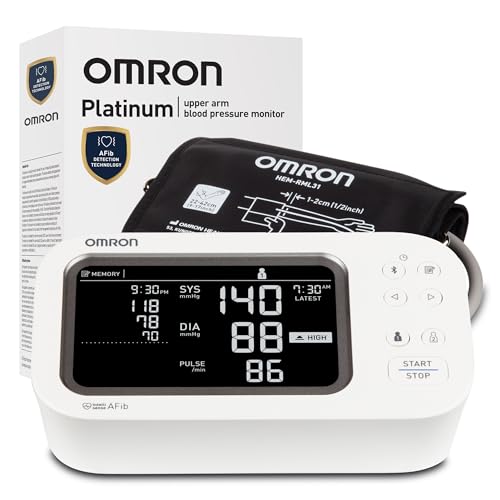
| Omron Platinum (BP5450 line) | Premium upper-arm accuracy and tracking | The maker lists an upper-arm cuff, multiple user profiles, memory and app connectivity | Premium tier; larger unit |
| Omron Silver / Bronze upper-arm models | Everyday value in a trusted brand | The maker lists upper-arm cuffs, memory storage and irregular heartbeat indicators on some models | Fewer features than the top tier |
| Withings BPM Connect | Smart tracking and Wi-Fi sync | The maker lists a compact upper-arm monitor with Wi-Fi and Bluetooth sync to an app | Mid-range to premium; depends on the app |
| QardioArm | Portable, app-based tracking | The maker lists a compact upper-arm monitor that works with a smartphone app | Needs a phone; less memory on the device |
| Omron Gold wrist monitor | Travel and small wrists | The maker lists a wrist cuff with a positioning guide | More sensitive to wrist position |
| Basic digital upper-arm monitors | Budget shoppers | Makers list simple one-button measurement and memory for a limited number of readings | Variable validation; read the box carefully |
Model numbers change by region and year. Check the maker’s current page for your country and read the product manual.
Upper Arm or Wrist?
Medical organisations generally prefer upper-arm monitors for home use because they tend to be easier to position correctly. Wrist monitors are smaller and fit people who find the arm cuff uncomfortable, but a reading can shift if the wrist is not at heart height. If you pick a wrist model, follow the maker’s positioning guide and compare your readings against a clinic measurement. Ask your doctor or pharmacist which suits you, especially if you have an irregular heartbeat or a large arm circumference.
Why Validation Matters
Not every monitor on sale has been clinically validated. Independent bodies keep lists of devices that have passed validation protocols, and healthcare organisations suggest choosing a monitor from such lists. Look for the model name on a validated list for home monitors, and check that the specific model number matches. Ask your clinician or pharmacist if you are unsure. Also bring your monitor to a clinic visit so staff can compare its reading with their own.
Cuff Size and Fit
Cuff size affects accuracy. A cuff that is too small can give higher readings, and one that is too large can give lower readings. Measure around your upper arm midway between shoulder and elbow, then match to the maker’s size chart. Many monitors include a standard cuff and offer a large cuff as an extra. The cuff should sit on bare skin or a thin sleeve, with the tube lying along the inside of the arm, as shown in the manual.
Features Worth Comparing
- Memory and users: Two-user memory suits couples; look at the number of stored readings.
- Averaging: Some models average the last readings, which can help give a clearer picture.
- Irregular heartbeat indicator: Some makers list a flag. It is a prompt to talk to a doctor, not a diagnosis.
- App sync: Wi-Fi or Bluetooth lets you export readings to share with your clinician.
- Display: A large backlit display helps older users.
- Power: Batteries are standard; some models also accept an adapter.
- Portability: Rechargeable compact models such as QardioArm and Withings BPM Connect travel well.
- Warranty: Check the period in the maker’s listing.
How to Measure Properly
- Rest quietly for five minutes, seated with your back supported and feet flat on the floor.
- Avoid caffeine, exercise and smoking for about thirty minutes beforehand, as many health bodies advise.
- Rest your arm on a table so the cuff is at heart height.
- Stay still and silent during the measurement.
- Take two readings a minute apart, and log them with the time of day.
- Measure at similar times each day, as advised by your clinician.
If a reading is very high or you have symptoms such as chest pain, severe headache, shortness of breath or sudden weakness, seek emergency medical care rather than waiting to retest.
Picks by Buyer Type
Everyday home monitoring
Omron Silver and Bronze models are a common choice because Omron is widely sold and many of its upper-arm models appear on validation lists, though you should check the exact model number. They keep to the basics with simple operation.
People who like data
The Omron Platinum, Withings BPM Connect and QardioArm sync readings to an app so you can share trends with a clinician. Be aware that app features can change, and that sharing health data brings privacy considerations; read the maker’s privacy policy.
Older adults
Look for a large display, a one-button start, a spoken or clear indicator and a cuff that is easy to put on with one hand. A caregiver or pharmacist can help set it up.
Travellers
Compact rechargeable models such as the QardioArm and Withings BPM Connect pack easily. A wrist monitor is smaller still but needs careful positioning.
Budget shoppers
Basic upper-arm monitors work for occasional checks, yet confirm that the specific model has been validated and that the cuff fits your arm.
Budget Tiers
| Tier | What to expect |
|---|---|
| Budget | Simple upper-arm or wrist monitors with limited memory and few extras |
| Mid-range | Omron Bronze/Silver and smart monitors with app sync and multiple users |
| Premium | Omron Platinum and similar models with larger memory, averaging and polished apps |
Pick X If… Decision Table
| Pick this | If you… |
|---|---|
| Omron Platinum | want a premium upper-arm monitor with multiple profiles |
| Omron Silver or Bronze | want a trusted brand and simple operation |
| Withings BPM Connect | want automatic Wi-Fi sync to an app |
| QardioArm | want a compact, phone-based monitor for travel |
| Omron Gold wrist | cannot use an arm cuff or want a small unit |
Alternatives
- Pharmacy or clinic checks: Many pharmacies offer free or low-cost checks, and a clinician can measure correctly.
- Ambulatory monitoring: A doctor may arrange a device worn for 24 hours, which gives readings across a day.
- Smartwatches with cuffless readings: These are not a replacement for a validated cuff and are generally not recommended for diagnosis.
Frequently Asked Questions
Are upper-arm or wrist monitors better?
Health bodies generally prefer upper-arm monitors for home use because they are easier to position. Wrist monitors can be useful if the arm cuff is uncomfortable, provided the wrist is held at heart height.
How do I know if a monitor is accurate?
Choose a model that appears on an independent validated list for home use, and take it to a clinic appointment to compare readings with the clinic’s device.
How often should I measure?
Follow your clinician’s schedule. Many people measure at the same times each day and record two readings each time.
Why do my readings vary?
Blood pressure naturally changes through the day. Posture, caffeine, stress, talking, cuff size and cuff position also affect readings.
Can I rely on an irregular heartbeat indicator?
It is a prompt, not a diagnosis. If it appears repeatedly, mention it to your doctor.
When should I see a doctor?
Contact your doctor if readings are consistently high or low, or if you notice symptoms. Seek emergency care for chest pain, severe headache, breathlessness or sudden weakness.
More from Amazon
Programs that pair well with the guide above. Offers and eligibility are set by Amazon and may change.
Free shipping on eligible items, Prime Video and more. Eligible new members can start with a free trial.
Start a Prime free trialAd-free music streaming. Eligible new subscribers can start with a free trial.
Try Music Unlimited freeA Prime membership for ages 18-24 with a trial period. Eligibility is set by Amazon.
See Prime for Young AdultsAudiobooks and podcasts to listen to on the go. Eligible new members can start with a free trial.
Try Audible freeAs an Amazon Associate we earn from qualifying purchases.