Key takeaways
- Weight limits: Never exceed the stated load rating of the stand, pole or socket.
- Stability: Fully open the tripod legs, lock all collars and use the pole on level ground. Sandbags or weights on the legs can add stability when the maker allows them.
- Cables: Route cables away from walkways and use tape or covers to prevent tripping. Do not let a cable pull on a stand.
- Outdoors: Wind can topple a tall stand. Lower the height, add weights and keep crowd access clear. Take speakers down in strong wind.
- Crowds: Keep stands out of areas where people may bump into them. Consider safety rules or event guidelines for your venue.
- Lifting: Use two people for heavy speakers, and lift with your legs rather than your back.
- Wear: Inspect stands before each use for bent tubes, loose pins or worn locks, and retire damaged items.
For most mobile DJs, bands and small venues, a sturdy tripod speaker stand with a standard 35 mm top, such as those from On-Stage, Ultimate Support or K&M, is the safest all-round choice, while a distance pole on a subwoofer suits setups that put a top speaker above a sub. The right pole depends on your speaker weight, the mounting socket and how often you transport the kit.
Our top picks


As an Amazon Associate we earn from qualifying purchases at no extra cost to you.
At a glance
| Product | Type | Best for | Key stated features (per maker) | Limits |
|---|---|---|---|---|
| On-Stage SS7761B | Tripod speaker stand | Mobile DJs and small bands | The maker lists a height-adjustable stand with a tripod base and a stated load rating | Check the load rating against your speaker |
| Ultimate Support TS-100B | Tall tripod stand | Frequent professional use | The maker lists a steel construction, adjustable height and a stated load rating | Heavier than lightweight stands |
| K&M speaker stands | Tripod stand | Touring and installs | The maker lists German-made stands with locking mechanisms and stated load ratings | Premium tier |
| Gator Frameworks speaker stand sets | Pair of stands, sometimes with a bag | Buyers who want a ready kit | The maker lists paired stands and carry bag options on some sets | Set contents vary |
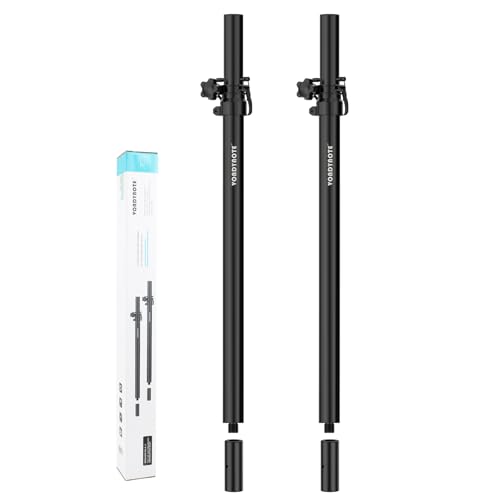
| Subwoofer distance poles from On-Stage or Ultimate Support | Pole for sub-to-top mounting | Powered top speaker on a sub | The maker lists poles with fixed or adjustable lengths and a stated load rating | Check sub socket and top speaker weight |
Check each maker’s current listing for the exact model, height range and load rating before ordering.
What a PA speaker pole is
A PA speaker pole connects a speaker to a stand or subwoofer so it sits at head height or above the audience. Most professional and consumer speakers have a pole socket on the bottom, sized for a 35 mm pole. Stands may be tripod types, crank-up stands or poles that slot into a sub’s top socket. Using the right pole helps spread sound over a crowd rather than letting front rows absorb the sound.
The 35 mm standard
The 35 mm diameter is the most common size for speaker poles and sockets. Check your speaker’s manual for the socket diameter and whether it has a locking pin or screw. Using a pole that does not match the socket is unsafe, so confirm before purchase.
Load rating
The maker’s load rating says how much weight a stand or pole can carry. Add up your speaker’s weight and any accessories, then choose a rating with a margin. Also consider the center of gravity, since a heavy speaker on a tall stand can tip more easily.
Types of stands and poles
Tripod stands
Tripods are the common choice. They fold flat, adjust in height and handle uneven floors. A wider leg spread is more stable but takes more space. Many have a locking collar or clutch that holds the height.
Crank-up stands
Crank-up or lift stands raise a speaker using a crank, which can be safer than lifting a heavy speaker by hand to full height. They cost more and weigh more.
Distance rods and subwoofer poles
A distance rod fits into a subwoofer’s top socket and holds a speaker above it. This setup saves floor space and is quick to assemble. Check that the sub’s socket is rated for the load and that the top speaker’s weight is within limits listed by the sub maker.
Wall and ceiling poles
Permanent installs use wall brackets or ceiling mounts, which should be installed by a qualified person using rated hardware. Never mount a speaker overhead without hardware rated for the load.
Safety and fit notes
- Weight limits: Never exceed the stated load rating of the stand, pole or socket.
- Stability: Fully open the tripod legs, lock all collars and use the pole on level ground. Sandbags or weights on the legs can add stability when the maker allows them.
- Cables: Route cables away from walkways and use tape or covers to prevent tripping. Do not let a cable pull on a stand.
- Outdoors: Wind can topple a tall stand. Lower the height, add weights and keep crowd access clear. Take speakers down in strong wind.
- Crowds: Keep stands out of areas where people may bump into them. Consider safety rules or event guidelines for your venue.
- Lifting: Use two people for heavy speakers, and lift with your legs rather than your back.
- Wear: Inspect stands before each use for bent tubes, loose pins or worn locks, and retire damaged items.
Budget tiers
Budget tier
Basic steel tripod stands, often sold in pairs, are enough for light speakers at home or in small rehearsal spaces. Check that the load rating is clearly listed.
Mid-range tier
Mid-range stands from On-Stage, Gator and Ultimate Support offer better locks, sturdier tubes and bags for transport. They suit gigging musicians and mobile DJs.
Premium tier
Premium stands from K&M and Ultimate Support have higher load ratings, refined locking systems and better durability. They suit touring and regular installs.
Pick X if …
| If you … | Pick | Why |
|---|---|---|
| Are a mobile DJ with mid-weight speakers | On-Stage SS7761B | Common design with a stated load rating |
| Gig often and need durability | Ultimate Support TS-100B | Professional-oriented construction |
| Tour or install regularly | K&M stand | Premium build and locking systems |
| Want a ready-to-go kit | Gator stand set | Pair plus bag on some sets |
| Use a top speaker on a sub | Distance pole matched to your sub | Saves space and speeds setup |
Alternatives to consider
- Speaker wedges and floor monitors: For stage monitoring, wedges avoid the need for stands.
- Column PA systems: These integrate the speaker column into a sub, removing the need for separate poles.
- Wall-mounted speakers: For permanent setups, certified brackets installed by a professional can be better than stands.
Setup tips
Set up the stand on a flat, firm surface, open the legs fully and lock them. Raise the pole to the desired height, lock the collar, and then lift the speaker onto the top. Use two people for heavy loads. Aim the speaker slightly down toward the audience, and make sure the top speaker’s locking pin is secured. Read the speaker and stand manuals for any limits the makers state.
Choosing height and spacing
A common approach is to place speakers on both sides of the stage or performance area, slightly in front of the microphones to reduce feedback. Keep the tweeter around or above the heads of seated listeners, and angle the speaker slightly downward. In small rooms, a lower stand height can be enough, while in big rooms or outdoors a taller stand helps the sound clear the front row. Check the maker’s minimum and maximum height, and whether the pole can be set at several fixed heights.
Materials and build quality
Steel tubes are strong and common, while aluminium reduces weight and is easier to carry. Look for sturdy locking collars, rubber feet or leg caps for grip, and a secure safety pin or knob to hold the speaker on the top. Reviewers generally prefer stands with metal rather than plastic locking parts, since plastic can wear faster with repeated use. Folded length also matters for car transport.
Common mistakes to avoid
Using a stand with a tripod base too narrow for a tall load is a frequent problem. Another is raising a heavy speaker to full height by hand alone. A third is forgetting to lock the collar, which can allow a speaker to slide down. A fourth is placing the legs across a walkway, where cables and legs can trip people. A fifth is relying on a stand’s rating while stacking extra equipment, such as a mixer or lights, on the same pole.
Care and storage
Wipe stands dry after use, especially outdoors, and keep sliding sections clean so the collars grip properly. Do not lubricate locking surfaces unless the maker says to, since oil can reduce friction. Store stands folded in a dry place, and keep spare knobs or pins in a small bag. If a tube is bent, a leg is cracked or a lock no longer holds, stop using that stand and replace it rather than repairing it with tape.
Frequently Asked Questions
What size pole do most PA speakers use?
Most use a 35 mm socket, but check your speaker’s manual. Some small speakers use different fittings, and some need adapters.
How tall should a speaker stand be?
Aim for the speaker to sit above the heads of the audience so sound reaches the back of the room. Many stands extend to around head height or above, but check the maker’s range.
Can I use any pole with any subwoofer?
No. Match the pole diameter to the sub’s socket and respect the load ratings from both makers. Using a mismatched pole can be unsafe.
Are cheap stands safe?
Some are fine for light speakers, but check the load rating and read reviewer comments on stability. For heavy or expensive speakers, a stand from an established professional brand is the safer choice.
Do I need sandbags?
They add stability outdoors or with heavy loads, if the stand maker allows weights on the legs. Follow the stand manual.
How should I transport speaker stands?
Fold them, secure the locks and use a carry bag if possible. This protects the finish and prevents bent legs.
More from Amazon
Programs that pair well with the guide above. Offers and eligibility are set by Amazon and may change.
Free shipping on eligible items, Prime Video and more. Eligible new members can start with a free trial.
Start a Prime free trialAd-free music streaming. Eligible new subscribers can start with a free trial.
Try Music Unlimited freeA Prime membership for ages 18-24 with a trial period. Eligibility is set by Amazon.
See Prime for Young AdultsAudiobooks and podcasts to listen to on the go. Eligible new members can start with a free trial.
Try Audible freeAs an Amazon Associate we earn from qualifying purchases.