Key takeaways
- Small rooms (seating for up to about 20): a 3,000 lumen WXGA projector on a short-throw lens is usually adequate if blinds can be drawn.
- Standard classrooms (about 25 to 35 students): look for 3,500 lumens or more, 16:10 aspect ratio for compatibility with common laptops, and a screen of roughly 100 inches or the board width.
- Lecture halls and large rooms: consider 5,000 lumens and above with interchangeable lenses; confirm the model supports the required lens options.
For a typical classroom, a bright laser or lamp-free projector in the 3,500 to 4,000 lumen range with a short-throw lens, such as models in the Epson EB-series or BenQ’s education line, suits most teachers, while a smaller room with good light control can get by with a more modest lamp-based model from ViewSonic or Optoma. The decision comes down to ambient light, room size, how far the projector can sit from the board, and how much maintenance the school wants to handle.
Our top picks

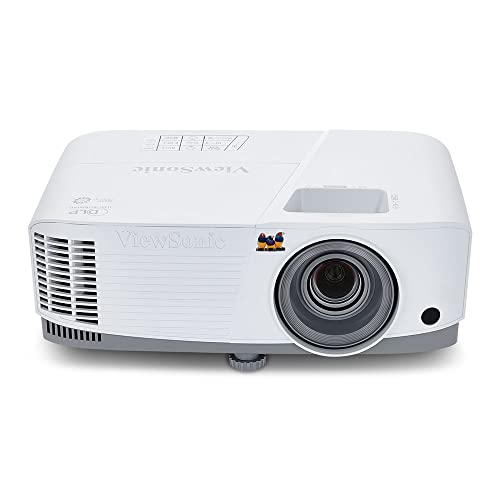


As an Amazon Associate we earn from qualifying purchases at no extra cost to you.
What matters in a classroom projector
Brightness (lumens)
Classrooms are rarely dark. Windows, overhead lights and a whiteboard glare all compete with the image. Education guidance from projector makers generally points to roughly 3,000 lumens as a floor for average rooms and higher for bright rooms. Note whether a maker quotes white brightness and color brightness separately, since Epson in particular publishes both, and a projector with weak color brightness can look washed out despite a high white figure.
Throw distance and lens type
A standard-throw projector sits far back, often ceiling-mounted near the middle of the room, and its beam can be blocked by a teacher walking in front of the screen. Short-throw and ultra-short-throw models sit near the board, which reduces shadows and glare in the presenter’s eyes. Makers publish throw ratios in their specification sheets; match the ratio against the room’s distance and screen width before buying.
Resolution and connectivity
XGA and WXGA are still common in education, with 1080p increasingly offered. For spreadsheets and text-heavy slides, WUXGA or 1080p adds sharpness. HDMI is the baseline, with wireless casting, USB display and network management valuable in shared classrooms. Many makers list screen-mirroring support for teacher and student devices.
Light source and upkeep
Lamp projectors have a lower upfront cost tier but require periodic lamp replacement and filter cleaning. Laser and LED light sources are listed by makers with very long rated lifetimes, which suits shared rooms where nobody wants to manage lamp swaps. Compare the stated light-source life and warranty terms as they apply to your region.
At a glance: classroom options compared
| Model family | Best for | Key stated features | Limits |
|---|---|---|---|
| Epson EB-series (for example the EB-992F class) | Bright, well-lit classrooms | The maker lists 3LCD technology, high color brightness and wireless options on certain models | Lamp-based variants need lamp replacement |
| Epson BrightLink interactive models | Interactive teaching on a whiteboard | Ultra-short-throw with pen or touch interaction on selected models | Higher tier; needs wall or board mounting |
| BenQ education projectors (LK, LH or MW series) | Schools wanting easy classroom-friendly setup | Education-focused modes, and on some models a lamp-free source | Model names vary by region |
| ViewSonic PA or LS-series | Budget-conscious schools | XGA to 1080p options and short-throw variants | Dimmer in bright rooms at the budget end |
| Optoma education line (for example EH or ZH models) | Rooms needing reliable, mainstream projection | The maker lists laser options with long rated source life | Check throw ratio against room layout |
Model numbers change with each product cycle, so confirm the exact variant against the maker’s current specification page.
Short throw or standard throw?
Standard-throw projectors are the most flexible and tend to cost less, but they need a ceiling mount or cart and a cable run to the front of the room. Short-throw units mount above or near the board and eliminate most of the shadow problem. Ultra-short-throw interactive systems, like Epson’s BrightLink or BenQ’s interactive series, replace the traditional whiteboard-plus-projector pairing and can let students write on the surface directly. Reviewers on education-technology outlets point out that interactive models add mounting and calibration work, so schools should plan installation time.
Room size and screen choice
- Small rooms (seating for up to about 20): a 3,000 lumen WXGA projector on a short-throw lens is usually adequate if blinds can be drawn.
- Standard classrooms (about 25 to 35 students): look for 3,500 lumens or more, 16:10 aspect ratio for compatibility with common laptops, and a screen of roughly 100 inches or the board width.
- Lecture halls and large rooms: consider 5,000 lumens and above with interchangeable lenses; confirm the model supports the required lens options.
A matte white screen or a good whiteboard surface helps. Ambient-light-rejecting screens exist and are sold separately by screen makers, though they work best with ultra-short-throw projectors.
Budget, mid-range and premium tiers
- Budget: Lamp-based XGA or WXGA models from ViewSonic or Optoma. They are practical for rooms with light control and for schools replacing many units at once.
- Mid-range: Brighter lamp or laser projectors in the Epson EB and BenQ education ranges, often with wireless options and stronger color output.
- Premium: Laser ultra-short-throw interactive models, which also take over whiteboard duty.
Safety, installation and maintenance notes
- Ceiling mounts should be installed according to the mount maker’s weight rating and, where required by the school, by a qualified installer.
- Laser projectors carry a laser class rating that the maker states in the manual; follow its guidance about not looking into the lens, particularly with children present.
- Clean air filters on schedule. A clogged filter causes overheating and can shorten the life of the light source.
- Use the manufacturer’s recommended power and cable arrangements, and have electrical work done by a qualified electrician.
Pick X if…
| Pick this | If |
|---|---|
| Epson EB-series | The room is bright and color brightness matters |
| Epson BrightLink or BenQ interactive | You want one device to replace the projector and interactive board |
| BenQ education models | You want a classroom-oriented feature set and a low-upkeep light source |
| ViewSonic | The budget is tight and the room can be dimmed |
| Optoma laser models | You want a long-life source and dependable mainstream performance |
Alternatives to consider
- Interactive flat panels (for example from Promethean or ViewSonic’s ViewBoard): large touch displays that skip projection entirely. They avoid shadows and bulb upkeep, though the panel size and mounting needs are different.
- Large commercial displays: simple, bright and always ready, but limited in size compared with a projected image.
- Portable projectors for shared carts: suitable for rooms that lack a fixed installation, at the cost of brightness and setup time each lesson.
Buying checklist for schools
- Measure first. Record the distance from the planned projector position to the board and the usable board width, then compare them with the throw ratio and screen-size table in the maker’s specification sheet.
- Plan the cabling. HDMI runs over long distances may need an active cable or an extender. Ask the installer how the teacher’s laptop will connect at the front of the room.
- Consider management tools. Epson, BenQ and others offer network monitoring software that lets IT staff see lamp hours, filter status and on or off state across many rooms, according to the makers.
- Read warranty terms. Education warranties often differ from consumer ones, particularly for lamp coverage and onsite service, so read the terms that apply in your region.
- Think about audio. Built-in projector speakers are modest. If the room is large, plan for a small powered speaker or use classroom audio already installed.
Common mistakes
Buyers often focus on resolution and overlook brightness, then find the picture washed out at midday. Another frequent issue is choosing a standard-throw model for a room where the ceiling mount position would put the projector directly in the teacher’s sightline. A third is forgetting about keystone correction: heavy digital keystone adjustment can soften the image, so mount the projector as square to the screen as possible. Reviewers in education-technology coverage also advise using the normal or eco brightness mode where the room allows, since it reduces fan noise and extends source life.
It also helps to involve the teachers who will use the room. Ask how they move around, whether they write on the board while projecting, and whether students bring their own devices. Those answers often decide between a standard-throw model, a short-throw model and an interactive system more reliably than a specification table does.
Frequently Asked Questions
How many lumens does a classroom projector need?
Makers of education projectors generally point to about 3,000 to 4,000 lumens for typical classrooms with windows and overhead lighting. Darker rooms can use less, and large or very bright rooms need more. Also look at the stated color brightness, since it affects how vivid the picture appears.
Is laser better than lamp for schools?
Laser sources are listed by makers with much longer rated lifetimes and no lamp swaps, which reduces upkeep. Lamp models usually cost less up front but need replacement bulbs and filter cleaning. The better choice depends on whether the school values lower upfront outlay or lower maintenance.
What is a short-throw projector?
It is a projector with a lens designed to produce a large image from a short distance, so it can sit close to the board. This reduces shadows from the presenter and reduces glare in the teacher’s eyes. Check the throw ratio listed in the specification sheet against your room.
Do I need an interactive projector?
Not for every room. Interactive models suit schools that want students to write or annotate directly on the board, but they require more careful mounting and calibration. Standard projectors paired with a whiteboard remain a practical choice for many classes.
What resolution should I choose?
WXGA is adequate for slides and video in many classrooms, while 1080p or WUXGA gives more detail for text-heavy material and spreadsheets. Make sure the resolution matches the devices that teachers and students will connect.
How long do projector lamps last?
Makers list rated lamp life in their specifications, and it varies by model and by brightness mode. Running in an eco mode generally extends the lamp’s stated life. Replace lamps according to the manufacturer’s manual.
More from Amazon
Programs that pair well with the guide above. Offers and eligibility are set by Amazon and may change.
Free shipping on eligible items, Prime Video and more. Eligible new members can start with a free trial.
Start a Prime free trialAd-free music streaming. Eligible new subscribers can start with a free trial.
Try Music Unlimited freeA Prime membership for ages 18-24 with a trial period. Eligibility is set by Amazon.
See Prime for Young AdultsAudiobooks and podcasts to listen to on the go. Eligible new members can start with a free trial.
Try Audible freeAs an Amazon Associate we earn from qualifying purchases.