Our Short List of 3

- Best for: A living room viewer who wants a bright 4K image with HDR and low lag for games and films.
- 4K PRO-UHD resolution
- 3-chip 3LCD
- 2,800 lumens
- HDR10 and HLG

- Best for: A gamer who wants the brightest image, the fastest response and a huge screen from a short distance.
- 1080p native with 4K HDR input
- DuraCore laser, 3,500 lumens
- 300,000 to 1 contrast ratio
- 30,000-hour laser life

- Best for: A film lover who wants true 4K resolution and the widest, most accurate colour in this group.
- True 4K, 3840 x 2160
- 2,200 lumens
- HDR10+
- 95% DCI-P3 colour coverage
All 4 Picks at a Glance
| Product | Specs | Action |
|---|---|---|
| Epson Home Cinema 2350 |
| Check price on Amazon |
| Optoma GT2000HDR |
| Check price on Amazon |
| BenQ HT3560 |
| Check price on Amazon |
 XGIMI Horizon Ultra |
| Check price on Amazon |
Our Top Picks
Picture quality is the reason to buy a projector, and it comes down to four things: resolution, brightness, contrast and colour. A projector that gets all four right shows a sharp, vivid image that feels like a cinema, while one that misses on any of them looks flat or washed out. The four projectors here are chosen for picture quality first, so the choice comes down to how sharp you need the image, how bright your room is, and how much colour accuracy matters to you.
This guide is for home cinema viewers who want a projector that shows films properly, for gamers who need a sharp image with low lag, and for anyone upgrading from a television to a big screen. The four projectors below were chosen from the names and specifications on their Amazon pages, and each one takes a different route to a great picture.
Quick Picks
As an Amazon Associate we earn from qualifying purchases
| Product | Best for | Key spec from title |
|---|---|---|
| Epson Home Cinema 2350 | A bright 4K projector for living rooms | 4K PRO-UHD, 2,800 lumens, HDR10 |
| Optoma GT2000HDR | A short-throw laser projector for gamers | 3,500 lumens, 300,000 to 1, 8 ms lag |
| BenQ HT3560 | A true 4K projector with wide colour | True 4K, 2,200 lumens, HDR10+ |
| XGIMI Horizon Ultra | A 4K projector with Dolby Vision | 4K, Dolby Vision, 2,300 ISO lumens |
How to Choose
Start with the resolution and what it means
Resolution decides how sharp the image looks, and the difference between 1080p and 4K is visible on a large screen. A true 4K projector shows 3840 by 2160 pixels, which keeps the image sharp even at 120 inches, while a 4K PRO-UHD projector uses pixel shifting to reach a similar sharpness. The BenQ HT3560 and the XGIMI Horizon Ultra are true 4K, the Epson 2350 is 4K PRO-UHD, and the Optoma GT2000HDR is 1080p native with 4K HDR input. Check the resolution on the listing and match it to the screen size you plan to use.
Check the brightness against the room
Brightness decides whether the image holds up with the lights on, and home cinema rooms are rarely fully dark. The Optoma GT2000HDR is the brightest here at 3,500 lumens, followed by the Epson 2350 at 2,800, the XGIMI Horizon Ultra at 2,300 ISO lumens, and the BenQ HT3560 at 2,200. A brighter projector works better in a living room, while a dimmer one needs a darker room to show its best. Check the lumens on the listing and think about when you watch, because a projector that is too dim for your room wastes its other qualities.
Look at the contrast ratio and the colour
Contrast ratio tells you how deep the blacks are, and colour coverage tells you how vivid the image is. A high contrast ratio makes dark scenes readable instead of grey, while wide colour coverage makes a sunset or a forest look real. The Optoma GT2000HDR has a 300,000 to 1 contrast ratio, the BenQ HT3560 covers nearly all of the DCI-P3 colour space, and the XGIMI Horizon Ultra supports Dolby Vision for the widest dynamic range. Check both numbers on the listing, because a projector with high resolution but poor contrast still looks flat.
Consider HDR and the light source
HDR expands the range between the brightest and darkest parts of the image, and the light source decides how long the projector lasts. The Epson 2350, Optoma GT2000HDR and BenQ HT3560 all support HDR10, while the XGIMI Horizon Ultra adds Dolby Vision. Laser light sources last 20,000 to 30,000 hours, while lamp projectors need a new bulb after a few thousand hours. The Optoma uses a DuraCore laser rated at 30,000 hours, and the XGIMI uses a dual-light LED and laser engine. Check the light source on the listing, because it decides the running cost over years.
The 4 Best Options
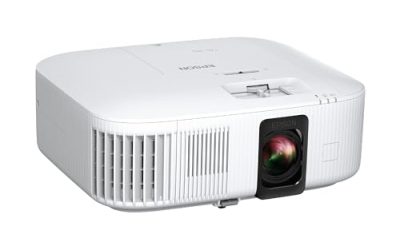
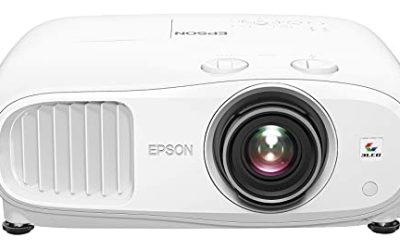
Epson Home Cinema 2350
- Best for: A living room viewer who wants a bright 4K image with HDR and low lag for games and films.
- 4K PRO-UHD resolution
- 3-chip 3LCD
- 2,800 lumens
- HDR10 and HLG
A living room viewer who wants a bright 4K image with HDR and low lag for games and films.
It uses pixel-shifting 4K PRO-UHD rather than native 4K, so a viewer who wants true native 4K should look at the BenQ or XGIMI.
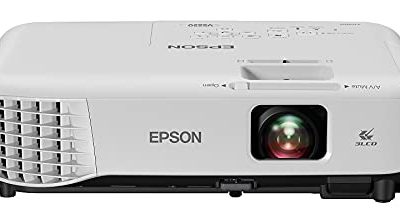
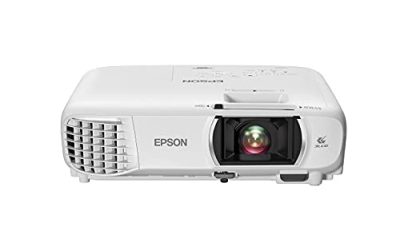
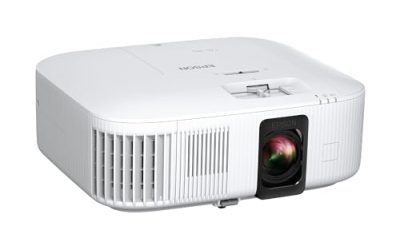
The Epson Home Cinema 2350 is the projector to choose when you want a bright 4K image in a living room. Its 3-chip 3LCD engine produces 4K PRO-UHD resolution at 2,800 lumens, which stays visible with the lights on, and HDR10 and HLG support give better colour and contrast in films. The input lag is under 20 milliseconds, which keeps games responsive, the 10W speaker handles sound without external speakers, and Android TV with Bluetooth runs your streaming apps. It is the most balanced projector here for a living room cinema.
Watch out for: It uses pixel-shifting 4K PRO-UHD rather than native 4K, so a viewer who wants true native 4K should look at the BenQ or XGIMI.
Optoma GT2000HDR
- Best for: A gamer who wants the brightest image, the fastest response and a huge screen from a short distance.
- 1080p native with 4K HDR input
- DuraCore laser, 3,500 lumens
- 300,000 to 1 contrast ratio
- 30,000-hour laser life
A gamer who wants the brightest image, the fastest response and a huge screen from a short distance.
It is 1080p native rather than true 4K, so a viewer who wants native 4K resolution should choose the BenQ or XGIMI.
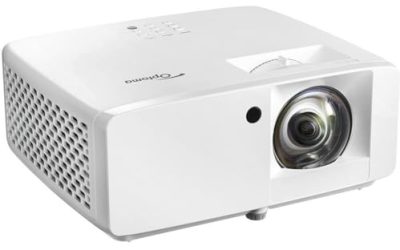
The Optoma GT2000HDR is the projector to choose when you want the brightest image and the fastest response for gaming. Its DuraCore laser produces 3,500 lumens with a 300,000 to 1 contrast ratio, which gives deep blacks and a vivid image even in a lit room, and the laser lasts 30,000 hours. The short-throw lens projects a large image from close to the wall, the maximum image reaches 300 inches, and the input lag is 8 milliseconds at 1080p and 120Hz, which is the fastest here. HDR10 and HLG support round out a projector made for games and films.
Watch out for: It is 1080p native rather than true 4K, so a viewer who wants native 4K resolution should choose the BenQ or XGIMI.
BenQ HT3560
- Best for: A film lover who wants true 4K resolution and the widest, most accurate colour in this group.
- True 4K, 3840 x 2160
- 2,200 lumens
- HDR10+
- 95% DCI-P3 colour coverage
A film lover who wants true 4K resolution and the widest, most accurate colour in this group.
One source lists this model as discontinued in October 2024, so confirm the listing is live before ordering.
The BenQ HT3560 is the projector to choose when colour accuracy matters most. Its true 4K resolution of 3840 by 2160 pixels keeps the image sharp at any size, and the wide DCI-P3 colour coverage shows films the way the director intended. It produces 2,200 lumens with HDR10+ support, a dynamic iris and a 50,000 to 1 contrast ratio, and the automatic vertical keystone makes setup easy. HDMI 2.0b, SPDIF and eARC connect it to a sound system, and the 10W speakers handle sound when you do not want external audio.
Watch out for: One source lists this model as discontinued in October 2024, so confirm the listing is live before ordering.
XGIMI Horizon Ultra
- Best for: A home cinema viewer who wants Dolby Vision, true 4K and the most automatic setup in this group.
- 4K resolution
- Dolby Vision
- 2,300 ISO lumens
- Dual-light LED and laser engine
A home cinema viewer who wants Dolby Vision, true 4K and the most automatic setup in this group.
It is the most feature-heavy projector here, so a viewer who wants a simple projector may prefer the Epson or Optoma.
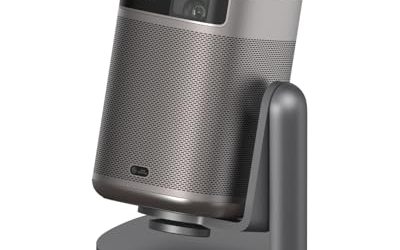
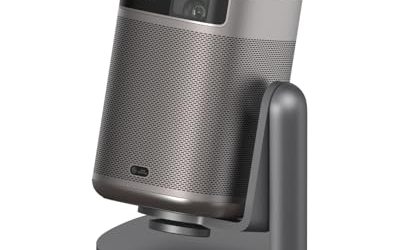
The XGIMI Horizon Ultra is the projector to choose when you want Dolby Vision and a smart, automatic setup. Its true 4K resolution pairs with Dolby Vision, the widest dynamic range here, and the dual-light LED and laser engine produces 2,300 ISO lumens. Two 12W Harman Kardon speakers fill a room with sound, Android TV 11 runs your apps, and the ISA 3.0 system with optical zoom sets up the image automatically. The maximum image reaches 200 inches, and Wi-Fi and Bluetooth connect it to your network and speakers.
Watch out for: It is the most feature-heavy projector here, so a viewer who wants a simple projector may prefer the Epson or Optoma.
Which One Fits Your Situation
You watch films in a bright living room
Pick the Epson Home Cinema 2350 when the room has lamps on and the screen is large. The 2,800-lumen brightness keeps the image visible, the 4K PRO-UHD resolution stays sharp, and HDR10 gives better colour in films. The low input lag also makes it good for games, so it suits a living room that does both.
You game on a huge screen
Pick the Optoma GT2000HDR when gaming is the priority. The 8-millisecond input lag is the fastest here, the 3,500-lumen laser image stays bright, and the short-throw lens gives a huge image from close to the wall. The 300-inch maximum image turns a small room into a gaming arena.
You care most about colour
Pick the BenQ HT3560 when you watch films and want the colours to look right. The true 4K resolution and wide DCI-P3 colour coverage show films the way they were made, and HDR10+ adds dynamic range scene by scene. Confirm the listing is live before ordering, because one source lists this model as discontinued.
You want the smartest projector
Pick the XGIMI Horizon Ultra when you want Dolby Vision and a projector that sets itself up. The ISA 3.0 system adjusts focus, keystone and zoom automatically, the Harman Kardon speakers fill the room, and Android TV runs your apps. It is the most complete home cinema package here.
Common Mistakes
- Buying a 1080p projector for a 150-inch screen and finding the image soft at that size.
- Choosing the dimmest projector for a bright living room and losing the contrast that makes films look good.
- Ignoring the light source and then paying for a replacement lamp after a few thousand hours.
- Forgetting to check the input lag and finding games feel sluggish on a projector made for films.
- Placing a projector too far from the wall for its throw ratio and getting an image that is too small or too large.
Frequently Asked Questions
Is true 4K better than 4K PRO-UHD?
True 4K shows 3840 by 2160 native pixels, while 4K PRO-UHD uses pixel shifting to reach a similar sharpness. On a very large screen, true 4K is slightly sharper, but 4K PRO-UHD is close enough that most viewers cannot tell the difference. The BenQ HT3560 and XGIMI Horizon Ultra are true 4K, while the Epson 2350 is 4K PRO-UHD.
How bright does a projector need to be?
It depends on the room. A living room with lamps on needs at least 2,000 lumens, and the projectors here range from 2,200 to 3,500 lumens. A dark cinema room can use a dimmer projector, but a brighter one shows better contrast. The Optoma GT2000HDR at 3,500 lumens is the brightest here, followed by the Epson 2350 at 2,800.
What is Dolby Vision and does it matter?
Dolby Vision is a form of HDR that adjusts brightness and colour scene by scene, rather than using one setting for the whole film. It gives a more dynamic image than HDR10, especially in scenes with both bright highlights and deep shadows. The XGIMI Horizon Ultra is the only projector here with Dolby Vision, while the others support HDR10 or HDR10+.
How long does a laser projector last?
A laser projector lasts far longer than a lamp projector. The Optoma GT2000HDR laser is rated at 30,000 hours, which is decades of normal use, while a lamp projector needs a new bulb after a few thousand hours. The Epson 2350 uses a lamp, so check the lamp life on the listing and the cost of a replacement.
More from Amazon
Programs that pair well with the guide above. Offers and eligibility are set by Amazon and may change.
Free shipping on eligible items, Prime Video and more. Eligible new members can start with a free trial.
Start a Prime free trialAd-free music streaming. Eligible new subscribers can start with a free trial.
Try Music Unlimited freeA Prime membership for ages 18-24 with a trial period. Eligibility is set by Amazon.
See Prime for Young AdultsAudiobooks and podcasts to listen to on the go. Eligible new members can start with a free trial.
Try Audible freeAs an Amazon Associate we earn from qualifying purchases.