Key takeaways
- Three audiophile-grade soundbars compared for serious music listening, with immersive surround, room calibration, hi-res streaming and room-fit guidance.
A soundbar bought for films can disappoint once a favourite album starts playing. Dialogue modes and bass boosts built for action scenes often smear vocals, flatten instrument separation and make acoustic music sound boxy. A listener who cares about faithful reproduction decides differently from a buyer who only wants louder television: stereo imaging, tonal balance and low-end control matter more than volume, and a bar that excels at surround effects is not always the one that plays music well. Here, stereophile points to soundbars built for serious music listening, judged on their own sound rather than on any outside ranking.
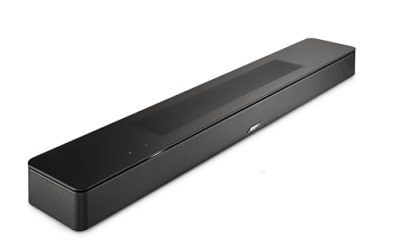
The three bars below were chosen from their Amazon titles and specifications for listeners who put music first. The Sennheiser AMBEO Soundbar Plus suits a single-box setup with genuine immersion, the Sony HT-A7000 suits a flagship bar that can grow into a full surround system, and the Samsung HW-Q990D suits a large room where real rear channels and a separate subwoofer belong in the box.
Quick Picks
As an Amazon Associate we earn from qualifying purchases
| Product | Best for | Key spec from title |
|---|---|---|
| Sennheiser AMBEO Soundbar Plus | Single-bar immersion for music and film | Virtual 7.1.4 setup with built-in dual subwoofers |
| Sony HT-A7000 | Flagship single bar with room mapping | 7.1.2ch 500W Dolby Atmos sound bar with DTS:X and 360 Spatial Sound Mapping |
| Samsung HW-Q990D | Complete surround system in one box | 11.1.4ch soundbar with wireless Dolby Atmos audio and rear speakers included |
How to Choose
Music first, film second
A soundbar that plays music well needs clean midrange, stable stereo imaging and bass that stays controlled at low volume, because albums expose weaknesses that film soundtracks hide behind effects. Check how the bar handles vocals and acoustic instruments rather than how many channels the box lists, since a high channel count describes surround layout, not tonal accuracy. Look for a dedicated music mode or a flat preset, a two-channel stereo presentation that keeps instruments separated, and a subwoofer section that supports the low end instead of overwhelming it. If the bar also handles films, that is a bonus, but the music test should come first for this kind of buyer.
Room calibration and placement
Every room changes what a soundbar does, so built-in calibration matters more at this level than it does for a basic bar. A calibration microphone measures reflections from walls, ceilings and furniture, then adjusts timing and levels so dialogue stays centred and height effects land where they should. Measure the stand before ordering: flagship bars are wide and tall, and a bar that overhangs the stand or sits behind the television edge loses its up-firing drivers. Hard floors and bare walls reflect more sound than rugs and curtains, so a room with little soft furnishing benefits most from a bar with strong calibration.
Connectivity and streaming
An audiophile-grade bar should accept music from more than one source without forcing a compromise on quality. HDMI eARC carries full surround formats from the television, while Wi-Fi streaming through Apple AirPlay 2, Chromecast built-in, Spotify Connect or Tidal Connect keeps phone audio out of the lossy Bluetooth path for everyday listening. Check for hi-res audio support if the household streams lossless catalogues, and confirm the bar has enough HDMI inputs for a console or media player when the television runs short. Optical input works as a fallback, but it cannot carry the full surround formats these bars are built around.
Subwoofer and expansion
Decide before buying whether the bar alone must carry the low end or whether a separate subwoofer belongs in the plan. Some flagship bars build dual subwoofers into the enclosure and stay convincing in a medium room, while others expect an optional wireless subwoofer for deep bass in a larger space. Rear speakers change films more than they change albums, so a listener who mainly plays music can often skip them, whereas a household that watches films every night will notice their absence. Confirm which add-ons each bar accepts, because subwoofers and rears are usually brand-specific and cannot be mixed.
The 3 Best Options
Sennheiser AMBEO Soundbar Plus
The AMBEO Soundbar Plus is the most convincing single-box answer for a listener who wants immersion without filling the room with extra speakers. Its virtual 7.1.4 layout uses nine drivers and built-in dual subwoofers to build a wide, tall soundstage from one enclosure, and the self-calibration routine tunes that stage to the room instead of leaving placement to guesswork. Music benefits from the clean midrange and controlled low end, while films gain height and width that smaller bars cannot fake. Streaming is well covered, with the usual wireless services on board alongside voice enhancement for dialogue and a night mode for late listening.
Specs
- Virtual 7.1.4 speaker setup with immersive 3D surround sound
- Built-in dual subwoofers for low-end depth from a single bar
- 400W total audio power across nine drivers
- Dolby Atmos, DTS:X, MPEG-H and 360 Reality Audio support
- Bluetooth, Apple AirPlay 2, Spotify Connect, Tidal Connect and Chromecast built-in
- Voice enhancement, night mode and app-based equalizer with AMBEO virtualization levels
Best for: listeners who want one-box immersion for music and film without a separate subwoofer.
Watch out for: the bar is wide, so measure the stand first, and a separate AMBEO Sub is an additional purchase for listeners who want deeper bass in a large room.
Sony HT-A7000
The HT-A7000 is Sony’s flagship single bar, built around a 7.1.2 layout with a built-in dual subwoofer and a calibration system that maps the room before it maps the sound. Its 360 Spatial Sound Mapping measures speaker positions relative to the walls and seating, then places phantom speakers where physical ones would stand, which gives films a convincing sense of space without rear speakers in the room. Music stays detailed and composed, with a clean centre for vocals and enough headroom for dynamic passages. The bar also leaves a clear upgrade path, accepting optional wireless subwoofers and rear speakers when the room or the budget allows.
Specs
- 7.1.2 channels with 500W total output
- Dolby Atmos and DTS:X with 360 Spatial Sound Mapping
- Built-in dual subwoofer inside the bar
- HDMI eARC plus HDMI input with 4K/120Hz and 8K/60Hz passthrough
- Wi-Fi, Bluetooth, Chromecast built-in and Apple AirPlay 2
- Works with Alexa and Google Assistant
- Compatible with optional SA-SW3 and SA-SW5 wireless subwoofers and SA-RS3S and SA-RS5 rear speakers
Best for: a flagship single bar that can grow into a full surround system later.
Watch out for: the bar is wide and tall, so check clearance under the television, and the wireless subwoofer and rear speakers are separate purchases.
Samsung HW-Q990D

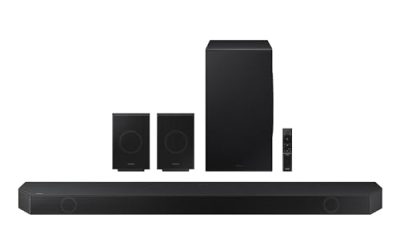
The HW-Q990D takes the opposite approach from the other two bars: instead of virtualising surround from one enclosure, it ships the whole system in the box. The main bar is joined by a wireless subwoofer and two wireless rear speakers, giving a genuine 11.1.4 layout with real channels behind the seating position. That makes it the strongest pick for films in a large room, while music still benefits from the wide front stage and the controlled low end. Q-Symphony pairs the bar with a compatible Samsung television so the television speakers add to the front stage, and SpaceFit Sound Pro re-tunes the system to the room after setup.
Specs
- 11.1.4 channels with wireless Dolby Atmos audio
- Wireless subwoofer and wireless rear speakers included in the box
- Q-Symphony pairing with compatible Samsung televisions
- SpaceFit Sound Pro room calibration
- Adaptive Sound for dialogue and scene balance
- Game Mode Pro for console play
- Alexa built-in, Apple AirPlay and Chromecast built-in
- HDMI eARC connection to the television
Best for: a complete surround system for a large living room without buying extra speakers.
Watch out for: four pieces of hardware need floor and shelf space, and Q-Symphony only works with a compatible Samsung television, though the bar itself works with other televisions.
Which One Fits Your Situation
You listen to music more than you watch films
Choose the Sennheiser AMBEO Soundbar Plus. Its single enclosure keeps stereo imaging coherent, the built-in dual subwoofers give albums a firm low end without a separate box, and the virtual 7.1.4 processing adds width to films without demanding rear speakers. It is the tidiest answer when the television is mainly a music source and the room has no space for extra hardware.
You want one bar now and a full system later
Choose the Sony HT-A7000. It performs as a complete flagship bar on its own, with room mapping and a built-in dual subwoofer, and it accepts optional wireless subwoofers and rear speakers when the household is ready. That staged path suits a buyer who wants audiophile sound today without committing to a four-piece system before knowing the room.
You have a large room and want real rear channels
Choose the Samsung HW-Q990D. A large or open-plan room swallows virtualised surround, and this system answers with physical rear speakers and a separate wireless subwoofer in the box. The 11.1.4 layout fills the space behind the seating position in a way no single bar can match, which matters most for households that watch films together most nights.
You already own a Samsung television
Choose the Samsung HW-Q990D. Q-Symphony lets a compatible Samsung television add its own speakers to the front stage, and the shared setup keeps one remote in charge of volume and sound modes. The pairing is not required, since the bar works with other televisions, but a Samsung household gets the most from the system it already owns.
Common Mistakes
- Buying on channel count alone: a higher number describes the surround layout, not stereo imaging or tonal accuracy.
- Placing the bar inside a closed cabinet or behind the television edge, which blocks the up-firing drivers and narrows the soundstage.
- Skipping the calibration routine after moving furniture or changing the seating position.
- Connecting through optical instead of HDMI eARC and losing the full surround formats these bars are built around.
- Expecting built-in bass to fill a large open-plan room without a separate subwoofer.
Frequently Asked Questions
What makes a soundbar audiophile-grade?
An audiophile-grade soundbar is judged on driver quality, tonal accuracy, stable stereo imaging and low distortion rather than on channel count alone. It should play vocals and acoustic instruments cleanly at low volume, keep bass controlled instead of boomy, and support hi-res streaming alongside room calibration. A bar that only adds height effects to films without getting the fundamentals right does not meet that standard.
Do I need a separate subwoofer with these soundbars?
It depends on the bar and the room. The Sennheiser AMBEO Soundbar Plus and the Sony HT-A7000 both build dual subwoofers into the enclosure and stay convincing in a medium room, while the Samsung HW-Q990D includes a wireless subwoofer in the box. In a large or open-plan room, a separate subwoofer adds the depth that built-in drivers cannot reach, so plan for one if the space is generous.
Can a soundbar replace a separate stereo system for music?
For many listeners in a living room, yes. A flagship bar with good drivers, room calibration and hi-res streaming covers most albums convincingly and adds film sound that a stereo pair cannot match. A dedicated stereo system still has an edge on imaging in a treated listening room, so the answer turns on the room and on how the household actually listens day to day.
Is HDMI eARC necessary for these soundbars?
Yes, for the full surround formats these bars are built around. HDMI eARC carries Dolby Atmos and DTS:X from the television to the bar, while an optical connection cannot carry those formats and limits the bar to simpler audio. Check that the television has an eARC port before ordering, and use the HDMI port labelled eARC on both the television and the bar.
More from Amazon
Programs that pair well with the guide above. Offers and eligibility are set by Amazon and may change.
Free shipping on eligible items, Prime Video and more. Eligible new members can start with a free trial.
Start a Prime free trialAd-free music streaming. Eligible new subscribers can start with a free trial.
Try Music Unlimited freeA Prime membership for ages 18-24 with a trial period. Eligibility is set by Amazon.
See Prime for Young AdultsAudiobooks and podcasts to listen to on the go. Eligible new members can start with a free trial.
Try Audible freeAs an Amazon Associate we earn from qualifying purchases.