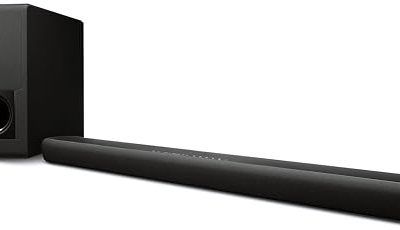
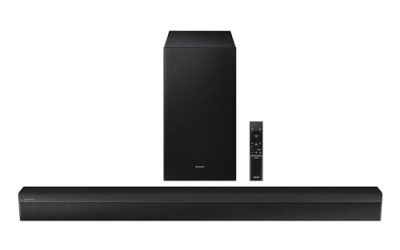
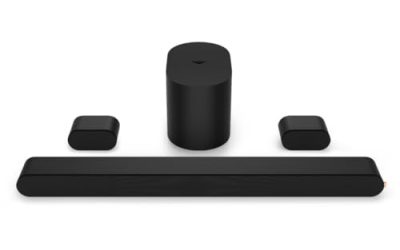
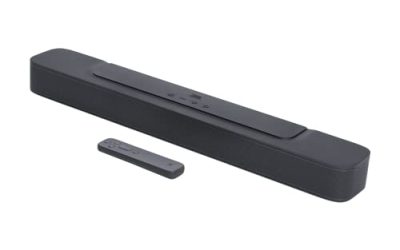
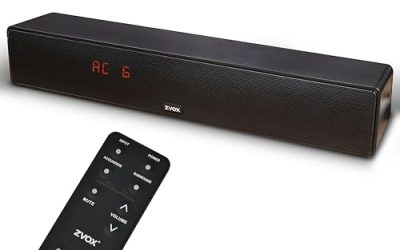
Our Short List of 3

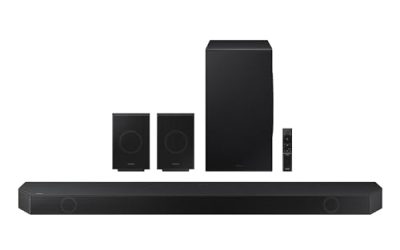
- Best for: Viewers replacing a receiver-based system who want the widest surround field a soundbar package offers.
- 11.1.4 channel configuration
- Wireless Dolby Atmos audio
- Rear speakers included
- Wireless subwoofer
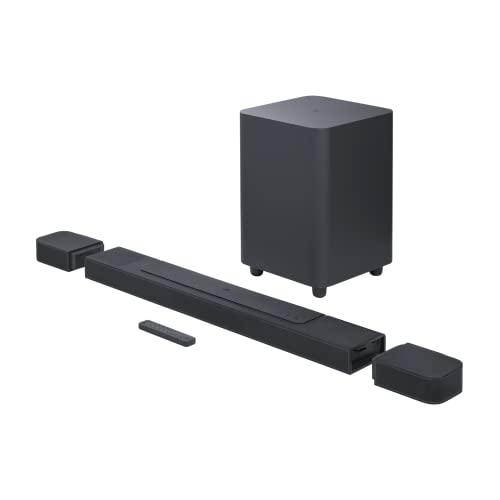
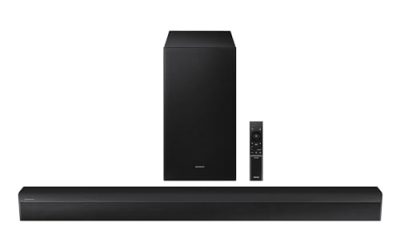
- Best for: Renters and shared rooms that want true rear surround for movie nights without permanent wiring.
- 7.1.4 channel configuration
- Two detachable wireless surround speakers
- 10-inch wireless subwoofer
- 880W total output

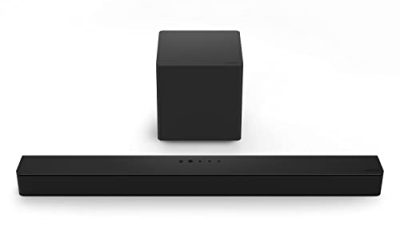
- Best for: LG OLED owners who want a matched flagship system with wireless, up-firing rear speakers.
- 9.1.5 channel configuration
- 810W total output
- Five up-firing speakers with triple up-firing center channel
- Wireless rear surround speakers included
All 5 Picks at a Glance
| Product | Specs | Action |
|---|---|---|
| Samsung HW-Q990D 11.1.4ch Soundbar |
| Check price on Amazon |
| JBL Bar 1000 7.1.4ch Soundbar |
| Check price on Amazon |
| LG S95TR 9.1.5ch Soundbar |
| Check price on Amazon |
 VIZIO Elevate SE 5.1.2 Soundbar |
| Check price on Amazon |
 Samsung HW-Q800D 5.1.2ch Soundbar |
| Check price on Amazon |
Key takeaways
- Five surround sound soundbars with real rear speakers or wide channel counts, compared by channels, surround format and room fit for movie nights.
The real decision with a surround sound soundbar is not how loud it gets. It is where the surround channels physically come from. Systems with separate rear speakers put effects behind your seat, while single-bar systems bounce or widen sound from the front, and the difference is obvious the first time a scene pans around the room. Channel counts, rear speaker type and how the system connects to your TV matter more than any headline wattage figure.
This roundup is for movie and streaming viewers who want genuine surround from a soundbar package instead of a receiver and speaker wire. Every pick below was chosen from the channel configuration and components named in its Amazon listing title, so a 5.1.2 system here really ships with a subwoofer and surround capability, and the flagships really include rear speakers in the box.
Quick Picks
As an Amazon Associate we earn from qualifying purchases
| Product | Best for | Key spec from title |
|---|---|---|
| Samsung HW-Q990D 11.1.4ch Soundbar | Full home theater replacement | 11.1.4ch with rear speakers included |
| JBL Bar 1000 7.1.4ch Soundbar | Surround speakers only when you need them | 7.1.4 with detachable surround speakers |
| LG S95TR 9.1.5ch Soundbar | LG OLED TV owners | 9.1.5ch with rear surround speakers |
| VIZIO Elevate SE 5.1.2 Soundbar | Smaller rooms wanting Atmos height | 5.1.2 with auto-rotating height speakers |
| Samsung HW-Q800D 5.1.2ch Soundbar | No space behind the sofa | 5.1.2ch bar and wireless subwoofer only |
How to Choose
Decide between real rear speakers and front-only surround
Separate rear speakers are the single biggest step up in surround realism, because effects and ambient sound genuinely originate behind you instead of being simulated from the front. The trade-off is physical: each rear speaker needs placement near ear level behind the seat and, on most systems, a power outlet nearby. Detachable battery-powered rears, like the JBL set below, dodge the outlet problem but need recharging. If your sofa sits flat against a wall with no shelf or stand space behind it, a strong single bar with wide front staging is the honest choice rather than rears squeezed into a corner.
Read the channel count properly
The three numbers describe front and surround channels, subwoofers, and height channels, in that order. A 5.1.2 system carries five ear-level channels, one subwoofer and two height channels; an 11.1.4 flagship adds wide and extra surround channels plus four height channels. More channels only help when the speakers exist to play them, so check whether the count comes from separate cabinets or from drivers packed into one bar. Also confirm your content uses the channels: streaming apps deliver 5.1 widely, while height channels only wake up on Dolby Atmos or DTS:X tracks.
Match the connection to your TV
HDMI eARC is the connection that matters, because it carries full-quality Dolby Atmos and multichannel audio from the TV’s apps and connected players to the bar. Older ARC ports can pass compressed surround but may drop channels or formats depending on the TV. Some systems add HDMI inputs on the bar itself, which helps if your TV has few ports or lacks eARC entirely. Wireless TV-to-bar links offered by Samsung and LG simplify cabling on their own TV brands, but they tie the neatest setup to one ecosystem, so weigh that before choosing around it.
Plan the subwoofer and room layout before buying
Every system here uses a wireless subwoofer, which still needs a power outlet and a corner or wall position where bass builds naturally rather than booming. Measure the bar against your TV width and the space under the screen, because tall bars can block infrared receivers or the bottom of the picture on low stands. Rear speakers need roughly matched distances to the main seat for the surround field to image correctly. Room calibration features such as Samsung’s SpaceFit help correct placement compromises, but they cannot fix a subwoofer trapped inside a closed cabinet.
The 5 Best Options
Samsung HW-Q990D 11.1.4ch Soundbar
- Best for: Viewers replacing a receiver-based system who want the widest surround field a soundbar package offers.
- 11.1.4 channel configuration
- Wireless Dolby Atmos audio
- Rear speakers included
- Wireless subwoofer
Viewers replacing a receiver-based system who want the widest surround field a soundbar package offers.
The rear speakers still need power outlets, and the full system is a lot of hardware for a small room.
Samsung’s flagship package is the closest a soundbar system gets to a full component home theater. Its 11.1.4 channels are spread across the main bar, a wireless subwoofer and wireless rear speakers that carry their own up-firing drivers, so surround and height effects both have dedicated hardware. Wireless Dolby Atmos removes the cable between TV and bar on compatible Samsung sets, and SpaceFit Sound Pro tunes output to the room. Choose it for a dedicated movie room or a large living room where the rears can sit properly behind the seating.
Watch out for: The rear speakers still need power outlets, and the full system is a lot of hardware for a small room.
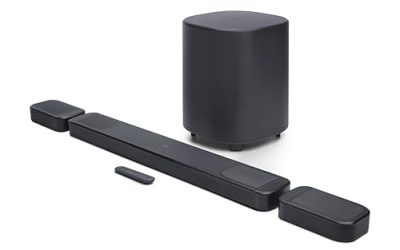
JBL Bar 1000 7.1.4ch Soundbar
- Best for: Renters and shared rooms that want true rear surround for movie nights without permanent wiring.
- 7.1.4 channel configuration
- Two detachable wireless surround speakers
- 10-inch wireless subwoofer
- 880W total output
Renters and shared rooms that want true rear surround for movie nights without permanent wiring.
The detachable rears run on batteries, so a forgotten recharge means front-only sound for that viewing.
The Bar 1000 solves the rear speaker problem differently: its surround speakers detach from the ends of the main bar and run on batteries, so you place them behind the sofa for a film and dock them back to recharge afterwards. Docked, the system still works as a wide front bar for everyday TV. MultiBeam processing widens the front stage, PureVoice targets dialogue clarity, and built-in Wi-Fi brings AirPlay, Chromecast and Alexa multi-room streaming. It suits renters and shared living rooms where permanent rear speakers and trailing cables are not welcome.
Watch out for: The detachable rears run on batteries, so a forgotten recharge means front-only sound for that viewing.
LG S95TR 9.1.5ch Soundbar
- Best for: LG OLED owners who want a matched flagship system with wireless, up-firing rear speakers.
- 9.1.5 channel configuration
- 810W total output
- Five up-firing speakers with triple up-firing center channel
- Wireless rear surround speakers included
LG OLED owners who want a matched flagship system with wireless, up-firing rear speakers.
The headline WOW features need a compatible LG TV; on other brands you use the standard HDMI connection instead.
LG builds this 9.1.5 system around its own TVs, with WOW Orchestra blending the bar’s output with the TV speakers and WOWCAST handling a wireless link to compatible LG sets. The hardware underneath is serious on any TV, though: five up-firing speakers including a triple up-firing center channel for dialogue, wireless rear speakers with their own height drivers, and a wireless subwoofer. Total output is 810W. Pick it if your living room centers on an LG OLED and you want the rears and height channels handled by one matched package.
Watch out for: The headline WOW features need a compatible LG TV; on other brands you use the standard HDMI connection instead.
VIZIO Elevate SE 5.1.2 Soundbar
- Best for: Smaller living rooms that still want physical rear speakers and real height effects.
- 5.1.2 channel configuration
- Adaptive height speakers that auto-rotate up for Atmos and DTS:X
- Wireless subwoofer and surround speakers included
- HDMI eARC connection
Smaller living rooms that still want physical rear speakers and real height effects.
The bar connects by HDMI eARC only, so TVs without eARC or ARC lose the main audio path.
The Elevate SE takes a mechanical approach to height channels: its adaptive height speakers physically rotate upward when Dolby Atmos or DTS:X content plays, then turn forward again for regular TV and music. The package includes a wireless subwoofer and separate surround speakers, giving a 5.1.2 layout with real rears at a size that fits smaller rooms and narrower TV stands. QuickFit compatibility simplifies mounting with select VIZIO TVs. It is the sensible pick when you want rear speakers and Atmos height without flagship dimensions or a flagship number of cabinets.
Watch out for: The bar connects by HDMI eARC only, so TVs without eARC or ARC lose the main audio path.
Samsung HW-Q800D 5.1.2ch Soundbar
- Best for: Apartments and wall-backed sofas that need surround from the front only.
- 5.1.2 channel configuration
- 360W total output
- Wireless Dolby Atmos audio
- Wireless subwoofer
Apartments and wall-backed sofas that need surround from the front only.
There are no separate rear speakers, so surround effects stay in front of you rather than wrapping behind.
Not every room can host rear speakers, and the Q800D is built for exactly that limit. It delivers its 5.1.2 channels from the bar itself, using side-firing drivers to widen the soundstage, paired with a wireless subwoofer for the low end. Wireless Dolby Atmos, SpaceFit Sound Pro room tuning and Adaptive Sound all carry over from Samsung’s higher systems, and Q-Symphony lets a compatible Samsung TV’s speakers join in. Choose it for bedrooms, apartments and wall-backed sofas where anything behind the seat is simply impossible.
Watch out for: There are no separate rear speakers, so surround effects stay in front of you rather than wrapping behind.
Which One Fits Your Situation
Your sofa has space and outlets behind it
Go with the Samsung HW-Q990D. With room for its rear speakers to sit behind the seat and reach power, its 11.1.4 layout produces the most complete surround field in this roundup, and the up-firing drivers in both the bar and the rears give Atmos height effects proper separation instead of a single bounced approximation.
You rent, or the room doubles as something else
The JBL Bar 1000 fits rooms that cannot commit to a permanent setup. Its battery-powered surround speakers come out for films and dock back onto the bar when the room returns to normal, so you get genuine rear channels on movie night and a tidy single bar the rest of the week.
Your TV is an LG OLED
Choose the LG S95TR to keep everything in one ecosystem. WOWCAST removes the audio cable to compatible LG televisions, WOW Orchestra folds the TV’s own speakers into the sound, and the wireless rears with up-firing drivers complete a 9.1.5 layout that properly matches the scale of a big OLED screen.
There is nowhere to put rear speakers
Take the Samsung HW-Q800D or, in a smaller room with eARC, the VIZIO Elevate SE if you can still place its compact rears on side tables. The Q800D accepts the constraint honestly and widens its 5.1.2 sound from the bar alone, which beats rear speakers crammed against the back of your head.
Common Mistakes
- Buying a high channel count without checking whether separate speakers actually deliver those channels.
- Placing rear speakers in front of the sofa or at floor level, which collapses the surround field.
- Connecting through an optical cable and losing the Dolby Atmos and multichannel formats eARC would carry.
- Assuming a wireless subwoofer needs no planning, then hiding it in a cabinet where bass turns to boom.
- Docking detachable surround speakers permanently and never using the rear channels you paid for.
Frequently Asked Questions
Do I need rear speakers for real surround sound?
They make the clearest difference. A single bar can widen the front stage and simulate envelopment, but effects that should pass behind you only truly do so when speakers sit behind the seat. If your room allows even compact rears on stands or shelves, systems like the VIZIO Elevate SE or JBL Bar 1000 deliver noticeably more convincing surround than front-only processing.
What does 5.1.2 or 11.1.4 actually mean?
The first number counts ear-level channels, the second counts subwoofers, and the third counts height channels. A 5.1.2 system has five main channels, one subwoofer and two height channels for Atmos overhead effects. An 11.1.4 flagship adds wide and additional surround channels plus four height channels, spreading sound more evenly around larger rooms.
Will these soundbars work with any TV brand?
Yes, through HDMI eARC or ARC, which every system here supports. Brand-specific extras are the exception: Samsung’s Q-Symphony and LG’s WOW Orchestra and WOWCAST only function with compatible TVs from the same brand. The core surround formats, Dolby Atmos and DTS:X, play regardless of which television feeds the bar.
Can a soundbar replace a receiver and separate speakers?
For most living rooms, yes. These packages include amplification, processing and every speaker in one purchase, with wireless links replacing speaker wire. A component system still wins on upgrade paths and very large rooms, but a flagship package like the HW-Q990D covers typical rooms with far less installation effort and no receiver to configure.
More from Amazon
Programs that pair well with the guide above. Offers and eligibility are set by Amazon and may change.
Free shipping on eligible items, Prime Video and more. Eligible new members can start with a free trial.
Start a Prime free trialAd-free music streaming. Eligible new subscribers can start with a free trial.
Try Music Unlimited freeA Prime membership for ages 18-24 with a trial period. Eligibility is set by Amazon.
See Prime for Young AdultsAudiobooks and podcasts to listen to on the go. Eligible new members can start with a free trial.
Try Audible freeAs an Amazon Associate we earn from qualifying purchases.