Key takeaways
- Know the limits: Never exceed the rated line pull, and use the correct accessories such as a snatch block to reduce load on the winch when needed.
- Rig carefully: Attach the hook to a rated anchor point, never to a tow ball or a weak point. Use a tree saver strap rather than wrapping cable around a tree.
- Use a line damper: Place a heavy blanket or a damper over the line to reduce whiplash if the cable fails.
- Keep people clear: Bystanders should stay well back from the line and the vehicle while it is under load. Never step over a taut line.
- Wear gloves and eye protection: Cable and rope edges can injure hands.
- Do not wrap the line on itself: Use a snatch block or a second anchor instead of doubling the cable back on itself.
- Maintain the winch: Rinse mud, dry the rope, inspect for fraying, and check electrical connections as the maker advises.
- Take training seriously: If you are new to recovery, consider a course from a recognized off-road organization.
The Warn VRX 45 or Axon 45 class suits UTV owners who want a well-supported, trail-proven winch, Superwinch’s Terra and similar lines suit buyers who want a sturdy winch at a mid-range tier, KFI winches suit riders who want a lightweight option with a UTV focus, and budget brands from Badland and Smittybilt suit occasional use. For most UTVs the 3,500 to 4,500 lb class is the usual starting point, but the right size depends on your machine’s weight, the terrain and how often you get stuck.
Our top picks
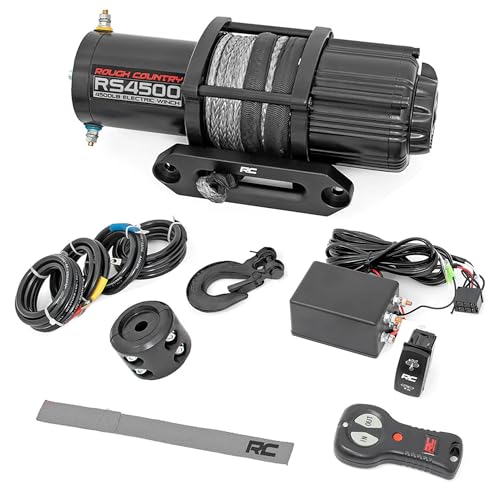


As an Amazon Associate we earn from qualifying purchases at no extra cost to you.
UTV winches at a glance
| Winch line | Best for | Key stated specs | Limits |
|---|---|---|---|
| Warn VRX 45 / Axon 45 | Frequent trail and recovery use | The maker lists a 4,500 lb rated line pull, steel or synthetic rope options and a sealed motor | Higher cost tier |
| Warn VRX 35 / Axon 35 | Lighter UTVs and sport machines | The maker lists a 3,500 lb rated line pull | May be undersized for heavy, loaded machines |
| Superwinch Terra 4500SR and similar | Mid-range reliability | The maker lists 4,500 lb rated line pull and synthetic rope on some versions | Check mount compatibility with your UTV |
| KFI SE series | Lightweight, UTV-specific designs | The maker lists several line pull ratings and compact bodies | Fewer dealers in some regions |
| Badland and Smittybilt UTV winches | Occasional use and tight budgets | Makers list 3,000 to 4,500 lb class ratings, often with a wireless remote | Shorter service life under heavy use |
Ratings and model names change over time, so use the table as a guide to the winch class and read the maker’s specification sheet for the exact model.
What matters most in a UTV winch
Line pull rating and vehicle weight
A common rule of thumb is to choose a winch rated at roughly one and a half times your vehicle’s gross weight. A loaded UTV can weigh well over a ton, so a 3,500 lb winch may be borderline, and a 4,500 lb class is often a safer starting point. Remember that rated line pull is measured on the first layer of rope on the drum, and pull decreases as more rope is wound on.
Steel cable versus synthetic rope
Steel cable is tough against abrasion but heavy, can fray, and can snap with dangerous whiplash. Synthetic rope is lighter, safer if it fails because it carries less stored energy, and easier to handle, but it needs protection from sharp rocks and heat. Many UTV owners now choose synthetic rope, and many winches ship with it. Always use gloves when handling either type.
Motor, gearing and speed
Winches differ in motor design, gear reduction and line speed. Faster line speed helps with quick recoveries but can draw more current. Makers often list a sealed or waterproof rating, which matters for creek crossings and mud. Check the amp draw against your UTV’s battery and charging system.
Mounting and fit
UTVs typically use a front bumper or a dedicated mounting plate. A winch that fits one model may not fit another, so confirm mounting hole patterns and clearances. Many accessory makers sell UTV-specific winch mounts and bumpers. Check that the fairlane or hawse fairlead matches the rope type: hawse fairleads for synthetic rope, roller fairleads for steel cable.
Remote, control and wiring
Most modern winches include a wired and sometimes a wireless remote. A handlebar or dash switch can be useful. Wiring should include proper fuses or circuit breakers and use the gauge the maker specifies. If you are not confident with the wiring, a qualified technician can install it.
Braking and safety features
Automatic load-holding brakes prevent the load from slipping when the motor stops. Winches with a clutch let you free spool the rope for quick pull-out. Always follow the manual for load limits, rigging and distance from the winch while it is under load.
Budget tiers explained
Budget tier
Badland, Smittybilt and similar winches offer an entry point for riders who only occasionally need a pull. They usually come with a wireless remote and steel or synthetic rope. Reviewers report that long-term durability and water resistance can vary, so they suit light-duty use.
Mid-range tier
Superwinch Terra and KFI winches sit here. They offer stronger components, better sealing and a broader range of ratings, making them a solid choice for regular riders.
Premium tier
Warn’s VRX and Axon lines are widely seen as top-tier, with strong dealer support, replacement parts and proven design. They suit frequent riders, work use and heavily loaded machines.
Recovery safety and care notes
- Know the limits: Never exceed the rated line pull, and use the correct accessories such as a snatch block to reduce load on the winch when needed.
- Rig carefully: Attach the hook to a rated anchor point, never to a tow ball or a weak point. Use a tree saver strap rather than wrapping cable around a tree.
- Use a line damper: Place a heavy blanket or a damper over the line to reduce whiplash if the cable fails.
- Keep people clear: Bystanders should stay well back from the line and the vehicle while it is under load. Never step over a taut line.
- Wear gloves and eye protection: Cable and rope edges can injure hands.
- Do not wrap the line on itself: Use a snatch block or a second anchor instead of doubling the cable back on itself.
- Maintain the winch: Rinse mud, dry the rope, inspect for fraying, and check electrical connections as the maker advises.
- Take training seriously: If you are new to recovery, consider a course from a recognized off-road organization.
Pick X if you want…
| If you want… | Pick | Why |
|---|---|---|
| A trusted, well-supported winch for frequent use | Warn VRX 45 or Axon 45 | Strong reputation, parts and service network |
| A lighter UTV or sport machine | Warn VRX 35 or KFI SE series | Lower rating and lighter weight |
| Mid-range reliability | Superwinch Terra 4500SR | Balanced capability and cost tier |
| Occasional use on a tight budget | Badland or Smittybilt UTV winch | Entry-level cost and simple controls |
| Safer failure behavior | Any winch with synthetic rope | Lower stored energy than steel cable |
Alternatives to consider
- Recovery straps and soft shackles: For vehicle-to-vehicle recovery, a rated strap and shackles may be enough.
- Portable winches and come-alongs: Hand winches can pull a stuck machine without the cost of a mounted unit, though they are slower.
- Tire upgrades and traction boards: Better tires and traction boards can reduce the number of times you need to winch.
Choosing and installing for your own riding
Think about the way you ride. Trail riders who rarely get stuck may do well with a mid-range winch and a good set of recovery straps, while riders who tackle deep mud, rock crawling or remote country benefit from a stronger winch, extra rope length and a second anchor strategy. Weight matters as well: accessories such as roofs, doors, windshields, cargo and passengers raise the vehicle’s weight, so size the winch for the loaded machine, not the base weight on the spec sheet.
Plan the mounting carefully. A solid bumper or a purpose-made mounting plate spreads the load into the frame, and weak mounts can bend under strain. Route the wiring away from heat and moving parts, protect it with loom, and use a fused or breaker-protected connection. If your machine has a factory winch-ready bumper or accessory port, follow the vehicle maker’s instructions.
Practice in a safe, controlled space before you need the winch in a real recovery, and carry the supporting kit: gloves, a tree saver strap, shackles, a snatch block and a line damper. Replace worn rope and damaged hooks promptly, and keep the manual in the vehicle so the load limits are always at hand.
Frequently Asked Questions
What size winch does my UTV need?
A common guide is a rating of about one and a half times the vehicle’s gross weight. Many UTVs use 3,500 to 4,500 lb winches, with heavier or loaded machines leaning toward the higher end.
Is synthetic rope better than steel cable?
Synthetic rope is lighter and stores less energy if it breaks, which many riders find safer, but it needs protection from abrasion and heat. Steel cable is tougher on sharp surfaces but heavier and can fray.
Can my UTV’s battery handle a winch?
Winches draw large amounts of current, so a healthy battery and charging system matter. Keep the engine running during a pull and follow the maker’s wiring and fuse guidance.
Where should I anchor the winch line?
Use a solid natural anchor with a tree saver strap or another vehicle’s rated recovery point. Never attach the hook to a weak point or use a tow ball for a winch pull.
Do I need a snatch block?
A snatch block doubles the pulling power and reduces strain on the winch, and it can change the direction of the pull. It is a useful accessory for heavy recoveries.
How do I maintain a UTV winch?
Rinse off mud, dry the rope, check for fraying or damage, and inspect electrical connections. Follow the manual for lubrication and storage guidance.
More from Amazon
Programs that pair well with the guide above. Offers and eligibility are set by Amazon and may change.
Free shipping on eligible items, Prime Video and more. Eligible new members can start with a free trial.
Start a Prime free trialAd-free music streaming. Eligible new subscribers can start with a free trial.
Try Music Unlimited freeA Prime membership for ages 18-24 with a trial period. Eligibility is set by Amazon.
See Prime for Young AdultsAudiobooks and podcasts to listen to on the go. Eligible new members can start with a free trial.
Try Audible freeAs an Amazon Associate we earn from qualifying purchases.