
Key takeaways
- Zoom detection: Standard USB webcams are recognised automatically. In Zoom, open Settings, choose Video and select the camera by name.
- Operating systems: Windows, macOS and Chromebook compatibility is widely listed by makers for the models above, but advanced features need the maker’s app.
- Monitor mounting: Check the clip against your monitor bezel or laptop lid thickness. For ultrawide or curved monitors, a tripod or monitor arm can be more stable.
- Ports: USB-A and USB-C versions both exist. Choose one that matches your computer, or use a short adapter.
- Zoom Rooms and shared spaces: Zoom publishes a list of certified conference devices. If you outfit a meeting room, check that list rather than relying on a consumer webcam.
For Zoom, a 1080p webcam with autofocus and automatic light correction, such as the Logitech C920s, C922 or Brio 100, is enough for most meetings and classes, while the Logitech MX Brio, Insta360 Link or Anker PowerConf C300 suit hosts who teach, present or move around. Zoom itself sends 720p video by default on most accounts and can send 1080p when the host’s plan and settings allow it, so a very expensive camera is rarely needed.
Our top picks

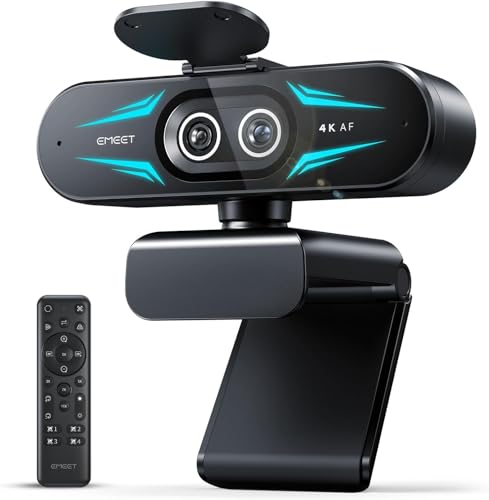


As an Amazon Associate we earn from qualifying purchases at no extra cost to you.
At a Glance: Zoom Webcams Compared
| Model family | Best for | Key stated specs (as makers list them) | Limits |
|---|---|---|---|
| Logitech C270 | Basic budget calls and school use | 720p, fixed focus, single microphone, clip mount | Soft image, weak in dim rooms |
| Logitech Brio 100 | Budget 1080p with privacy shutter | 1080p at 30 fps, auto light correction, built-in microphone | Fixed focus |
| Logitech C920s / C922 | Reliable all-round Zoom camera | 1080p at 30 fps, autofocus, stereo microphones; C922 also lists 720p at 60 fps | Older design |
| Anker PowerConf C200 / C300 | Value picks with extra framing features | C200 lists 2K resolution; C300 lists 1080p with AI framing and low-light handling | Software less refined, some reviewers say |
| Razer Kiyo Pro / Kiyo X | Dim rooms and gaming desks | Kiyo Pro lists a larger sensor and HDR; Kiyo X lists 1080p at 30 fps | Kiyo Pro is premium tier; Kiyo X is basic |
| Logitech MX Brio | Teachers, consultants, frequent hosts | 4K at 30 fps, dual microphones, USB-C | Premium tier |
| Insta360 Link / Link 2 | Demonstrations and moving presenters | 4K sensor on a gimbal, AI tracking, gesture control | Premium tier; tracking may be unnecessary for seated users |
Availability changes by region and some models are sold as previous generation stock. Confirm the current version on the maker’s page.
What Zoom Actually Needs
Video resolution Zoom can use
Zoom lists 720p HD video as standard for most accounts and 1080p as an option that depends on plan and settings. A 4K webcam still helps because the extra sensor detail is downscaled into a cleaner 1080p stream, and because it lets you crop in on a presentation. If your connection is weak, a modest camera on a stable network gives a better meeting than a premium camera on a poor one.
Light and exposure
Zoom has its own video enhancement settings, including a low-light adjustment and a “touch up” filter, but a webcam with good auto exposure reduces how much you need them. Reviewers at outlets such as Wirecutter, PCMag and Tom’s Guide repeatedly say that lighting does more for image quality than camera spec upgrades.
Autofocus versus fixed focus
If you hold up objects, write on a whiteboard or lean forward, autofocus is helpful. Fixed focus is acceptable for seated, static calls, particularly at the budget tier.
Virtual backgrounds
Zoom’s virtual background works with or without a green screen. Without one, it relies on the camera feed and your computer’s processing power, so evenly lit shoulders and a plain wall behind you give cleaner edges. A cheap fold-up green screen is an optional extra for clean cutouts.
Audio
Built-in microphones are convenient but usually pick up room noise and keyboard clatter. Zoom offers noise suppression settings, though a headset or USB mic often does better. If audio is critical for lessons or sales calls, treat the microphone as a separate purchase.
Compatibility and Fit
- Zoom detection: Standard USB webcams are recognised automatically. In Zoom, open Settings, choose Video and select the camera by name.
- Operating systems: Windows, macOS and Chromebook compatibility is widely listed by makers for the models above, but advanced features need the maker’s app.
- Monitor mounting: Check the clip against your monitor bezel or laptop lid thickness. For ultrawide or curved monitors, a tripod or monitor arm can be more stable.
- Ports: USB-A and USB-C versions both exist. Choose one that matches your computer, or use a short adapter.
- Zoom Rooms and shared spaces: Zoom publishes a list of certified conference devices. If you outfit a meeting room, check that list rather than relying on a consumer webcam.
Budget Tiers
| Tier | Expect | Trade-offs |
|---|---|---|
| Budget | 720p to 1080p, simple clip, basic microphone | Fixed focus, weak low-light performance |
| Mid-range | 1080p or 2K, autofocus, stereo mics, some software | Features vary, some models are older designs |
| Premium | 4K, HDR, tracking or auto-framing, sturdy build | Higher outlay than most Zoom users need |
Pick X If… Decision Table
| Pick this | If you… |
|---|---|
| Logitech C270 or Brio 100 | need a simple camera for family calls, school or occasional meetings |
| Logitech C920s or C922 | want a well-known, widely compatible 1080p autofocus camera |
| Anker PowerConf C300 | like AI framing that keeps you centered at a value tier |
| Razer Kiyo Pro | often call in dim rooms and want stronger low-light handling |
| Logitech MX Brio | host paid sessions, webinars or lessons and want 4K clarity |
| Insta360 Link series | move around, demonstrate products or teach at a whiteboard |
Camera Setup Tips for Zoom
- Place the lens at eye level, about an arm’s length away.
- Face a window or lamp so light falls on your face rather than behind you.
- In Zoom’s video settings, test the low-light adjustment and the “touch up” slider, then leave them on only if they help.
- Close other apps that use the camera, since Zoom can only share it with one program at a time on some systems.
- Use a wired network connection where possible for steadier video.
Teachers, Students and Hybrid Work
Zoom is common in classrooms and hybrid offices, where needs differ from solo remote work. Teachers who write on a whiteboard or show objects benefit from autofocus and a wider field of view, and a camera on a small tripod can sit beside the screen. Students on shared family computers often do well with a basic clip-on camera that is plug and play. Hybrid workers who move between a desk and a meeting room may prefer a compact camera that travels in a bag. In each case, open Zoom’s camera preview before the call starts, check that the right microphone is selected and join with video off briefly if you want to adjust lighting first.
Troubleshooting Common Zoom Camera Issues
- Camera not listed: Close other apps that use the camera, unplug and reconnect, and grant camera permission to Zoom in your operating system privacy settings.
- Black screen: Make sure any privacy shutter is open and that Zoom has selected the external camera, not the built-in one.
- Choppy video: Close heavy apps, switch off virtual backgrounds temporarily and move to a stronger network connection.
- Mirrored image: Zoom flips your own preview by default. The other participants see you un-mirrored, and there is a setting to change this.
Alternatives
- Phone as a webcam: Recent iPhones and many Android phones can work as webcams using built-in features or apps. The picture is often sharp, but you need a stable mount.
- Laptop camera: Newer laptops from Apple, Dell and Lenovo include 1080p cameras that are enough for light use.
- Conference camera: For rooms with several people, a wide-angle conference bar gives a more suitable picture than a single-person webcam.
Zoom Settings Worth Knowing
In Zoom’s Video settings you can choose the camera, enable HD where your plan allows it, and adjust for low light either automatically or manually. The “touch up my appearance” option softens the image, and some users prefer to leave it off for a more natural look. Under the Background and Effects tab you can pick a virtual background or a blur. Hosts of large sessions should also test screen sharing alongside the camera, since sharing a screen can reduce the video resolution of the camera tile. If your webcam maker provides its own app, close it before joining the call unless you need it open, as some apps hold the camera and prevent Zoom from using it.
Why Lighting Beats Resolution
Zoom compresses video heavily, so fine detail is lost in transit. What survives well is a well-lit face with even color and a clean background. A small LED panel or a desk lamp with a diffuser placed slightly above and in front of you will do more for a Zoom call than moving from 1080p to 4K. Keep the strongest light source in front of you, not behind, and avoid mixing warm and cool lights in the same room.
Frequently Asked Questions
What resolution does Zoom use?
Zoom sends 720p for most meetings by default and can send 1080p where your plan and settings allow. A 1080p webcam therefore covers nearly all cases. Higher resolutions mostly help with sensor quality and cropping.
Do I need a green screen for virtual backgrounds?
No. Zoom’s virtual backgrounds work without a green screen, but edges look cleaner with even lighting and a plain wall. A green screen can improve results on older computers.
Why does my Zoom video look dark or grainy?
It is usually down to low light. Add a lamp in front of you, turn on Zoom’s low-light adjustment and avoid sitting with a bright window behind you. If it still looks grainy, a camera with a larger sensor may help.
Can I use my phone as a Zoom camera?
Yes, many phones can act as webcams using built-in features or apps from the phone maker. You will need a stable mount and a charger for long sessions. The picture is often better than a basic webcam.
Is a separate microphone worth it for Zoom?
For casual meetings, built-in audio is acceptable. For teaching, interviews or sales calls, a headset or USB microphone gives clearer speech and less background noise. It is often a better investment than a camera upgrade.
Will any USB webcam work with Zoom?
Standard USB webcams generally work, since Zoom detects them as video devices. Check the operating system support listed by the maker, and install any companion software if you want extra features like auto-framing.
More from Amazon
Programs that pair well with the guide above. Offers and eligibility are set by Amazon and may change.
Free shipping on eligible items, Prime Video and more. Eligible new members can start with a free trial.
Start a Prime free trialAd-free music streaming. Eligible new subscribers can start with a free trial.
Try Music Unlimited freeA Prime membership for ages 18-24 with a trial period. Eligibility is set by Amazon.
See Prime for Young AdultsAudiobooks and podcasts to listen to on the go. Eligible new members can start with a free trial.
Try Audible freeAs an Amazon Associate we earn from qualifying purchases.








