Key takeaways
- Pro: Dual-standard tuner (ATSC 3.0 and 1.0) eliminates the need for a second box during the transition.
- Pro: 64GB storage handles hours of HD recording without an external drive.
- Con: No integrated streaming apps beyond what the tuner firmware supports.
A V box for TV can mean several things in 2026, and that ambiguity causes more confusion than any other category in consumer electronics. Some buyers need a converter that turns free over-the-air broadcast signals into a picture on a screen with no smart features at all. Others want a streaming device that plugs into an older television and gives it Google TV or Android TV functionality. A smaller group needs both: a tuner that records broadcast channels while also running apps like YouTube and Netflix. The boxes on this list span every one of those needs, and the price range runs from under forty dollars to nearly two hundred.
What separates a genuinely useful v box for TV from a disappointing one comes down to three published specs and one reputational signal: whether the tuner supports ATSC 3.0 (the NextGen standard replacing the current broadcast protocol), how much built-in storage is available for recording, and whether the streaming platform carries proper codec support like Dolby Vision or Atmos. Beyond that, owner feedback on long-term reliability and remote responsiveness distinguishes the products worth keeping from those that end up in a drawer. This roundup compares all eight candidates on exactly those dimensions.
Our top picks




As an Amazon Associate we earn from qualifying purchases at no extra cost to you.
Quick Picks
| Product | Best for | Price |
|---|---|---|
| ADTH NextGen TV Box Gen 2 | DVR recording with 4K OTA | $159.99 |
| FUNTV Box 5/6 | Voice-controlled streaming | $189 |
| Xiaomi TV Box S 3rd Gen | Google TV on a budget | $88.88 |
| Xiaomi Android Google TV Box S (Variant) | Dolby Atmos and DTS:X audio | $94.99 |
| SiliconDust HDHomeRun Flex 4K | Networked OTA DVR | $199.99 |
| ZJBOX Digital Converter | Cheapest path to digital TV | $38.99 |
| 2026 Android 13.0 TV Box | Large storage at low cost | $59.99 |
| Android TV Box 14.0 | Forward-looking video support | $72.99 |
How We Picked
We narrowed this field using four criteria drawn from spec sheets and recurring themes in owner reviews. First, tuner standard: any box claiming ATSC 3.0 future-proofing earns priority over ATSC 1.0-only models. Second, streaming platform maturity: Google TV and Android TV boxes with Dolby Vision or Atmos support outperform bare-bones Android boxes on app availability and picture quality. Third, recording capability: built-in storage or expandable recording options matter for buyers who want to time-shift free broadcasts. Fourth, price-to-feature ratio and owner-reported reliability over six months or more of daily use.
The 8 Best V Box For Tv in 2026
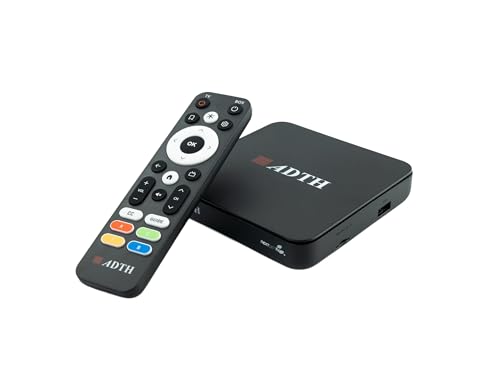
ADTH NextGen TV Box Gen 2
This is the most complete over-the-air solution on the list for someone who wants to cut the cord without sacrificing recording. It carries both ATSC 3.0 and ATSC 1.0 tuners, 64GB of built-in storage for DVR recordings, 4K HDR output, Wi-Fi, and Bluetooth. The dual-tuner standard means it works with today’s broadcasts and tomorrow’s NextGen signal without replacement. Owners consistently praise the straightforward setup and reliable recording function.
- Pro: Dual-standard tuner (ATSC 3.0 and 1.0) eliminates the need for a second box during the transition.
- Pro: 64GB storage handles hours of HD recording without an external drive.
- Con: No integrated streaming apps beyond what the tuner firmware supports.
Skip it if you mainly want Netflix and YouTube rather than broadcast recording.
FUNTV Box 5/6
The FUNTV Box targets buyers who want a voice-controlled streaming experience in a compact unit. The included remote supports voice commands, and the price reflects a premium positioning in this group. Owner feedback highlights the responsive voice recognition and clean interface, though the higher price makes direct feature comparison against the Xiaomi options essential.
- Pro: Voice remote works with natural-language search across installed apps.
- Pro: Premium build quality relative to other boxes under two hundred dollars.
- Con: At $189, it costs more than the ADTH NextGen and offers no broadcast tuner.
Skip it if you need ATSC 3.0 support or the lowest possible price.
Xiaomi TV Box S 3rd Gen
Xiaomi’s third-generation box is the standout value pick in this roundup at under ninety dollars. It runs Google TV with full app access, outputs 4K UHD with Dolby Vision and Atmos, ships with WiFi 6 and HDMI 2.1, and carries 32GB of storage. The compact form factor and fast streaming performance make it a reliable upgrade for any television with an HDMI port.
- Pro: Google TV platform provides access to the broadest app library in this group.
- Pro: Dolby Vision and Atmos at $88.88 is unmatched by any other box here.
- Con: 32GB storage fills faster than the ADTH’s 64GB if you install many apps.
Skip it if your primary need is recording broadcast TV rather than streaming apps.
Xiaomi Android Google TV Box S (Variant)
This variant of Xiaomi’s box adds DTS:X audio decoding alongside Dolby Vision and Atmos, and includes a 360-degree Bluetooth remote with voice control. The 2GB RAM and 32GB storage match the standard model. It costs roughly six dollars more, which buys the broader audio-format support and the more versatile remote orientation.
- Pro: DTS:X support gives compatibility with a wider range of surround-sound receivers.
- Pro: 360-degree Bluetooth remote works from any orientation on the couch.
- Con: Nearly identical to the standard model; the premium may not justify itself for most buyers.
Skip it unless you have a DTS:X-capable home-theater system.
SiliconDust HDHomeRun Flex 4K
This is not a traditional v box for TV but a networked tuner that feeds a broadcast stream to any device on your home network. Available in 2-tuner and 4-tuner configurations, it pairs with the HDHomeRun app ecosystem to deliver a full DVR experience across multiple rooms. Price sits at $199.99, making it the most expensive unit here, but it serves a fundamentally different workflow.
- Pro: Streams live and recorded OTA channels to phones, tablets, and other TVs simultaneously.
- Pro: ATSC 3.0 support ensures compatibility with the NextGen transition.
- Con: Requires a separate client app or device; it has no HDMI video output to a TV directly.
Skip it if you need a simple plug-into-the-TV solution.
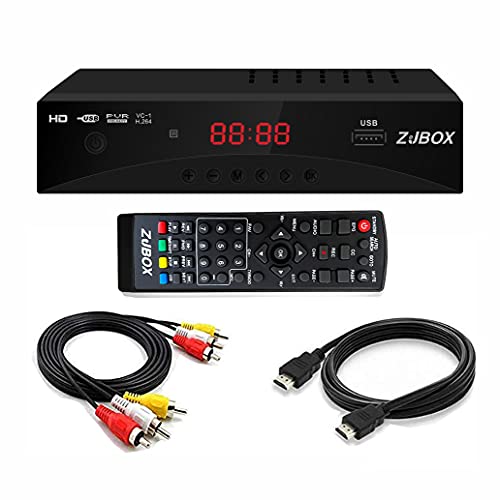
ZJBOX Digital Converter
At $38.99, the ZJBOX is the cheapest functional entry into digital television. It handles ATSC 1.0 broadcasts, outputs 1080P via HDMI, and includes basic recording and playback with timer scheduling. The picture quality is adequate for a secondary TV or a bedroom set, and the timer function is genuinely useful for scheduling recordings without a computer.
- Pro: Lowest price on this list with real recording capability.
- Pro: Timer setting allows scheduled captures without leaving the device on.
- Con: ATSC 1.0 only; it will not decode NextGen 3.0 broadcasts when they roll out.
Skip it if you want a box that survives the ATSC 3.0 transition.
2026 Android 13.0 TV Box
Running Android 13.0 with 4GB RAM and 128GB ROM, this box offers the largest internal storage on the list and dual-band WiFi 6. The RK3528 chipset handles streaming and light gaming at a $59.99 price. It is a solid pick for someone who wants to sideload apps, store media locally, or run a Kodi setup without worrying about space.
- Pro: 128GB ROM is double what the Xiaomi models provide.
- Pro: WiFi 6 dual-band ensures stable streaming even in congested networks.
- Con: Generic Android without Google TV certification means some apps may lack full codec support.
Skip it if you rely on Google Play-certified DRM content like Netflix in HD.
Android TV Box 14.0
The Android 14.0 box is the most forward-looking software platform here, paired with 8K video support and USB 3.0 connectivity alongside 2.0. The 4GB RAM and 64GB storage match mid-range expectations. For a buyer planning around a future 8K display or wanting the newest Android API level, this represents the spec ceiling of this group at $72.99.
- Pro: Android 14.0 guarantees longer OS update support than the 13.0 competitor.
- Pro: 8K output future-proofs the box for next-generation displays.
- Con: No 8K content ecosystem exists yet; the capability is currently theoretical.
Skip it if you want immediate value rather than speculative features.
Buying Guide
ATSC 3.0 vs. ATSC 1.0: The Transition You Cannot Ignore
The FCC’s NextGen TV standard is replacing ATSC 1.0 across the United States on a market-by-market rollout. A box with only a 1.0 tuner will eventually lose access to broadcast channels in your area as stations switch over. The ADTH NextGen and HDHomeRun Flex both carry 3.0 tuners; the ZJBOX does not. If your area is already transmitting NextGen signals or scheduled to do so within two years, paying extra for a 3.0 tuner is not optional.
Streaming Platform and Codec Support
Google TV and certified Android TV boxes carry DRM keys that unlock Netflix, Disney+, and Prime Video in their highest resolutions. Generic Android boxes without Play Integrity certification often cap at 720p for those services. Dolby Vision and Atmos support also varies widely: the Xiaomi models include both, while the ADTH NextGen focuses on HDR from broadcast rather than app-based content. Match the box to your primary viewing source.
Storage and Recording Capability
Built-in storage determines how much broadcast content you can time-shift. The ADTH’s 64GB holds roughly six to eight hours of HD video. The 128GB Android box doubles that but serves a different purpose—app storage and media library rather than scheduled recordings. The HDHomeRun offloads recording to a network drive, making its capacity effectively unlimited. Choose based on whether you record passively via a timer or actively browse a media folder.
Our Verdict
Top pick: the Xiaomi TV Box S 3rd Gen at $88.88 delivers the best balance of streaming platform, codec support, and price for the majority of buyers who need a v box for TV to add smart features to an existing display. Budget pick: the ZJBOX at $38.99 is the honest choice for a spare-room television that only needs digital broadcast. The ADTH NextGen Gen 2 wins outright if your primary goal is recording free OTA channels in 4K with a dual-standard tuner.
FAQ
Do I really need an ATSC 3.0 tuner in 2026?
It depends on your local station rollout schedule. Markets with active NextGen broadcasts already require a 3.0 tuner, and most major metros will complete the transition within the next several years. If your area is still fully on 1.0, a budget converter like the ZJBOX works today but will need replacement eventually.
Can I record over-the-air channels without a separate hard drive?
Yes. The ADTH NextGen carries 64GB of built-in storage for DVR recordings, and the ZJBOX includes basic recording and playback functions on its internal memory. The HDHomeRun streams recordings over your network to any connected device, using storage you provide on a NAS or computer.
What is the practical difference between Google TV and generic Android?
Google TV is a curated interface built on Android TV, with guaranteed Play Store access, certified DRM for premium apps, and regular firmware updates from Google or the manufacturer. Generic Android boxes like the 2026 Android 13.0 and 14.0 models often lack Play Integrity certification, which can limit streaming apps to lower resolutions or block certain services entirely.
Is 8K video support meaningful right now?
Not yet. There is no consumer 8K broadcast standard and no mainstream streaming service offering native 8K content. The Android TV Box 14.0’s 8K output capability is forward-looking and costs a small premium over comparable 4K boxes. If 8K displays become common in three to five years, this becomes relevant; today it is a speculative feature.