Our Short List of 3

- Best for: Viewers who want the strongest voice boost in a small, simple soundbar for clear TV dialogue.
- Width: 17 inches
- AccuVoice with 12 levels of voice boost
- Single-wire connection
- Output Leveling for consistent volume
- Best for: Viewers who want the most adjustable voice boost with fuller bass for movies and shows.
- AccuVoice with 20 levels of voice boost
- Dual woofers for fuller sound
- Dimensions: 17.6 x 5.0 x 1.9 inches
- HDMI-compatible connection

- Best for: Viewers who want premium dialogue clarity with music streaming built in for the living room.
- Model: 838309-1100
- 2.0 channel with dialogue-focused center tweeter
- Enhanced Dialogue special feature
- Output: 35 W
All 3 Picks at a Glance
| Product | Specs | Action |
|---|---|---|
| ZVOX AccuVoice AV157 |
| Check price on Amazon |
| ZVOX AccuVoice AV835 |
| Check price on Amazon |
| Bose TV Speaker |
| Check price on Amazon |
Our Top Picks
Muffled dialogue is the most common complaint about modern TVs, and it has a simple cause: thin panels leave no room for speakers that can reproduce human voices clearly. Music and sound effects drown out conversation, so viewers keep reaching for the remote to turn the volume up and down. A dialogue soundbar fixes that specific problem with a center tweeter or a voice-boost circuit that lifts speech above the rest of the mix. The right choice depends on how much voice boost you need, how much room your TV stand has, and whether you also want music and movie sound.
This guide is for viewers who miss lines in movies and shows, for older viewers who want voices without raising the overall volume, and for anyone whose TV speakers bury conversation under background music. The three soundbars below were chosen from the names and specifications shown on their Amazon pages, so every voice feature, size and connection claim traces back to the listing itself.
Quick Picks
As an Amazon Associate we earn from qualifying purchases
| Product | Best for | Key spec from title |
|---|---|---|
| ZVOX AccuVoice AV157 | Maximum voice boost in a small bar | 12 levels of voice boost |
| ZVOX AccuVoice AV835 | Strongest voice boost with dual woofers | 20 levels of voice boost |
| Bose TV Speaker | Premium dialogue clarity and build | Enhanced Dialogue feature |
How to Choose
Look for a dedicated voice-boost circuit
A dialogue soundbar is different from an ordinary soundbar because it includes a circuit that separates human voices from music and effects, then lifts the voices without raising the overall volume. Look for a named voice technology such as AccuVoice or Enhanced Dialogue, and count the levels of adjustment it offers. More levels give you finer control, which matters when you move between quiet dramas and loud action films. A single voice mode is better than none, but a multi-level control lets you tune the boost to your hearing and your room. Test the boost with a dialogue-heavy scene, since a bar that sounds good on music may still struggle with soft-spoken actors.
Check the speaker layout for a center channel
Human voices live in the center of the soundstage, so a soundbar with a dedicated center tweeter reproduces dialogue more clearly than a bar with only left and right drivers. Three speakers across the front of the bar give the voices their own driver, which keeps them separate from the music. Dual woofers add weight to the low end without muddying the midrange where voices sit. A two-channel bar can still sound good, but it relies on processing rather than a physical center driver to lift the dialogue. If clear speech is your main goal, a bar with a dedicated center tweeter or three front speakers is the better bet.
Match the bar size to your TV and stand
A bar wider than the TV stand looks awkward and can tip off the edge, while a short bar leaves the TV looking bigger than the upgrade. Measure the stand and the gap between the TV feet, then check those numbers against the bar’s listed width. A 17-inch bar suits smaller TVs and tight stands, while a wider bar suits larger screens. Also check the bar’s height, because a tall front can hide the remote receiver or cover the lower edge of the picture. For a wall-mounted TV, confirm the bar can hang too, through holes in its back or a mount sold for it.
Check the connections and the setup effort
Most dialogue soundbars connect through a single cable, which keeps the setup simple. A single-wire connection means you plug one cable into the TV and the bar works, with no wireless pairing or extra boxes. HDMI-compatible bars let the TV remote control the volume, which is the most convenient setup for daily use. Optical works on almost any TV, but it does not carry volume commands the same way. Output Leveling is a useful extra, because it keeps loud commercials from blasting after a quiet scene. Look at the sockets on the rear of the set, and see whether the box holds the lead you will use.
The 3 Best Options
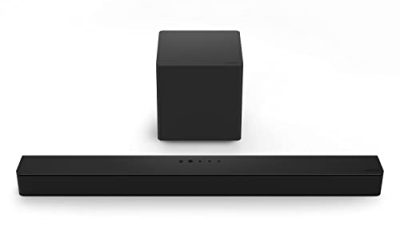
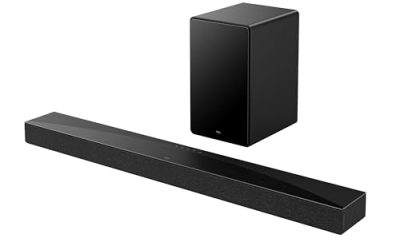
ZVOX AccuVoice AV157
- Best for: Viewers who want the strongest voice boost in a small, simple soundbar for clear TV dialogue.
- Width: 17 inches
- AccuVoice with 12 levels of voice boost
- Single-wire connection
- Output Leveling for consistent volume
Viewers who want the strongest voice boost in a small, simple soundbar for clear TV dialogue.
It is built for dialogue, not for deep bass or surround effects, so movie fans who want big low end should look elsewhere for a fuller system.
The ZVOX AccuVoice AV157 is the most focused dialogue soundbar in this guide, built around a single job: making voices clear without raising the overall volume. Its AccuVoice circuit offers twelve levels of voice boost, so you can tune the dialogue for quiet actors and noisy rooms. Output Leveling keeps loud commercials from blasting after a soft scene, and the single-wire connection means setup is one cable and done. Three two-inch speakers across the front give voices their own drivers, and the 17-inch width fits smaller TVs and tight stands. Pick it when clear speech is your only goal and setup must stay simple.
Watch out for: It is built for dialogue, not for deep bass or surround effects, so movie fans who want big low end should look elsewhere for a fuller system.
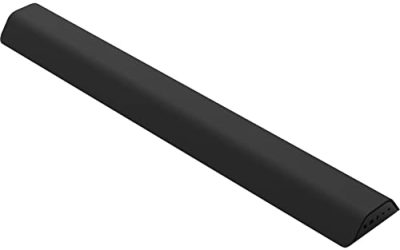
ZVOX AccuVoice AV835
- Best for: Viewers who want the most adjustable voice boost with fuller bass for movies and shows.
- AccuVoice with 20 levels of voice boost
- Dual woofers for fuller sound
- Dimensions: 17.6 x 5.0 x 1.9 inches
- HDMI-compatible connection
Viewers who want the most adjustable voice boost with fuller bass for movies and shows.
The wider body needs a stand with room to spare, and the extra voice levels take a little time to tune to your taste and your room.
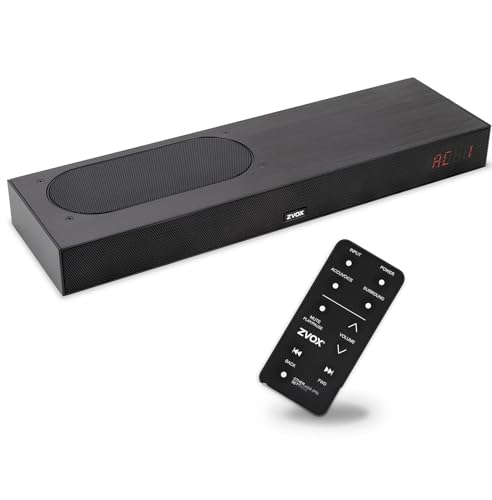
The ZVOX AccuVoice AV835 takes the same voice-boost idea as the AV157 and pushes it further, with twenty levels of voice boost and dual woofers for a fuller sound. The extra levels give you finer control over the dialogue for quiet dramas, news and loud action films. Dual woofers add weight to the low end without muddying the midrange where voices sit, so the bar sounds good on music as well as speech. The HDMI-compatible connection lets the TV remote control the volume, and the 17.6-inch width fits most TV stands. Pick it for the strongest dialogue control and a fuller sound than the AV157.
Watch out for: The wider body needs a stand with room to spare, and the extra voice levels take a little time to tune to your taste and your room.
Bose TV Speaker
- Best for: Viewers who want premium dialogue clarity with music streaming built in for the living room.
- Model: 838309-1100
- 2.0 channel with dialogue-focused center tweeter
- Enhanced Dialogue special feature
- Output: 35 W
Viewers who want premium dialogue clarity with music streaming built in for the living room.
It has no separate subwoofer, so bass-heavy movie fans may want a 2.1 system with a wireless subwoofer instead.
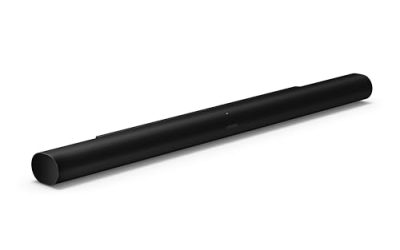
The Bose TV Speaker is the premium dialogue soundbar in this guide, built around a dialogue-focused center tweeter that keeps voices clear and natural. Its Enhanced Dialogue feature lifts speech above the music and effects, while the two-channel design with a dedicated center driver reproduces voices with the warmth Bose is known for. Bluetooth streams music from a phone when the TV is off, and HDMI-ARC lets the TV remote control the volume. The optical cable is included in the box, so setup is a single cable and done. At 35 watts it fills a living room without strain, and the compact body fits most TV stands.
Watch out for: It has no separate subwoofer, so bass-heavy movie fans may want a 2.1 system with a wireless subwoofer instead.
Which One Fits Your Situation
You miss lines in every movie
Pick the ZVOX AccuVoice AV835. Its twenty levels of voice boost give you the finest control over dialogue in this guide, so you can lift quiet actors without making loud scenes harsh. The dual woofers keep the sound full, and the HDMI connection lets the TV remote control the volume. Start at a middle level and adjust up or down with the scene, since the right setting changes between dramas and action films.
You want the simplest possible setup
Pick the ZVOX AccuVoice AV157. Its single-wire connection means you plug one cable into the TV and the bar works, with no wireless pairing or extra boxes. Twelve levels of voice boost give you plenty of adjustment, and Output Leveling keeps commercials from blasting after quiet scenes. The 17-inch width fits smaller TVs and tight stands, and the three front speakers keep voices clear. It suits a bedroom or a small living room.
You want dialogue clarity and music in one bar
Pick the Bose TV Speaker. Its dialogue-focused center tweeter and Enhanced Dialogue feature keep voices clear, while Bluetooth streams music from your phone when the TV is off. The 35-watt output easily fills a living room without strain, and the HDMI-ARC connection lets the TV remote control the volume. Keep in mind that it has no separate subwoofer, so deep bass is not its strength.
You have hearing difficulty and need voices louder
Pick either ZVOX model, and start with the AV835 if your budget allows. The AccuVoice circuit lifts voices without raising the overall volume, which is exactly what you need when background music drowns out speech. The AV835’s twenty levels give you the finest control, while the AV157’s twelve levels cover most cases. A soundbar is not a hearing aid, so talk to a clinician if hearing loss is the real issue.
Common Mistakes
- Buying an ordinary soundbar and expecting it to fix dialogue without a voice-boost circuit, when only a dedicated voice circuit lifts speech above music and effects.
- Choosing a bar wider than the TV stand and watching it tip off the edge, so measure the stand first and leave a small margin on each side.
- Leaving the voice boost at maximum for everything and making loud scenes harsh, instead of starting in the middle and adjusting the level for each show.
- Sending movie sound over Bluetooth and faulting the bar for the lag, when the wireless link itself adds the delay that a wired connection avoids.
- Ordering without confirming the TV offers HDMI ARC, then finding the remote cannot change the bar’s volume as expected, and needing a second remote for volume.
Frequently Asked Questions
What makes a dialogue soundbar different from a normal soundbar?
A dialogue soundbar includes a voice-boost circuit that separates human voices from music and effects, then lifts the voices without raising the overall volume. An ordinary soundbar improves the overall sound but does not target speech specifically. A dedicated center tweeter also helps, since voices live in the center of the soundstage for films and shows.
How many levels of voice boost do I need?
Twelve levels cover most viewers, while twenty levels give you finer control for different shows and rooms. More levels matter when you move between quiet dramas and loud action films, since the right setting changes with the content and the room. Start at a middle level and adjust up or down with the scene as you watch.
Can a soundbar help if I have hearing difficulty?
Yes, a voice-boost soundbar can make dialogue easier to follow by lifting voices above the background music and effects in your home. It is not a substitute for a hearing aid, so talk to a clinician if hearing loss is the real issue. Output Leveling also helps, since it keeps loud commercials from blasting after quiet evening scenes.
Will a dialogue soundbar work with any TV?
Any TV works with a dialogue soundbar through HDMI ARC or an optical cable, and most include at least one of those connections. Before ordering, look over the sockets on the back and confirm the lead you need is in the box. An HDMI ARC link is handiest, because it lets the set’s own remote change the volume.
More from Amazon
Programs that pair well with the guide above. Offers and eligibility are set by Amazon and may change.
Free shipping on eligible items, Prime Video and more. Eligible new members can start with a free trial.
Start a Prime free trialAd-free music streaming. Eligible new subscribers can start with a free trial.
Try Music Unlimited freeA Prime membership for ages 18-24 with a trial period. Eligibility is set by Amazon.
See Prime for Young AdultsAudiobooks and podcasts to listen to on the go. Eligible new members can start with a free trial.
Try Audible freeAs an Amazon Associate we earn from qualifying purchases.