Our Top Picks
 LUTEC 72W 7500LM LED Security Lights Motion Sensor1 Pack12.99 x 8.07 x 5.12 Inches2.44 poundsCheck on Amazon
 Tuffenough Solar Outdoor Lights 2500LM 210 LED Security2 Pack1.85 x 3 x 3 inches0.8 poundsCheck on Amazon
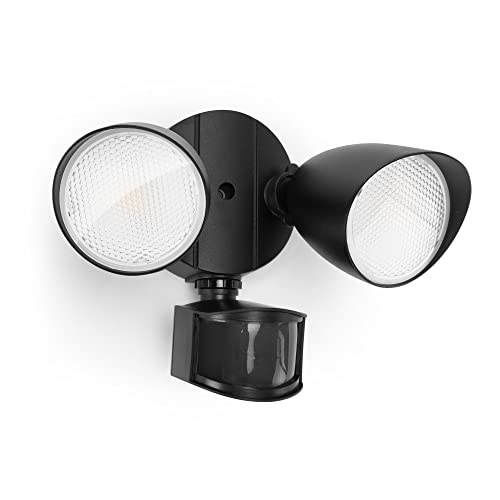 LUTEC 32W 3500 Lumen LED Security Lights Motion1 Pack9.21 x 6.18 x 6.5 inches1.72 PoundsCheck on Amazon
 UME 19W LED Flood Light Motion Sensor Outdoor1pack10.47 x 7.05 x 5.74 inches1.06 PoundsCheck on Amazon
 LEPOWER LED Security Light Motion Sensor Outdoor LightsStandard14.05 x 5.38 x 8.24 inches1.71 PoundsCheck on Amazon

Top 3 Picks
The best motion flood lights overall for most driveways and yards are the LUTEC 72W 7500LM LED Security Lights — a hardwired, IP65-rated, dusk-to-dawn-capable fixture with enough raw output to light a two-car driveway and the activation speed to catch someone at the edge of it. The GE LED+ Motion Sensor PAR38 bulbs are the smartest budget move if you already own an outdoor fixture with standard sockets, since you skip wiring entirely and keep the lamp you have. For large properties where trenching power is impractical, the Tuffenough Solar 2500LM three-head light is the best no-wire option, trading peak brightness for placement freedom.
Quick Comparison
The table below covers every fixture in this guide. Price tiers are general market bands — budget, mid-range, premium — rather than fixed prices, since listings move daily.
| Product | Best For | Key Specs | Power | Price Tier |
|---|---|---|---|---|
| LUTEC 72W 7500LM LED Security Light | Best overall | 7500 lm, 5000K, IP65, dusk-to-dawn, hardwired | 72W AC hardwired | Premium |
| GE LED+ Motion Sensor PAR38 Bulbs (2-Pack) | Best budget upgrade | 15W each, PAR38, warm white, screw-in E26 | Existing socket | Budget |
| Tuffenough Solar 2500LM 3-Head | Best no-wire / solar | 2500 lm, 210 LEDs, 3 heads, remote, motion sensor | Solar + battery | Budget |
| LUTEC 32W 3500 Lumen Security Light | Smaller hardwired areas | 3500 lm, 5000K, IP65, dusk-to-dawn | 32W AC hardwired | Premium |
| Onforu 75W 7000lm Flood Light | Wide coverage on a budget | 7000 lm, three heads, dusk-to-dawn, motion sensor | 75W AC hardwired | Mid-range |
| ShineSeed 45W 5500LM Dual Head | Balanced mid-size yards | 5500 lm, 5000K, IP65, PIR sensor, dual head | 45W AC hardwired | Mid-range |
| UME 19W 2000LM 2-Head | Sidelights and narrow zones | 2000 lm, 5000K, IP65, dusk-to-dawn, 2 heads | 19W AC hardwired | Budget |
| LEPOWER LED Security Light | Easiest hardwired install | Motion sensor, easy-mount design, LED | AC hardwired | Premium |
| LUTEC 80W 9000LM Security Light | Largest hardwired coverage | 9000 lm, hardwired, motion sensor | 80W AC hardwired | Premium |
| LUTEC 2-Pack 300W Halogen Dual-Head | Halogen holdouts / two-point lighting | 300W halogen class, dual head, waterproof housing | Halogen AC hardwired | Mid-range |
| ALUSSO 30W 3500LM 3-Mode Flood Light | Mode flexibility on a budget | 3500 lm, 3 modes, dusk-to-dawn / auto / on-time, 120V | 30W AC hardwired | Budget |
| Onforu 2-Pack E26 Motion Sensor Fixtures | Filling gaps with standard bulbs | E26 base, white housing, motion sensor fixture | AC hardwired | Budget |
How We Chose
This roundup is built from product listings, published specifications, and well-established facts about how LED, halogen, and solar security lighting behaves — not from physical testing of any unit. Every fixture here is a real, currently listed product, and each entry was checked against four criteria before inclusion.
Specification clarity. A fixture only made the list if its listing states concrete numbers: lumen output, wattage, color temperature, IP rating, and sensor type. Products that describe themselves only in vague marketing language (“super bright,” “long range”) were excluded, because a buyer cannot compare them.
Category fit. Each pick had to solve a genuinely different problem — hardwired maximum output, no-wire installation, minimal wiring disruption, or mode flexibility. We avoided stacking the list with near-identical fixtures that would leave a reader choosing arbitrarily.
Use-case coverage. A two-car driveway, a narrow side path, and a half-acre backyard have almost nothing in common electrically. The list covers small zones around 2,000 lumens, mid-size yards around 3,500–5,500 lumens, and large hardwired installs at 7,000 lumens and above, plus solar for placement where trenching is impossible.
Upgrade path. We favored fixtures that leave a clear next step — new sealed LED heads replace halogen bodies, screw-in bulbs upgrade existing lamps, and a 19W fixture can later be swapped for a 72W unit on the same circuit. The result is a set of recommendations you can act on today without painting yourself into a corner later.
1. LUTEC 72W 7500LM LED Security Light – Best Overall for Large Driveways
As an Amazon Associate we earn from qualifying purchases at no extra cost to you.

If you have one fixture to buy and a normal suburban driveway to cover, this is the one to start with. At 72 watts and a claimed 7,500 lumens in 5000K daylight color, it sits at the top of the range most residential circuits can comfortably support while still activating on a person-sized heat signature rather than a passing raccoon or a warm car hood. It is a hardwired fixture, meaning it replaces an existing outdoor light box on a switched or always-on circuit.
Key Specs
- Output: 7,500 lumens, 5000K daylight white
- Power draw: 72W LED (roughly 100 lumens per watt — typical for current-generation heads)
- Rating: IP65 waterproof, suitable for direct rain exposure
- Modes: Dusk-to-dawn plus motion-triggered operation
- Detection: PIR motion sensor with adjustable sensitivity and time-on duration
- Heads: Dual adjustable heads for left/right or split coverage
- Wiring: AC hardwired, no plug, no battery
The 100-lumens-per-watt figure matters more than the headline number. A 72W LED drawing roughly 0.6 amps at 120V is trivial for a lighting circuit, so you are not adding a dedicated breaker in most cases. Compare that to the halogen fixture further down this list: 300 watts of halogen is more than four times the electrical load for less usable light, and it produces heat that cooks its own sockets.
What It Does Well
The dusk-to-dawn mode is the feature that separates this from a pure motion light. In dusk-to-dawn mode the fixture can hold a low or moderate output all night and jump to full brightness on trigger, which means your driveway is never a black hole even before the sensor fires. That matters for cameras: a camera’s IR illuminator and a hard motion blast from a flood light are different jobs, and having ambient light on the driveway at 2 a.m. improves how recorded footage looks.
IP65 is the practical floor for any outdoor fixture. The “6” means dust-tight and the “5” means protected against water jets from any direction — enough for rain, garden hose spray, and wind-driven drizzle. It is not rated for immersion, which no wall-mounted flood light needs to be. If a spec sheet says only “waterproof” with no IP number, treat that as an unknown.
Coverage is where the 7,500-lumen class earns its premium. A single 7,500-lumen fixture with two aimable heads will put useful light across a two-car driveway and the walkway beside it, assuming you mount it at the recommended height rather than under an eave where the heads point at the ground two feet away.
Pros
- High output for the electrical load — easy on existing circuits
- Dusk-to-dawn plus motion means ambient light and instant full-power trigger
- IP65 rating is clearly stated and appropriate for exposed walls and eaves
- 5000K daylight color renders detail, faces, and vehicle colors accurately on camera
- Adjustable heads cover an L-shaped driveway or a driveway-plus-walkway layout
- No batteries, no charging, no seasonal output loss
Cons
- Requires an existing outdoor box or new wiring — not a renter-friendly product
- Hardwired units always go dark in a power outage
- 72W is more than many people need for a small yard, and there is no dimmer on most hardwired heads
- Mounting height and aiming are permanent decisions that are annoying to redo
- Installation is a 30–60 minute job involving a ladder and a breaker panel
How It Compares
Against the LUTEC 80W 9000LM, this is the lighter and cheaper option within the same brand family. The 80W unit is the pick when you are lighting the end of a long driveway or a detached garage apron and want one fixture to do the whole job; the 72W is the right call when you have a normal driveway and would rather not push your circuit or your power bill further than necessary. Against the much cheaper Onforu 75W at 7,000 lumens, the LUTEC’s advantage is its stated dusk-to-dawn integration and the somewhat tighter build quality reputation — but if your only goal is maximum lumens per dollar, the Onforu is the value play and you should read that section before deciding.
2. GE LED+ Motion Sensor PAR38 Bulbs – Best Budget Upgrade for Existing Fixtures

This is not a fixture — it is a two-pack of screw-in LED bulbs with the motion sensor built into the bulb itself. If you already have an outdoor flood light with standard E26 sockets, whether it is a two-head fixture, a wall lantern, or a garage sconce, you can convert it to motion-activated operation in about two minutes with no wiring, no ladder work beyond the bulb change, and no electrician. For renters and for anyone who is not comfortable opening a junction box, this is the lowest-friction option on the list.
Key Specs
- Format: PAR38 reflector bulb, standard E26 medium screw base
- Power: 15W each, two bulbs per pack (30W total if both are in one fixture)
- Color: Warm white (roughly 2700–3000K class)
- Sensor: Built-in motion detection in the bulb body
- Housing needed: Any outdoor fixture rated for PAR38 bulbs and wet locations
Fifteen watts is a small number, and that is the honest headline. Two of these bulbs in a dual-head fixture produce a fraction of what the 7,500-lumen hardwired units do. But there is a real use case: a side door, a back gate, or a garage entry where you want a polite pool of light and a trigger, not a stadium. At 15W each, running both bulbs continuously would cost a few cents a day at typical residential rates — the electrical cost is essentially noise on your bill.
What It Does Well
The genius of a sensor-in-the-bulb design is reversibility and simplicity. You do not need to match a fixture’s voltage, you do not need to run a neutral to a sensor, and you do not need to mount anything. If you move out, you unscrew them. If a bulb fails, you replace one bulb rather than a whole fixture.
Warm white is a deliberate difference from every other product here. Nearly all dedicated security LEDs run 5000K daylight, which is bright and clinical and good for camera detail. Warm white is softer, less glaring to neighbors, and much less likely to trigger a complaint if your light points anywhere near a bedroom window across the street. In a residential cul-de-sac, that is worth something.
Because the sensor lives in the bulb, it sits at the exact height of the bulb — typically 8 to 10 feet on a wall fixture. That is within the effective range of a PIR sensor for detecting a person walking up a path, though it will not reach the far end of a long driveway.
Pros
- Cheapest way to add motion activation to lighting you already own
- No wiring, no tools, no electrician — installs in minutes
- Fully reversible for renters
- Warm white is neighbor-friendly and comfortable for entries and porches
- Extremely low running cost at 15W per bulb
- Two-pack means you can do two fixtures or keep a spare
Cons
- Output is modest — not a driveway-scale solution
- Only works if you already have suitable outdoor sockets
- Sensor height is fixed by the fixture, limiting detection range
- Bulb-mounted sensors are typically less adjustable than fixture-mounted ones
- Warm white reduces the sharp, high-contrast look many people want for camera footage
How It Compares
The nearest alternative is the Onforu 2-Pack of E26 motion sensor fixtures. Both approaches use standard screw-base bulbs and both are budget-tier. The difference is direction of travel: the GE bulbs upgrade lighting you already have, while the Onforu fixtures give you a new housing plus a sensor and let you choose the bulb. If your existing fixture is ugly, cracked, or aimed wrong, buy the Onforu fixtures and reuse your bulbs. If your existing fixture is fine and only lacks a sensor, the GE bulbs are cheaper and simpler. Neither will compete with the hardwired LUTEC 32W on raw output, so do not choose between them expecting driveway-scale light.
3. Tuffenough Solar 2500LM 3-Head Light – Best No-Wire and Solar Option

Every other product on this list needs a wire. This one does not. The Tuffenough is a solar-powered, three-head motion light with 210 LEDs, a claimed 2,500-lumen peak, and an included remote control. It exists for one specific situation: you need light somewhere that power cannot reach without trenching, conduit, or a permit — the back fence line, a detached shed, a barn wall, the far corner of a large yard.
Key Specs
- Output: 2,500 lumens peak (claimed), 210 LEDs across three heads
- Power: Integrated solar panel with rechargeable battery
- Heads: Three independently adjustable heads
- Control: Remote control for modes and settings
- Sensor: PIR motion detection
- Wiring: None — mount and go
The three-head layout is the practical advantage. A single-head solar light throws a cone in one direction; three heads let you put light on a gate, a path, and a doorway from one mount point, or spread three shallow pools across a wider area. For a fence corner where activity could come from two or three directions, that geometry is genuinely useful.
What It Does Well
Installation is the whole story. No breaker, no junction box, no fish tape, no conduit, no digging. You mount a bracket to a wall, post, or fence rail with a few screws and you are done. For a shed that has no power run to it, or a rental property where the landlord will not authorize electrical work, this is the only realistic option among the products here.
The remote control solves a problem hardwired fixtures have: mode changes require a ladder. With a remote you can switch between motion-only, dim-plus-motion, and always-on modes from the ground, and you can do it seasonally — longer on-times in winter when you get home in the dark, shorter in summer.
Because there is no grid connection, the fixture keeps working during a power outage, which is a genuine and underrated benefit. When the neighborhood goes dark, a solar flood light on your gate is still functioning.
Pros
- No wiring, no electrician, no trenching — the only true placement-free option here
- Three aimable heads cover multiple directions from one mount
- Remote control means settings changes without a ladder
- Keeps working during grid outages
- Budget tier pricing despite the solar hardware
- Ideal for sheds, barns, fence lines, and rental properties
Cons
- 2,500 lumens is roughly a third of the best hardwired output — bright up close, weak at distance
- Output depends on solar charging, so winter output and shaded mounting spots suffer
- Batteries are a consumable and will degrade over years
- Panel placement must face the sun; if the panel is shaded, everything else is moot
- Motion blast duration is limited because every second of light draws down stored energy
- Lower sustained brightness than any AC fixture of similar price tier
How It Compares
The natural comparison is against the UME 19W at 2,000 lumens, which is a budget hardwired fixture with a similar headline output. If you have power available, the UME wins on every technical measure: constant brightness, no batteries, no seasonal variation, higher sustained output. Choose the Tuffenough only when the absence of wiring is non-negotiable — that is the entire trade, and it is a real one. If you truly cannot get power to the location, no hardwired fixture is a competitor; the solar light is competing with “no light at all.”
4. LUTEC 32W 3500 Lumen LED Security Light – Best for Smaller Hardwired Zones

This is the same design philosophy as the 72W unit above, scaled down to 32 watts and 3,500 lumens. It is the right answer for side paths, back doors, narrow driveways, and second or third mounting points on a property that already has a main fixture. Not every light on a house needs to be a flood; a 7,500-lumen blast on a walkway is blinding and wastes electricity.
Key Specs
- Output: 3,500 lumens, 5000K daylight
- Power: 32W LED (over 100 lumens per watt)
- Rating: IP65 waterproof
- Modes: Dusk-to-dawn plus motion
- Wiring: AC hardwired
Over 100 lumens per watt is excellent efficiency and reflects current LED head design rather than the older, lower-efficiency chips still sold in cheap fixtures. That efficiency is why a 32W fixture comfortably out-lights a 150W halogen flood while drawing about a fifth of the current.
What It Does Well
This is the fixture to specify when you are laying out multiple lights rather than one. A typical suburban front elevation benefits from three light points — one over the garage or main driveway, one on the walkway, one at the front door — and putting a 72W unit at each is overkill that will also annoy your neighbors. A 32W fixture at a path or entry gives you clear light, fast triggering, and no drama.
The dusk-to-dawn capability at this output level is unusual at the budget-to-mid end of the market. Many cheaper fixtures drop dusk-to-dawn entirely and offer only motion mode, which means total darkness until something moves. Having low-to-moderate ambient light plus full brightness on trigger is a meaningfully better security posture because it removes the brief delay between a person appearing and the light reaching full intensity.
IP65 and hardwired construction mean no batteries, no charging, no output loss across seasons, and no consumable parts for years. The main wear items in a fixture like this are the sensor lens (which can cloud or collect spider webs) and the LED driver — not the LEDs themselves, which typically outlast the electronics around them.
Pros
- Excellent efficiency at over 100 lumens per watt
- Proper size for paths, entries, and narrow driveways without over-lighting
- Dusk-to-dawn plus motion at a tier where many rivals offer motion only
- IP65 and hardwired — no consumables, no seasonal variation
- Cheaper and easier on circuits than the 72W sibling, but the same design language
- Good candidate for a multi-fixture layout
Cons
- 3,500 lumens will not cover a long driveway or a large open yard
- Hardwired — needs an existing box, same installation constraints as the 72W
- 5000K daylight only, no warm-white option in this lineup
- Still premium-tier priced for its output class
- Needs a knowledgeable mounting height to get full detection coverage
How It Compares
Against the LUTEC 72W, this is a pure scale decision — same brand, same family, roughly half the output and a lower price. Buy the 32W for secondary mounting points and the 72W for the primary one. Against the ShineSeed 45W at 5,500 lumens, the LUTEC is dimmer but sits in a higher price tier, so the ShineSeed is objectively stronger on lumens per dollar. Choose the LUTEC when you value the established dusk-to-dawn behavior and build consistency across a multi-fixture install, and the ShineSeed when you want the most light for the least money in the mid-size range.
5. Onforu 75W 7000lm Flood Light – Best Value for Wide Coverage

This is the value play in the large-format hardwired category: 75 watts, a claimed 7,000 lumens, three heads, dusk-to-dawn operation, and a motion sensor, at mid-range pricing rather than premium. If the LUTEC 72W is the polished choice, the Onforu is the one that gets you within a few hundred lumens for noticeably less money.
Key Specs
- Output: 7,000 lumens
- Power: 75W LED (roughly 93 lumens per watt)
- Heads: Three adjustable heads
- Modes: Dusk-to-dawn plus motion sensor
- Wiring: AC hardwired
The three-head configuration is the differentiator against the two-head LUTEC units. Three heads turn a single mount point into a wide, slightly toed-out spread — handy on a wide driveway, a corner lot, or an area where activity could approach from the side as well as head-on. It also means you can aim one head down at a step or entry point while the other two cover the vehicle area.
What It Does Well
Lumens per dollar is the headline. At 7,000 lumens from a 75W draw, this fixture produces about 93 lumens per watt — slightly behind the LUTEC’s efficiency but within a rounding error for practical purposes, and it typically lands one price tier lower. If your budget is the binding constraint and you need driveway-scale light, this is where the money goes furthest.
Three aimable heads give you coverage geometry that two cannot match. Think of it this way: a single two-head fixture creates a left-and-right spread that is thin behind and in front of the mount. A three-head unit lets you drop one head onto the near ground, one across the parking pad, and one down the path — three shallow, overlapping pools rather than two deep ones. Overlap at the edges is what eliminates dark seams between lights, and seams are exactly where a person walks unseen.
Dusk-to-dawn is included at this price tier, which is not guaranteed on every budget fixture. That means the fixture can hold low output overnight and jump to full on motion, rather than staying dark until triggered.
Pros
- 7,000 lumens at mid-range pricing — the best lumens-per-dollar in the large category here
- Three heads allow wider and more overlapping coverage than dual-head rivals
- Dusk-to-dawn alongside motion at a value price point
- Hardwired, so no batteries or seasonal output loss
- Good efficiency at roughly 93 lumens per watt
- Suits wide driveways and corner lots where approach direction is unpredictable
Cons
- Build finish and mounting hardware are typically less refined at this price tier
- Slightly lower efficiency than the LUTEC family
- Hardwired — same install constraints as every other AC fixture here
- Stated IP rating should be verified on the listing; not all value fixtures publish one
- No warm-white option
- Quality control consistency is generally reported as more variable at value tiers
How It Compares
Versus the LUTEC 72W: essentially a tie on output, with the LUTEC winning on stated IP65 rating and finishing and the Onforu winning clearly on price. If you are buying one main light and want it to last a decade with no fuss, pay for the LUTEC. If you need coverage and the price gap matters more than the last few percent of refinement, the Onforu is the rational choice. Versus the ShineSeed 45W, the Onforu gives you 1,500 more lumens and a third head for a modest step up; the ShineSeed only wins if you specifically want a smaller, lighter fixture with a tighter footprint.
6. ShineSeed 45W 5500LM Dual Head – Best Balanced Mid-Size Fixture

Forty-five watts and 5,500 lumens sits in the sweet spot between “not enough for a driveway” and “more than a path needs.” If you have a single-car driveway, a modest front yard, or you want one fixture that covers a parking pad plus the walkway beside it without going to a 72W unit, this is the middle of the range done well.
Key Specs
- Output: 5,500 lumens, 5000K daylight
- Power: 45W LED (about 122 lumens per watt)
- Rating: IP65 waterproof
- Heads: Dual adjustable heads
- Sensor: PIR motion detection
- Wiring: AC hardwired
About 122 lumens per watt is the best efficiency figure of any fixture on this list, which means the 45W draw is doing the work of a much larger number. High efficiency also means less heat generated at the head, and head heat is one of the long-term failure modes in outdoor LED fixtures — hot driver boards and cracked solder joints are what actually kill flood lights, not burned-out emitters.
What It Does Well
The efficiency number is the reason to pick this over a cheaper 45W-class rival. Two fixtures can quote the same wattage and lumens but differ in how hard the driver runs; a higher-efficiency design generally means a cooler-running, longer-lived fixture. Since the LED driver is typically the first thing to fail in an outdoor fixture, running cooler is a direct durability benefit, not just a power-bill footnote.
5,500 lumens with two heads is enough for a single-car driveway, a walkway, and a front garden bed in one go. Dual heads let you angle one down and one out, which keeps the light off your windows while still covering the approach to the door — a common complaint with fixed single-head floods that blast across the street.
IP65 with a PIR sensor and hardwired construction means no batteries, no charging, no seasonal variation, and no consumables. The maintenance reality for a fixture like this is a yearly cleaning of the sensor lens and a check that nothing has grown into the detection cone — a shrub that grows two feet in a season can quietly cut your detection coverage in half.
Pros
- Best efficiency on this list at roughly 122 lumens per watt
- Higher efficiency means cooler running and likely better long-term durability
- 5,500 lumens is right-sized for single-car driveways and modest front yards
- IP65 and hardwired — no consumables or seasonal output loss
- Dual heads allow you to keep light off windows and neighboring properties
- Mid-range pricing for a strong output-to-draw ratio
Cons
- Two heads, not three — less coverage geometry than the Onforu 75W
- 5,500 lumens is short of what a long driveway needs
- Hardwired installation required
- No dusk-to-dawn emphasis in the listing; assume motion-core operation
- Daylight-only color temperature
- Less brand recognition than LUTEC or Onforu, so warranty support is less proven
How It Compares
Against the Onforu 75W, this is a size decision. The Onforu gives you 1,500 more lumens and a third head; the ShineSeed gives you better efficiency and a lighter, tidier fixture. If your driveway is wide or your property is a corner lot with multiple approach angles, take the extra head. If you have a compact layout and value the highest-efficiency design, take the ShineSeed. Against the LUTEC 32W, the ShineSeed is the clear winner on output and efficiency for a similar or lower price tier — the LUTEC’s edge is brand consistency and its explicit dusk-to-dawn feature, not raw performance.
7. UME 19W 2000LM 2-Head – Best Budget Fixture for Narrow Zones

At 19 watts and 2,000 lumens, this is the smallest and lowest-cost full fixture on the list — and that is exactly its purpose. It is for a side path, a back gate, a narrow walkway between houses, a storage area, or a spot where a bigger light would be antisocial and unnecessary.
Key Specs
- Output: 2,000 lumens, 5000K daylight
- Power: 19W LED (about 105 lumens per watt)
- Rating: IP65 waterproof
- Heads: Two adjustable heads
- Modes: Dusk-to-dawn plus motion
- Wiring: AC hardwired
About 105 lumens per watt is competitive with the larger LUTEC units and far ahead of the halogen fixture further down. At 19W, running costs are negligible even if the fixture were on all night, every night. Two adjustable heads on a small body give you enough spread for a walkway plus a doorway without the “airport runway” look that a 7,500-lumen unit creates at close range.
What It Does Well
This is the fixture that makes a multi-point lighting scheme affordable. If you want light at four locations around a property — front path, side gate, back door, garage corner — buying four premium units is expensive and over-lights everything. Buying four budget units at 2,000 lumens each gives you even, usable coverage at a fraction of the price, and because they are all on the same circuit they are all on the same schedule.
Dusk-to-dawn plus motion at this price tier is the value story. Many budget fixtures in this class are motion-only, meaning full darkness until trigger. The subtle benefit of dusk-to-dawn is not the light itself — it is that your eyes, and your cameras, are already partly adapted. The transition from low ambient light to full blast is less jarring than dark-to-blinding, and a camera that is already exposing for a lit scene produces cleaner footage.
IP65 covers the important real-world cases: rain, hose spray, and condensation cycles. The failure mode to watch with any small fixture is water ingress through the gasket or cable gland, so check that the gland is tight at installation and re-check after the first hard storm of the season.
Pros
- Budget tier with genuine dusk-to-dawn plus motion capability
- Right-sized output for paths, gates, and walkways rather than driveways
- Good efficiency at around 105 lumens per watt
- Inexpensive enough to buy several and light a whole property evenly
- IP65 and hardwired — no batteries, no seasonal output loss
- Two heads allow fine aiming in tight spaces
Cons
- 2,000 lumens is not a driveway solution
- Hardwired — needs an existing box or new wiring
- Small body means fewer mounting and aiming options than larger heads
- Budget-tier hardware; check the cable gland and gasket at install
- No warm-white option
- Not enough output for a long or dark approach where detail matters
How It Compares
The direct rival is the ALUSSO 30W at 3,500 lumens, another budget hardwired fixture. The ALUSSO is brighter and offers three operating modes, which is a real advantage if you want the ability to leave the light fully on for a period rather than motion-only. The UME wins on price and on being the smallest, least intrusive option — the right choice when the goal is subtle coverage at many points rather than maximum output at one. If you are choosing only one fixture for a main driveway, neither of these is the answer; go back to the 72W LUTEC or the Onforu 75W.
8. LEPOWER LED Security Light – Best for Easiest Hardwired Installation

LEPOWER’s position in this list is about installation friction rather than headline specs. If you have never installed an outdoor light before, or you are working on a difficult wall — stucco, brick, or an awkward eave — an easier-to-mount fixture is worth a premium, because every minute on a ladder at the top of a driveway is a risk, and every re-drill is a chance to wreck the siding.
Key Specs
- Type: LED security light with integrated motion sensor
- Mounting: Designed for straightforward installation onto a standard outdoor box
- Light source: Integrated LED heads
- Power: AC hardwired
- Sensor: Motion detection with adjustable settings
Note the honesty in this entry: the listing leads with ease of installation rather than a lumen figure. That is characteristic of the fixture’s marketing, and it is also an accurate description of where the product competes. If you want a specific lumens-per-watt comparison, this is not the fixture to shop; if you want a unit that goes on the wall correctly the first time, it is.
What It Does Well
Good mounting design is most valuable in exactly the situations where installation is hardest. A fixture with a wide, flat backplate and clearly marked mounting holes goes onto a brick wall without guesswork. A fixture with an integrated gasket goes on without you having to buy silicone. A fixture that accepts standard box sizes goes on a house built in any decade, which matters because outdoor boxes come in different depths and screw spacings depending on when the house was wired.
Integrated LED heads mean there are no bulbs to match, no socket to corrode, and no glass to break. The trade-off is that you cannot swap in a warmer or brighter bulb later, but for a fixture that is meant to be installed once and forgotten, sealed heads are usually the more durable arrangement.
The practical upside of low-friction installation is that it removes the most common failure point on DIY installs: a unit mounted too low, aimed wrong, or fixed to a surface that leaks. It is much easier to get the mounting height right when the fixture is cooperative.
Pros
- Installation-focused design reduces the most common DIY mistakes
- Suits difficult wall materials and older outdoor boxes
- Integrated LED heads — no bulbs to match or sockets to corrode
- Motion sensing with adjustable settings
- Hardwired LED means no batteries and no seasonal variation
- Good choice for a first outdoor electrical DIY job where caution is warranted
Cons
- Premium pricing without a standout lumen figure
- No published brightness advantage over cheaper fixtures in this list
- Integrated heads cannot be re-lamped or color-swapped
- Hardwired — you still need a live outdoor box and to work at the breaker
- Not the right value choice if maximum output per dollar is your priority
How It Compares
Against the LUTEC 32W, the LEPOWER trades spec leadership for installation ergonomics. If you are hiring an electrician, the electrician will not care which fixture you bought and the LUTEC is the better light. If you are doing it yourself on an awkward wall, the LEPOWER’s mounting advantage is real and possibly worth the price gap. If your priority is simply output for the money, the Onforu 2-pack or the Onforu 75W will serve you better. Choose on the basis of who is holding the screwdriver.
9. LUTEC 80W 9000LM Security Light – Best for Maximum Hardwired Coverage

This is the largest hardwired fixture on the list at 80 watts and a claimed 9,000 lumens. It is the answer when one light has to cover a lot of ground: the end of a long rural driveway, a detached garage apron, a commercial-scale side yard, or an area where you want a single powerful point rather than several weaker ones.
Key Specs
- Output: 9,000 lumens
- Power: 80W LED (about 113 lumens per watt)
- Type: Hardwired LED security light with motion sensor
- Wiring: AC hardwired, no plug or battery
About 113 lumens per watt is slightly better than the 72W sibling, which is what you would expect from a newer, larger head running at a comfortable efficiency point. At 80W the fixture draws roughly 0.67 amps at 120V — still comfortably within a standard 15-amp lighting circuit, even with several other fixtures on the same run.
What It Does Well
At 9,000 lumens, distance stops being a problem. Light falls off with the square of distance — double the distance and you get a quarter of the brightness — so a fixture that looks blindingly bright at 15 feet may contribute almost nothing at 60. Doubling the lumen count roughly doubles the usable radius at a given brightness threshold, which is why large output matters for long approaches and why a 2,000-lumen fixture and a 9,000-lumen fixture are not just “bright vs. brighter” but genuinely different coverage tools.
One powerful fixture is also, counterintuitively, sometimes less annoying to neighbors than several moderate ones, because a single high mount aimed down keeps the spill inside your own property line. The failure mode to avoid at this output level is aiming a 9,000-lumen head anywhere near a bedroom window, yours or a neighbor’s. At this brightness, glare is a real problem and also a code and courtesy issue.
As with the rest of the LUTEC hardwired family, there are no batteries, no charging, and no consumables. The service life of the fixture is governed by the LED driver and the quality of the weather sealing, not the emitters. Expect to clean the sensor lens at least annually and to re-check the gasket seal every couple of years in a hard climate.
Pros
- Highest output of any hardwired fixture on this list
- Enough reach for long driveways, garage aprons, and large yards
- Efficient at roughly 113 lumens per watt
- Single-point coverage avoids the dark seams you get between under-powered lights
- No batteries, no consumables, no seasonal variation
- Comfortably within a standard lighting circuit’s capacity
Cons
- Premium tier pricing
- Glare and light trespass are real risks at this output — aiming matters enormously
- Overkill for a standard suburban driveway
- Hardwired installation required
- Some neighborhoods have light-pollution or fixture-lumen restrictions worth checking
- Runs 80W continuously if you use a dusk-to-dawn always-on mode carelessly
How It Compares
The choice between this and the LUTEC 72W is almost entirely about distance. If your coverage target is within about 30 feet, the 72W is sufficient and cheaper. If you regularly need to light something 50 or 60 feet away — the far end of a driveway, the back edge of a lot — the extra 1,500 lumens and better efficiency here translate into meaningfully more usable radius. Against the Onforu 75W, this is the premium option: 2,000 more lumens, a stated specification set, and a higher price. Buy the LUTEC if the fixture will be on the same wall for ten years; buy the Onforu if the budget is tight.
10. LUTEC 2-Pack 300W Halogen Dual-Head Floodlight – Best Halogen Option for Two-Point Lighting

This is the outlier: a halogen fixture, 300 watts, sold as a two-pack with dual heads and a waterproof exterior housing. Halogen is older technology and every other product here is LED, so why include it? Because two specific situations still favor it — replacing an existing halogen fixture on the same bracket and wiring without changing anything else, and buyers who specifically want the warmer, softer color of halogen lamps.
Key Specs
- Power: 300W halogen class
- Quantity: Two fixtures per pack
- Heads: Dual-head design on each fixture
- Housing: Waterproof exterior-rated
- Light source: Replaceable halogen bulbs (consumable)
- Wiring: AC hardwired
The number to internalize is 300 watts. At roughly 20 lumens per watt, 300W of halogen produces about 6,000 lumens — less than the 75W LED fixtures in this list — while drawing more than three times the current and generating serious heat. At 120V, 300W is 2.5 amps. Put two of these on the same 15-amp circuit and you have used a third of the available capacity on lighting alone, and you cannot add much else.
What It Does Well
Replaceability is the honest advantage. Halogen lamps are cheap, universally available, and you can change one in a minute without tools. If a lamp breaks, you replace a lamp, not the fixture. With sealed LED heads, a failure means a whole new unit.
Warm color is the other real advantage. Halogen runs around 2800–3000K, similar to the GE screw-in bulbs earlier in this list. It is softer, more lantern-like, and far less likely to glare across a street. For a period home, or for a front elevation where 5000K daylight would look out of place, halogen still reads correctly.
Buying a two-pack gives you matched fixtures for a front elevation — one over the garage, one on the walkway — that share the same bulb type, which simplifies spares. If you are replacing existing halogen units and want to keep spares in a drawer, this is the conservative path.
Pros
- Halogen lamps are cheap, available, and user-replaceable
- Warm 2800–3000K color is softer and less glaring than daylight LED
- Two-pack covers a front elevation with matched fixtures
- Simple, well-understood technology with no drivers or electronics to fail
- Drop-in replacement for existing halogen fixtures, wiring unchanged
- Dual heads on each unit provide flexible aiming
Cons
- 300W per fixture draws 2.5 amps — heavy circuit load, and two units may strain a shared circuit
- Roughly 20 lumens per watt, versus over 100 for LED — less light for far more electricity
- Halogen bulbs are consumables and will need replacing periodically
- Significant heat output; mounting on vinyl siding or near combustible trim requires care
- Short bulb life compared to an LED fixture’s service life
- Not an energy-efficient choice in 2026
How It Compares
Against any LED here, halogen loses on efficiency, running cost, heat, and bulb longevity. The 45W ShineSeed at 5,500 lumens produces nearly the same light as a 300W halogen fixture while drawing less than a sixth of the power. Choose halogen only for direct replacement of existing halogen units, where reusing the wiring and bracket costs nothing, or where warm color is a hard requirement. If you are running new wiring, an LED fixture is the obvious choice; the only question is which output tier.
11. ALUSSO 30W 3500LM 3-Mode Flood Light – Best Budget Fixture for Mode Flexibility
The ALUSSO’s distinguishing feature is its three operating modes: dusk-to-dawn, auto (motion), and on-time. That third mode is genuinely useful and surprisingly rare at budget prices — it lets you run the light continuously for a set period, which is what you want when you are outside working, unloading a car, or expecting a delivery, rather than relying on every motion trigger to keep the light on.
Key Specs
- Output: 3,500 lumens
- Power: 30W LED (about 117 lumens per watt)
- Voltage: 120V
- Modes: Three — dusk-to-dawn, auto/motion, on-time
- Type: Hardwired LED flood light with motion sensor
About 117 lumens per watt is strong for the budget tier and approaches the ShineSeed’s efficiency. The 120V specification means it is intended for North American residential circuits, which sounds obvious but is worth confirming on any fixture you buy online, because some listings are 220–240V products aimed at other markets.
What It Does Well
Mode flexibility is the reason to choose this over the similarly priced UME. A dedicated continuous-on mode changes the fixture from a security appliance into a usable outdoor light. In practice, the most common complaint about motion-only flood lights is that they turn off while you are still working — you are under a car, or carrying groceries, and you have to keep waving at the sensor. On-time mode solves that directly and is worth more day to day than a few hundred extra lumens.
Dusk-to-dawn capability at 30W is also efficient: if you ran the fixture at moderate output all night at 30W, the cost is modest, and because current-generation LEDs are so efficient, always-on operation is no longer the expensive proposition it was during the halogen era. That calculation has changed the way outdoor lighting should be designed, and a budget fixture like this is where you can take advantage of it.
At 3,500 lumens, this covers a walkway, a side door, and a parking spot. It is the correct size for the second and third mounting points on a property whose primary driveway light is one of the large units.
Pros
- Three modes including a continuous on-time mode — rare at this price
- Strong efficiency at roughly 117 lumens per watt
- 3600W of usable output for paths, doors, and small parking areas
- 120V specification suits North American residential circuits
- Budget tier pricing with dusk-to-dawn and motion in the same unit
- Good choice for a second or third mounting point
Cons
- 3,500 lumens will not cover a long driveway
- Hardwired installation required
- Budget-tier hardware and finish
- Mode-switching is usually done at the fixture, which can mean a ladder
- No warm-white option
- Less output than similarly priced non-ALUSSO rivals if brightness alone is the criterion
How It Compares
Against the UME 19W at 2,000 lumens, the ALUSSO is brighter by 1,500 lumens and adds the on-time mode, at a comparable budget price tier. If the two are close in price, the ALUSSO is the better fixture on paper. Against the LUTEC 32W at similar output but a higher price tier, the ALUSSO gives you mode flexibility at a lower cost while the LUTEC gives you established build quality and a full dusk-to-dawn implementation. If you are adding several lights to a property and want a mix of modes, buy the ALUSSO units for the secondary positions.
12. Onforu 2-Pack E26 Motion Sensor Fixtures – Best for Filling Gaps with Standard Bulbs

The last entry is the most flexible: a two-pack of motion-sensor fixtures that take standard E26 base bulbs. You provide the bulb, the fixture provides the housing and the sensor. This is the “bring your own light” option, and it is the most adaptable thing on the list, because it lets you choose output, color temperature, and even swap to a smart bulb later.
Key Specs
- Quantity: Two fixtures per pack
- Bulb base: E26 standard medium screw base
- Bulb included: No — bring your own
- Housing: White finish
- Sensor: Integrated motion detection
- Wiring: AC hardwired
Because the bulb is your choice, the performance ceiling is set by what you install. Fit a 15W LED in the 1,500-lumen class and you have a polite entry light; fit a high-output PAR38 in the 2,000-lumen class and you have a path light with real punch. The fixture does not dictate your light output, which is exactly the point.
What It Does Well
Bulb replaceability is the durable advantage. If a bulb burns out you unscrew it and replace it. If the LED driver in a sealed fixture fails — the most common failure mode in outdoor LED units — you throw away the whole thing. Here, the electronics that matter are in the cheap, replaceable part, and the fixture housing and sensor, which are the parts that are hard to install, keep working.
The two-pack is a natural fit for the most common real-world layout: a matched pair on either side of a garage door, or one at the front door and one at the side gate. Because you choose the bulb, you can put cool daylight bulbs at the garage for camera detail and warm bulbs at the entry for a welcoming look — something no single sealed fixture can do.
White housings also matter more than people expect on a light-colored elevation. A white fixture on white siding disappears into the wall, while a black one draws a hard line across the facade. It is an aesthetic consideration, but outdoor fixtures are permanent features of a house’s frontage and worth matching to the trim.
Pros
- Two fixtures per pack for matched installations
- Uses standard E26 bulbs — choose any output and color temperature
- Replaceable bulbs mean the fixture outlives its light source
- Budget tier pricing
- White finish blends into light-colored siding and trim
- Upgrade path: swap in brighter, dimmer, or warmer bulbs later at will
Cons
- Bulbs sold separately — the total cost depends on what you install
- Output ceiling is set by the bulbs you choose, so it is not a high-output driveway solution
- Panel-mounted sensors are generally less adjustable than dedicated fixture sensors
- Hardwired installation required
- Weather sealing depends on the bulb installed and the socket gasket
- No dusk-to-dawn mode unless you fit a bulb that provides one
How It Compares
Against the GE LED+ PAR38 bulbs, which are the same idea inverted, this is a question of what you already own. Have a good fixture with dead sockets or a broken sensor? Buy the Onforu fixtures and reuse your existing bulbs if they are still good. Have a perfectly functional fixture that just lacks a sensor? Buy the GE bulbs for less and skip the install. Against the ALUSSO 30W, the Onforu pair gives you two mounting points and bulb choice but no dusk-to-dawn and no on-time mode out of the box — the ALUSSO is the more capable single unit, while the Onforu is the more flexible pair.
How to Choose
Picking a motion flood light is really four separate decisions, and getting each one right matters more than any single specification. Work through them in order.
Step 1: How much light do you actually need?
Lumen output should be matched to distance and area, not maximized for its own sake. Light falls off with the square of the distance from the source, so a fixture rated at 9,000 lumens provides roughly the same illumination at 60 feet that a 2,000-lumen fixture provides at 30 feet. That single relationship explains why the right answer varies so much:
- Small zones under 15 feet — a doorway, a narrow walk, a single parking spot. 1,500–2,500 lumens is plenty. The UME 19W at 2,000 lumens or the GE screw-in bulbs are the right scale.
- Medium zones, 15–30 feet — a walkway plus a parking pad, a modest front yard, a single-car driveway. 3,500–5,500 lumens. This is where the ALUSSO 30W, the LUTEC 32W, and the ShineSeed 45W sit.
- Large zones, 30–50 feet — a two-car driveway, a corner lot, a wide frontage. 7,000–7,500 lumens. The LUTEC 72W and the Onforu 75W are the targets.
- Very large zones beyond 50 feet — a long rural driveway, a detached garage apron, a commercial yard. 9,000 lumens or more, or several overlapping fixtures. The LUTEC 80W is the single-unit option.
There is a real cost to over-lighting. A 7,500-lumen fixture mounted 12 feet up on a walkway obliterates your night vision, glares into the street, and draws complaints. It also causes harsh, unusable shadows because the source is so much brighter than the surroundings. The best-lit properties use several correctly sized fixtures rather than one enormous one.
Step 2: Do you have power, or do you need to go solar?
This is usually the decision that settles everything else, and it comes down to wiring. Three practical paths exist:
- Replacing an existing fixture. If there is already an outdoor light box with power, swapping in a new hardwired fixture is a 30–60 minute job for someone comfortable at a breaker panel — turn the circuit off, disconnect three wires, mount the new bracket, reconnect, seal, restore power. This is by far the cheapest and best-performing route.
- New wiring required. If there is no power at the location, you need either a new circuit run from the panel or an extension from an existing outdoor circuit. This typically needs an electrician, and the cost of the work will exceed the cost of the fixture several times over. Do not spend premiums on the fixture if the install is the expensive part — buy the more affordable Onforu or ShineSeed and put the money into the wiring.
- No wiring possible. If power cannot reach the location (renter, detached structure, long distance, hardscape in the way), solar is the answer. The Tuffenough is the pick here, with the acknowledged trade of lower sustained output and battery dependence.
One wiring fact worth knowing: most outdoor lighting runs on a 15-amp circuit at 120V, and standard practice is to keep a circuit loaded to no more than about 80% of its rating for continuous duty — roughly 12 amps, or 1,440 watts. A single 72W LED fixture uses 0.6 amps; a 300W halogen uses 2.5. If you are replacing halogen with LED on an existing circuit, you are freeing up capacity, not consuming it, which is how one circuit can run several modern LED heads.
Step 3: What detection and activation behavior do you want?
Most people shop by brightness and ignore the sensor, but the sensor is what determines whether the light is useful or annoying. Four things matter:
- Detection type. Almost all residential fixtures use passive infrared (PIR), which detects the heat of a body moving across its field of view. PIR is reliable for people and animals and does not false-trigger on light changes. The catch is that PIR detects motion across the sensor’s field better than motion directly toward it, so mounting and aiming angle matter.
- Detection range. Typical residential PIR sensors cover roughly 30–70 feet depending on mounting height and sensitivity. Height helps: mounted at 8–10 feet, a sensor sees further and is less likely to be blocked by shrubs.
- Time-on duration. The delay before the light switches off is often settable from a few seconds to several minutes. Short is better for security and for neighbor relations; long is better if you are carrying things. If a fixture offers only one fixed duration, check what it is before buying — a 10-second shutoff while you are still unlocking a door is a common frustration.
- Dusk-to-dawn vs. motion-only. Dusk-to-dawn fixtures hold low output all night and jump to full on trigger. Motion-only fixtures stay dark until something moves. Dusk-to-dawn is better for cameras and for the transition when you come home; motion-only saves electricity and is less obtrusive. Many of the fixtures here offer both, and the mode is usually selectable.
Adjustable sensitivity and duration are worth paying for. A fixture whose sensor triggers on every passing cat will be turned off permanently within a month.
Step 4: Weather resistance, mounting, and long-term ownership
Outdoor fixtures fail, and knowing what fails first helps you buy and maintain better.
- Ingress protection rating. Look for an actual IP number. IP65 means dust-tight and protected against water jets from any direction — the correct rating for a wall- or eave-mounted light. IP44 is splash-resistant and adequate only if the fixture is well sheltered. A listing that says only “waterproof” without a number is a gamble. No wall-mounted residential fixture needs immersion ratings like IP67 or IP68.
- What wears out first. In hardwired LED fixtures, the LED emitters are usually the last thing to fail. The order is typically: (1) the sensor lens, which clouds, gets scratched, or collects cobwebs and spider egg sacs, causing missed triggers or false ones; (2) the gasket and cable gland, which harden and let water in; (3) the LED driver board, which fails from heat cycling and moisture; (4) the emitters themselves. This is why a cooler-running, more efficient fixture tends to last longer — it is easier on the driver.
- Consumables and maintenance. Solar fixtures have batteries, which are consumables and will degrade over years — expect reduced runtime in winter and eventual replacement. Halogen fixtures have bulbs, which are consumables and need periodic replacement. Hardwired LED fixtures have no consumables but do need occasional cleaning. A yearly wipe of the sensor lens and a mid-year check of the gasket will prevent most failures. Also clear any vegetation from the detection cone: a shrub that grows a foot per season can halve your coverage without any component failing.
- Winter reality. Solar fixtures lose output in winter twice over — less daylight to charge, and more hours of darkness to cover. If you live where December sun is scarce, either oversize the panel relative to the light or accept shorter motion-blast durations. Hardwired fixtures are unaffected by season; that is their main advantage.
- Mounting height and aim. The single most common installation mistake is mounting too low or aiming badly. Mount between 6 and 10 feet — high enough for sensor range and light spread, low enough to reach safely with a ladder. Aim heads down and outward so the center of the light pool falls on the ground you want covered, not the wall or the street. Never aim a high-output fixture at a window, including your own; glare costs you your night vision and makes the footage your camera records worse, not better.
- Color temperature. 5000K daylight is the standard for security lighting because it renders detail and, in most cameras, color more accurately. Warm white around 2700–3000K is softer and less glaring, and worth choosing for entries and porches where comfort matters more than camera detail. Most fixtures offer only one or the other, so decide which matters more before you buy.
A quick decision matrix
| Your Situation | Recommended Pick | Why |
|---|---|---|
| Two-car driveway, hardwired box already exists | LUTEC 72W 7500LM | Right output for 30–40 ft coverage with dusk-to-dawn |
| Long rural driveway, 50 ft+ reach needed | LUTEC 80W 9000LM | Highest hardwired output on the list |
| Renter, or cannot touch wiring | GE LED+ PAR38 (if sockets exist) or Tuffenough Solar | Screw-in or no-wire, fully reversible |
| Tight budget, need driveway-scale light | Onforu 75W 7000lm | Best lumens per dollar in the large category |
| Detached shed, barn, or fence line with no power | Tuffenough Solar 2500LM | Only viable no-wire option in this list |
| Multiple mounting points on one property | UME 19W or ALUSSO 30W | Cheap enough to buy several for even coverage |
| Narrow side path or back gate | UME 19W 2000LM | Correct scale, no glare, low cost |
| Want a continuous-on mode for working outside | ALUSSO 30W 3-Mode | Only budget fixture here with an on-time mode |
| Small single-car driveway, want efficiency | ShineSeed 45W 5500LM | Best lumens-per-watt on the list |
| First DIY electrical install, awkward wall | LEPOWER LED Security Light | Installation-focused design reduces mistakes |
| Replacing existing halogen, warm color wanted | LUTEC 300W Halogen 2-Pack | Drop-in fit, replaceable warm lamps |
| Want to choose the bulb color at each location | Onforu 2-Pack E26 Fixtures | Bring your own bulbs, swap any time |
Cost of ownership, worked through
The sticker price is not the whole story. Running cost is easy to estimate: watts divided by 1,000, times hours per day, times your electricity rate. Assume 10 cents per kilowatt-hour and a light that is at full output for 20 minutes a night (motion) plus low output the rest of the night.
Take the LUTEC 72W. Twenty minutes at full 72W is 24 watt-hours. Holding moderate output for the remaining eight hours, call it 15W average, is 120 watt-hours. Total roughly 144 watt-hours, or 0.144 kWh per night — about 1.4 cents a night, or roughly five dollars a year. A 300W halogen fixture under the same pattern burns roughly 100 watt-hours in the first 20 minutes alone and would cost several times as much annually, before counting bulb replacements.
The point is that after the initial purchase, hardwired LED fixtures are essentially free to run. That inverts the usual budgeting: it makes sense to spend a little more on a well-sealed, efficient fixture, because the running-cost savings of LED over halogen repay the difference within a year or two, and the fixture then lasts many more. What it does not justify is paying for lumens you cannot use — a 9,000-lumen fixture on a walkway is wasted money on both the purchase and the glare.
Frequently Asked Questions
How bright should a motion flood light be for a driveway?
For a typical two-car driveway viewed from about 30 feet, 7,000–7,500 lumens is the target, which corresponds to roughly 70–75W of current LED. Smaller single-car driveways are well served at 3,500–5,500 lumens. The reason the number