Key takeaways
- Routine care: Shake or vacuum both sides weekly in high-traffic areas. Use a vacuum without an aggressive beater bar on braided or loosely woven surfaces.
- Food and drink spills: Blot first, then use cool water and a small amount of mild detergent. Rubbing can spread oily stains or fuzz synthetic fibers.
- Outdoor dirt: Sweep, rinse with a garden hose, and hang or lean the rug so air reaches both sides. Do not put it back while the underside is damp.
- Mildew odor: Move the rug to a dry, ventilated area and follow the manufacturer’s cleaning instructions. Persistent odor can indicate moisture trapped in the backing or pad.
- Deep cleaning: Use a professional cleaner when the care label prohibits soaking, when the rug is too large for your washer, or when the backing has begun to crack.
Best Indoor Outdoor Rugs for Every Space
The best indoor outdoor rugs are low-pile polypropylene rugs with a tightly woven surface, a non-slip-compatible backing, and a size chosen to leave a visible border around the furniture area.
For most patios, kitchens, and busy living rooms, polypropylene offers the strongest balance of water resistance, color retention, easy cleaning, and price. Polyester can feel softer and hold brighter colors, while natural fibers such as jute and sisal provide attractive texture but require more protection from moisture. The right choice depends less on appearance alone than on where the rug will sit, how often it will get wet or dirty, and whether you need it to feel comfortable under bare feet.
Our top picks


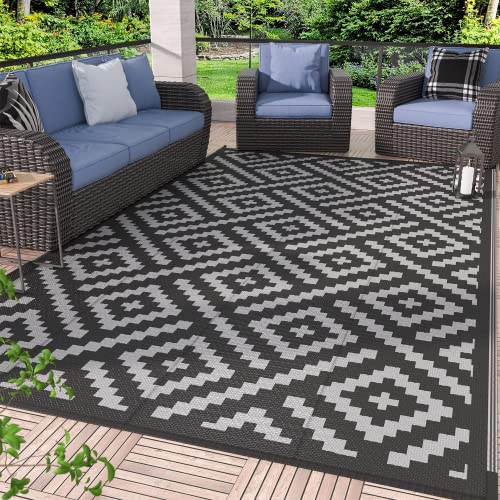
As an Amazon Associate we earn from qualifying purchases at no extra cost to you. Ratings are shown as listed on Amazon.
Quick comparison: which rug material fits your space?
| Material | Typical pile | Water resistance | UV resistance | Best use | Main drawback |
|---|---|---|---|---|---|
| Polypropylene | Flat to 0.4 in | Very good; dries quickly | Good to very good | Patios, kitchens, high-traffic rooms | Can look less plush than indoor-only rugs |
| Polyester | Flat to 0.5 in | Good, but may retain moisture longer | Moderate to good | Covered patios and decorative interiors | May flatten or show oily stains |
| Recycled plastic fibers | Flat to 0.3 in | Very good | Good when UV-treated | Outdoor dining and damp climates | Texture can feel coarse |
| Jute or sisal | 0.25 to 0.6 in | Limited | Moderate | Dry living rooms and covered porches | Absorbs spills and can mildew if left damp |
| Wool blends | 0.4 to 0.8 in | Limited | Moderate | Comfort-focused living rooms | Higher cost and more demanding cleaning |
Best material for patios: UV-treated polypropylene
Polypropylene is usually the safest patio recommendation because the fibers do not readily absorb water. A low-pile or flatweave design allows rain to evaporate more quickly than a dense, plush rug, and most surface dirt can be removed with shaking, sweeping, or rinsing.
Look for wording such as “UV treated,” “fade resistant,” or “solution dyed.” These features are useful, but none makes a rug permanently fade-proof. A rug in full afternoon sun will age faster than one on a covered balcony. Rotate it every few months so one end does not receive all the sunlight, and lift it after heavy rain rather than leaving it pressed against a wet floor.
Polypropylene is also a practical choice beneath patio dining tables. Food crumbs do not become trapped as deeply in a flatweave, and diluted dish soap is generally sufficient for ordinary spills. Avoid assuming that a waterproof fiber makes the entire rug waterproof: the backing, binding, and any sewn pattern can still hold moisture.
Best choice for kitchens: thin, washable, and stable
Kitchen rugs need different priorities from patio rugs. Water resistance matters, but so do a low profile, secure footing, and easy removal. A pile between 0.1 and 0.3 inch is usually easier to place in front of a sink or dishwasher without catching beneath doors or creating a raised trip edge.
Choose a rug that can be lifted easily for sweeping. A washable synthetic rug is useful for homes where spills are frequent, but check the care label rather than relying on the word “washable.” Some rugs are machine washable only after removing a separate pad; others require a commercial-size washer because an 8-by-10-foot rug is too large for ordinary equipment.
For a standing area, a 2-by-3-foot mat works near a sink, while a 2.5-by-7-foot runner can cover a galley kitchen. The rug should not extend so far into a walkway that chair legs or opening cabinet doors catch its edge. Use a thin, rug-compatible nonslip pad if the underside does not provide enough grip.
Best choice for living rooms: comfort versus maintenance
Living rooms allow a higher pile because doors and appliances are less likely to interfere. If the room has pets, children, or frequent outdoor traffic, select a low-pile polypropylene or polyester rug around 0.2 to 0.4 inch high. It will feel more comfortable than a bare flatweave while remaining relatively easy to vacuum.
Natural-fiber rugs, including jute and sisal, add texture and work well in dry rooms. They are not a substitute for an outdoor rug, however. A wet dog, plant leak, or repeated drink spill can leave dark marks, cause odor, or weaken the fibers. A wool blend is softer and more resilient under furniture, but it generally needs gentler spot treatment and costs more than synthetic alternatives.
Rug size: use the furniture, not the empty floor
The most common sizing mistake is choosing a rug that is too small to connect the furniture group. In a living room, aim for at least the front legs of the sofa and chairs to sit on the rug. For a more unified arrangement, place all major furniture legs on it.
| Space | Useful starting size | Placement target | Clearance guidance |
|---|---|---|---|
| Small kitchen sink area | 2 x 3 ft | Centered in front of the sink | Keep edges clear of cabinet swings |
| Galley kitchen | 2.5 x 7 ft | Runner along the working zone | Leave about 3 to 6 in from cabinets |
| Two-seat patio dining | 5 x 7 ft | Table and chair legs remain on the rug | Allow roughly 24 in behind each chair |
| Six-seat patio dining | 8 x 10 ft | Table plus pulled-out chairs | Measure chair movement before buying |
| Medium living room | 8 x 10 ft | Front legs of seating on the rug | Keep a visible floor border around the arrangement |
| Large living room | 9 x 12 ft | All main seating on the rug | Measure from the outside furniture legs |
For a worked example, suppose a patio table is 60 inches wide and each chair needs 24 inches of pull-out space on both sides. The minimum useful rug width is approximately 60 + 24 + 24 = 108 inches, or 9 feet. A 9-by-12-foot rug may therefore fit better than an 8-by-10-foot rug, even if both appear large in a product photo.
Backing and pile: the details that affect daily use
A flatwoven rug may have no separate backing, which helps it drain and dry but can allow movement on smooth concrete or tile. Latex- or rubber-backed rugs generally grip better, but the backing can deteriorate in intense sunlight or leave residue on some finished floors. A separate outdoor-rated nonslip pad is more replaceable and can improve airflow beneath the rug.
Avoid placing a thick, absorbent pad under a rug exposed to rain. It can trap water against the floor and create the very mildew problem the rug itself was designed to avoid. On a covered patio, a breathable pad may be reasonable; in an uncovered area, prioritize drainage and the ability to lift the rug.
Cleaning methods and ownership realities
- Routine care: Shake or vacuum both sides weekly in high-traffic areas. Use a vacuum without an aggressive beater bar on braided or loosely woven surfaces.
- Food and drink spills: Blot first, then use cool water and a small amount of mild detergent. Rubbing can spread oily stains or fuzz synthetic fibers.
- Outdoor dirt: Sweep, rinse with a garden hose, and hang or lean the rug so air reaches both sides. Do not put it back while the underside is damp.
- Mildew odor: Move the rug to a dry, ventilated area and follow the manufacturer’s cleaning instructions. Persistent odor can indicate moisture trapped in the backing or pad.
- Deep cleaning: Use a professional cleaner when the care label prohibits soaking, when the rug is too large for your washer, or when the backing has begun to crack.
The surface usually wears first along traffic lanes, beneath chair legs, and at the bound edges. On outdoor rugs, fading and backing deterioration are often more noticeable than fiber breakage. Move heavy furniture slightly from time to time, rotate the rug, and avoid dragging metal legs across it.
Decision guide by situation
| Your situation | Recommended specification | Why |
|---|---|---|
| Lowest maintenance | UV-treated polypropylene, flatweave | Resists water and cleans with sweeping or rinsing |
| Softest practical patio feel | Low-pile polyester or polypropylene, covered location | More comfortable without the drying problems of thick pile |
| Frequent kitchen spills | Thin synthetic, washable construction, separate nonslip pad | Easy to lift, clean, and replace in sections |
| Natural, textured living room look | Jute or sisal with no exposure to rain | Provides texture but needs dry conditions |
| Pets and heavy traffic | Low-pile synthetic, tightly bound edges | Less trapping of hair and fewer snag points |
What to check before buying
- Confirm the exact finished dimensions; listed sizes can vary by several inches.
- Check whether UV resistance applies to the fibers, the printed design, or both.
- Verify if “washable” means machine washable, hose washable, or spot clean only.
- Measure door clearances, cabinet swings, chair pull-out space, and drainage paths.
- Choose a backing suited to the floor; some rubberized materials are unsuitable for certain finished surfaces.
- Plan where the rug will dry before buying a large size.
For one versatile purchase, choose a low-pile, UV-treated polypropylene rug in the largest size that allows furniture to sit comfortably on it. Select a thinner washable synthetic for the kitchen, and reserve jute, sisal, and wool blends for dry indoor areas where texture and comfort matter more than rapid drying.