Key takeaways
- Move lightweight chimes indoors during hurricanes, severe thunderstorms, or forecast winds that exceed the manufacturer’s guidance.
- Rinse salt and dust from metal tubes with clean water, then dry them with a soft cloth.
- Clean bamboo and wood with a lightly damp cloth; avoid soaking the material or sealing drainage points.
- Do not polish naturally patinating bronze if you prefer its aged finish.
- Replace frayed cord before it breaks. Matching outdoor-rated cord is usually inexpensive compared with replacing the entire chime.
- Keep the chime from striking a wall, post, or railing, which can damage tubes and create unwanted noise.
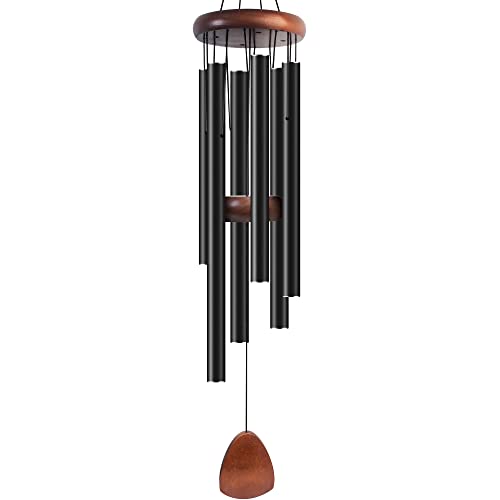
The best wind chimes for most homes are medium-length aluminum tube chimes with a tuned, moderate-volume voice, rust-resistant hanging hardware, and an overall length of about 24 to 36 inches; smaller wood or bamboo chimes suit balconies, while large bronze or deep-tone chimes are better for spacious yards.
Our top picks


As an Amazon Associate we earn from qualifying purchases at no extra cost to you. Ratings are shown as listed on Amazon.
Best wind chimes by outdoor situation
| Situation | Best choice | Useful target specifications | Why it fits |
|---|---|---|---|
| Apartment balcony or small patio | Compact aluminum or bamboo chime | 12–24 in. long, 0.5–2 lb, 3–5 tubes | Lower sail area, easier mounting, less chance of disturbing neighbors |
| Typical porch or garden | Medium aluminum-tube chime | 24–36 in. long, 2–5 lb, 5–7 tubes | Clear notes with enough presence for an outdoor seating area |
| Large yard or open property | Large aluminum, bronze, or steel chime | 36–60 in. long, 5–15 lb, 6–10 tubes | Longer sustain and deeper sound carry farther in open air |
| Quiet neighborhood or close neighbors | Small bamboo or muted aluminum chime | 12–30 in. long, 0.5–3 lb, soft clapper and small wind catcher | Produces a gentler sound and less movement in strong gusts |
| Coastal or very wet climate | Powder-coated aluminum with stainless hardware | Aluminum tubes, stainless ring and hook, sealed wood parts | Better resistance to corrosion and repeated wet-dry cycles |
Our top picks by design and sound
Best all-purpose choice: medium aluminum tube chimes
For a first purchase, choose a 24- to 36-inch aluminum-tube model with five to seven tubes. Aluminum offers a clear, sustained tone without the weight of bronze, and this size is large enough to be heard from a porch without dominating a small yard. Brands such as Woodstock Chimes and Corinthian Bells offer multiple sizes and tone profiles in this category.
Look for tubes roughly 1 to 1.5 inches in diameter and a center sail that is not excessively large. A large sail may create louder sound, but it also puts more force on the suspension point during gusts. A medium model is usually the most practical balance between sound, mounting safety, and price.
Best for deep, lingering notes: bronze or large aluminum
Bronze chimes produce a warmer, lower voice than thin aluminum, especially when the tubes are long and wide. Large aluminum chimes can also produce deep notes while remaining lighter and generally less expensive. These are strong options for a large garden, where a bright high-pitched chime can disappear into wind and background noise.
Expect a large, lower-tone chime to cost approximately $80 to $250 or more, depending on tube thickness, finish, suspension design, and craftsmanship. Before buying, measure the distance from the hook to the lowest point. A 48-inch chime needs considerably more clearance than a 24-inch model, particularly when it swings.
Best for a balcony: compact bamboo or soft-sounding aluminum
Balconies favor light, compact designs. Bamboo chimes have a mellow, irregular sound and usually weigh less than metal models. A small aluminum chime with only three to five tubes gives more defined notes but can sound sharper if it hangs close to a wall or window.
Choose a total length of 12 to 24 inches and keep the weight below the limit recommended for your railing, ceiling hook, or balcony bracket. Do not attach a chime to a removable screen frame, thin gutter, or decorative railing panel that was not designed to carry a swinging load.
Best for a musical, tuned sound: precision-tuned tube chimes
If you want recognizable intervals rather than random metallic movement, look for descriptions such as “tuned,” a named scale, or a listed note sequence. Woodstock Chimes is known for offering tuned designs, while Music of the Spheres produces premium outdoor chimes with an emphasis on musical tone and visual finish.
A tuned chime is not necessarily louder or better for every space. The advantage is consistency: the notes are selected to sound compatible when the clapper moves among several tubes. In a small enclosed patio, that musical clarity can be more pleasant than a large, resonant model.
Tube materials compared: sound versus ownership
| Material | Typical sound | Weather behavior | Best use | Common drawback |
|---|---|---|---|---|
| Aluminum | Clear, bright, sustained | Does not rust; finish can fade or scratch | General-purpose balconies, porches, and yards | Can sound sharp at close range |
| Bronze | Warm, low, rich | Develops patina; generally durable | Large gardens and deep-tone preferences | Heavier and usually more expensive |
| Steel | Bright, ringing, sometimes shorter sustain | Needs a durable coating to prevent rust | Decorative designs and moderate budgets | Scratches can expose corrosion-prone areas |
| Bamboo or wood | Soft, earthy, uneven | Absorbs moisture and needs more care | Quiet spaces and natural-looking gardens | Can split, fade, or mildew over time |
How to compare sound levels
Manufacturers do not use one consistent loudness scale for wind chimes, so product descriptions such as “large,” “deep,” or “resonant” are not reliable substitutes for a sound-level measurement. Sound depends on wind speed, tube thickness, clapper size, mounting height, nearby walls, and whether the chime is free to rotate.
For a quiet location, choose shorter tubes, fewer tubes, a smaller wind catcher, and a clapper described as soft or muted. For a large yard, longer tubes and a larger sail create more movement and audibility. A wall or covered porch can reflect sound, making a modest chime seem louder than it would in an open garden.
Do not assume a heavier chime is automatically louder. Weight mainly affects mounting demands and how much the chime resists light wind. Tube length, diameter, and the clapper’s contact area have more influence on the character of the sound.
Hanging hardware matters more than decorative detail
Inspect the entire suspension path, not just the top hook. A dependable setup includes a reinforced top ring, weather-resistant chain or cord, a secure connector, and a hook rated above the chime’s weight. Stainless steel hardware is preferable in coastal or persistently damp locations. Zinc-plated hardware may be adequate in a sheltered, dry area but can eventually corrode.
Use a rated swivel between the hanging point and the chime when the design allows it. A swivel lets the body turn with changing wind instead of repeatedly twisting the chain. The swivel should be compatible with the load; a tiny decorative loop is not a substitute for a properly rated connector.
As a practical margin, choose a mounting point rated for at least three times the chime’s listed weight. For a 6-pound chime, a 20-pound-rated hook or bracket provides a more sensible buffer than a 6-pound hook, because wind creates dynamic forces that a static weight rating does not capture.
Weather resistance and maintenance realities
The parts most likely to wear first are usually the cord, the central suspension line, the clapper connection, and the finish on wooden components. Even corrosion-resistant tubes can outlast untreated string or a weak plastic connector. Examine the hanging cord at the start of each season and after severe weather.
- Move lightweight chimes indoors during hurricanes, severe thunderstorms, or forecast winds that exceed the manufacturer’s guidance.
- Rinse salt and dust from metal tubes with clean water, then dry them with a soft cloth.
- Clean bamboo and wood with a lightly damp cloth; avoid soaking the material or sealing drainage points.
- Do not polish naturally patinating bronze if you prefer its aged finish.
- Replace frayed cord before it breaks. Matching outdoor-rated cord is usually inexpensive compared with replacing the entire chime.
- Keep the chime from striking a wall, post, or railing, which can damage tubes and create unwanted noise.
A simple fit calculation before you buy
Measure the available vertical space from the attachment point to the surface below, then subtract at least 8 inches for movement and clearance. For example, if a porch hook is 54 inches above the floor, a 36-inch chime leaves 18 inches of nominal clearance. After reserving 8 inches for swinging, only 10 inches remain, which is workable but not generous. A 48-inch chime would leave just 6 inches before movement and would be a poor fit.
Also measure horizontal clearance. A chime with a 12-inch-wide sail and tubes needs more room than its hanging length suggests, especially near a wall or railing. When in doubt, choose the shorter model rather than forcing a large chime into a confined space.
What to spend
Basic bamboo, steel, and small aluminum chimes commonly cost about $15 to $45. Midrange tuned aluminum models generally fall around $35 to $100. Large bronze, thick-tube aluminum, and premium hand-finished designs can range from $100 to $300 or more. The price difference usually reflects tube size, material thickness, tuning, finish, and hardware—not simply loudness.
Final buying recommendation
Choose a 24- to 36-inch aluminum chime with five to seven tubes, a stainless or well-protected hanging system, and a moderate sail if you want one dependable option for a typical porch or garden. Choose compact bamboo or aluminum for a balcony, a large bronze or deep-tone aluminum model for an open yard, and a small muted design when neighbors or nearby windows make volume a concern. The best wind chimes are the ones whose length, tone, mounting load, and weather resistance match the exact space rather than the largest model your budget allows.