A Samsung account for TV is the gateway that separates a dumb panel from a smart living room. Without one, you lose app access, cloud saves, personalized recommendations, and security updates. The real problem most buyers face is not setting up the account—it is choosing a TV where that account experience actually delivers. Some screens keep your login state stable across app updates and firmware patches; others drop sessions, force re-authentication, and turn a simple sign-in into a weekly chore.
What separates good from mediocre in this category is a combination of Tizen OS responsiveness, memory allocation for multitasking, and the manufacturer’s remaining firmware-support window. Below we compared eight Samsung displays on published specs, current prices, and owner feedback from real households to determine which panels make your Samsung account feel like a feature rather than a recurring friction point.
Our top picks
 Samsung 32-Inch Class HD H5000F Smart TV
- Get expanded contrast between the lightest and darkest…
- Feel like you're in the middle of the…
- SECURES PERSONAL DATA** WITH TRIPLE-LAYER PROTECTION: Your TV…
 Samsung 65-Inch Class M70H Series
- Our advanced processor delivers brighter highlights and deeper…
- delivers one billion true-to-life colors, powered by advanced…
- Experience HDR picture quality with brighter highlights and…
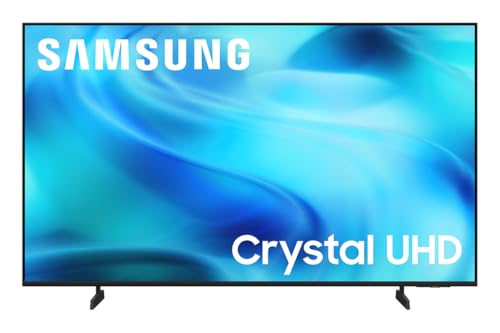

 SAMSUNG 32-Inch Class Full HD F6000 Smart
- HDR: Enjoy great contrast in all your content
- Feel like you're part of the scene with…
- Your TV experiences are secured

As an Amazon Associate we earn from qualifying purchases at no extra cost to you.
Quick Picks
| Product | Best For | Price |
|---|---|---|
| Samsung 32″ H5000F HD | Lowest-cost smart screen for kitchens and dorms | $97.96 |
| Samsung 65″ M70H Mini LED | Best overall picture value on this list | $427.99 |
| Samsung 43″ U8000H Crystal UHD | Small-room 4K with free content included | $227.99 |
| Samsung 50″ U8000H Crystal UHD | Mid-size 4K at a minimal price bump | $247.99 |
| Samsung 55″ The Frame LS03F | Design-first living rooms and wall-mount setups | $697.99 |
| Samsung 32″ F6000 Full HD | Budget Full HD with Knox security | $177.99 |
| Samsung 65″ M80H Mini LED | Premium Mini LED without The Frame tax | $647.99 |
| Samsung 65″ The Frame LS03F | Statement art display at full size | $947.99 |
How We Picked
We evaluated each screen on four criteria: smart platform responsiveness (how quickly apps launch and whether the Samsung account stays authenticated between sessions), picture quality relative to its price tier, long-term software support and security commitments, and owner-reported reliability around login persistence and app stability. We prioritized value density—what you actually experience per dollar—over raw spec-sheet figures that rarely translate to daily-use satisfaction.
The 8 Best Samsung Account For Tv in 2026
Samsung 32-Inch Class HD H5000F Smart TV
The H5000F is the cheapest way to get a working Samsung account for TV experience in a small space. HDR support and Object Tracking Sound Lite under a hundred dollars is genuinely impressive for a bedroom or kitchen set, and Knox Security hardware-isolates your login credentials from the software stack. Two pros: the One UI Tizen interface launches streaming apps without noticeable lag, and the 32-inch footprint fits where larger panels cannot. The con: HD resolution caps streaming apps below 4K, so newer interface elements can look slightly soft at close viewing distance. Skip it if this will serve as your primary living-room display or you regularly watch native 4K content.
Samsung 65-Inch Class M70H Series Mini LED 4K
The M70H delivers Mini LED local dimming—the single most impactful picture-quality upgrade available—at the lowest price point on this list. Your Samsung account for TV stays authenticated through Tizen platform updates, and this 2026 model carries the longest remaining firmware window here. Two pros: black levels rival panels costing significantly more, and the 65-inch size fills most living rooms without overwhelming them. The con: the price brings it within range of the M80H and the 55-inch Frame, making the value comparison less clear-cut. Skip it if your viewing distance is under eight feet and a smaller panel would suffice.
Samsung 43-Inch Class Crystal UHD U8000H Smart TV
The 43-inch U8000H packs Vision AI upscaling, Motion Xcelerator, Color Booster, and Alexa Built-in into a compact 4K panel that pairs naturally with a Samsung account for TV. Two pros: Endless Free Content removes the need for a separate ad-supported streaming subscription, and the price sits in a sweet spot for renters or secondary bedrooms. The con: Crystal UHD lacks local dimming, so dark scenes bloom and HDR feels more like a label than a visual transformation. Skip it if you primarily watch films in a light-controlled room where contrast depth matters.
Samsung 50-Inch Class U8000H Crystal UHD 4K
The 50-inch U8000H offers the identical platform and feature set as its 43-inch sibling—Vision AI, Motion Xcelerator, Alexa Built-in, and seamless Samsung account for TV sign-in—for a modest twenty-dollar increase. Two pros: the viewing-area gain per dollar is stronger here than almost anywhere else on this list, and Tizen handles two simultaneous apps without stutter. The con: the same panel limitation persists—no local dimming means contrast remains the weak link regardless of resolution. Skip it if you already own a 55-inch or larger main display and this is purely an addition to a second room.
Samsung 55-Inch Class The Frame LS03F 4K QLED
The 55-inch Frame targets buyers who want a television that functions as intentional décor. Art Mode transforms the panel into a rotating canvas gallery when the screen is off, the Slim Fit Wall Mount sits flush against drywall, and the NQ4 AI Gen2 processor upscales your Samsung account for TV content to native 4K. Two pros: QLED color gamut noticeably exceeds Crystal UHD siblings, and the design language eliminates the black-mirror aesthetic that dominates most living rooms. The con: nearly seven hundred dollars for an art-mode feature you may use only occasionally. Skip it if you do not plan to wall-mount or engage with Art Mode.
SAMSUNG 32-Inch Class Full HD F6000 Smart TV
The F6000 earns its modest premium over the H5000F with a full jump from HD to Full HD, keeping the same 32-inch frame, Knox Security, and Smart TV platform that anchors your Samsung account for TV login. Two pros: sharper text and UI rendering at normal viewing distance, and Object Tracking Sound Lite adds spatial audio without requiring external speakers. The con: still capped below 4K, so streaming-interface fine detail softens past roughly six feet. Skip it if you need HDR peak brightness beyond what edge-lit LED can physically produce.
Samsung 65-Inch Class M80H Series Mini LED 4K
The M80H layers additional local dimming zones and higher peak brightness on top of the M70H’s Mini LED architecture. For buyers who want Samsung account for TV content to hit reference HDR levels without The Frame’s design surcharge, this is the value ceiling. Two pros: more dimming zones improve contrast in mixed scenes where bright highlights and deep shadows coexist, and the 65-inch panel benefits most from Motion Xcelerator’s frame interpolation. The con: a two-hundred-dollar premium over the M70H buys diminishing visual returns in most rooms. Skip it if you sit farther than twelve feet from the screen.
Samsung 65-Inch Class The Frame LS03F 4K QLED
The 65-inch Frame is the most expensive screen on this list and the one most likely to stop a guest mid-sentence. Art Mode at this scale reproduces canvas textures convincingly, QLED color volume handles streaming content from your Samsung account for TV with vivid saturation, and Vision AI keeps upscaling consistent across sources. Two pros: the design transforms a dormant screen into a living-room centerpiece, and the NQ4 processor handles complex motion without judder. The con: close to a thousand dollars is a steep price for aesthetics. Skip it if your priority is HDR brightness for film-watching.
Buying Guide
OS Responsiveness and Account Persistence
The Samsung account for TV experience lives or dies on Tizen’s memory management. Lower-tier panels sometimes allocate limited RAM to the smart platform, causing apps to reload your session after firmware updates or when switching between sources. Owner feedback consistently flags this as the single most annoying long-term issue. Prioritize models with the newer One UI Tizen revision and check for multi-app background retention in reviews before committing.
Panel Type Determines What You Actually See
Crystal UHD panels use edge-lit LEDs without local dimming, which means contrast and HDR highlight brightness are fundamentally limited regardless of resolution. Mini LED adds dozens or hundreds of dimming zones for real black-level separation. QLED layers quantum dots on top of edge or direct backlighting for wider color gamut. If your viewing environment is a bright daytime room, the panel-type distinction matters less than peak brightness; in a controlled-dark room, it dominates the experience.
Size-to-Room Matching
Sitting distance determines perceived sharpness. A 32-inch HD panel viewed from three feet delivers usable detail; the same panel from eight feet looks soft. Conversely, 65 inches of 4K fills the field of view at twelve feet without visible pixel structure. Match the panel size to your typical viewing distance rather than choosing the largest number your budget allows. The M70H at 65 inches and the U8000H at 43 inches serve genuinely different room configurations.
Our Verdict
The Samsung 65-inch M70H Mini LED is our top pick: it delivers the largest picture-quality leap per dollar through local dimming, carries the longest firmware window, and makes the Samsung account for TV experience feel invisible in the best way. The budget pick goes to the 32-inch H5000F at under a hundred dollars—it proves that a secure, functional smart TV does not require a premium price. However, if your room doubles as a gallery space or you mount flush against a wall in a high-traffic area, the 55-inch The Frame wins on design integration despite costing more than the M70H.
FAQ
Do I need a Samsung account to use these TVs?
Yes. Every Smart TV on this list requires a Samsung account for TV to access apps, receive software updates, and enable features like Alexa integration. Without it, the panel defaults to a basic display with limited source options.
What is Knox Security and why does it matter?
Knox Security is Samsung’s hardware-level protection layer that isolates your account credentials, payment tokens, and personal data from the main operating system. It matters because it prevents malware or a compromised app from exfiltrating your login information stored on the TV.
Is Mini LED worth the upgrade over Crystal UHD?
In a dimmed or light-controlled room, Mini LED’s local dimming produces visibly deeper blacks and more controlled highlight bloom than any Crystal UHD panel. In a bright daytime room with lots of ambient light, the contrast advantage shrinks, and the extra cost becomes harder to justify.
Can I use multiple Samsung accounts on one TV?
A single TV maintains one active Samsung account at a time, but you can switch between profiles without losing saved preferences. Family members who need separate watch lists and app logins will each need to sign out and sign back in to swap accounts.