Our Top Picks
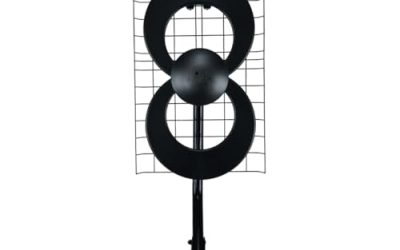
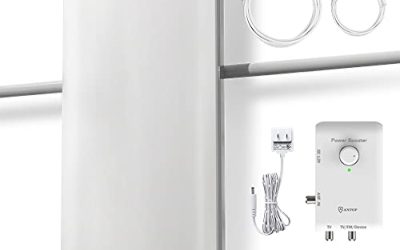
 Antennas Direct ClearStream 2V Indoor Outdoor TV Antenna18.50" H x 31.4" W x 6.5" D31.4 x 6.5 x 18 inches2 poundsCheck on Amazon
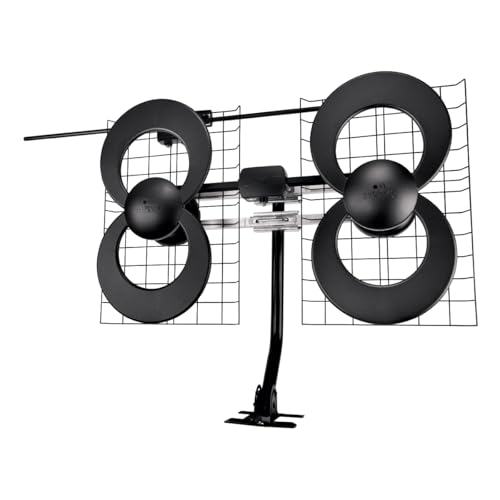


The best outdoor TV antennas for most households are the Antennas Direct ClearStream 4V for a balanced, multi-directional all-rounder, the Winegard Elite 7550 when you want a built-in amplifier, and the Antennas Direct DB8e or Winegard YA-7000 when your towers sit 50 miles or more away. Which one is right depends less on brand than on three things: how far you are from the transmitters, whether those towers are in one direction or several, and how high you can mount the antenna.
This guide is built around those decisions. You will find the criteria that separate a good outdoor antenna from a marketing-heavy one, eight current models with spec lines and honest skip-if notes, a worked signal-budget calculation for the cable run, a decision matrix, and a FAQ. Every range figure below is a manufacturer-rated number, which is a best-case figure for clear line of sight, not a promise for your roof.
Quick picks by situation
- Best overall outdoor antenna: Antennas Direct ClearStream 4V, for towers within roughly 20 to 60 miles in more than one direction.
- Best with a built-in amplifier: Winegard Elite 7550, for long cable runs or marginal signal.
- Best for distant towers in one direction: Winegard YA-7000 or Antennas Direct DB8e.
- Best budget-minded directional pick: RCA Compact Outdoor Yagi.
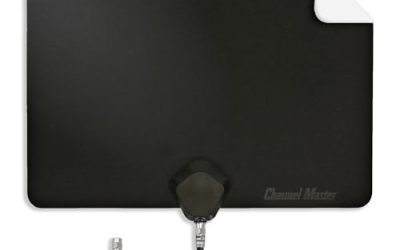
- Best for tight spaces and attics: Channel Master STEALTHtenna.
- Best for RVs and campers: Winegard Air 360+ V2.S.
How we chose these antennas
This is a research-based roundup. We compared manufacturer specification sheets, published rated ranges, band coverage, and the way independent antenna guides describe real-world reception. We kept only models that are currently sold and that cover the channels most U.S. viewers need. Where a spec could not be confirmed, we describe the antenna by class (for example, “multi-bay bowtie” or “Yagi”) instead of quoting a number.
We weighted five criteria:
- Rated range versus your distance. A rating of 60 miles means roughly “about 60 miles of clear, flat, unobstructed path.” Plan to your tower distance with a margin, not to the headline number.
- Band coverage. Most stations now broadcast on UHF, but several major networks use VHF-high (channels 7 to 13). An antenna that is UHF-only will miss those.
- Directionality. A narrow-beam Yagi pulls distant stations out of noise but needs aiming. A multi-directional bowtie accepts a wide arc with less peak reach.
- Amplification. Helpful when you have a long cable run or a weak signal, harmful when towers are close and strong.
- Build and mounting. Aluminum elements, UV-resistant plastic, a real mast clamp, and accessible hardware matter over years of wind, ice, and sun.
What matters most when you buy an outdoor TV antenna
Distance thresholds
Use these working thresholds, measured to the farthest station you care about:
- Under 20 miles: a compact or attic-class antenna is usually enough, and an amplifier can hurt.
- 20 to 45 miles: a mid-sized multi-directional outdoor antenna such as a bowtie design works well on a roof or mast.
- 45 to 65 miles: choose a larger multi-bay or Yagi-style antenna, mount it as high as is safe, and consider a mast-mounted preamp.
- Over 65 miles: you are in fringe territory. A large directional antenna, a rotator or aimed placement, and a quality preamp become requirements, and terrain decides the rest.
VHF versus UHF
Broadcast TV uses three slices: VHF-low (channels 2 to 6), VHF-high (7 to 13), and UHF (14 to 36 after the spectrum repack). Check your local station list for the “RF channel,” which is the real broadcast channel and often differs from the number on your TV. If several of the stations you want sit on RF 7 to 13, pick an antenna rated for VHF-high. UHF-only designs can be physically smaller and sharper on UHF, but they leave those stations out.
Amplified or not
An amplifier boosts everything, including noise and overpowering local signals. A good rule: if your strongest tower is closer than about 15 miles, start without an amplifier. If your cable run is long (over 75 feet) or you split to several TVs, an amplifier placed at the antenna, before the long coax, makes up for the losses. Where a model has an embedded amplifier you can often power it off or bypass it, which is a useful safety valve.
Mounting height and clearance
Height routinely matters more than the antenna model. Trees, hills, and buildings absorb UHF. Moving an antenna from the eaves to a mast above the roofline often does more than upgrading to a bigger model. Keep the antenna away from metal gutters, large metal objects, and other antennas.
Spec comparison table
| Model | Type | Manufacturer-rated range | Bands | Amplified | Direction |
|---|---|---|---|---|---|
| Antennas Direct ClearStream 4V | Multi-bay bowtie with reflector | About 70 miles | VHF/UHF | No (preamp optional) | Multi-directional |
| Antennas Direct ClearStream 2V | Dual-bay bowtie with reflector | About 60 miles | VHF/UHF | No (preamp optional) | Multi-directional |
| Winegard Elite 7550 | Directional with embedded amplifier | 70+ miles | VHF/UHF | Yes | Directional |
| Antennas Direct DB8e | 8-bay UHF-focused | About 65 miles | UHF | No (preamp optional) | Directional |
| Winegard YA-7000 | Yagi | About 70 miles | VHF/UHF | No | Directional |
| RCA Compact Outdoor Yagi | Compact Yagi | About 75 miles (as listed) | VHF/UHF | No | Directional |
| Channel Master STEALTHtenna | Compact attic/outdoor | About 50 miles | VHF/UHF | No | Directional |
| Winegard Air 360+ V2.S | Omnidirectional RV/mast antenna | About 55 miles | VHF/UHF | Yes (powered) | 360 degrees |
Treat the range column as a ranking aid between models, not a guarantee. Third-party listings sometimes show rated ranges for the same antenna that differ by 5 to 10 miles, which is why we present approximate figures.
The best outdoor TV antennas
1. Antennas Direct ClearStream 4V
Spec line: Multi-bay bowtie with reflector · VHF/UHF · rated about 70 miles · multi-directional · mast mount · passive (preamp optional)
Best for: Households whose stations come from more than one direction and who want one antenna without a rotator.
Skip if: Your towers are 70 or more miles away in a single direction, where a long-boom Yagi concentrates more gain.
- Pros: wide acceptance angle, VHF and UHF coverage, passive design that avoids overload near towers, an easy upgrade path with a separate preamp.
- Cons: physically larger than compact models, and wide acceptance means more multipath exposure in dense urban areas.
As an Amazon Associate we earn from qualifying purchases at no extra cost to you.

2. Antennas Direct ClearStream 2V
Spec line: Dual-bay bowtie with reflector · VHF/UHF · rated about 60 miles · multi-directional · passive
Best for: Suburban homes 20 to 45 miles from towers who want a smaller footprint than the 4V.
Skip if: You expect to reach stations beyond roughly 50 miles with trees in the path.
- Pros: lighter load on the mast in wind, simple assembly, works indoors in an attic as a fallback.
- Cons: less reach than the 4V, and no built-in amplifier.
3. Winegard Elite 7550
Spec line: Directional · VHF/UHF · embedded low-noise amplifier · rated 70+ miles · mast mount
Best for: Long cable runs, marginal signals, and splitting to two or three TVs.
Skip if: You live within about 15 miles of the transmitters, where the amplifier may overload the tuner.
- Pros: amplification built into the antenna head, strong VHF/UHF range, a fit for hard-to-reach marginal spots.
- Cons: needs a power inserter at the receiving end, and a failed amplifier means replacing the head rather than a small add-on.
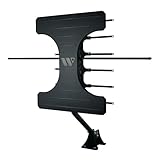
4. Antennas Direct DB8e
Spec line: 8-bay bowtie · UHF-focused · rated about 65 miles · directional · mast mount · passive
Best for: Rural and fringe locations where all of your wanted stations broadcast on UHF in the same direction.
Skip if: Any wanted network is on VHF-high, or you want one antenna for several directions.
- Pros: high UHF gain from the multi-bay layout, a clean pairing with a mast-mounted preamp, and a strong match for a small rotator.
- Cons: a large wind-catching frame and a narrow beam that needs careful aiming.

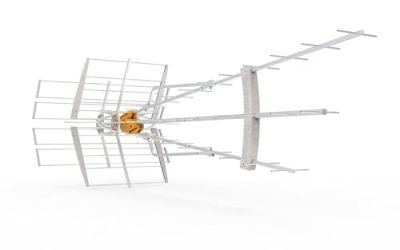
5. Winegard YA-7000
Spec line: Yagi · VHF/UHF · rated about 70 miles · directional · passive · mast mount
Best for: A single bearing to a tower cluster, 40 to 65 miles away, when you want a traditional, rugged design.
Skip if: Your stations are spread across a wide arc, or you live more than 80 miles out where larger gain is needed.
- Pros: classic Yagi reach, sturdy construction, covers VHF and UHF, easy to pair with a rotator.
- Cons: noticeable on the roofline and sensitive to aiming errors.
6. RCA Compact Outdoor Yagi
Spec line: Compact Yagi · VHF/UHF · listed at about 75 miles · directional · passive
Best for: Budget-conscious buyers who need a directional antenna and can aim it once.
Skip if: You want a very high-gain antenna for the deep fringe. Treat the 75-mile listing as optimistic.
- Pros: small profile for a Yagi, simple installation, good value in the directional class.
- Cons: rated figure is a best case, and lighter hardware than premium models.

7. Channel Master STEALTHtenna
Spec line: Compact attic or outdoor · VHF/UHF · rated about 50 miles · directional · passive · powder-coated aluminum
Best for: Homeowners associations, small roofs, or attic mounting where a big antenna is not allowed.
Skip if: You need to pull stations beyond about 40 miles through hills or trees.
- Pros: low visual impact, light weight, easy to mount on a small mast.
- Cons: lower gain than full-size models, so the margin for error is thinner.
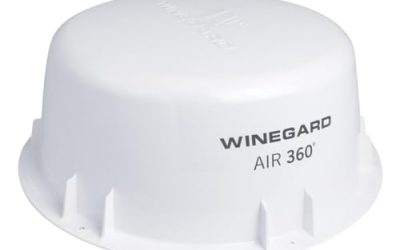
8. Winegard Air 360+ V2.S
Spec line: Omnidirectional · VHF/UHF · powered amplifier · rated about 55 miles · RV and mast mount
Best for: RVs, campers, and anyone who moves between markets and does not want to re-aim an antenna.
Skip if: You have a fixed home and need long-distance directional reach.
- Pros: 360-degree reception, compact, needs no aiming.
- Cons: lower peak reach than comparable fixed directional antennas, and amplified so it can overload near towers.
More outdoor antennas worth comparing
The eight models above cover the most common roof, attic, and RV cases. The seven below fill the gaps: premium amplified heads, rugged passive Yagis, an omnidirectional pick, a budget Yagi, and long-range designs for fringe homes. Ranges are manufacturer ratings and best-case.
9. Winegard Elite Pro BW-2000
Spec line: Amplified directional · VHF/UHF · rated 70+ miles · amplifier built into the antenna head · mast mount
Best for: Homes with a clear bearing to distant towers that want amplification at the antenna and a heavier build than the Elite 7550 class. Skip if: Your strongest tower is close, where the amplifier can overload the tuner, or your stations sit in several directions.
Pros: amplifier sits at the antenna so cable loss matters less, directional gain for far stations, covers VHF and UHF. Cons: needs indoor power, a failed amplifier means replacing the head, and it sits in the premium tier.
Treat it as the step-up choice when a passive Yagi leaves marginal channels pixelating on a long cable run.
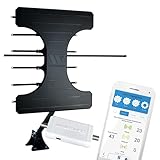
10. Winegard Elite 360 Pro HA-2000
Spec line: Amplified omnidirectional · VHF/UHF · rated about 55 miles · mast mount
Best for: Households with towers spread around the compass that want to avoid a rotator and still have a built-in amplifier. Skip if: All wanted stations are in one direction and beyond 55 miles, where a directional design reaches farther.
Pros: no aiming needed, amplified for longer cable runs, VHF and UHF coverage. Cons: omnidirectional pickup also admits noise and multipath, and reach is lower than directional models.
It fits suburban lots where towers sit at different bearings and the cable run is long.

11. Winegard HD7698A
Spec line: Heavy-duty Yagi · rated about 65 miles · directional · non-amplified · weather and rust resistant
Best for: Buyers who want a rugged passive Yagi for a single bearing and plan to add their own preamp if needed. Skip if: Your stations come from several directions or you want a built-in amplifier.
Pros: durable all-weather construction, no amplifier to fail, easy to pair with a rotator or mast preamp. Cons: premium-tier cost for a passive design and a visible roofline profile.
Because it is passive, it is a safe choice when strong local stations would overload an amplified antenna.

12. GE Outdoor HD Digital TV Antenna
Spec line: Outdoor Yagi-style · VHF/UHF · directional · J-mount included · passive
Best for: Entry-level installs where you will aim the antenna once and want a low-cost way to learn what your roofline can receive. Skip if: You need guaranteed fringe reach or heavy-duty hardware for an exposed tall mast.
Pros: low cost, mounting hardware included, simple to aim. Cons: lighter build than premium Yagis and any listed range is a best case.
It makes a sensible first antenna before you commit to a larger one.

13. Antennas Direct ClearStream MAX-XR
Spec line: Multi-directional · UHF and VHF · indoor or outdoor · 20-inch mast included · passive
Best for: Mid-range suburban homes with towers in more than one direction and room for a mid-sized antenna on a mast or in an attic. Skip if: Your towers are far away in a single direction, where a larger Yagi or multi-bay design has more gain.
Pros: wide acceptance angle, flexible placement, no amplifier to overload near towers. Cons: moderate gain compared with larger outdoor models.
It is a practical attic-or-mast choice when you want a sturdier step up from compact bowties.

14. Televes DAT BOSS Mix LR (149884)
Spec line: Long-range directional · high VHF and UHF · built-in amplifier · mast mount
Best for: Deep-fringe homes far from the towers that want a compact high-gain design often cited by reviewers as a long-range leader. Skip if: Your towers are close, or you need low-VHF channels.
Pros: narrow beam rejects off-axis noise, integrated amplifier, European-engineered build. Cons: premium-tier cost, precise aiming is required, and it is overkill for nearby stations.
Pick it when a passive Yagi at the same distance still leaves weak channels.

15. Antop AT-800SBS
Spec line: Amplified panel · VHF/UHF plus FM · listed at about 85 miles · adjustable boost · dual outputs
Best for: Buyers who want an adjustable amplified antenna that can feed two TVs from one panel. Skip if: You are in the deep fringe, where the listed range is optimistic and a true Yagi does better.
Pros: adjustable boost, dual outputs, indoor or outdoor use. Cons: listed range is a best case and the build is lighter than premium outdoor models.
Start with the booster at a low setting and raise it only until pixelation stops.

Worked example: cable loss and the amplifier decision
Here is the step-by-step logic to decide if you need a preamp. Coax loses signal with length and every splitter takes a bite. Typical RG6 loses roughly 5 to 7 dB per 100 feet at UHF frequencies, and a 2-way splitter costs about 3.5 dB. Use those approximate numbers to build a budget.
- Start with the cable run. Say your mast is 90 feet from the TV. At about 6 dB per 100 feet, that is roughly 5.4 dB of loss.
- Add the splitter. Feeding two TVs through a 2-way splitter adds about 3.5 dB per leg, so total loss is about 8.9 dB.
- Compare with the amplifier. A typical mast-mounted preamp provides roughly 15 to 20 dB of gain. After the 8.9 dB loss you net about 6 to 11 dB of gain, which pushes a marginal signal into the usable zone.
- Check for overload. If your strongest local station is already very strong at the antenna, 15 to 20 dB of extra gain can drive the tuner into distortion. In that case, skip the preamp or use an attenuator or a switchable amp.
Decision: with strong signals and a short run, go passive. With a 90-foot run, a splitter, and 40-plus-mile stations, add the preamp at the antenna. Do not put the amplifier next to the TV, because it then amplifies the noise that the cable already added.
All fifteen outdoor antennas compared
| Model | Type | Bands | Amplified | Direction | Rated range class | Price tier |
|---|---|---|---|---|---|---|
| Antennas Direct ClearStream 4V | Multi-bay bowtie | VHF/UHF | No | Multi-directional | About 70 miles | Mid-range |
| Antennas Direct ClearStream 2V | Dual-bay bowtie | VHF/UHF | No | Multi-directional | About 60 miles | Mid-range |
| Winegard Elite 7550 | Directional | VHF/UHF | Yes | Directional | 70+ miles | Mid-range |
| Antennas Direct DB8e | 8-bay bowtie | UHF | No | Directional | About 65 miles | Mid-range |
| Winegard YA-7000 | Yagi | VHF/UHF | No | Directional | About 70 miles | Mid-range |
| RCA Compact Outdoor Yagi | Compact Yagi | VHF/UHF | No | Directional | Listed about 75 miles | Entry-level |
| Channel Master STEALTHtenna | Compact attic/outdoor | VHF/UHF | No | Directional | About 50 miles | Mid-range |
| Winegard Air 360+ V2.S | Omnidirectional RV | VHF/UHF | Yes | 360 degrees | About 55 miles | Mid-range |
| Winegard Elite Pro BW-2000 | Amplified directional | VHF/UHF | Yes | Directional | 70+ miles | Premium |
| Winegard Elite 360 Pro HA-2000 | Amplified omni | VHF/UHF | Yes | 360 degrees | About 55 miles | Mid-range |
| Winegard HD7698A | Heavy-duty Yagi | VHF/UHF | No | Directional | About 65 miles | Premium |
| GE Outdoor HD Digital Antenna | Yagi-style | VHF/UHF | No | Directional | Class not verified | Entry-level |
| Antennas Direct ClearStream MAX-XR | Multi-directional | VHF/UHF | No | Multi-directional | Class not verified | Mid-range |
| Televes DAT BOSS Mix LR | Long-range directional | High VHF/UHF | Yes | Directional | Long-range class | Premium |
| Antop AT-800SBS | Amplified panel | VHF/UHF + FM | Yes | Panel | Listed about 85 miles | Mid-range |
Use the range column to rank models against each other, not as a promise for your roof. Where a figure could not be verified, the table says so.
How to choose in four checks
- Distance to the farthest wanted station: under 20 miles favors a compact or passive antenna; 20 to 45 miles favors a bowtie such as the ClearStream 2V or MAX-XR; 45 to 65 miles favors a Yagi or multi-bay design; beyond 65 miles favors a premium Yagi or the Televes with a rotator.
- Number of directions: if towers are within about 30 degrees of one bearing, a directional antenna works; if they spread wider, use a multi-directional or omnidirectional model, or add a rotator.
- Cable run: beyond about 75 feet, or when splitting to two or more TVs, choose an amplified model or add a mast preamp.
- Strong local tower closer than about 15 miles: start passive, because an amplifier can overload the tuner.
Decision matrix: which antenna for which home
| Your situation | Distance to towers | Best match | Why |
|---|---|---|---|
| Suburban lot, towers in two directions | 15 to 40 miles | ClearStream 2V | Wide acceptance, no rotator needed |
| Exurban, mixed VHF/UHF, towers in two directions | 30 to 60 miles | ClearStream 4V | Larger multi-bay with reflector, VHF/UHF |
| Long cable run or several TVs | 25 to 60 miles | Winegard Elite 7550 | Amplifier at the antenna offsets losses |
| Single direction, all UHF, far towers | 50 to 65 miles | DB8e plus mast preamp | High UHF gain on one bearing |
| Single direction, mixed VHF/UHF | 40 to 65 miles | Winegard YA-7000 | Yagi covers both bands |
| Budget directional | 20 to 50 miles | RCA Compact Outdoor Yagi | Lower cost, simple aiming |
| HOA rules or small roof | Up to about 35 miles | STEALTHtenna | Low visual profile |
| RV or camper | Varies | Air 360+ V2.S | Omnidirectional |
Installation and safety basics
- Stay far from power lines. Keep any mast and antenna at least a mast-length plus 10 feet from overhead lines. Contact with a power line is a leading cause of antenna-installation injuries.
- Ground the mast and coax. Use a grounding block on the coax and a ground wire to your home’s grounding system to reduce lightning and static risk. Follow local electrical code.
- Use a harness and a helper on roofs. Do not install in wind, rain, or ice.
- Seal the connections. Weatherproof F-connectors and use a drip loop so rain does not follow the cable into your home.
- Scan after every change. Re-run your TV’s channel scan whenever you move or re-aim the antenna.
Common mistakes that cost you channels
- Buying by the biggest range claim. Listings with 150-mile or 200-mile figures are marketing. Real fringe reception tops out in the 60 to 80 mile range even with excellent equipment.
- Using too many splitters. Each 2-way splitter costs about 3.5 dB. Use a distribution amplifier for three or more TVs.
- Cheap coax. Use RG6 quad-shield with solid copper-clad center conductor for a rooftop run.
- Ignoring VHF. If a favorite network is on RF 7 to 13 and your antenna is UHF-only, you will not get it.
- Not aiming. A directional antenna off-axis by 20 to 30 degrees can lose several dB.
Frequently asked questions
What is the best outdoor TV antenna overall?
The Antennas Direct ClearStream 4V is our overall pick for most homes. It covers VHF and UHF, accepts several directions, and avoids the overload risk of built-in amplifiers.
It is a good fit for towers between about 20 and 60 miles, and it pairs with a separate preamp if you later need more gain.
How far can an outdoor TV antenna really receive?
Realistically about 50 to 80 miles in good conditions. Manufacturer ratings are best-case figures for clear line of sight.
Hills, dense trees, and buildings reduce that number quickly, so always plan with a margin and check your local tower distances first.
Do I need an amplified outdoor antenna?
Only if your signal is weak or your cable run is long. Close to towers, amplification can cause pixelation by overloading the tuner.
When you do need one, mount the amplifier at the antenna, not at the TV, so it boosts the signal before the cable adds noise and loss.
Is a directional or multi-directional antenna better?
Directional antennas reach farther in one direction. Multi-directional antennas suit towers in different directions.
If your stations are within about 30 degrees of each other, a directional Yagi or multi-bay antenna is usually best. If they are scattered, choose a multi-directional design or add a rotator.
Does an outdoor antenna work with ATSC 3.0 (NEXTGEN TV)?
Yes, for reception purposes. An antenna only captures the radio signal, and your TV or tuner does the decoding.
What matters is a compatible tuner, because ATSC 3.0 signals are somewhat more sensitive to weak or multipath conditions than older ATSC 1.0 signals. A good antenna at a good height helps either way.
How high should I mount an outdoor TV antenna?
As high as is safe and practical, ideally above the roofline and clear of trees. Height often matters more than the antenna model.
For fringe areas, aim for about 30 feet above ground if you can do so safely, and keep the mast away from power lines.
Can I use one outdoor antenna for multiple TVs?
Yes. Split the signal with a quality splitter or, for three or more TVs, a distribution amplifier.
Each 2-way split costs about 3.5 dB, so a preamp at the antenna helps keep every TV above the noise floor.
Do I need a rotator?
Only if your wanted stations are spread widely across the compass. With towers within about 30 degrees of each other, a fixed aim works.
If they are more spread out, either use a multi-directional antenna or a rotator that lets you point at each tower group.
Final recommendation
Start with your station list and the distance to each tower. If you are within about 45 miles and have towers in several directions, the ClearStream 2V or 4V is the simplest answer. If you are over 50 miles from one cluster of towers, choose the DB8e or YA-7000 and plan on a mast preamp. If you have a long cable run or several TVs, the Winegard Elite 7550 solves the loss problem in one box. Whatever you pick, mount it high, ground it correctly, and rescan your channels.
More from Amazon
Programs that pair well with the guide above. Offers and eligibility are set by Amazon and may change.
Free shipping on eligible items, Prime Video and more. Eligible new members can start with a free trial.
Start a Prime free trialAd-free music streaming. Eligible new subscribers can start with a free trial.
Try Music Unlimited freeA Prime membership for ages 18-24 with a trial period. Eligibility is set by Amazon.
See Prime for Young AdultsAudiobooks and podcasts to listen to on the go. Eligible new members can start with a free trial.
Try Audible freeAs an Amazon Associate we earn from qualifying purchases.