Our Top Picks
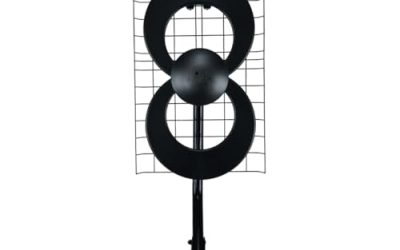
 Best for deep fringe (70 to 100 miles)Televes DAT BOSS Mix LR 149884 HDTV AntennaLarge41 x 17 x 6 inchesCheck on Amazon
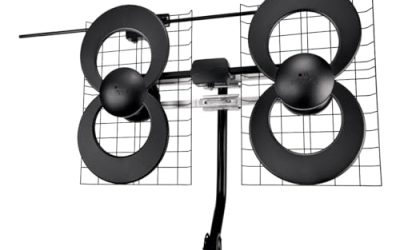
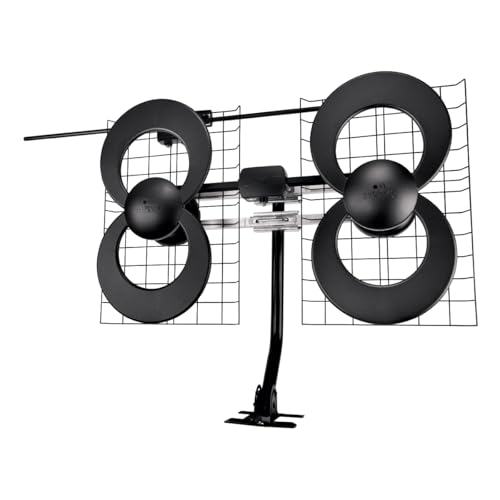 Best multi-direction rural pickAntennas Direct ClearStream 4V Outdoor TV Antenna27.8 x 6 x 17.4 inches4.1 poundsCheck on Amazon
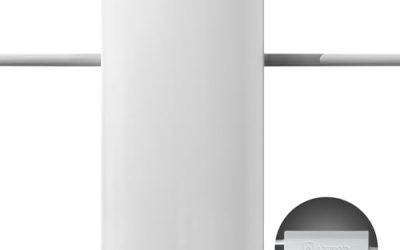
 Best UHF-only long reachAntennas Direct 8-Element Bowtie UHF Outdoor HDTV Antenna36 x 6 x 48 inches10 poundsCheck on Amazon
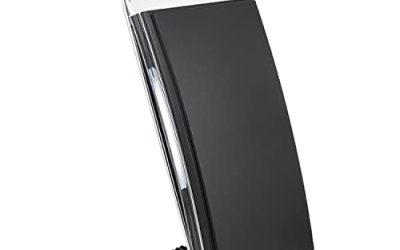
 Antennas Direct ClearStream 2V Indoor Outdoor TV Antenna18.50" H x 31.4" W x 6.5" D31.4 x 6.5 x 18 inches2 poundsCheck on Amazon
The best TV antennas for rural areas are the Televes DAT BOSS Mix LR for deep-fringe reception, the Winegard YA-7000 and GE Outdoor Yagi for single-direction Yagi performance, and the Antennas Direct ClearStream 4V or DB8e when you want multi-bay gain with a separate mast-mounted preamp. In the country, height, a clear path to the towers, and a preamp matter as much as the antenna you pick.
Rural reception is a different problem from suburban reception. Signals are weaker by the time they reach you, terrain and trees block them, and a long cable run eats what remains. This guide explains the thresholds that separate “works” from “pixelates,” walks through a worked fringe-margin calculation, compares eight real antennas by spec class, and answers the questions rural buyers ask most. All ranges are manufacturer ratings or published listings, which describe best-case conditions.
Quick picks for rural homes
- Best for deep fringe (70 to 100 miles): Televes DAT BOSS Mix LR.
- Best traditional Yagi at 50 to 70 miles: Winegard YA-7000.
- Best budget Yagi: GE Outdoor Yagi.
- Best multi-direction rural pick: Antennas Direct ClearStream 4V.
- Best UHF-only long reach: Antennas Direct DB8e.
- Best amplified all-in-one: Winegard Elite 7550.
- Best for dual-band and long cable: Antop AT-800SBS.
- Best compact directional: RCA Compact Outdoor Yagi.
How we chose these antennas
This is a research-based guide. We compared manufacturer specification sheets, rated ranges, band coverage, and how independent antenna reviewers describe real-world fringe performance. We favored designs with higher gain and a narrow beam, sturdy mounting hardware, and a sensible path to adding a preamp. Where numbers were inconsistent between sources, we show an approximate range or describe the antenna by class instead of quoting a single figure.
Our criteria for rural use:
- Gain and directivity. A long-boom Yagi or multi-bay array concentrates signal from one direction and rejects noise from others.
- Band coverage. Many rural markets still rely on VHF-high channels (RF 7 to 13). A UHF-only antenna will miss them.
- Preamp compatibility. A mast-mounted preamp is often the difference between no picture and a reliable one.
- Wind and ice survivability. Rural masts are tall and exposed.
- Honest ratings. Claims of 150 to 200 miles are not credible. Reliable fringe reception tops out around 60 to 80 miles for ordinary hardware, and a quality high-gain Yagi under good conditions can reach farther.
The rural reception rules that matter most
Height and line of sight beat antenna size
UHF and VHF-high signals travel roughly line of sight. Every hill and tree line in the path robs signal. Published guidance varies on exactly how much each extra 10 feet of mast helps, from a few dB of gain to a handful of extra miles, but it is consistently large. Aim for about 30 feet above ground when it is safe to do so, with a clear view toward the towers. Attic mounting only works if there is no metal ductwork, radiant barrier foil, or solar panel in the signal path.
Add a preamp at the antenna
Most fringe installs need a low-noise preamp rated around 15 to 20 dB of gain, mounted on the mast right at the antenna so it boosts the signal before the coax adds loss. Avoid over-amplifying if you also receive strong local stations, because overload shows up as pixelation rather than more channels. Switchable or adjustable preamps are safer for mixed situations.
Plan for a rotator when towers are spread out
If your wanted towers sit more than about 30 degrees apart, a single fixed Yagi will miss some of them. Options: a rotator, two antennas combined with a signal combiner, or a multi-directional antenna such as a bowtie design, accepting lower peak gain.
Use a tower-location tool before you buy
Look up your address on a broadcast-signal map such as the FCC DTV reception map. It shows which towers serve your location, their distance, their bearing, and their channel (including whether it is VHF or UHF). That list tells you whether you need VHF, how many directions to cover, and what range class to buy.
Spec comparison table
| Model | Type | Manufacturer-rated range | Bands | Amplified | Direction |
|---|---|---|---|---|---|
| Televes DAT BOSS Mix LR | High-gain Yagi-style | Long-range class; reviewers report up to about 100 miles | VHF/UHF (mix) | Optional | Directional |
| Winegard YA-7000 | Yagi | About 70 miles | VHF/UHF | No | Directional |
| GE Outdoor Yagi | Yagi | About 80 miles (listed) | VHF/UHF | No | Directional |
| Antennas Direct ClearStream 4V | Multi-bay bowtie with reflector | About 70 miles | VHF/UHF | No (preamp optional) | Multi-directional |
| Antennas Direct DB8e | 8-bay | About 65 miles | UHF | No (preamp optional) | Directional |
| Winegard Elite 7550 | Directional, amplified | 70+ miles | VHF/UHF | Yes | Directional |
| Antop AT-800SBS | Dual-band with booster | About 85 miles (listed) | VHF/UHF plus FM | Yes | Smart-pass design |
| RCA Compact Outdoor Yagi | Compact Yagi | About 75 miles (listed) | VHF/UHF | No | Directional |
Treat the range column as a way to rank classes, not as a promise. Listings often exaggerate; a few say 150 to 1,200 miles, which no consumer antenna delivers. We left those out.
The best TV antennas for rural areas
1. Televes DAT BOSS Mix LR
Spec line: High-gain long-range Yagi-style · VHF and UHF mixed-band · directional · passive with optional amplification · mast mount
Best for: Homes 70 or more miles from the towers, where a standard consumer Yagi struggles.
Skip if: Your towers are within 40 miles, or your signal comes from several directions.
- Pros: reviewers describe it as a top choice for deep-fringe areas, a narrow beam for rejecting noise, a European-engineered build.
- Cons: a larger and heavier mast load, higher cost than basic Yagis, and needs precise aiming.
As an Amazon Associate we earn from qualifying purchases at no extra cost to you.

2. Winegard YA-7000
Spec line: Yagi · VHF/UHF · rated about 70 miles · directional · passive · mast mount
Best for: Rural homes 40 to 65 miles from a cluster of towers on one bearing.
Skip if: You are 80 or 100 miles out. At those distances a larger antenna is needed.
- Pros: a ratings figure reviewers consider realistic, robust build, pairs well with a rotator and preamp.
- Cons: no built-in amplifier and a visible footprint on the mast.
3. GE Outdoor Yagi
Spec line: Yagi · VHF/UHF · listed at about 80 miles · directional · passive
Best for: A budget-minded rural install where you will do the aiming and add your own preamp.
Skip if: You need guaranteed performance at the listed distance. Plan for less in the real world.
- Pros: lower cost, simple design, easy to mount.
- Cons: light hardware compared with premium Yagis, and the listed range is a best case.

4. Antennas Direct ClearStream 4V
Spec line: Multi-bay bowtie with reflector · VHF/UHF · rated about 70 miles · multi-directional · passive
Best for: Rural homes with towers in two or three directions that want to avoid a rotator.
Skip if: Your stations are all in one direction and very far away.
- Pros: wide acceptance, covers VHF and UHF, works well with a mast preamp.
- Cons: lower peak gain than a long-boom Yagi.

5. Antennas Direct DB8e
Spec line: 8-bay bowtie · UHF-focused · rated about 65 miles · directional · passive
Best for: A single bearing with all wanted stations on UHF, typically in open terrain.
Skip if: Any major station is on VHF-high.
- Pros: strong UHF gain, a good pairing with a quality preamp.
- Cons: a large wind surface and a need for accurate aiming.

6. Winegard Elite 7550
Spec line: Directional · VHF/UHF · embedded amplifier · rated 70+ miles · mast mount
Best for: Rural homes with long cable runs where an integrated amplifier at the antenna simplifies the install.
Skip if: You also have a strong local station, where the amplifier may overload your tuner.
- Pros: amplification at the source, high rated reach, no separate preamp purchase.
- Cons: needs a power supply indoors, and the amplifier is a possible failure point on a tall mast.
7. Antop AT-800SBS
Spec line: Dual-band outdoor/indoor design · VHF/UHF plus FM · amplified with adjustable booster · listed at about 85 miles · about 40 ft cable
Best for: Buyers who want an amplified, adjustable antenna with a long included cable at a moderate cost.
Skip if: You are in the deep fringe where a true high-gain Yagi performs better than a listed range suggests.
- Pros: adjustable gain, long cable included, dual outputs.
- Cons: the listed range is likely optimistic, and lighter construction.

8. RCA Compact Outdoor Yagi
Spec line: Compact Yagi · VHF/UHF · listed at about 75 miles · directional · passive
Best for: Smaller roofs or homes that need a directional antenna with minimal footprint.
Skip if: You are beyond about 60 miles with obstructions.
- Pros: compact, easy to mount and aim, good value.
- Cons: lower gain than larger Yagis, and a listing that overstates real reach.

More rural antennas worth comparing
The eight models above cover the usual rural picks. The six below add a premium amplified head, two rugged passive Yagis, a mid-sized bowtie, and a compact amplified option for attics. Ranges are manufacturer ratings and best-case.
9. Winegard Elite Pro BW-2000
Spec line: Amplified directional · VHF/UHF · rated 70+ miles · amplifier built into the antenna head · mast mount
Best for: Homes with a clear bearing to distant towers that want amplification at the antenna and a heavier build than the Elite 7550 class. Skip if: Your strongest tower is close, where the amplifier can overload the tuner, or your stations sit in several directions.
Pros: amplifier sits at the antenna so cable loss matters less, directional gain for far stations, covers VHF and UHF. Cons: needs indoor power, a failed amplifier means replacing the head, and it sits in the premium tier.
Treat it as the step-up choice when a passive Yagi leaves marginal channels pixelating on a long cable run.
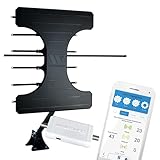
10. Winegard HD7698A
Spec line: Heavy-duty Yagi · rated about 65 miles · directional · non-amplified · weather and rust resistant
Best for: Buyers who want a rugged passive Yagi for a single bearing and plan to add their own preamp if needed. Skip if: Your stations come from several directions or you want a built-in amplifier.
Pros: durable all-weather construction, no amplifier to fail, easy to pair with a rotator or mast preamp. Cons: premium-tier cost for a passive design and a visible roofline profile.
Because it is passive, it is a safe choice when strong local stations would overload an amplified antenna.

11. Winegard HD8200A Platinum
Spec line: Heavy-duty Yagi · rated 65+ miles · directional · non-amplified · weather resistant
Best for: Rural or fringe homes aiming at one tower cluster that want a long-boom passive Yagi built for years of exposure. Skip if: You need an amplified antenna out of the box or a small footprint for a tight mounting spot.
Pros: high directional gain, sturdy hardware, pairs cleanly with a mast-mounted preamp. Cons: premium-tier cost, a large mast load in wind and ice, and careful aiming is required.
Plan a solid mast and guy support, because a long boom catches wind.

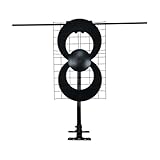
12. Antennas Direct ClearStream 2V
Spec line: Multi-directional bowtie with reflector · UHF/VHF · rated 60+ miles · indoor or outdoor · passive
Best for: Suburban homes 20 to 45 miles from towers that want a mid-sized multi-directional antenna with no rotator. Skip if: You expect to reach stations beyond roughly 50 miles with trees in the path.
Pros: wide acceptance angle, VHF and UHF coverage, no amplifier to overload. Cons: less reach than the 4V and no built-in amplifier.
It works well in an attic as a fallback if roof mounting is not allowed.
13. Antennas Direct ClearStream MAX-XR
Spec line: Multi-directional · UHF and VHF · indoor or outdoor · 20-inch mast included · passive
Best for: Mid-range suburban homes with towers in more than one direction and room for a mid-sized antenna on a mast or in an attic. Skip if: Your towers are far away in a single direction, where a larger Yagi or multi-bay design has more gain.
Pros: wide acceptance angle, flexible placement, no amplifier to overload near towers. Cons: moderate gain compared with larger outdoor models.
It is a practical attic-or-mast choice when you want a sturdier step up from compact bowties.

14. Televes DiNova Boss Mix 144286
Spec line: Attic or outdoor · UHF/VHF · built-in signal amplification · compact design
Best for: Mid-distance homes that want a small amplified antenna for an attic or a short mast. Skip if: You live far out in rough terrain, where a larger high-gain antenna is the better tool.
Pros: compact footprint, integrated amplifier, usable in attics and outdoors. Cons: mid-range cost for a small antenna and less reach than larger Televes models.
It is the smaller sibling of the long-range Televes model and suits suburban to light-fringe use.
Worked example: fringe signal margin with height and preamp
Use a simple dB budget to decide whether you will get a stable picture. Numbers below are illustrative approximations to show the logic, not measurements of any specific antenna.
- Start from a marginal base case. Suppose your station arrives at the antenna with a 0 dB margin on a rooftop mounted at 15 feet. That means the picture is on the edge of pixelating.
- Add mast height. Raising the antenna to 30 feet may add roughly 2 to 4 dB, based on the range of published guidance. New margin: about +2 to +4 dB.
- Subtract cable loss. A 100-foot RG6 run loses roughly 5 to 7 dB at UHF. New margin: about -3 to -1 dB if the antenna has no preamp.
- Add a mast-mounted preamp. With a 15 to 20 dB preamp at the antenna, the noise figure of the preamp (low) sets the system noise before cable loss. Effective margin typically rises to the +5 to +10 dB zone.
- Subtract splitter loss. Feeding two TVs costs about 3.5 dB per leg. New margin: about +1.5 to +6.5 dB, usually enough for steady reception.
Takeaway: height plus a preamp turned a failing install into a stable one before spending more on the antenna. Do the free and cheap fixes first: height, line of sight, short coax, and a preamp at the antenna.
All fourteen rural antennas compared
| Model | Type | Bands | Amplified | Direction | Rated range class | Best distance fit |
|---|---|---|---|---|---|---|
| Televes DAT BOSS Mix LR | Long-range directional | High VHF/UHF | Built-in amplifier per the maker listing | Directional | Long-range class | 70 miles and up |
| Winegard YA-7000 | Yagi | VHF/UHF | No | Directional | About 70 miles | 40 to 65 miles |
| GE Outdoor Yagi | Yagi | VHF/UHF | No | Directional | Listed about 80 miles | 30 to 55 miles |
| Antennas Direct ClearStream 4V | Multi-bay bowtie | VHF/UHF | No | Multi-directional | About 70 miles | 30 to 60 miles |
| Antennas Direct DB8e | 8-bay bowtie | UHF | No | Directional | About 65 miles | 35 to 60 miles |
| Winegard Elite 7550 | Directional | VHF/UHF | Yes | Directional | 70+ miles | 40 to 65 miles |
| Antop AT-800SBS | Amplified panel | VHF/UHF + FM | Yes | Panel | Listed about 85 miles | 20 to 50 miles |
| RCA Compact Outdoor Yagi | Compact Yagi | VHF/UHF | No | Directional | Listed about 75 miles | 25 to 50 miles |
| Winegard Elite Pro BW-2000 | Amplified directional | VHF/UHF | Yes | Directional | 70+ miles | 45 to 70 miles |
| Winegard HD7698A | Heavy-duty Yagi | VHF/UHF | No | Directional | About 65 miles | 40 to 60 miles |
| Winegard HD8200A Platinum | Heavy-duty Yagi | VHF/UHF | No | Directional | 65+ miles | 45 to 65 miles |
| Antennas Direct ClearStream 2V | Dual-bay bowtie | VHF/UHF | No | Multi-directional | 60+ miles | 20 to 45 miles |
| Antennas Direct ClearStream MAX-XR | Multi-directional | VHF/UHF | No | Multi-directional | Class not verified | 20 to 45 miles |
| Televes DiNova Boss Mix | Compact amplified | UHF/VHF | Yes | Directional | Class not verified | 20 to 50 miles |
The last column is a conservative planning band set below the headline ratings, since listings tend to overstate reach.
Rural buying checklist with thresholds
- Farthest must-have station under 45 miles: a bowtie or compact amplified model is enough if you can mount above the roofline.
- 45 to 65 miles: a full-size Yagi or multi-bay antenna, mast height of 20 to 30 feet where safe, and a mast-mounted preamp of roughly 15 to 20 dB.
- Beyond 65 miles: a premium directional design, a rotator or fixed aim, and a quality preamp; terrain decides the rest.
- Towers more than about 30 degrees apart: add a rotator, a second antenna with a combiner, or choose a multi-directional model.
- Cable run over 75 feet: use low-loss RG-6 and place amplification at the antenna rather than at the TV.
Decision matrix: choosing by distance and direction
| Your situation | Distance | Best match | Add-ons |
|---|---|---|---|
| One tower bearing, VHF and UHF mix | 40 to 65 miles | Winegard YA-7000 | Mast preamp, tall mast |
| One bearing, all UHF | 50 to 65 miles | Antennas Direct DB8e | Mast preamp |
| Towers in 2 to 3 directions | 30 to 60 miles | ClearStream 4V | Mast preamp if signal marginal |
| Deep fringe | 70 to 100 miles | Televes DAT BOSS Mix LR | Mast preamp, rotator if needed |
| Long cable, few TVs | 30 to 60 miles | Winegard Elite 7550 | Power inserter indoors |
| Tight budget | 30 to 60 miles | GE Outdoor Yagi or RCA Compact Yagi | Own preamp |
| Wants adjustable gain | 40 to 70 miles | Antop AT-800SBS | None required |
Installing for rural conditions
- Stay away from power lines. Keep the mast at least its length plus 10 feet away from overhead lines. If you cannot guarantee that, hire a professional installer.
- Ground the system. A grounding block on the coax and a ground wire to your home’s ground reduce lightning risk. Follow local electrical code.
- Guy the mast. Tall masts in open country need guy wires or a tripod or chimney mount rated for wind load.
- Use quality coax. RG6 quad-shield with weatherproof compression connectors. Keep the run as short as practical.
- Aim with a signal meter. Use your TV’s signal-strength screen or a small meter. Have a helper read the screen while you turn the mast slowly, pausing at each position so the tuner can update.
- Rescan channels after every change.
Common mistakes in rural TV setups
- Believing 150-mile claims. Skeptical treatment of 150-mile and 200-mile figures saves money.
- Mounting too low. A beautiful antenna at 12 feet behind a tree line will lose to a modest one at 30 feet.
- Preamp at the TV. Mount it at the antenna.
- Ignoring VHF. Many rural stations still use RF 7 to 13.
- Over-amplifying. If you have one strong tower and several weak ones, use an adjustable amp or attenuator.
Frequently asked questions
What is the best TV antenna for rural areas?
For deep fringe at 70 miles or more, the Televes DAT BOSS Mix LR is a top pick. For 40 to 65 miles on one bearing, choose the Winegard YA-7000.
Pair either with a mast-mounted preamp and mount the antenna as high as is safe.
How far can a rural TV antenna reach?
Reliable reception is typically 50 to 80 miles for consumer hardware, and a high-gain Yagi can do better in open terrain.
Terrain and trees reduce range sharply, and claims above 100 miles on budget antennas should be treated with skepticism.
Do I need a preamp in the country?
Usually yes in fringe areas. A preamp with about 15 to 20 dB of gain at the antenna offsets cable loss and boosts weak signals.
Skip or reduce it if you also have a strong local station nearby, because overload causes pixelation.
Do I need a rotator?
If your wanted towers are spread more than about 30 degrees apart, yes, or use a multi-directional antenna.
Some people instead install two fixed antennas and merge them with a signal combiner.
How high should the antenna be?
Aim for about 30 feet above ground with clear line of sight, if you can do so safely and away from power lines.
Height often matters more than the antenna brand, so raise the mast before buying a bigger antenna.
Is an attic antenna good enough in the country?
Only for the closest towers. Roofing, insulation, and metal reduce signal, so fringe areas usually need an outdoor mast.
If you try the attic, keep it away from foil-faced insulation, ductwork, and solar panels.
Will a rural antenna work with ATSC 3.0?
Yes, since the antenna only receives radio signals and your TV or tuner decodes them.
A strong, clean signal helps either format, and a compatible tuner is what enables NEXTGEN TV channels.
How do I find which towers serve my address?
Use the FCC’s DTV reception map or a similar signal tool. It lists towers, distances, bearings, and channels for your location.
That list tells you whether you need VHF, how many directions to cover, and whether a rotator is justified.
Final recommendation
Begin with a tower list for your address, then choose by distance and direction. At 70 miles or more, buy the Televes DAT BOSS Mix LR and a good preamp. At 40 to 65 miles on one bearing, the Winegard YA-7000 or DB8e is the dependable choice. With towers in several directions, the ClearStream 4V avoids a rotator. Raise the mast, keep the coax short, ground everything, and rescan.
More from Amazon
Programs that pair well with the guide above. Offers and eligibility are set by Amazon and may change.
Free shipping on eligible items, Prime Video and more. Eligible new members can start with a free trial.
Start a Prime free trialAd-free music streaming. Eligible new subscribers can start with a free trial.
Try Music Unlimited freeA Prime membership for ages 18-24 with a trial period. Eligibility is set by Amazon.
See Prime for Young AdultsAudiobooks and podcasts to listen to on the go. Eligible new members can start with a free trial.
Try Audible freeAs an Amazon Associate we earn from qualifying purchases.