Key takeaways
- Best mino projectors explained: brightness, resolution, battery life and connectivity compared, so you can pick the right mini projector for home or travel.
As an Amazon Associate we earn from qualifying purchases.
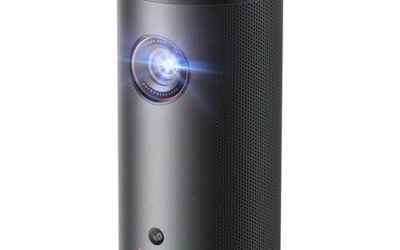
If you typed “mino projectors” into a search box, you almost certainly meant mini projectors — “mino” is a misspelling of “mini”. A mini projector is a pocket-sized machine that trades raw brightness and sharpness for something a full-size home cinema projector cannot offer: the freedom to carry a big screen in a bag, set it up on a bedside table, and pack it away in minutes. The choice is how much picture quality you will give up for portability, and how much portability you actually need.
This guide is for apartment dwellers who want film nights without a television dominating the living room, for travellers who carry their entertainment from hotel to hotel, for parents setting up cartoons in a child’s bedroom, for backyard hosts showing a movie under the stars, and for people presenting slides where no projector is installed. It explains brightness, resolution, battery, portability and connectivity in simple terms, so you can match a mini projector to the rooms and trips where it will be used.
How to Choose
Brightness and the Light in Your Room
Brightness decides where a mini projector can be used, and it matters more than any other specification on the box. A dim projector produces a washed-out image the moment a lamp is on or daylight leaks past the curtains, while a brighter one holds its colours in a room that is not fully dark. Look for the ANSI lumen rating rather than a vague marketing number, because different manufacturers measure light output in different ways and the two figures are not interchangeable. A small, dim room with blackout curtains forgives a modest rating; a living room with windows, a kitchen diner at dusk, or any outdoor use demands considerably more. Before shortlisting anything, decide honestly how dark your usual viewing spot gets, and remember that battery mode often reduces brightness further, so the figure quoted for mains power may not be what you see on a picnic blanket.
Resolution and How Sharp the Picture Looks
Resolution decides how crisp faces, subtitles and on-screen text appear, and it interacts with screen size in a way that catches first-time buyers out. A projector rated at 1080p keeps a large image looking clean, while a lower-resolution model can look soft or visibly pixelated once the picture stretches past a modest size, especially with subtitles or a laptop desktop. That said, a smaller projected image hides a lower resolution well, so a compact model throwing a picture onto a bedroom wall can look perfectly watchable even if its native resolution is modest. Check the native resolution on the product page, not a “supported” figure, because a projector that accepts a 1080p signal may still display it at a lower native resolution. If you plan to watch films at a large size or read text from slides, treat native 1080p as the safer starting point.
Battery Life and How Far the Projector Travels
Battery life decides whether a mini projector is genuinely portable or merely small. A built-in battery frees you from hunting for a socket in a hotel room, a garden or a friend’s flat, but the quoted runtime usually assumes dimmed brightness and quiet audio, so a full-length film may outlast the charge on some models. Think about your longest single session: a feature film, a full evening of episodes, or a two-hour presentation with questions afterwards. If your sessions regularly run long, a model that can run while charging from a USB power bank or a mains adapter gives you a safety net, and a spare power bank in your bag costs far less than a projector with a bigger cell. Weight matters here too. A projector under a kilogram slips into a day bag with a cable and a small tripod; a heavier one starts to feel like luggage rather than a pocket cinema.
Connectivity, Apps and Sound
Connectivity decides how much extra gear you have to carry, and it is where two otherwise similar mini projectors diverge most. Built-in Wi-Fi and a smart platform with streaming apps mean the projector can work on its own, while a model without them needs a phone, a laptop or a streaming stick plugged into its HDMI port. Bluetooth matters for the same reason: it lets you send sound to a portable speaker or pair of headphones when the built-in speaker is too quiet for a group. Check the physical ports as well. An HDMI input covers laptops and consoles, a USB-C port can carry video and power on some models, and a USB-A port is handy for playing files from a flash drive. Sound deserves a moment of its own. A single small speaker is fine for one person in a quiet bedroom, but a garden gathering or a living room full of people will usually need an external speaker, so plan for that rather than discovering it mid-film.
Which One Fits Your Situation
A Small Bedroom or a Dorm Room
A compact LED mini projector with a built-in battery and Wi-Fi fits a bedroom or dorm better than anything larger, because it sits on a bedside table, throws a picture onto a bare wall or the ceiling, and disappears into a drawer in the morning. Prioritise quiet operation and a short throw distance, since you may be sitting only a couple of metres from the wall. A built-in smart platform saves you from balancing a laptop on the bed, and a modest native resolution is acceptable at the small image sizes a bedroom allows. A model with a simple remote or phone app is a bonus, since you will be controlling it from under the covers rather than getting up to press buttons on the unit itself.
Frequent Travel and Hotel Rooms
Travellers should pick the lightest battery-powered mini projector with a robust carrying case and autofocus, because hotel rooms vary wildly in layout and you will be setting up on unfamiliar walls in dim light. Built-in streaming apps remove the need for extra dongles, and the ability to charge over USB-C from a laptop charger or power bank keeps the kit down to one cable. Accept a smaller maximum image size in exchange for a projector that genuinely fits in a carry-on alongside your other gear. Before you travel, check that the projector’s apps and accounts work where you are going, since some streaming services behave differently abroad and hotel Wi-Fi can be slow or require a sign-in page.
Backyard Movie Nights
For the garden, brightness and sound outrank every other feature, so look for the brightest portable mini projector you can carry comfortably, paired with a portable Bluetooth speaker and a simple screen or a smooth, light-coloured wall. A model with a tripod mount is worth seeking out, because a garden table is rarely at the right height. Keep the image size modest rather than stretching it across a huge sheet, and start the film after sunset rather than fighting the last of the daylight. Bring the projector inside if dew starts to settle, since damp air and electronics are a poor combination, and keep a torch handy for the walk back once the credits roll.
Work Presentations on the Move
Presenters need a mini projector that connects to a laptop without fuss, so favour models with a full-size HDMI port, quick autofocus and keystone correction, and a native resolution high enough to keep spreadsheet text and slide headings readable. Battery power is a bonus in rooms where the only socket is across the floor, but a short mains cable in your bag is a cheaper guarantee. Built-in speakers matter less here, since meeting rooms are quiet, while a clear, bright image matters far more than cinematic colour. Carry a spare adapter for your laptop’s video output as well, because arriving to find your only cable does not fit the room’s setup is the most common way a portable presentation goes wrong.
Common Mistakes
- Judging brightness by a marketing number: unlabelled lumen figures from different brands are not comparable, so compare ANSI lumen ratings and read how the projector performs in a lit room.
- Confusing supported resolution with native resolution: a projector that accepts a 1080p signal may display it at a much lower native resolution, which shows up as soft text and visible pixels.
- Assuming the battery lasts a whole film: quoted runtimes usually assume dimmed brightness and low volume, so check whether the projector can run while charging before planning a long session.
- Ignoring the speaker: a tiny built-in speaker suits one person in a quiet room, but a group outdoors will struggle to hear dialogue without an external speaker or headphones.
- Projecting onto a coloured or textured wall: a cream, patterned or rough surface dulls colours and softens the image, so a plain white wall or a cheap screen makes a bigger difference than a pricier projector.
Frequently Asked Questions
Do mini projectors work in a bright room?
A mini projector struggles in a bright room because its light output is far lower than a full-size home cinema model, and daylight washes the image out. They work best after dark or in a room with curtains drawn, and a brighter model with a higher ANSI lumen rating copes better with a lamp on. If your room cannot be darkened, a television is usually the better choice, and a mini projector is best kept for evening viewing. A simple test before buying is to imagine watching in the room at the time of day you would actually use it, since a projector that looks fine in a shop demo can disappoint badly in a sunny living room.
Is 1080p worth it on a mini projector?
Native 1080p is worth seeking out if you project a large image, watch subtitled films, or display text from a laptop, because lower resolutions look soft and pixelated at bigger sizes. At a small image on a bedroom wall, the difference is harder to notice, so a lower-resolution model can still be satisfying for casual viewing. Check the native figure on the product page, since a “supported 1080p” claim does not guarantee the projector displays at that resolution. If your budget forces a choice, spend the extra on resolution before chasing a brighter rating, because a dim, sharp picture is easier to fix with darker curtains than a bright, blurry one is to fix at all.
How long does a mini projector battery last?
Battery life varies widely between models and depends heavily on brightness and volume settings, so there is no single figure that covers the category. Quoted runtimes are usually measured in dimmed eco modes, which means real-world film watching may drain the battery sooner than the box suggests. A model that can run while plugged into mains power or a USB power bank removes the worry, and carrying a power bank is a practical backup for long evenings. When comparing runtimes, look for figures quoted at normal brightness rather than eco mode, and treat any number that seems generous as a best-case result rather than a promise.
Can a mini projector replace a TV?
A mini projector can replace a television for occasional film nights, travel and small rooms, but it is a poor substitute as a household’s main screen. It needs a dark room, a plain wall or screen, and usually an external speaker, and it cannot match a television for daytime viewing or sharpness at large sizes. Think of it as a portable second screen for films, games and presentations rather than a like-for-like replacement for the living-room set. Many households end up keeping both: the television for everyday viewing and news, and the mini projector for the nights when a huge picture in a darkened room is worth the extra setup.
More from Amazon
Programs that pair well with the guide above. Offers and eligibility are set by Amazon and may change.
Free shipping on eligible items, Prime Video and more. Eligible new members can start with a free trial.
Start a Prime free trialAd-free music streaming. Eligible new subscribers can start with a free trial.
Try Music Unlimited freeA Prime membership for ages 18-24 with a trial period. Eligibility is set by Amazon.
See Prime for Young AdultsAudiobooks and podcasts to listen to on the go. Eligible new members can start with a free trial.
Try Audible freeAs an Amazon Associate we earn from qualifying purchases.