Key takeaways
- For one person carrying one or two chairs: aim for 7–12 pounds per chair and a molded handhold.
- For a storage closet: compare folded depth, commonly 2–5 inches, and check whether the locking ring or hinge protrudes.
- For a dozen or more chairs: use a chair dolly or transport cart rated for the actual stack weight.
- For stairs: favor aluminum or lighter plastic chairs; a 12-chair stack can exceed 100 pounds before the cart is added.
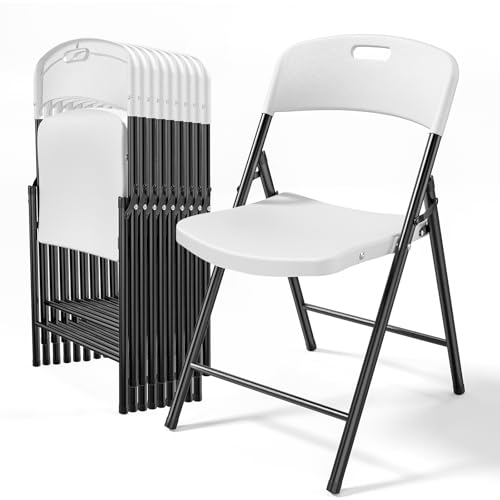
The best folding chairs for most homes and events are commercial-grade resin chairs with a steel frame: they offer a useful balance of 300–1,000-pound weight ratings, wipe-clean surfaces, manageable folded sizes, and better weather tolerance than padded indoor chairs.
Our top picks


As an Amazon Associate we earn from qualifying purchases at no extra cost to you. Ratings are shown as listed on Amazon.
Best folding chairs by situation
| Best for | Chair type or example | Typical weight limit | Typical folded size | Main advantage | Main compromise |
|---|---|---|---|---|---|
| Occasional home seating | Plastic seat-and-back chair with steel frame | 250–350 lb | 36–39 in high, 17–20 in wide | Low cost and easy storage | Thin seat and limited long-session comfort |
| Frequent parties and community events | Commercial resin folding chair | 500–1,000 lb | 36–40 in high, 18–22 in wide | Durable, washable, and stable | Heavier than basic plastic chairs |
| Formal dinners | Resin Chiavari-style folding chair | 300–1,000 lb, depending on model | 36–40 in high, 15–18 in wide | Decorative appearance without separate setup | Narrower seat and more expensive finish |
| Indoor dining comfort | Padded metal folding chair | 300–500 lb | 37–42 in high, 18–22 in wide | More comfortable for meals and meetings | Fabric absorbs spills and needs dry storage |
| Outdoor lawns and patios | Resin or molded polyethylene chair | 300–1,000 lb | 35–40 in high, 18–22 in wide | Resists occasional moisture and cleans easily | Sun exposure can fade or embrittle some plastics |
What to choose first: frame, seat, or weight rating?
Start with the environment and frequency of use, then compare comfort and carrying weight. A chair rated for 1,000 pounds is not automatically the best choice for a dining room: its frame may be bulky, its seat may be hard, and its folded profile may consume more closet space.
For occasional indoor use, a basic steel-frame chair is usually sufficient. Look for a steel tube frame, a seat at least 15 inches wide, a positive locking mechanism, and non-marking foot caps. Typical market pricing is about $15–$35 per chair, or roughly $60–$140 for a four-pack.
For repeated events, choose a commercial resin chair. These usually have a molded polyethylene or polypropylene seat and back attached to a powder-coated steel frame. They tolerate repeated folding, spilled drinks, and frequent wiping better than upholstered chairs. Expect approximately $30–$80 per chair, with decorative or reinforced models costing more.
For long meetings or meals, comfort matters more than the highest capacity. A seat with a modest contour, a flexible back, and 1.5–2 inches of foam can feel substantially better than a flat plastic seat. However, padded chairs should be treated as indoor or covered-outdoor furniture unless the manufacturer specifically permits exposure to rain.
Head-to-head: the main folding-chair materials
Steel frame with molded plastic
This is the practical budget choice. Steel provides rigidity at a reasonable price, while plastic keeps the chair light and easy to clean. Many weigh about 7–12 pounds. The weak points are thin seat panels, loose rivets, and cracked plastic around the folding joints after years of heavy use or outdoor exposure.
Steel frame with resin seat and back
Resin event chairs are the best all-purpose option for most buyers. A typical chair weighs 9–15 pounds and may support 500–1,000 pounds, but capacity depends on the frame, fasteners, and testing standard. Resin is usually more impact-resistant than ordinary household plastic and can be wiped clean after food service.
Do not confuse a high listed capacity with permission to use the chair as a step stool. Folding chairs are designed for sitting; standing on the seat can shift the center of gravity and overload the hinges.
Powder-coated steel with fabric or vinyl padding
Padded metal chairs give the best comfort for indoor meetings and meals. Vinyl is easier to wipe than fabric, while fabric often feels less sticky in warm rooms. The padding and upholstery are the first parts to wear: seams split, foam compresses, and stains become permanent. Choose removable or replaceable seat cushions if the chairs will be used weekly.
Aluminum frame
Aluminum chairs are easier to carry than steel versions, often weighing 5–9 pounds, and they do not rust in the same way steel does. The trade-off is a higher price and potentially more flex under load. Aluminum is a strong choice for venues where chairs must be transported frequently, provided the hinges and joints are well reinforced.
Best folding chairs for carrying and storage
Weight is only part of carrying ease. A chair with a comfortable hand opening, a smooth folding action, and a slim folded depth can be easier to move than a lighter chair with awkward edges.
- For one person carrying one or two chairs: aim for 7–12 pounds per chair and a molded handhold.
- For a storage closet: compare folded depth, commonly 2–5 inches, and check whether the locking ring or hinge protrudes.
- For a dozen or more chairs: use a chair dolly or transport cart rated for the actual stack weight.
- For stairs: favor aluminum or lighter plastic chairs; a 12-chair stack can exceed 100 pounds before the cart is added.
To estimate storage space, multiply the chair count by folded thickness and add clearance. Twelve chairs that average 3 inches thick need about 36 inches of linear stack space. Allow another 4–6 inches for imperfect alignment and hand access, so a 42-inch-wide storage bay is a safer target.
Seat comfort: the measurements that matter
Seat width is more useful than the chair’s overall width. A 16-inch seat may work for short ceremonies but feel restrictive during a two-hour dinner. For general-purpose use, look for a seat at least 17 inches wide and approximately 15–18 inches deep. A seat height of 17–19 inches suits most standard dining tables.
Contoured molded seats distribute pressure better than flat panels. A waterfall-style front edge can reduce pressure behind the knees, while a slightly flexible back encourages a more natural sitting position. These features do not replace fitting the chair to the user; for unusual mobility or seating needs, consult an appropriate professional.
Check the gap between the seat and the underside of the table before buying in bulk. Folding chairs with thick cushions or elevated seats can reduce legroom even when their seat height appears standard.
A decision matrix for buying the right quantity
| Your situation | Recommended specification | Why |
|---|---|---|
| Small apartment, fewer than six uses per year | 7–10 lb plastic/steel chairs; 250–350 lb rating; 2–3 in folded depth | Minimizes storage and purchase cost |
| Monthly family gatherings | 9–14 lb resin chairs; 500 lb or higher rating; 17 in or wider seat | Improves durability and comfort without becoming commercial equipment |
| Weekly organization or event use | Powder-coated steel, commercial resin, reinforced hinges, 750–1,000 lb rating | Better suited to repeated folding and heavier traffic |
| Frequent transport between venues | 5–10 lb aluminum or lightweight resin chairs with handholds | Reduces lifting fatigue and makes cart loading easier |
| Outdoor use in sun and occasional rain | UV-resistant resin, rust-resistant hardware, drainage-friendly seat | Reduces staining, corrosion, and water retention |
Outdoor durability and maintenance
No folding chair should be left outdoors indefinitely unless it is specifically designed for that purpose. Rain can enter hinge cavities, steel can rust beneath damaged powder coating, and ultraviolet light can make some plastics brittle. Store chairs dry, preferably off a concrete floor, and cover them only after they are fully dry.
Inspect the rivets, bolts, hinge plates, and foot caps at least twice a year. Replace a chair if the frame is bent, a hinge does not lock, the seat has a structural crack, or a leg rocks after tightening. Do not try to repair a load-bearing frame with household glue or improvised wire.
For routine cleaning, use mild dish soap, warm water, and a soft brush. Rinse outdoor chairs and dry the folding joints before stacking. Avoid chlorine bleach, abrasive pads, and strong solvents unless the manufacturer explicitly approves them; these can discolor resin and weaken upholstery or protective coatings.
Common buying mistakes
- Buying by advertised capacity alone: verify seat width, chair weight, and locking hardware as well.
- Ignoring folded dimensions: a stack that fits in a garage may not fit through a closet door or vehicle hatch.
- Using indoor padded chairs outside: moisture trapped in foam can create odor and accelerate deterioration.
- Choosing narrow chairs for long events: saving two inches per chair can make a full meal noticeably less comfortable.
- Mixing chairs with different seat heights: this creates an uneven appearance and inconsistent table clearance.
Bottom line
Choose a lightweight steel-and-plastic chair for occasional home use, a commercial resin chair for the best balance of capacity and durability, a padded steel chair for indoor comfort, and an aluminum model when carrying weight is the primary concern. Before ordering, compare the complete specification rather than one headline number: weight limit, seat width, folded depth, frame material, hardware protection, and the conditions in which you will store and use it.