Key takeaways
- Best all-round glass siphon: Hario Technica, especially the 3-cup or 5-cup version.
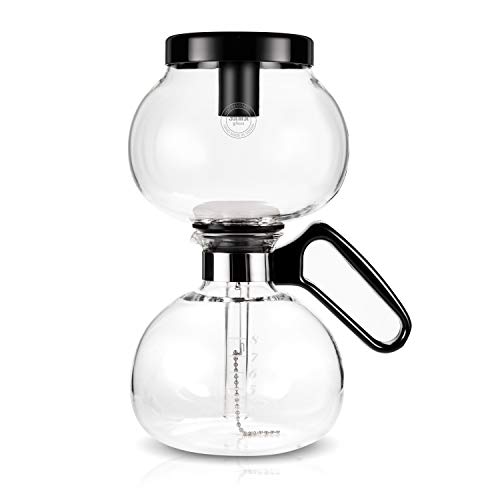
- Best for compact stovetop brewing: A Yama stovetop vacuum brewer, which avoids a separate burner.
- Best for serving two people: A 5-cup siphon with roughly 600 ml capacity, provided you have room for its stand.
- Best for occasional use: A 3-cup model holding about 360 ml, because it heats faster and leaves less coffee to waste.
- Best for maximum control: A traditional alcohol- or butane-heated siphon with a reusable cloth or fine metal filter.
The best vacuum coffee makers are the ones whose chamber size matches your normal batch, whose heat source suits your kitchen, and whose filter and glassware you are willing to clean after every brew.
Our top picks


As an Amazon Associate we earn from qualifying purchases at no extra cost to you. Ratings are shown as listed on Amazon.
Quick picks by brewing situation
- Best all-round glass siphon: Hario Technica, especially the 3-cup or 5-cup version.
- Best for compact stovetop brewing: A Yama stovetop vacuum brewer, which avoids a separate burner.
- Best for serving two people: A 5-cup siphon with roughly 600 ml capacity, provided you have room for its stand.
- Best for occasional use: A 3-cup model holding about 360 ml, because it heats faster and leaves less coffee to waste.
- Best for maximum control: A traditional alcohol- or butane-heated siphon with a reusable cloth or fine metal filter.
Vacuum brewers can produce a clean, aromatic cup with more body than many pour-over methods, but the result depends heavily on batch size, heat management, agitation, and filter condition. They are also less forgiving of rushed cleanup than a simple drip brewer.
What separates the best vacuum coffee makers?
Chamber size affects extraction and waste
Vacuum coffee makers are usually sold in “cup” sizes, but a siphon cup is commonly around 120 ml rather than a large mug. A 3-cup model therefore holds about 360 ml, while a 5-cup model holds about 600 ml. Check the manufacturer’s stated capacity before buying, because naming conventions vary.
A smaller chamber is usually the better choice for one drinker. It reaches brewing temperature more quickly, requires less coffee, and makes it easier to maintain a consistent ratio. A larger model makes sense when two or more people drink coffee together, but using it for a single serving can encourage underfilling or leave coffee sitting in the lower bowl.
A practical starting ratio is 55–65 grams of coffee per litre of water. That works out to approximately 20–23 grams for a 360 ml brewer and 33–39 grams for a 600 ml brewer. Adjust to taste, but avoid filling a large brewer far below its intended level: the geometry and heating pattern may become less predictable.
Glass offers visibility; stainless steel offers resilience
Most classic siphons use heat-resistant borosilicate glass in the upper and lower chambers. Glass lets you watch the water rise, judge agitation, and see when the brewed coffee returns to the lower bowl. That visual feedback is a major part of learning the method.
The drawback is breakage. A glass bowl can crack from impact, sudden temperature changes, or contact with a cold, wet surface while hot. Replacement upper bowls and lower globes are not always inexpensive or continuously available, so verify spare-part availability before buying.
Stainless-steel vacuum brewers are less transparent but better suited to busy kitchens, travel, or anyone who dislikes handling hot glass. They can be harder to monitor, and polished metal may retain fingerprints or show water marks. Some hybrid designs use a stainless lower chamber with a glass upper chamber, combining durability with useful visibility.
| Brewer type | Typical capacity | Common material | Best use | Main compromise |
|---|---|---|---|---|
| 3-cup siphon | About 360 ml | Borosilicate glass, metal stand | One large serving or two small cups | Limited capacity |
| 5-cup siphon | About 600 ml | Borosilicate glass, metal stand | Two to three drinkers | More counter space and cleanup |
| Stovetop vacuum brewer | About 300–500 ml | Glass upper, stainless or heat-resistant lower body | Small kitchens and induction-compatible setups, depending on model | Less visual control and model-specific compatibility |
| Commercial-style siphon | About 1 litre | Glass, metal frame, gas or electric burner | Frequent serving and presentation | Cost, size, and longer cleanup |
Heat source: speed versus control
Alcohol burners are inexpensive, quiet, and easy to replace, but their flame can be less consistent and more sensitive to airflow. They also require safe fuel storage and careful handling around curtains, paper, and children. Never refill a burner while it is hot or lit.
Butane burners generally offer more adjustable heat and a stronger flame. That can shorten the time needed to raise the water and make it easier to reduce heat once the upper chamber fills. They add fuel costs and require an extra canister, though.
Electric siphon burners are convenient for repeated brewing and indoor use. They provide predictable heat without an open flame, but the base takes up space and may cost more. An electric burner is also less useful if the brewer’s lower globe is not designed to sit securely on it.
A stovetop model is the simplest option if you already have a suitable hob. Confirm compatibility with gas, electric, ceramic, or induction cooking before purchase; a glass vessel will not work directly on induction without an appropriate magnetic adapter or compatible metal base.
Head-to-head: glass siphon versus stovetop vacuum brewer
Choose a traditional glass siphon when control matters
A Hario Technica or TCA-style siphon gives you a clear view of the water movement and brewing phase. You can control the heat, stir at a repeatable point, and remove the flame to trigger filtration. This makes it the stronger choice for someone who enjoys dialing in coffee and wants the brewing process to be visible.
The stand, burner, upper stem, filter, seals, and two glass chambers create more parts to store. It is also vulnerable to accidental knocks, particularly while the lower bowl is hot.
Choose a stovetop model when space matters
A Yama stovetop vacuum brewer reduces equipment clutter because the cooktop supplies the heat. It is a sensible option for a small kitchen or a drinker who brews only occasionally. Its lower chamber may be more robust than an all-glass design, depending on the model, but it still needs careful handling around the upper glass vessel and seal.
Stovetop heat can be harder to fine-tune than a dedicated burner. If your hob cycles power aggressively, the brewer may take longer to stabilize, so use the lowest setting that keeps the upper chamber filled without violent bubbling.
Brewing control that changes the cup
- Use freshly roasted coffee at a medium grind. Start slightly coarser than espresso and finer than a typical French press. Too fine a grind can slow filtration and produce a muddy cup.
- Heat the measured water in the lower chamber. Starting with hot water reduces burner time, but leave enough headspace for safe movement and follow the brewer’s fill line.
- Fit the upper chamber without forcing it. The filter, stem, and gasket must seat evenly. A poor seal prevents the pressure difference that moves water upward.
- Stir once when the upper chamber fills. Add the coffee, then use a gentle, controlled stir to wet the grounds. Excessive stirring increases agitation and can make the cup harsher.
- Manage the contact time. A starting point is roughly 60–90 seconds in the upper chamber, then adjust by taste. More time usually increases extraction; less time can preserve brighter notes.
- Remove or reduce the heat and stir lightly. Cooling the lower chamber draws the brewed coffee downward through the filter. Do not pull or twist the hot upper chamber aggressively.
For a 600 ml batch using a 60 g-per-litre ratio, the calculation is 0.6 × 60 = 36 grams of coffee. If that amount is more than you normally drink, a 360 ml brewer at the same ratio needs about 22 grams. Matching the dose to your normal serving is more useful than buying the largest model available.
Filters and cleanup are part of the buying decision
Cloth filters can produce a clean cup while retaining some oils, but they require rinsing immediately after brewing and proper storage. Leaving coffee residue in a damp cloth can create stale flavors and odors. Replace a cloth filter when it remains discolored, smells sour after washing, or drains noticeably more slowly.
Metal filters are reusable and easier to store, but they may allow more fine particles into the cup. Paper filters are convenient where the brewer supports them, though they add an ongoing consumable cost and can mute some body.
After every brew, let the glass cool gradually, then separate the chambers and rinse coffee oils from the filter, stem, and gasket. Wash with mild dish soap when needed, but avoid abrasive pads on glass or metal. Dry the seal and store the upper chamber separately so trapped moisture does not encourage odors.
Durability and ownership costs
In normal use, the gasket and filter usually wear before the metal stand or burner. A replacement gasket may cost roughly $5–$15, while filters and cloth replacements commonly range from about $5–$25 depending on type and pack size. Replacement glass can cost roughly $20–$60 or more, so a low purchase price is less attractive if spare parts are unavailable.
Common mistakes include heating an empty lower chamber, placing hot glass on a cold wet counter, over-tightening the upper chamber, using a flame wider than the base, and storing a wet cloth filter sealed in a container. These are avoidable causes of cracked glass, damaged seals, slow filtration, and unpleasant flavors.
Final buying decision
Choose a 3-cup glass siphon if you brew for yourself and want the clearest visual control. Choose a 5-cup Hario-style siphon if you regularly serve two people. Choose a Yama-style stovetop brewer when counter space and equipment simplicity matter more than maximum heat control. For frequent brewing, prioritize replaceable gaskets and filters, a stable stand, and a burner with adjustable output over decorative features.
The best vacuum coffee makers reward deliberate brewing, but their value depends on whether you will actually accept the extra setup and cleanup. Match the chamber to your real serving size, select the heat source you can use safely, and treat replacement parts as part of the long-term cost.