Key takeaways
- Choose a hitch platform rack for the best combination of vehicle fit, bike protection, capacity, and installation ease. Choose a hitch hanging rack when carrying several conventional bikes matters more than universal frame compatibility. Choose a roof rack when rear access is essential and you…
Best Bike Racks for SUVs: Hitch, Roof & Trunk Options
The best bike rack for most SUVs is a hitch-mounted platform rack, but a roof rack suits vehicles without a receiver and a trunk rack is usually the lowest-cost choice for occasional, lightweight bikes.
Quick comparison: which SUV bike rack fits your situation?
| Rack type | Typical capacity | Typical rack weight | Common price range | Best for | Main drawback |
|---|---|---|---|---|---|
| Hitch platform | 2 bikes; 4 with an approved extension or add-on | 35–75 lb | $250–$1,000+ | Frequent use, heavy bikes, easy loading | Needs a suitable hitch and reduces rear clearance |
| Hitch hanging | 2–5 bikes | 20–55 lb | $120–$500 | Several standard-frame bikes and lower weight | Can contact frames and often needs adapters |
| Roof tray | 1 bike per tray | 10–25 lb per tray | $150–$350 per bike position | Vehicles with crossbars and an unobstructed rear hatch | Lifting bikes overhead and increased wind noise |
| Roof fork-mount | 1 bike per tray | 8–18 lb per tray | $120–$300 per bike position | Road bikes and lighter bicycles | Front wheel must be removed |
| Trunk strap rack | 2–3 bikes | 8–18 lb | $60–$250 | Infrequent trips and tight budgets | Least stable and limited by hatch, spoiler, and frame shape |
These are useful planning ranges rather than universal specifications. Maximum load, tire size, wheelbase, vehicle approval, and the rack’s distance from the hitch receiver vary by model. Always compare the rack instructions with your SUV’s owner’s manual.
Our top picks


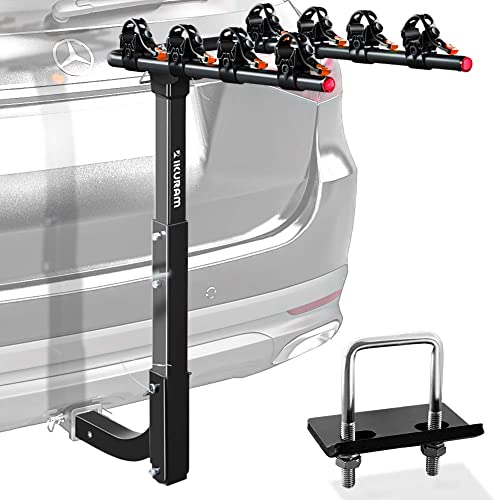
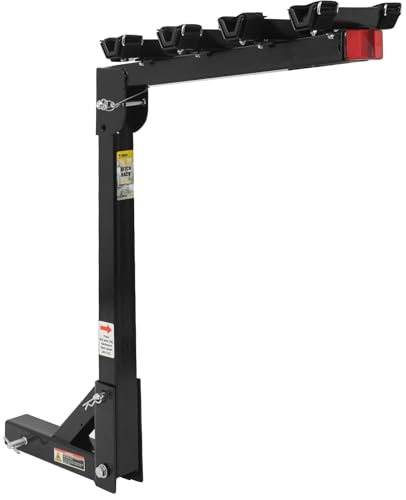
As an Amazon Associate we earn from qualifying purchases at no extra cost to you. Ratings are shown as listed on Amazon.
Best choice by SUV owner and riding situation
| Your situation | Best starting point | Why |
|---|---|---|
| Two adult bikes used every weekend | Two-bike hitch platform | Fast loading, better separation, and no roof lifting |
| Electric bikes or unusually heavy bicycles | Heavy-duty hitch platform | Usually offers the clearest per-bike weight rating and a low loading height |
| No hitch receiver installed | Roof rack, if crossbars are present | More predictable attachment than a trunk rack on many SUVs |
| One light bike and occasional use | Trunk rack or single roof tray | Lower purchase cost and less permanent hardware |
| Four or five conventional bikes | Hitch hanging rack | Higher capacity without paying for four individual roof trays |
| Rear hatch must open frequently | Roof rack, or a tilting hitch rack | A fixed hitch rack can block the hatch even when unloaded |
Hitch racks: the best all-around SUV option
Hitch racks attach to a receiver tube, most commonly a 1.25-inch or 2-inch receiver. For SUVs, the 2-inch format is often preferable because it supports a broad selection of racks and generally provides more capacity, although the vehicle’s hitch rating remains the limiting factor.
Hitch platform racks
A platform rack supports each bike by its tires, usually with a front-wheel hook and a rear-wheel strap. This design is the easiest to load and is usually the safest choice for carbon frames, full-suspension bikes, step-through frames, and bicycles with unusual tube shapes because the rack need not clamp the frame.
Important measurements are tire width, wheelbase, maximum per-bike weight, and total rack capacity. A typical two-bike platform may support around 60 lb per bike, while some compact racks support substantially less. Electric bikes commonly weigh 45–75 lb before accessories, so an e-bike owner should check the individual-bike limit, not just the advertised total.
Tilting hardware is worth paying for if the SUV’s hatch cannot open over the rack. It adds weight and cost, but avoids removing the bikes whenever you need cargo access. A locking hitch pin and integrated bike locks improve convenience, though they are theft deterrents rather than substitutes for secure parking.
Hitch hanging racks
Hanging racks suspend bikes by the top tube and can carry three to five standard bicycles at a lower price and weight than a platform rack. They are a practical choice for families with conventional diamond-frame bikes, especially when the rack will be stored frequently.
The limitations become significant with step-through, women’s, full-suspension, and children’s frames. These may not hang level or may not provide enough clearance between bikes. A frame adapter bar can solve some fit problems, but it adds another part to install and another contact point to protect with padding. Hanging racks are also less suitable for heavy e-bikes unless the manufacturer explicitly permits them.
Roof racks: clean rear access, harder loading
A roof rack is useful when the SUV has compatible crossbars, when the rear hatch must remain completely clear, or when you want to keep a hitch available for a trailer. Tray-style roof carriers hold the bicycle by its wheels and usually accept tires roughly 20–29 inches in diameter, with width limits commonly around 2.3–5 inches depending on the tray.
Fork-mount carriers remove the front wheel and clamp the fork, reducing the bike’s height and sometimes improving stability. They are well suited to lighter road and gravel bikes, but they are slower to load and require somewhere inside the SUV for the wheel. Bikes with thru-axles also need the correct fork adapter.
Roof mounting has two ownership risks that are easy to underestimate. First, lifting a 50 lb bicycle above shoulder height is awkward and can damage the vehicle or the bike if the load is dropped. Second, the total height changes dramatically. Measure the SUV with the rack and bike installed, then put a reminder on the steering wheel. Parking-garage and drive-through impacts are among the most expensive mistakes in bike-rack ownership.
Wind resistance also increases fuel use, particularly at highway speed. Removing an empty roof rack when it is not needed reduces noise and drag; removing the bike is more important still.
Trunk racks: affordable, but fit is vehicle-specific
Trunk racks use padded support arms and adjustable straps around the hatch or liftgate. They work well for a light pair of bikes on an SUV with a compatible, mostly vertical rear surface. Brands such as Saris, Allen Sports, Hollywood Racks, Thule, and Yakima offer trunk-mounted designs, but compatibility must be checked for the exact vehicle year and body style.
A rear spoiler, plastic trim, rear wiper, large glass hatch, or unusual license-plate position can prevent a safe fit. The rack should rest on strong areas of the vehicle rather than on a spoiler or thin trim. Straps must be routed exactly as directed, and the rack should not cover the license plate or rear lights where local law prohibits it.
Trunk racks are not the ideal match for expensive carbon-frame bikes unless the contact points are carefully protected and the manufacturer approves the arrangement. They also tend to sway more than hitch racks. For a long trip, stop after the first few miles to retighten and inspect every strap.
Installation and fit checklist
- Identify the attachment point. Check whether the SUV has a 1.25-inch or 2-inch receiver, compatible crossbars, or a trunk shape approved for the rack.
- Weigh every bike as ridden. Include batteries, racks, child seats, water bottles, locks, and other accessories. Do not exceed either the rack’s per-bike limit or the SUV’s hitch and tongue-weight limit.
- Measure the bikes. Record wheelbase, tire width, frame shape, and handlebar width. Compare them with the carrier’s published ranges.
- Check clearance. Measure from the hitch to the nearest part of the rear hatch, bumper, spare tire, and exhaust. Confirm that the rack can tilt or swing if hatch access matters.
- Install and perform a movement test. After tightening, shake the rack at its base. The vehicle may move slightly, but the rack should not wobble independently or contact the body.
- Recheck after loading. Secure loose wheels, pedals, straps, and battery components. Verify that lights and the license plate remain visible.
Durability and maintenance realities
The parts that wear first are usually rubber wheel straps, foam frame pads, plastic buckles, hitch-lock covers, and pivot hardware. UV exposure and road grit accelerate deterioration, so replace cracked straps rather than tying knots in them. Rinse salt and mud from metal parts with clean water, dry the rack, and lubricate pivots only with the product’s recommended lubricant; excess oil attracts abrasive dirt.
Before each trip, inspect welds, bolts, tray hinges, wheel cradles, and the hitch pin. After transporting a muddy bike, clean the rack before folding it into storage. Do not leave a loaded rack attached when using an automatic car wash. Store the rack indoors or under cover, particularly in regions with winter road salt.
For frequent use, a two-bike hitch platform often justifies its higher price through faster loading and fewer fit compromises. A simple comparison illustrates the difference: a $500 rack used twice a month for five years costs about $4.17 per use before maintenance, while a $120 trunk rack used ten times costs $12 per use. The cheaper purchase is not always the cheaper ownership choice.
Bottom line
Choose a hitch platform rack for the best combination of vehicle fit, bike protection, capacity, and installation ease. Choose a hitch hanging rack when carrying several conventional bikes matters more than universal frame compatibility. Choose a roof rack when rear access is essential and you can safely lift the bikes. Choose a trunk rack for occasional, budget-conscious transport only after confirming the exact SUV fit and keeping the load light.