Key takeaways
- One small repair: buy a 12- or 14-inch aluminum float and a 10- or 12-inch medium-flex stainless trowel.
- A patio or walkway: choose a 16-inch magnesium float and a 14-inch steel trowel; add an edging tool if the forms require a rounded edge.
- Repeated slab work: invest in a 20-inch magnesium float, then keep 12-, 14-, and 16-inch trowels with different flex levels.
- Decorative work: choose a resin float and a clean, flexible stainless trowel reserved for that finish.
The best concrete hand floats and trowels for finishing depend on timing: choose magnesium for early-to-mid finishing, resin for a forgiving finish, aluminum for a lighter general-purpose tool, and steel for the final closing pass.
A practical setup for most small slabs is a magnesium float around 16 by 3.5 inches, a resin or composite float for texture-sensitive work, and a 14-by-4-inch steel finishing trowel with a comfortable soft-grip handle. The right combination matters more than buying one “do-everything” tool, because floating and troweling happen at different stages and require different blade behavior.
Our top picks


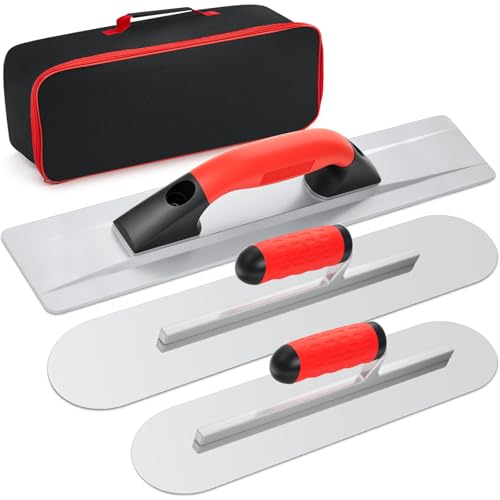
As an Amazon Associate we earn from qualifying purchases at no extra cost to you. Ratings are shown as listed on Amazon.
Quick comparison: which material should you buy?
| Tool material | Typical sizes | Blade behavior | Best concrete stage | Typical market range |
|---|---|---|---|---|
| Magnesium | 12–24 in. long; 3–5 in. wide | Light, moderately stiff, smooth glide | After screeding, before final troweling | $25–$75 |
| Aluminum | 12–24 in. long; 3–5 in. wide | Stiff, light, slightly less forgiving | General floating and leveling | $20–$60 |
| Resin or composite | 12–20 in. long; 3–5 in. wide | Flexible, low-friction, gentle on the surface | Early floating and decorative or delicate mixes | $15–$55 |
| Stainless or carbon steel | 10–20 in. long; 3–5 in. wide | Progressively flexible; polished edge can close the surface | Final finishing and burnishing | $20–$100 |
These are broad tool-category ranges rather than specifications for one model. Brand lines from Marshalltown, Kraft Tool, Bon Tool, and QLT commonly include several of these materials, sizes, handle styles, and blade profiles.
Best picks by situation
| Your situation | Best choice | Why |
|---|---|---|
| First small patio or walkway | 16-inch magnesium float plus 14-inch stainless-steel trowel | Useful progression from leveling to closing without excessive weight |
| Occasional repairs on a tight budget | 12–14-inch aluminum float and medium-flex steel trowel | Lower initial cost and enough versatility for patches and steps |
| Decorative, colored, or fiber-reinforced concrete | Resin float with a flexible stainless-steel trowel | Less likely to drag aggressively or expose coarse aggregate |
| Frequent slab work | 16–20-inch magnesium float and several steel trowels | Faster coverage and different flex levels for successive passes |
| Small workspace or repairs around posts and walls | 12-inch float and 10–12-inch trowel | Easier edge control and less chance of catching adjacent surfaces |
Magnesium floats: the best all-around early finishing tool
Magnesium floats are the safest default for many concrete jobs. Their relatively low weight reduces arm fatigue, while the stiff blade distributes pressure across ridges left by a screed. The surface is usually smooth enough to slide through workable concrete without pulling excessive paste from one area.
Use a magnesium float after the concrete has been struck off and the bleed water has begun to disappear. Its job is not to create the final polished surface. Instead, it flattens high spots, fills shallow voids, embeds coarse aggregate slightly, and brings enough cement paste upward for later troweling.
A 16-inch float is a useful middle size. A 12-inch model is easier to control on narrow walks and repairs; a 20- to 24-inch model covers a slab faster but needs more room and a steadier motion. The main disadvantage is cost: magnesium usually costs more than basic aluminum or resin.
Aluminum floats: stiff, economical, and easy to control
Aluminum floats are a sensible choice for homeowners who need one durable tool for occasional work. They are light compared with steel and generally rigid enough to knock down ridges after screeding. Their stiffness can be helpful when flattening uneven patches, but it also means they may feel less forgiving on a soft or irregular surface.
Choose aluminum when price, low weight, and simple maintenance matter more than the smoothest possible glide. Keep the blade clean and check its edges regularly. A bent corner can leave a repeating groove across the slab, and aluminum is not always as tolerant of rough handling as a thicker magnesium float.
Resin floats: gentle control for sensitive surfaces
Resin and composite floats are useful when a metal blade feels too aggressive. Their slight flexibility can conform to minor variations instead of cutting into the surface. They are particularly useful for decorative concrete, mixes containing visible fibers, and early floating where the concrete is still relatively soft.
The trade-off is wear. A resin edge can round over, chip, or develop a rough patch if it is dragged over hardened lumps. Do not leave concrete to cure on the blade. Rinse immediately, use a plastic scraper for residue, and avoid striking the tool against steel or masonry.
Resin is also a good choice for beginners who tend to press too hard. It does not eliminate the risk of overworking concrete, but its more forgiving contact can make pressure mistakes less severe.
Steel trowels: for closing, not initial floating
Steel trowels create the dense, relatively smooth finish most people associate with a finished interior floor, step, or small slab. Stainless steel resists rust and is easy to clean; carbon steel can offer excellent flexibility and a traditional feel but needs prompt drying to prevent corrosion.
Steel should normally follow floating, not replace it. Using a steel trowel too early can seal the surface while bleed water remains below, potentially leaving a weak or dusty top layer. Wait until the concrete supports the tool without producing watery smears, then make a controlled pass with the blade held nearly flat.
Blade flexibility is important. A stiff trowel is efficient for flattening but can create pronounced edges and lines. A medium-flex blade is the best starting point. More flexible blades suit experienced finishers who want to follow subtle contours and make a smooth final pass. Sizes around 14 by 4 inches balance coverage and control; 10- or 12-inch trowels are easier around corners.
Handle comfort matters more than the label
Look for a handle that allows your wrist to stay close to neutral while the blade lies nearly flat. A soft two-component grip is comfortable for long sessions, while a traditional wood handle can be durable and easy to replace. A handle that is too tall makes it harder to feel blade angle; one that is too narrow can create pressure points.
Balance is also important. Hold the tool by the handle and imagine making repeated forward-and-back passes. If the blade constantly tips onto one corner, you will compensate with your wrist and tire faster. For occasional users, a lighter tool with a comfortable grip is often a better purchase than a heavier professional-style blade.
How to choose the correct size
Match the blade length to both the work area and your reach. A larger tool covers more surface per pass, but it needs a flatter slab and more room to turn. A smaller blade produces less leverage and is easier to use beside forms, walls, drains, and steps.
For example, suppose a 16-inch float covers an effective path about 12 inches wide after overlap. On a 12-foot-wide slab, you need roughly 12 passes across the width. A 24-inch float with an 18-inch effective path needs about eight passes, but it may be awkward if the slab is narrow or obstructed. The larger tool saves passes only when you can maintain consistent control.
A sensible buying plan
- One small repair: buy a 12- or 14-inch aluminum float and a 10- or 12-inch medium-flex stainless trowel.
- A patio or walkway: choose a 16-inch magnesium float and a 14-inch steel trowel; add an edging tool if the forms require a rounded edge.
- Repeated slab work: invest in a 20-inch magnesium float, then keep 12-, 14-, and 16-inch trowels with different flex levels.
- Decorative work: choose a resin float and a clean, flexible stainless trowel reserved for that finish.
Spending more makes sense when the tool will be used regularly. If a $45 magnesium float lasts five years and is used on 15 projects per year, its tool cost is about $0.60 per use. A $20 aluminum float used twice before its edge bends costs $10 per use. The cheaper purchase is not automatically the lower-cost choice.
Ownership realities and common mistakes
Concrete residue is the main enemy of every hand float and trowel. Rinse tools as soon as the finishing session ends, scrub around the handle bracket, and dry steel blades before storage. Never chip cured concrete with another finished blade. Use a plastic or wooden scraper and a stiff nylon brush instead.
Inspect the leading and trailing edges before each pour. Small chips and dents transfer directly to the concrete. Replace a damaged resin tool, flatten or retire a badly bent metal blade, and tighten loose handle fasteners before work begins. Do not oil a blade that will contact fresh concrete unless the manufacturer specifically permits it; residue can mark the surface.
The most common finishing error is choosing a material based only on price. A float moves and levels concrete; a trowel closes and refines it. For the best results, buy tools that match those separate stages, use the largest size you can control, and let the concrete reach the right firmness before applying pressure.