Key takeaways
- Best for speed and reduced foot effort: Tama Speed Cobra 910. Its long footboard and offset cam are designed to produce quick strokes with comparatively modest ankle movement. It suits metal, fast rock and players who use heel-up technique.
- Best for maximum adjustability: Pearl Eliminator Redline P2052C. Interchangeable cam options, independent beater and footboard adjustments, and a broad range of spring settings make it a useful choice when you are still refining your preferred feel.
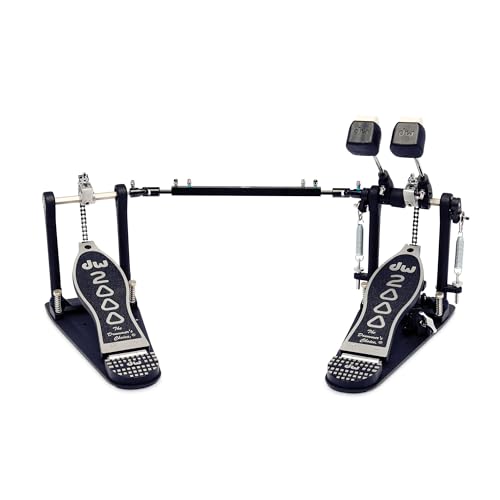
- Best all-round traditional choice: DW 5002. The two-chain drive, sturdy construction and familiar cam response make it a dependable option for rock, punk, worship and studio work.
- Best direct-drive option: Yamaha FP9D. Direct drive removes the chain or belt between footboard and cam, giving a very immediate response. It is particularly appealing to players who want crisp repeated notes and minimal transmission lag.
- Best premium power-and-adjustment platform: DW 9000. It offers extensive angle, spring and cam-related adjustment, but its weight and price make more sense for frequent performers or players who already know the feel they want.
- Best value-focused adjustable option: Mapex Falcon P1000TW. The Falcon combines interchangeable drive characteristics and useful adjustment at a generally lower market price than many flagship pedals.
The best double bass drum pedals for most players are the Tama Speed Cobra 910 for fast, low-effort playing, the Pearl Eliminator Redline P2052C for detailed adjustment, and the DW 5002 for a familiar, powerful longboard-style feel.
Choosing between them comes down to three things: how the drive converts foot motion into speed, how the beater rebounds from the head, and how much adjustment and floor space you can accept. A fast pedal is not automatically the best pedal if its feel is too light, its footboard is too long, or its settings are difficult to reproduce.
Our top picks



As an Amazon Associate we earn from qualifying purchases at no extra cost to you. Ratings are shown as listed on Amazon.
Best double bass drum pedals by playing need
- Best for speed and reduced foot effort: Tama Speed Cobra 910. Its long footboard and offset cam are designed to produce quick strokes with comparatively modest ankle movement. It suits metal, fast rock and players who use heel-up technique.
- Best for maximum adjustability: Pearl Eliminator Redline P2052C. Interchangeable cam options, independent beater and footboard adjustments, and a broad range of spring settings make it a useful choice when you are still refining your preferred feel.
- Best all-round traditional choice: DW 5002. The two-chain drive, sturdy construction and familiar cam response make it a dependable option for rock, punk, worship and studio work.
- Best direct-drive option: Yamaha FP9D. Direct drive removes the chain or belt between footboard and cam, giving a very immediate response. It is particularly appealing to players who want crisp repeated notes and minimal transmission lag.
- Best premium power-and-adjustment platform: DW 9000. It offers extensive angle, spring and cam-related adjustment, but its weight and price make more sense for frequent performers or players who already know the feel they want.
- Best value-focused adjustable option: Mapex Falcon P1000TW. The Falcon combines interchangeable drive characteristics and useful adjustment at a generally lower market price than many flagship pedals.
Drive type: chain, belt or direct drive?
Double-chain drive
A double chain is the safest starting point for most players. It usually feels stable under hard strokes, resists lateral flex better than a single chain and provides a familiar amount of mechanical movement between your foot and the beater. Tama Iron Cobra and Speed Cobra pedals, Pearl Eliminator models, DW 5002 and DW 9000 pedals use chain-based designs.
The trade-off is a small amount of play in the linkage and more parts to inspect. A dry chain can sound rough, while excessive slack can make fast doubles feel less precise. Chain pedals are usually the best match for players who want both power and a predictable, slightly rounded response.
Belt drive
Belt-drive pedals use a synthetic strap instead of a chain. They can feel smooth, quiet and slightly softer at the transition from forward motion to rebound. That can be comfortable for jazz, pop, recording rooms or players who dislike mechanical noise.
A belt is a wear item. It may eventually develop fraying, cracks or stretching, especially if the pedal is folded frequently or transported without protection. Keep a replacement belt available if the pedal is used for regular gigs.
Direct drive
Direct drive connects the footboard to the cam with a rigid link. This produces immediate acceleration and a firm return, with no chain or belt slack. Yamaha FP9D and some premium specialist pedals use this approach.
Direct drive rewards accurate technique but can expose inconsistent foot motion. If the beater feels too abrupt, increase spring tension gradually, reduce the footboard angle or use a slightly heavier beater. Do not assume that maximum directness equals maximum speed.
Comparison: the important differences
| Pedal | Drive | Footboard character | Useful adjustment | Best fit | Typical 2026 market range |
|---|---|---|---|---|---|
| Tama Speed Cobra 910 | Double chain | Long, speed-oriented | Cam profile, footboard and beater angles, spring tension | Fast playing and heel-up technique | $450–$600 |
| Pearl Eliminator Redline P2052C | Double chain | Balanced, highly tunable | Interchangeable cams, beater settings, spring and footboard angle | Players who want to tune response precisely | $450–$650 |
| DW 5002 | Double chain | Solid, powerful, traditional | Cam and beater angle, spring tension | General rock and dependable gigging | $400–$550 |
| Yamaha FP9D | Direct drive | Immediate and firm | Footboard position, beater angle, spring and linkage settings | Precision and rapid articulation | $650–$850 |
| DW 9000 | Double chain | Heavy, smooth and powerful | Extensive cam, angle and spring adjustment | Frequent performers and studios | $750–$950 |
| Mapex Falcon P1000TW | Double chain | Adjustable and controlled | Interchangeable drive parts, beater and spring settings | Value-conscious players wanting flexibility | $300–$450 |
Prices are broad street-price ranges and vary by finish, region, included case and promotions. Exact dimensions also differ by heel-plate configuration, so measure your kit rather than relying only on catalog photographs.
Decision matrix: match the pedal to your situation
| Your situation | Prioritize | Strong starting choice | Why |
|---|---|---|---|
| First double pedal, budget under $400 | Stable chain, replaceable parts, simple setup | Mapex Falcon P1000TW or a mid-range chain pedal | Enough adjustment without paying for features you may not use |
| Fast metal, limited ankle endurance | Longboard, efficient cam and moderate beater weight | Tama Speed Cobra 910 | Its geometry supports quick strokes with less deliberate foot travel |
| You change playing styles often | Interchangeable cams and independent adjustments | Pearl Eliminator Redline P2052C | You can move from punchy to quick response without replacing the pedal |
| Small practice space or compact kit | Narrow side-by-side placement and a short, manageable footprint | A standard-footboard chain pedal | Longboards can interfere with nearby stands and may need more heel clearance |
| Regular touring or weekly performances | Rigid frame, secure hoop clamp and available spares | DW 5002, Tama Iron Cobra 900 or Yamaha FP9D | Established service ecosystems matter when a spring, strap or bearing needs replacement |
| You want the most immediate response | Direct drive and fine linkage adjustment | Yamaha FP9D | Less transmission movement makes small foot motions easier to feel |
Beater feel matters as much as the pedal
The beater determines how the pedal sounds and how much rebound reaches your foot. A light beater accelerates easily and can help with speed, but may produce a thinner attack. A heavier beater feels more substantial and can produce a larger low-frequency punch, but it demands more work from the spring and your leg.
Felt beaters generally give a rounder attack. Plastic or composite surfaces create a sharper, more pronounced click and can be useful when fast bass-drum patterns need to remain distinct. Wood produces a hard, bright attack and can be unforgiving on some batter heads.
Start with the beater supplied with the pedal. Set its height so the striking surface lands consistently near the same area of the drumhead, then adjust the spring and footboard before buying a different beater. Changing several variables at once makes it difficult to identify what improved the feel.
How to set up a double pedal for speed and control
- Center the main pedal. Align the primary beater with the desired striking zone and clamp the pedal securely to the bass-drum hoop.
- Position the slave pedal before tightening it. Keep both footboards at comparable angles and leave enough space for your natural hip and knee position. Forcing the slave foot inward often reduces control.
- Match beater heights. Equal heights are a useful starting point. If the slave side feels weaker, check alignment and linkage before increasing its spring tension.
- Set a moderate spring tension. Play slow alternating strokes, then increase tension in small increments until the beaters return cleanly without bouncing uncontrollably.
- Change only one setting at a time. Test each change for two minutes at slow, medium and fast tempos. A setting that feels quick for short bursts may become tiring during a full song.
Ownership, maintenance and common mistakes
The parts most likely to need attention are springs, chain or belt sections, linkage joints, bearings, heel-plate screws and beater heads. Wipe dust and sweat from the pedal after playing, especially around the hinge and spring posts. Check screws before a rehearsal and inspect the hoop clamp for looseness.
Do not flood bearings or chain joints with household oil. Use the lubricant specified by the manufacturer, and apply only a small amount where appropriate; excess oil attracts grit. Keep the pedal in a case during transport, because a bent linkage or damaged footboard can create more play than normal wear.
Another common mistake is setting the beater too far from the head. A large swing can feel powerful but often slows repeated strokes and increases impact stress. Begin with a moderate beater distance, then add distance only if you need more volume or rebound.
Frequently asked questions
Are longboard pedals faster?
Not automatically. A longboard gives more room for sliding and can suit heel-toe techniques, but speed still depends on cam shape, beater mass, spring setting and technique. A standard footboard may be easier to control for players with smaller feet or limited space.
Should a beginner buy direct drive?
Only if the immediate response appeals to you and you can try it first. A well-made chain pedal is usually more forgiving and easier to resell or service. Direct drive is a preference, not a required upgrade for learning double-bass technique.
Is an expensive double pedal worth it?
It can be worthwhile for frequent playing, touring or players who need precise adjustments and replacement parts. For occasional practice, a stable mid-range pedal with a secure hoop clamp is usually a better use of the budget than paying for adjustments you will rarely change.
For the broadest recommendation, choose the Tama Speed Cobra 910 when speed and a longboard feel are central, the Pearl Eliminator Redline when adjustability matters most, and the DW 5002 when you want a durable, familiar all-purpose pedal. Prioritize a pedal that lets both feet feel balanced; consistency will improve your playing more than any single drive system.