Key takeaways
-
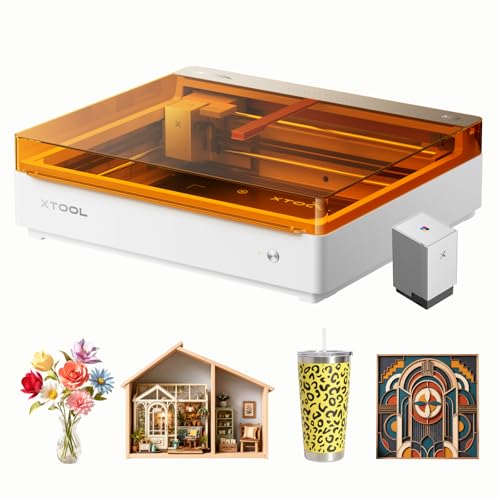
Best for beginners and small craft businesses: an enclosed 20W diode engraver such as the xTool S1 20W. It offers a manageable learning curve, relatively low running costs, and enough power for signs, ornaments, leather goods, and plywood projects.
-
Best for frequent cutting: a 55W to 60W CO2 machine such as the OMTech Polar 350 or Glowforge Pro. CO2 lasers cut wood, acrylic, cardboard, and many non-metal materials faster and more deeply than diode machines.
-
Best for metal identification and personalization: a 20W to 30W fiber engraver. Fiber systems mark stainless steel, aluminum, brass, tools, and coated metals cleanly, but they are usually poor choices for ordinary wood and transparent acrylic.
-
Best for professional production: a higher-power CO2 or fiber system from brands such as Epilog, Trotec, or Boss Laser, selected according to material and work-area requirements rather than advertised wattage alone.
The best laser engraver depends on what you make: choose a diode machine for affordable wood and craft work, a CO2 engraver for fast cutting of thicker non-metal materials, or a fiber engraver for permanent marks on bare metal.
Our top picks


As an Amazon Associate we earn from qualifying purchases at no extra cost to you. Ratings are shown as listed on Amazon.
Quick picks by project
-
Best for beginners and small craft businesses: an enclosed 20W diode engraver such as the xTool S1 20W. It offers a manageable learning curve, relatively low running costs, and enough power for signs, ornaments, leather goods, and plywood projects.
-
Best for frequent cutting: a 55W to 60W CO2 machine such as the OMTech Polar 350 or Glowforge Pro. CO2 lasers cut wood, acrylic, cardboard, and many non-metal materials faster and more deeply than diode machines.
-
Best for metal identification and personalization: a 20W to 30W fiber engraver. Fiber systems mark stainless steel, aluminum, brass, tools, and coated metals cleanly, but they are usually poor choices for ordinary wood and transparent acrylic.
-
Best for professional production: a higher-power CO2 or fiber system from brands such as Epilog, Trotec, or Boss Laser, selected according to material and work-area requirements rather than advertised wattage alone.
Diode vs. CO2 vs. fiber: the important differences
| Laser type | Typical power | Useful work area | Typical cutting ability | Best materials | Ventilation and safety |
|---|---|---|---|---|---|
| Diode | 5W–40W optical output | 400 × 400 mm to 498 × 498 mm | About 3–12 mm wood in one or several passes, depending on power and material | Wood, plywood, cardboard, leather, slate, some opaque acrylic | Enclosure, exhaust, air assist, flame monitoring recommended |
| CO2 | 40W–150W | 300 × 500 mm to 900 × 600 mm | About 3–20 mm wood; acrylic is often faster and cleaner than with a diode | Wood, acrylic, glass, rubber, fabric, paper, leather | Dedicated exhaust, water cooling, interlocks, and fire precautions required |
| Fiber | 20W–100W | 70 × 70 mm to 300 × 300 mm, depending on lens | Engraves and marks metal; cutting is limited and specialized | Stainless steel, aluminum, brass, coated metal, some plastics | Fully enclosed Class 1 cabinet strongly preferred; metal fumes still need extraction |
These are practical ranges rather than guarantees. Cutting depth varies with lens focus, air assist, material density, moisture, kerf, and whether the material is genuine laser-safe stock. A 20W diode can outperform an older low-power machine, but it will not generally match a 60W CO2 laser for speed or acrylic cutting.
When a diode engraver is the right choice
Diode engravers are the most approachable option for makers who work mainly with wood, plywood, leather, slate, cork, and painted or opaque acrylic. Open-frame models are often cheaper, but an enclosure is worth prioritizing for a home workshop because it contains scattered laser light, smoke, and dust. Enclosed models also tend to include a viewing window, exhaust port, door sensor, and flame detection.
Look beyond the headline wattage. A useful diode setup should include air assist, adjustable focus or a reliable fixed-focus system, a honeycomb or knife-blade bed, and a working area large enough for your usual blanks. A 400 × 400 mm bed is suitable for ornaments, plaques, and small signs. A roughly 500 × 500 mm bed reduces the need to tile larger designs.
Diodes have two important limitations. Standard blue diode light does not efficiently cut clear acrylic, and bare metal generally cannot be engraved directly. Dark anodized aluminum and coated metal can work because the coating absorbs the light, but that is different from marking stainless steel itself. Diode machines are also slower when cutting thick plywood, particularly if the air assist is weak.
When CO2 earns its higher price
Choose CO2 when cutting speed, acrylic, or larger pieces matters more than compactness. A 55W or 60W CO2 laser can cut common plywood and acrylic in fewer passes than a 20W diode, while a 100W-class system can handle thicker stock and larger production runs. CO2 lasers are also effective on glass, rubber stamps, fabric, and many coated materials.
The trade-off is ownership complexity. A typical glass-tube CO2 machine needs a water chiller or cooling system, an exhaust fan and ducting, a properly aligned beam path, and regular mirror and lens cleaning. Water temperature must be monitored, especially during long jobs. A misaligned mirror can produce uneven power across the bed, causing one side of a cut to finish while the other side does not.
Models such as the OMTech Polar 350 and Glowforge Pro occupy different parts of the CO2 market. A compact desktop CO2 unit can fit a small studio but may have a smaller bed and less flexibility for upgrades. Larger OMTech, Boss Laser, Epilog, and Trotec systems provide more work area and production-oriented features, but installation, ventilation, and electrical requirements become more demanding. General market pricing ranges from roughly $2,000–$6,000 for entry-level enclosed CO2 machines to well above $10,000 for professional systems.
When fiber is the best laser engraver
Fiber is the clear choice for direct marking of bare metals. A 20W fiber machine is suited to serial numbers, logos, jewelry, knives, tools, tags, and small industrial parts. A 30W or 50W unit completes deeper marks and larger production batches more quickly. Optional rotary attachments allow cylindrical objects such as tumblers and rings to be marked, although the practical diameter and usable field depend on the lens and attachment.
Fiber machines commonly use galvo scanning heads and smaller work fields than craft-oriented diode or CO2 machines. A 110 × 110 mm lens is precise and fast for small parts; a 200 × 200 mm or 300 × 300 mm lens covers larger pieces but normally spreads the available energy over a larger area. Before buying, confirm the maximum part size and whether the required lens is included.
Fiber is not a universal material machine. It is poorly suited to ordinary wood, clear acrylic, and fabric. Some fiber systems can process engineering plastics, but the result depends heavily on the plastic formulation. Never assume that a material is safe because it can be marked: PVC, vinyl, and unknown plastics can release corrosive or hazardous fumes.
Decision matrix for real workshops
| Your situation | Recommended type | Target specification | Why |
|---|---|---|---|
| Budget under about $1,500; occasional signs and gifts | Enclosed diode | 10W–20W, 400 × 400 mm or larger | Lowest equipment and ventilation burden; adequate for common craft materials |
| Weekly cutting of plywood and acrylic | CO2 | 50W–60W, approximately 400 × 600 mm | Fewer passes and better acrylic performance justify the extra setup |
| Metal tags, tools, and serial numbers | Fiber | 20W–30W, 110 × 110 mm or 200 × 200 mm lens | Direct, durable metal marking without relying on coatings |
| Very limited space or shared room | Enclosed diode | Integrated exhaust and compact footprint | CO2 cooling and ducting may be impractical |
| Daily production and large signs | CO2 or professional fiber | 60W–100W CO2, or 30W–60W fiber | Higher duty cycle, larger beds, and faster repeat jobs |
Software, ventilation, and safety features to prioritize
LightBurn is widely used with many diode and CO2 machines because it provides layers, material libraries, camera alignment, and control over speed and power. Some manufacturers supply their own software, which may be simpler but can limit hardware compatibility. Check the exact controller support before assuming that a machine works with your preferred program. Cloud-based software can be convenient, but offline operation is valuable when internet access is unreliable.
For ventilation, route smoke outdoors through suitable ducting rather than merely recirculating it through a small filter. A filter box can reduce odor when outdoor venting is impossible, but filters saturate and do not make every material safe. Keep the exhaust path short, inspect it for buildup, and avoid flexible duct bends that sharply reduce airflow.
- Use a fully enclosed machine whenever possible, particularly around children, pets, or other people.
- Confirm that the enclosure has a door interlock, emergency stop, visible status indication, and a viewing window rated for the laser wavelength.
- Use air assist to reduce flare-ups and improve cut edges, but do not treat it as a substitute for supervision.
- Keep a suitable fire extinguisher nearby and never leave an active job unattended.
- Do not process PVC, vinyl, unknown plastics, fiberglass, or materials containing halogens.
Setup and maintenance that affect results
Start by making a small speed-and-power test grid for each new material. For example, if a 20W diode cuts a 3 mm plywood sample in one pass at 300 mm/min and 80% power, do not assume another plywood sheet will behave identically. Glue content and density can change the result. Record settings, material thickness, lens position, and number of passes in a material library.
Clean the diode lens or CO2 lens according to the manufacturer’s instructions whenever smoke residue becomes visible. On CO2 systems, inspect mirrors and confirm alignment after moving the machine. Empty ash and debris from the bed after every cutting session, because accumulated scraps can ignite. Replace air-assist tubing, exhaust hoses, filters, and CO2 tubes when their performance declines; these parts wear sooner than the frame and motors.
A useful capacity calculation prevents a common buying mistake. If a 60W CO2 machine cuts one 300 × 500 mm sign in 18 minutes and you allow 12 minutes for loading, focusing, and cleanup, its practical cycle is 30 minutes. An eight-hour day therefore has a theoretical maximum of 16 signs, but a safer planning figure is about 12–13 after design changes and material handling. Compare that output with your actual demand before paying for a larger laser.
Final buying advice
For most first-time makers, an enclosed 10W–20W diode with air assist and a work area around 400 × 400 mm is the sensible starting point. Move to CO2 when you regularly cut acrylic or thick wood, need larger pieces, or are losing time to multiple diode passes. Buy fiber only when metal marking is central to the work. Whichever category you choose, prioritize enclosure quality, exhaust, interlocks, software compatibility, spare-part availability, and a realistic work area over the largest advertised power number.