Key takeaways
- An honest review of the Yamaha YAS-706 MusicCast soundbar: 285W output, wireless subwoofer, 4K HDR pass-through and virtual 7.1 sound, plus its discontinued status in 2026.
As an Amazon Associate we earn from qualifying purchases.
The Yamaha YAS-706 was the top of Yamaha’s YAS soundbar line when it launched in 2016: a MusicCast multiroom bar with a wireless subwoofer, virtual 7.1-channel surround processing, and receiver-grade HDMI switching with 4K HDR pass-through. A decade on, it remains a genuinely capable piece of hardware, and used examples still change hands regularly, which is why a clear-eyed review still matters.
The honest status comes first. The YAS-706 is a discontinued model, and no current in-stock new listing for it on Amazon US could be verified for this review, so there is no purchase link and no ASIN here. What follows is an assessment of the product itself, from Yamaha’s published specifications, aimed at readers considering a used unit, checking a bar they already own, or comparing a decade-old flagship against the current entry level.
How to Choose
Judge it as a used purchase, not a new one
A discontinued bar competes on the secondhand market, so the questions change. Condition of the wireless subwoofer matters most, because the bar and sub are a paired system and a missing or failed sub cannot be replaced with an off-the-shelf unit. The remote, the optical cable and the wall-mount spacers were all in the original box; a listing missing them is worth less. Firmware is frozen in time, so what the bar does today is what it will always do, and that is fine as long as the feature set matches your room.
Check the HDMI specification against your TV
The YAS-706’s HDMI stage was strong for 2016: two inputs and one output, 4K pass-through at 50/60 Hz with HDR and HDCP 2.2, plus ARC and CEC. That still covers a 4K Blu-ray player or a streaming box feeding a 4K TV. What it does not have is eARC, so a modern TV cannot send it lossless audio or the newest formats from TV apps; ARC carries the compressed stream instead. If your viewing is streaming apps on the TV itself, that ceiling is the main technical compromise of choosing this bar today.
Understand what the virtual surround can and cannot do
Yamaha’s AIR SURROUND XTREME processing builds a virtual 7.1-channel field from the bar’s driver array, widening the soundstage well beyond the cabinet’s physical width. It is effective at making movies feel bigger and dialogue sit forward, especially with the bar’s dedicated sound modes. It is not a substitute for physical rear speakers, and no processing makes it one. Buyers who want true surround placement should look at expandable systems; buyers who want one bar, no wires and a much larger sound than TV speakers give will find this approach entirely satisfying.
Confirm the streaming features you rely on still work
The YAS-706 is a MusicCast product with Wi-Fi, AirPlay, Ethernet and Bluetooth, and it was designed to join a multiroom system and be run from Yamaha’s controller app. Legacy connected products carry a standing risk: streaming services change their integrations over time, and a 2016 platform may not support every current service directly. Bluetooth and AirPlay are the durable paths, since they depend on your phone rather than the bar’s service list. If multiroom MusicCast grouping with newer Yamaha products is the goal, verify compatibility for the specific products before buying.
Design, Setup and Daily Use
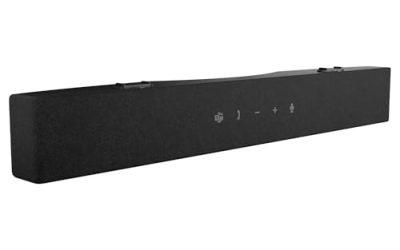
Physically, the YAS-706 is a slim bar in black with silver-accented bass reflex ports at the sides and a cloth grille across the driver array. At under three inches tall it sits below the screen of most TVs on a media console, and Yamaha supplied wall-mount spacers and a template in the box for mounting. There is no front text display; a row of LED indicators on the top panel shows input and status instead, which keeps the front clean but means settings changes are confirmed through the app or the LEDs rather than read off the unit.
Setup is conventional for its era: connect sources to the bar’s two HDMI inputs, run one HDMI cable to the TV, and let the wireless subwoofer pair itself. The subwoofer can stand vertically or lie on its side, which helps it fit beside or under furniture. A TV remote repeater passes remote signals that the bar blocks when it sits in front of the TV’s sensor, a small detail that prevents a daily annoyance. Day to day, control comes from the included remote or the MusicCast Controller app, and the five sound modes cover the realistic range of content: TV Program for dialogue-heavy viewing, Movie for the widest presentation, and Music, Sports and Game alongside.
One ownership note belongs in any 2026 assessment: because the model is discontinued, replacement remotes, app behavior on future phone operating systems and service support are all outside the manufacturer’s active window. None of that changes how the hardware performs today, but it shapes who should buy one, which the verdict sections below take up.
The Specs That Matter
Yamaha’s published specification for the YAS-706 describes a two-piece system: a slim center unit and a separate wireless subwoofer. Total output power is 285 watts, split 210 watts to the bar and 75 watts to the subwoofer. The bar itself measures 37-3/8 inches wide, 2-7/8 inches high and 5-1/8 inches deep, and weighs 11.9 pounds, so it sits in front of most TVs without blocking the screen and can also be wall mounted. The subwoofer weighs 20 pounds and connects wirelessly, which keeps its placement flexible within the room.
- Output power: 285 W total (210 W center unit + 75 W subwoofer)
- Surround technology: AIR SURROUND XTREME virtual 7.1-channel
- Sound modes: Music, Movie, Sports, Game, TV Program
- HDMI: 2 in / 1 out, 4K pass-through (50/60 Hz, HDR, HDCP 2.2), ARC, CEC
- Other inputs: Digital optical (1), digital coaxial (1), analog audio (1), subwoofer output
- Audio decoding: HD audio formats including Dolby TrueHD and DTS-HD
- Wireless: Wi-Fi, AirPlay, Bluetooth (A2DP/AVRCP), Ethernet, MusicCast multiroom
- Music files: MP3, WMA, AAC; Apple Lossless to 96 kHz; WAV, FLAC and AIFF to 192 kHz
- Center unit dimensions: 37-3/8 x 2-7/8 x 5-1/8 in; 11.9 lbs
- Subwoofer weight: 20 lbs
On sound character, the specification tells a consistent story. The bar uses separate amplification for its treble, midrange and bass drivers, which is the design Yamaha credits for clarity at higher volumes, and the powered subwoofer carries the low end that a slim cabinet cannot produce alone. The result, in the terms the hardware supports, is a system built for dialogue clarity and a wide virtual stage in a normal living room rather than for filling a large open-plan space at cinema levels. Its 210 watts in the bar is generous for the category even now, and the subwoofer’s wireless link means bass placement can follow the room instead of the cable run. Buyers comparing raw numbers should weigh the complete two-piece system, not the bar alone.
Which One Fits Your Situation
You found a complete used unit at a sensible price
This is the bar’s natural home in 2026. A complete YAS-706 with its wireless subwoofer and remote delivers power, HDMI switching and virtual surround that current entry-level bars still struggle to match as a package. Verify the sub pairs and plays, test every input, and it is a rational buy for a secondary room, a bedroom TV or a first step up from TV speakers.
You want a bar for a new 4K TV and modern streaming
Think carefully. The bar passes 4K HDR video from external sources without trouble, but the lack of eARC and the age of its streaming platform are real limits when the TV’s own apps are the main source. A current bar with eARC and maintained app support serves that setup better, even if its raw power figure is lower on paper.
You already own MusicCast speakers
The YAS-706 was built for your system. It joins a MusicCast network for multiroom music, plays high-resolution files up to 192 kHz, and can hand music off between rooms in a way a standalone bar cannot. If a used unit appears and you are committed to the platform, its age matters far less than its compatibility with the speakers already in your house.
You need guaranteed support and a warranty
Look elsewhere. A discontinued 2016 model carries no meaningful warranty path on the used market, and parts such as the paired subwoofer are not commodities. Buyers who value a return window and manufacturer support should choose a current model and accept the different trade-offs that come with it.
Common Mistakes
- Buying the bar without its subwoofer: the wireless sub is part of the system design, and the bar alone sounds thin without it. A listing missing the sub is an incomplete product.
- Expecting eARC behavior from ARC: the HDMI output is ARC, not eARC, so plan external sources through the bar’s own HDMI inputs for the best audio.
- Assuming every streaming service still integrates: service support on a 2016 platform is not guaranteed. Bluetooth and AirPlay are the dependable routes.
- Judging it against new flagship bars: the fair comparison is against current entry-level bars and the used market, where its power and switching remain competitive.
- Skipping the input test on a used unit: HDMI ports and the wireless sub link are the two things to verify in person before money changes hands.
Frequently Asked Questions
Is the Yamaha YAS-706 still sold new?
No verified in-stock new listing on Amazon US could be found for this review, and the model dates from 2016 and is discontinued. Remaining availability is the used and refurbished market, where condition and completeness vary by seller, which is why this review carries no purchase link and focuses on what to check before buying secondhand.
Does the YAS-706 support Dolby Atmos?
No. The YAS-706 predates Atmos soundbars in Yamaha’s line. It decodes HD audio formats including Dolby TrueHD and DTS-HD and creates a virtual 7.1-channel field with AIR SURROUND XTREME processing. That produces a wide, room-filling presentation from a single bar, but it is virtual surround rather than object-based audio with height channels.
Can the YAS-706 pass a 4K HDR signal to a TV?
Yes. Yamaha’s specification lists 4K pass-through at 50/60 Hz with HDR and HDCP 2.2 on its HDMI stage, with two inputs and one output. A 4K player or streaming box connected through the bar reaches the TV at full quality, and the bar extracts the audio. The limitation is on the return path: ARC, not eARC, from the TV.
What should I check before buying a used YAS-706?
Confirm the wireless subwoofer is included and pairs, test both HDMI inputs and the optical input, check the remote works, and listen for driver rattle at higher volume. Ask about the wall-mount spacers if you plan to mount it. Finally, connect it to your network and test Bluetooth and AirPlay, since those are the streaming paths most likely to matter in daily use.
More from Amazon
Programs that pair well with the guide above. Offers and eligibility are set by Amazon and may change.
Free shipping on eligible items, Prime Video and more. Eligible new members can start with a free trial.
Start a Prime free trialAd-free music streaming. Eligible new subscribers can start with a free trial.
Try Music Unlimited freeA Prime membership for ages 18-24 with a trial period. Eligibility is set by Amazon.
See Prime for Young AdultsAudiobooks and podcasts to listen to on the go. Eligible new members can start with a free trial.
Try Audible freeAs an Amazon Associate we earn from qualifying purchases.